WarmlyYours Company Blog Header

Tuesday, March 9, 2010

This blog has moved


This blog is now located at http://blog.warmlyyours.com/.
You will be automatically redirected in 30 seconds, or you may click here.

For feed subscribers, please update your feed subscriptions to
http://blog.warmlyyours.com/feeds/posts/default.


Friday, February 26, 2010

Are there Alternatives to Salting?

Car stuck in snowUsing high concentrations of salt to melt snow and ice on roads and driveways can upset the ecological balance of the earth. As we gain a better understanding of this issue, we are seeking out “alternative” salting techniques. Using sand in place of salt, or mixes which contain a lower percentage of salt are just a few of the options. But, very few alternative salting techniques work as effectively as salting does. Stay tuned for WarmlyYours solution…

Salt works well because as it dissolves, heat is released which melts snow and ice. Sand provides traction which increases our ability to walk and drive safely, but it will not melt snow. Deicing mixers do melt snow and ice but in order to be effective, the mix must contain a higher concentration of salt. So, in the end, how much are we really sparing the environment and what else is being substituted for salt instead? Oftentimes, there are also dyes and other questionable substances in deicing mixes that make them a less attractive solution.

Many countries are currently attempting to address this issue. For instance, in America, there is an effort to cut down on the amount of salt used for each snowfall. In Germany, the practice of wetting the salt before adding it has helped cut down on the amount of salt used. I’ve even read a few articles that have recommended planting salt resistive plants around the edges of areas affected by salt usage.

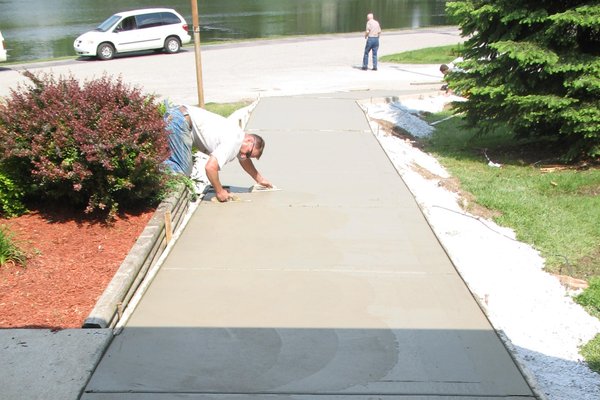
WarmlyYours offers another solution now: radiantly heated driveways, walkways, and stairs. Snow melting cables or mats are installed underneath the asphalt or concrete. A sensor can be used to detect precipitation and temperature which in turn activates the snow melting system, melting the snow as it falls. This makes for a much safer walkway or driveway and no harsh chemicals are used in the process. However, just like with any deicing system there will always be pros and cons. Though you will be able to melt the snow without the use of salt, the system does run on electricity and will result in an increase in electricity usage. If used wisely though, the additional cost will be well worth it!

Ultimately, the decision about how to remove snow and ice is a personal one that homeowners and business owners alike will make. Different people have different priorities; I just believe that people should have all the facts so they can make an informed decision. That way, folks are more aware of how their actions will affect their lives and the planet.

Labels:


Friday, February 19, 2010

An Easy Installation Even For Me - the Mechanically Challenged!

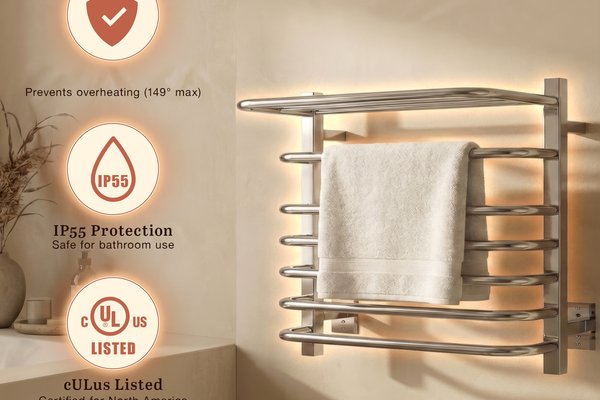
Me and the InfinityThis week I decided that I would try to install a WarmlyYours product entirely by myself. We talk a lot about how easy our products are to install, so I decided that it was time for me to put it to the test. My thinking was that if I can figure out how to do this on my own, surely anyone could.

Let me tell you a little bit about my background. I’m female (not that they aren’t very capable, mechanically inclined women out there, I’m just not one of them) and I was busy taking dance lessons as a kid – I wasn’t helping my Dad fix things out in the garage. Even now, when the DVD player is on the fritz, I call my husband in to deal with it. Patience is NOT one of my virtues!

Anyways, back to the point. I decided to start with a towel warmer because it seemed like the least complicated product to install. And, I’m happy to say, it went smoothly. Here’s how it all went down.

Step 1 - I put the towel warmer together (it was a little confusing to figure out the brackets, being totally unfamiliar with hardware, but I did) and then laid the towel warmer on a piece of cardboard and marked the placement of all the brackets and the electrical box. The install manual recommended using the towel warmer shipping box as the cardboard template.

Step 2 - Then, I used the template to figure out where to mark the wall so that I could hang the towel warmer (for me this was easy since I did it on a practice wall at our office). There are only a couple very important rules. First, at least 2 of the 4 brackets must be installed in a stud. Secondly, for the plug-in model only, it must be installed no more than 6 feet away from a grounded outlet or the plug won’t reach.

Step 3 - I installed 2 brackets in a stud and anchored the other 2 brackets that were not being installed in a stud.

Step 4 - I attached the towel warmer to the brackets.

Step 5 - I didn’t actually perform the final step which was the electrical hookup because it actually requires an electrician, but I did set everything up for that step.

Voila, done! This exercise was a little confusing for a novice such as me, but overall it was pretty easy. Next project, a fusion reactor!

Labels: