

Retrofit Snow Melting for Existing Concrete & Asphalt
Already have a driveway? You can still add a snow melting system. Follow our detailed step-by-step guide covering a real retrofit installation in an existing asphalt driveway—from saw cutting to the finished heated surface.
Get an Instant Quote
Answer a few quick questions and we'll match you with the best snow melting system.
Jump to
Why Retrofit Snow Melting Makes Sense
You don't need to replace your entire driveway. A retrofit installation adds heating to the surface you already have—with minimal disruption and lasting results.
No Full Replacement Needed
Heating cables are cut directly into your existing asphalt or concrete surface—no demolition, no new pour.
Works in Any Existing Surface
Retrofit installations work in asphalt and concrete driveways of any age, as long as the surface is structurally sound.
Tire Tracks Cut Costs in Half
The most popular retrofit layout heats just two tire-width strips—keeping your driveway passable at a fraction of full-coverage cost.
Automatic & Set-It-and-Forget-It
Paired with a sensor-based control, the system activates before snow accumulates—no monitoring or manual switching required.
Expandable Later
Electric systems are modular. When you eventually resurface or extend the driveway, the system can be expanded seamlessly.
No Salt, No Damage
Eliminate the corrosive de-icers that damage concrete, asphalt, vehicles, and surrounding landscaping year after year.
Snow Melting Customer Reviews
We take pride in providing both exceptional service and great products. But don't just take our word for it, check out what some of our customers have had to say.


Retrofit Snow Melting Projects
See how homeowners and contractors have retrofitted snow melting systems into existing driveways and surfaces.


Adding Snow Melting to an Existing Driveway
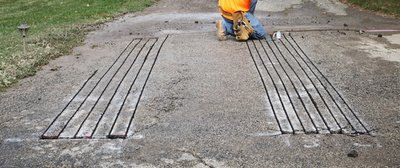
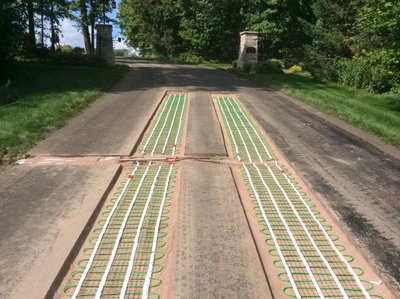
A retrofit installation means you don't have to tear out your existing driveway to enjoy the benefits of radiant snow melting. A contractor saw-cuts narrow grooves into the surface, lays heating cables inside, and seals them flush—the result is a fully heated driveway with minimal disruption.
This guide walks through a complete retrofit project in an existing asphalt driveway, covering two tire-track strips from the saw-cutting stage all the way through to a finished, snow-free surface.
Watch the short video to see how straightforward the process really is.
Learn More About Heated DrivewaysWhen is the Right Time to Retrofit?
A retrofit can be done at virtually any point—you don't need to wait for a resurfacing project. The key requirements are that your existing surface is structurally sound and that you can coordinate your contractor, electrician, and groove-sealing within a reasonable timeframe.
The best season for a retrofit is late spring through early fall, when asphalt sealers and joint fillers cure properly and contractors are available. Avoid freezing temperatures, which prevent the groove filler from bonding correctly.
The project pictured here is a real retrofit in an existing asphalt driveway completed in mid-fall. The homeowners added tire-track snow melting coverage near the front entrance—without replacing the driveway at all.
Because the system is electric, it can be expanded at any time—whether they extend the tracks, resurface the driveway, or add a second zone later.
Full Coverage vs. Tire Tracks
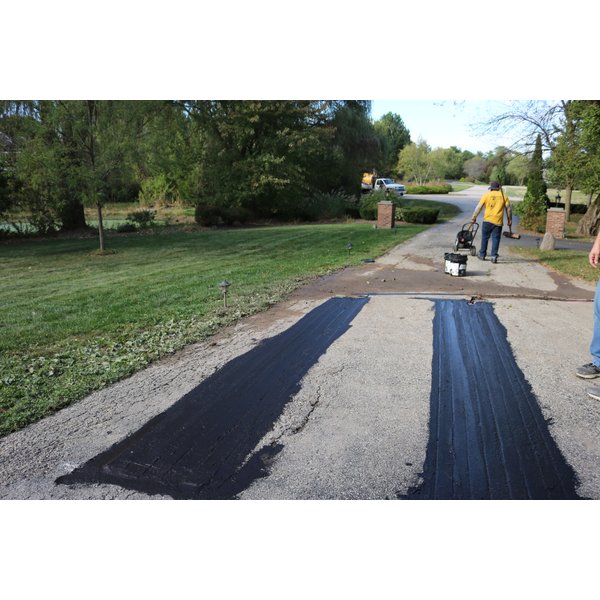
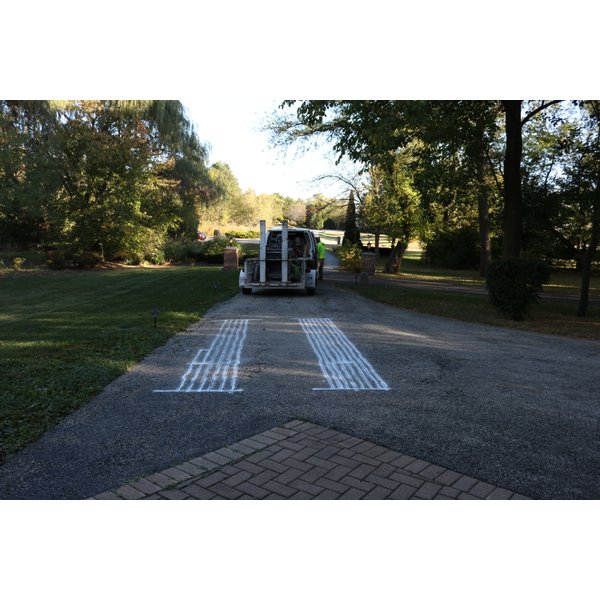
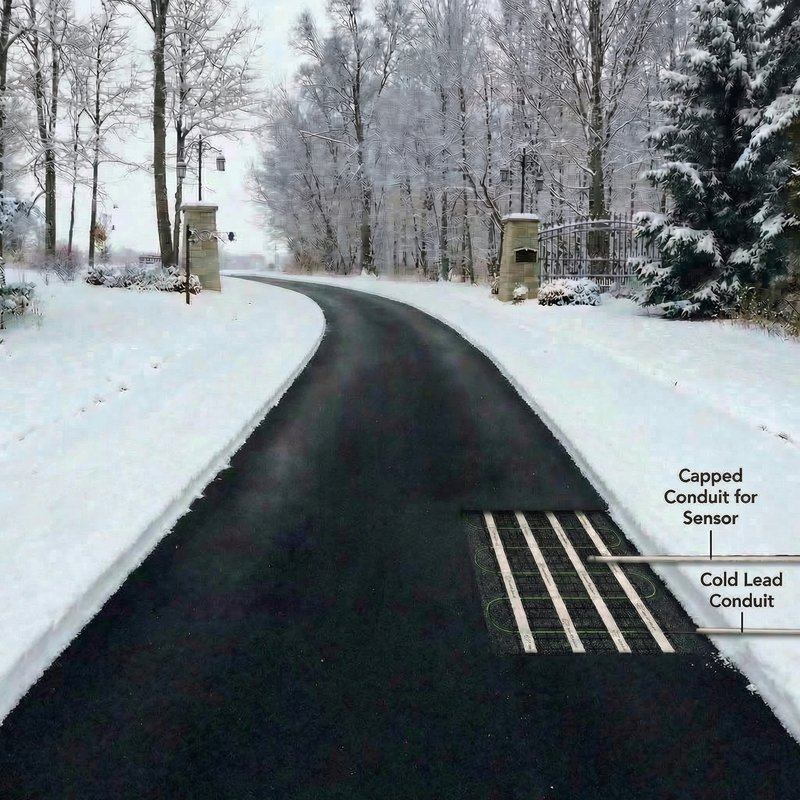
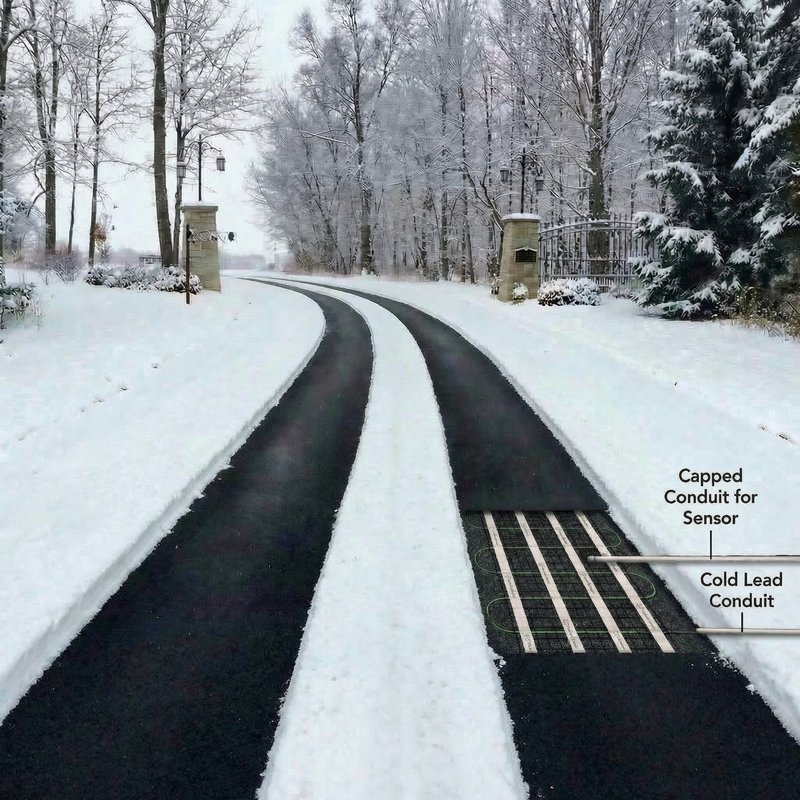
You can choose to have your entire driveway project covered with snow melting, but one popular alternative to full coverage is to simply heat tire tracks.
This economical option helps users cut down on both installation and operating costs, while still providing great functionality.
This coverage system works by installing two sets of heating elements, typically 2 feet wide and the length of the driveway, which will keep the driveway passable, even in the heaviest of snow falls.
Operating Cost Calculator for Snow Melting
Calculate driveway heating costs based on size, coverage type, and local energy rates.

ft.
ft.
¢/kWh
Estimated Cost
$3.25
per hour
$19.50
for 6 hours
Free SmartPlan
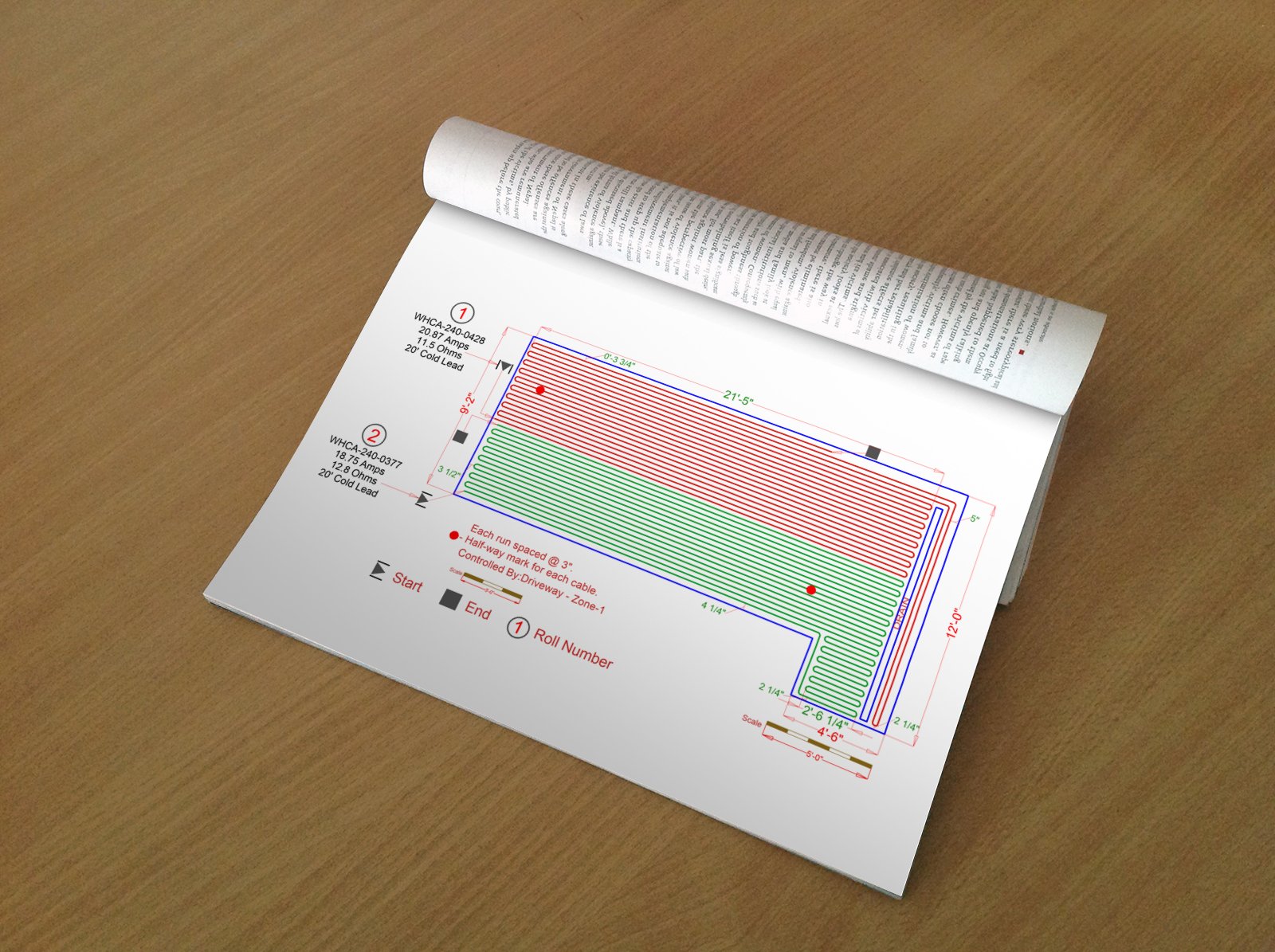
Get a custom installation plan for your driveway retrofit project in just 1 business day.

"I'll design a custom snow melting layout for your project, complete with cable spacing, electrical requirements, and a full quote."
Retrofitting the Snow Melting System
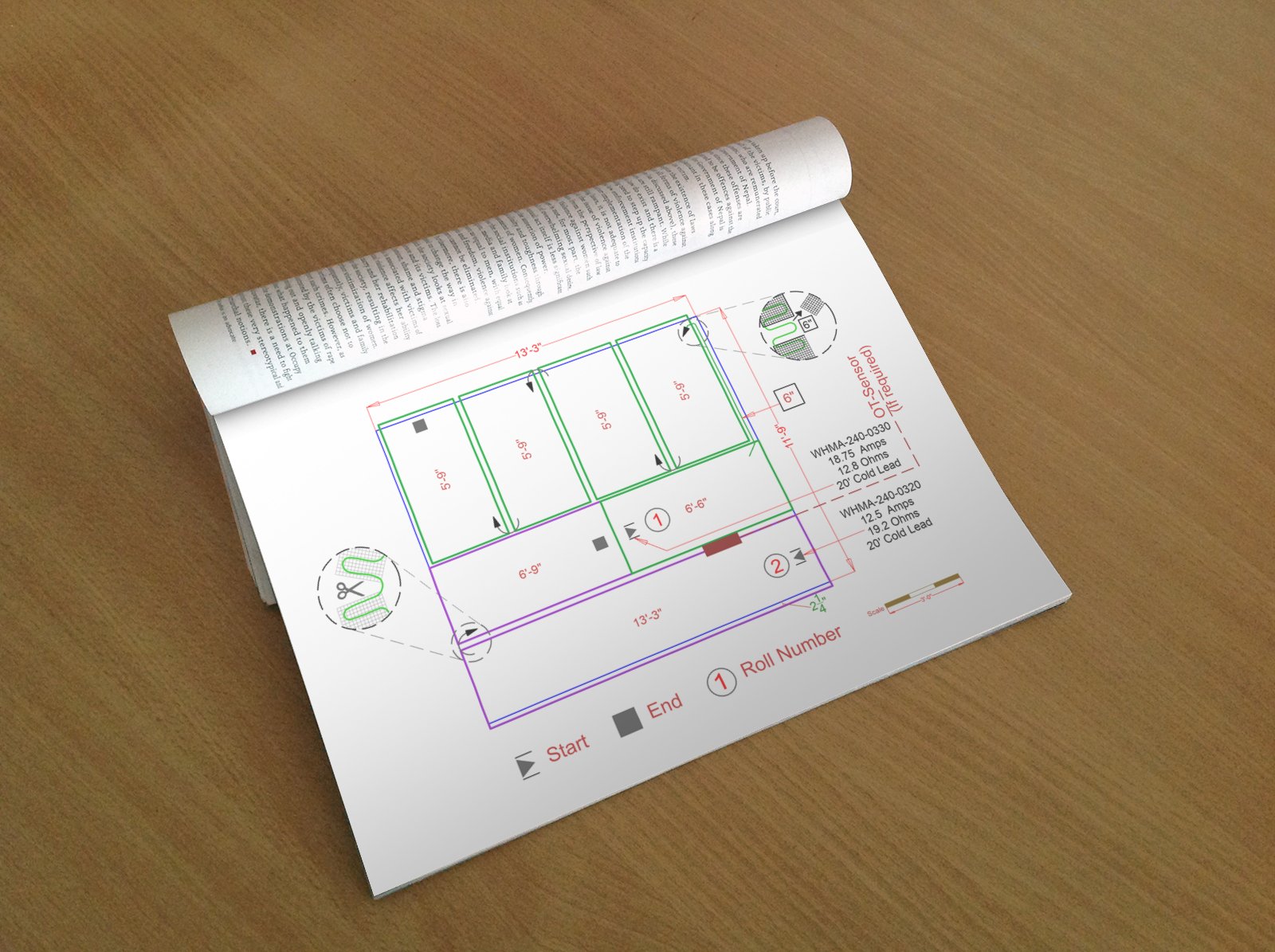
The retrofit installation of any snow melting system relies on proper layout and installation depth. In this project, we will be covering two 2′ x 15′ tire tracks in an asphalt driveway.
In this project, installation started with saw cutting into existing asphalt. We recommend that you consult with and plan this step with your contractor, since it may depend on the surface material and its condition.
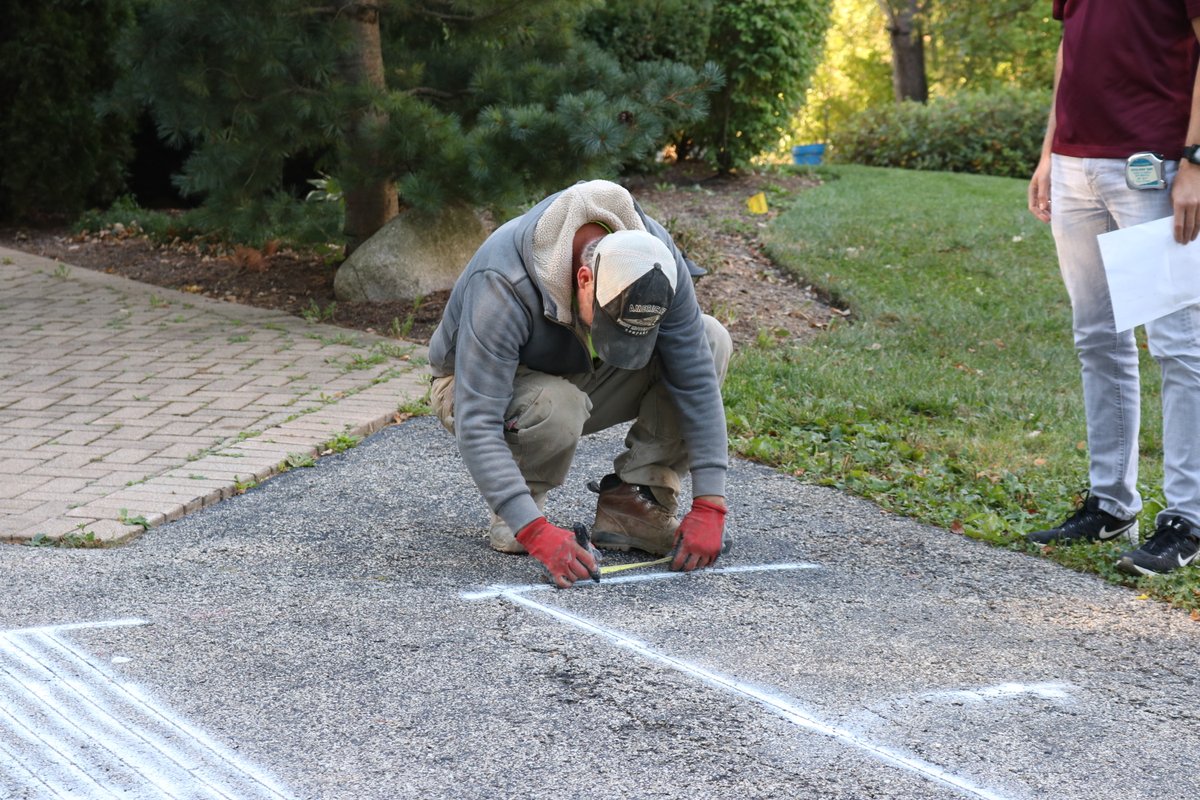
Prior to beginning any digging, we suggest contacting a local utility locating/marking firm to make sure your project won't run into any gas, water, or electrical lines. Once that's done, you'll want to start with locating the area to be heated and then, marking the cable layout in that area according to the SmartPlan.
The recommended approach to marking the installation area is to spray paint the start and the end of the area with clear lines. Follow the spacing provided on the installation plan and mark the cuts with a chalk line. Ensure uniform spacing and verify the number of cuts as per the installation plan.
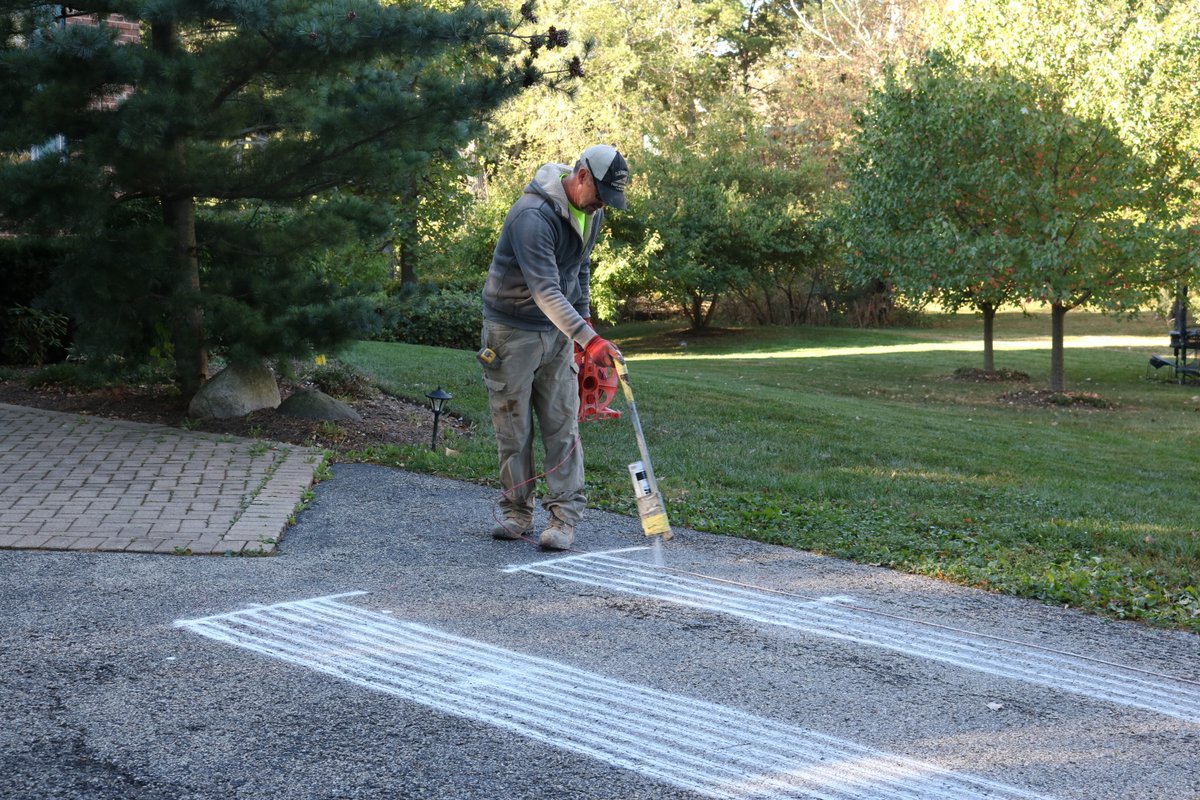
Pro Tip: While the chalk marking string is on the surface, spray the spray paint over the string to mark the position of the saw cuts. That will prevent the line from washing away and will provide a clear identification to ensure evenly-spaced and straight cuts.
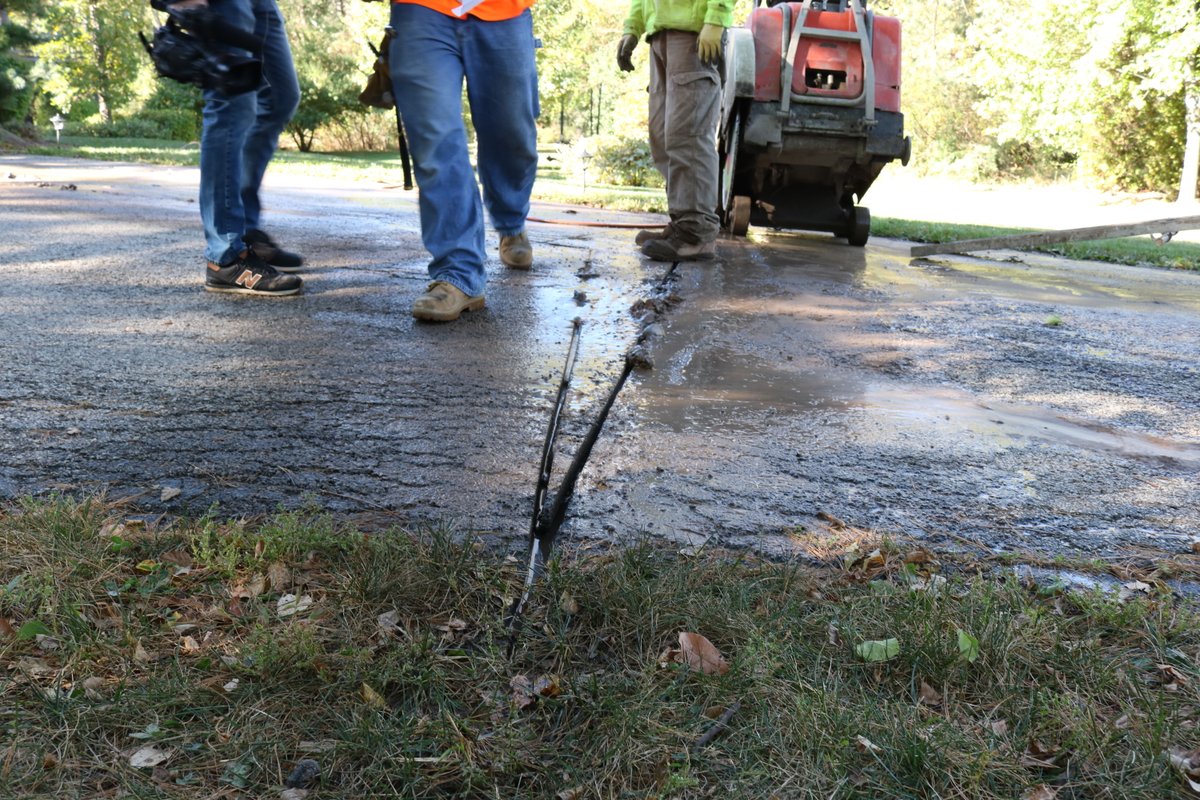
Depending on the size and location of your project, it may require the use of one or more junction boxes.
By reviewing your WarmlyYours SmartPlan, your electrician will be able to identify where the junction boxes for your snow melting system should be located. Make sure to mark and cut additional lines to exit points for the non-heating leads in the concrete slab or asphalt.
Please note that the cold leads of the heating cables must be protected by approved conduit as they exit the driveway and travel to the junction boxes.
The junction box serves as an intermediary connection location between the heating element itself and the snow melting relay panel or control that you select. Making sure to establish the location of the junction boxes early on will allow you to make sure that all sequential steps are going according to plan.
Preferred Method: Saw Cutting Main Lines
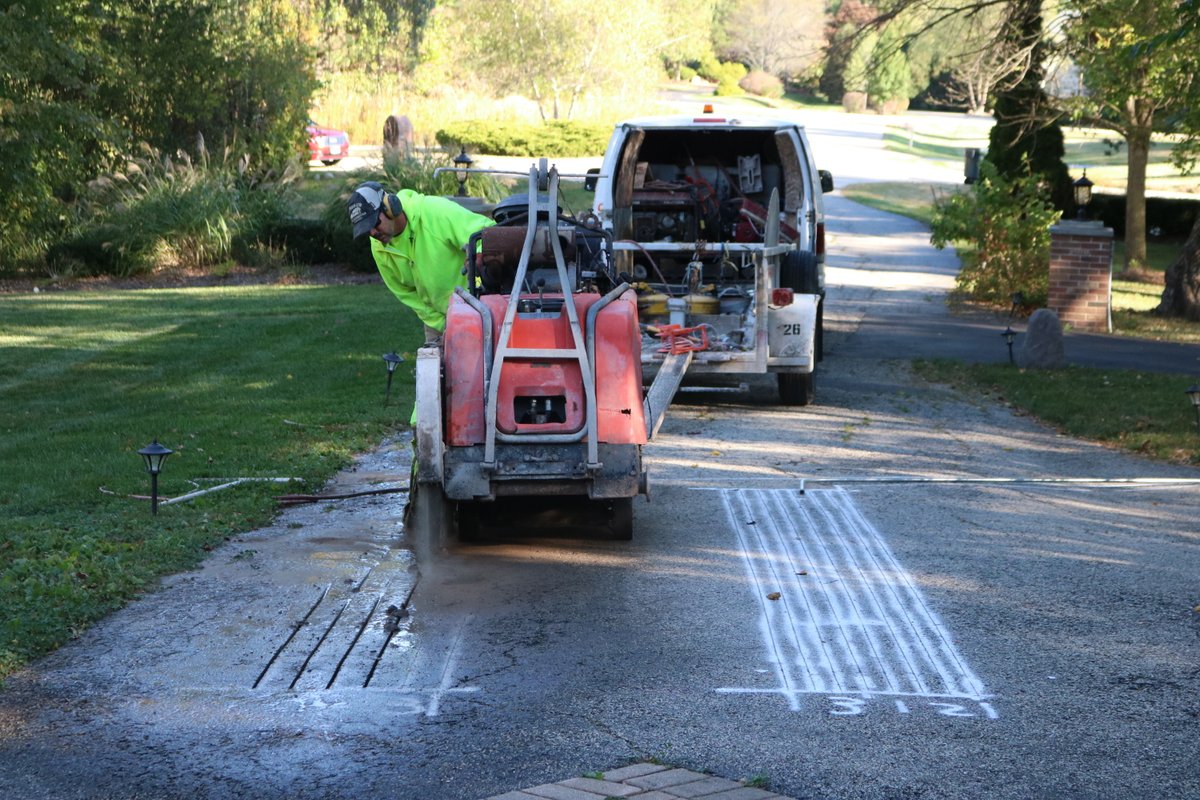
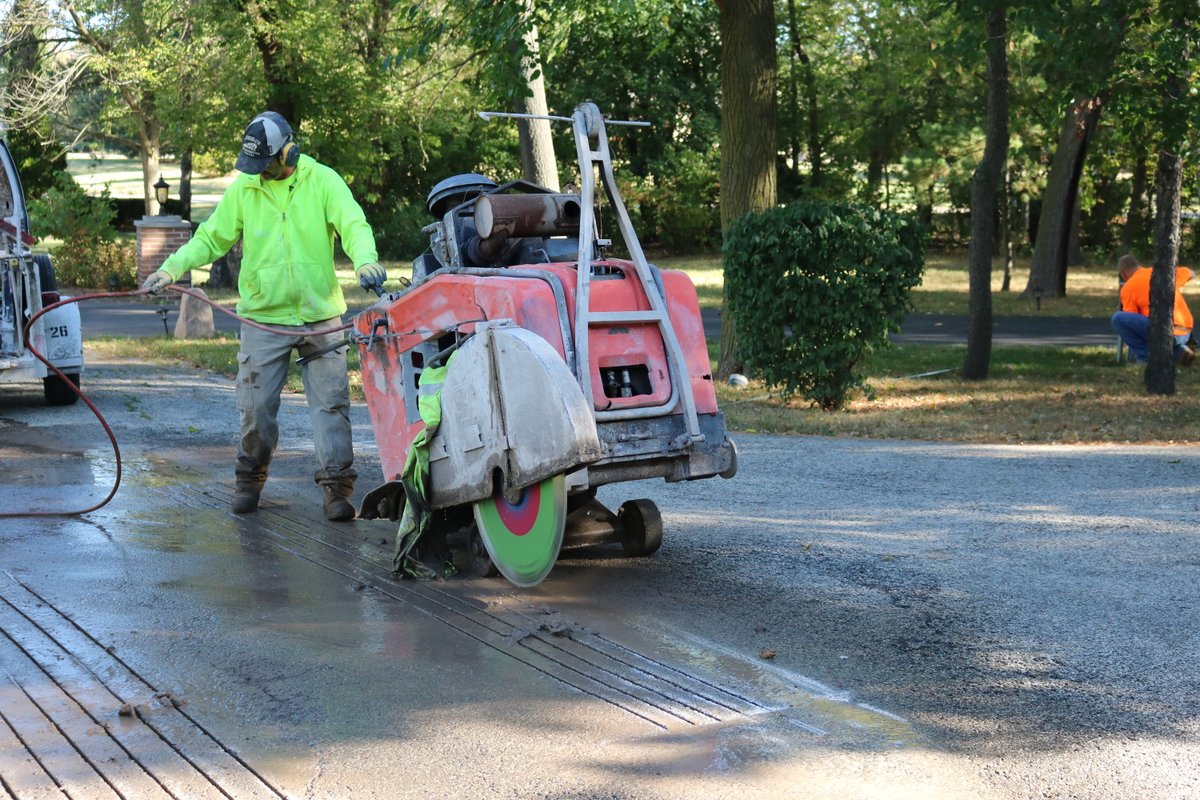
Saw cut each line to achieve at least a ⅜" wide groove to fit a snow melting cable in. Multiple blades may need to be used to accomplish a wider cut. Test with a shorter cut first and use a cable to see if it fits in. Cuts need to be at least 1-½" deep, per National Electrical Code, and the cable should not run deeper than 2-3″ from the surface to ensure proper performance. Plan a wider cut of about 9/16″ or more for the 6″ long factory splices at the beginning and end of the cable. Ensure the splice can be fully buried and placed at least 4″ from the conduit opening. It may be a good idea to make the last run 5′-10′ longer than needed to allow for any cable overruns.
If an in-slab high temperature limit sensor will be used, this is the best time to plan one short groove equally spaced between two heating cables. Separate conduit should be used to protect the low voltage sensor wire and it must NOT be shared with any high voltage cold lead from the heating cable. The temperature sensor conduit should be capped off and the sensor itself installed within the conduit near the cap. This allows easy replacement of the sensor if required.
Alternative Method for Tire Track Format: Removing Trenches
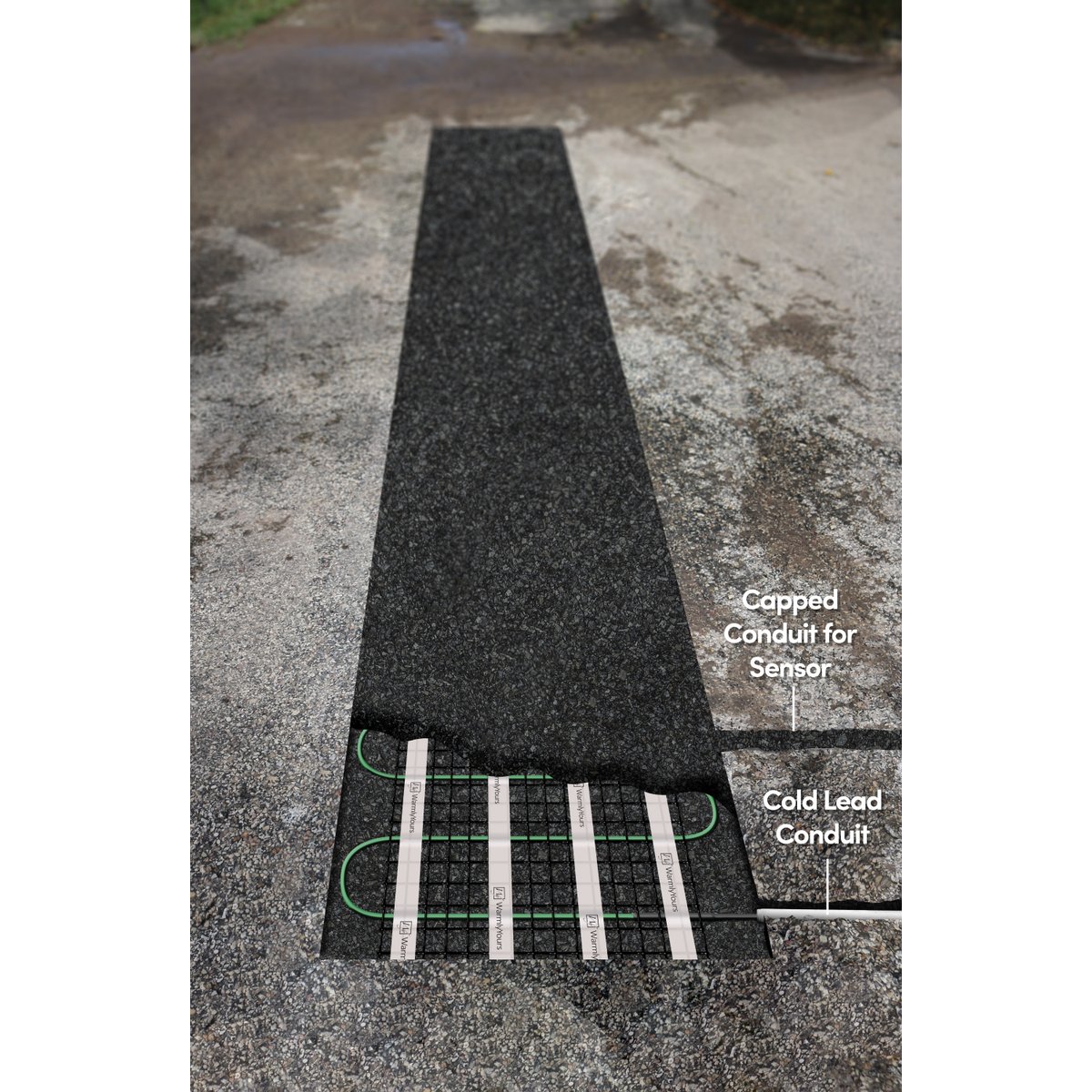

If you're installing a snow melting system for tire track coverage during a retrofit installation, an alternative trenching method may be used. Remove 2-3″ of the top asphalt layer that matches the length and width of the snow melt mats being used. Unroll the mats within the trenches and lay asphalt on top. Each trench needs to be at least 1.5″ deep, per National Electrical Code, and the mat should not run deeper than 2-3″ from the surface to ensure proper performance. Plan a cut about 9/16″ wide or more for the 6″ long factory splice at the beginning of the mat. Ensure the splice will be fully buried and is placed at least 4″ from the conduit opening.
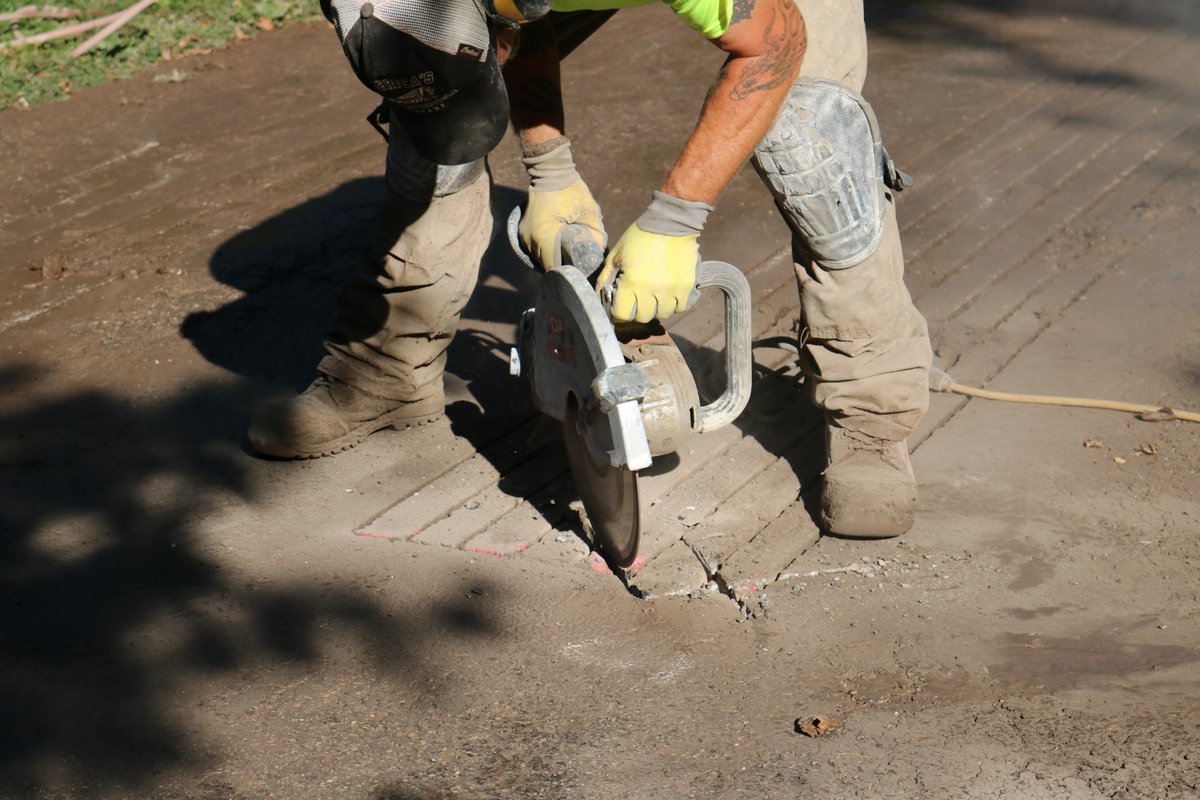
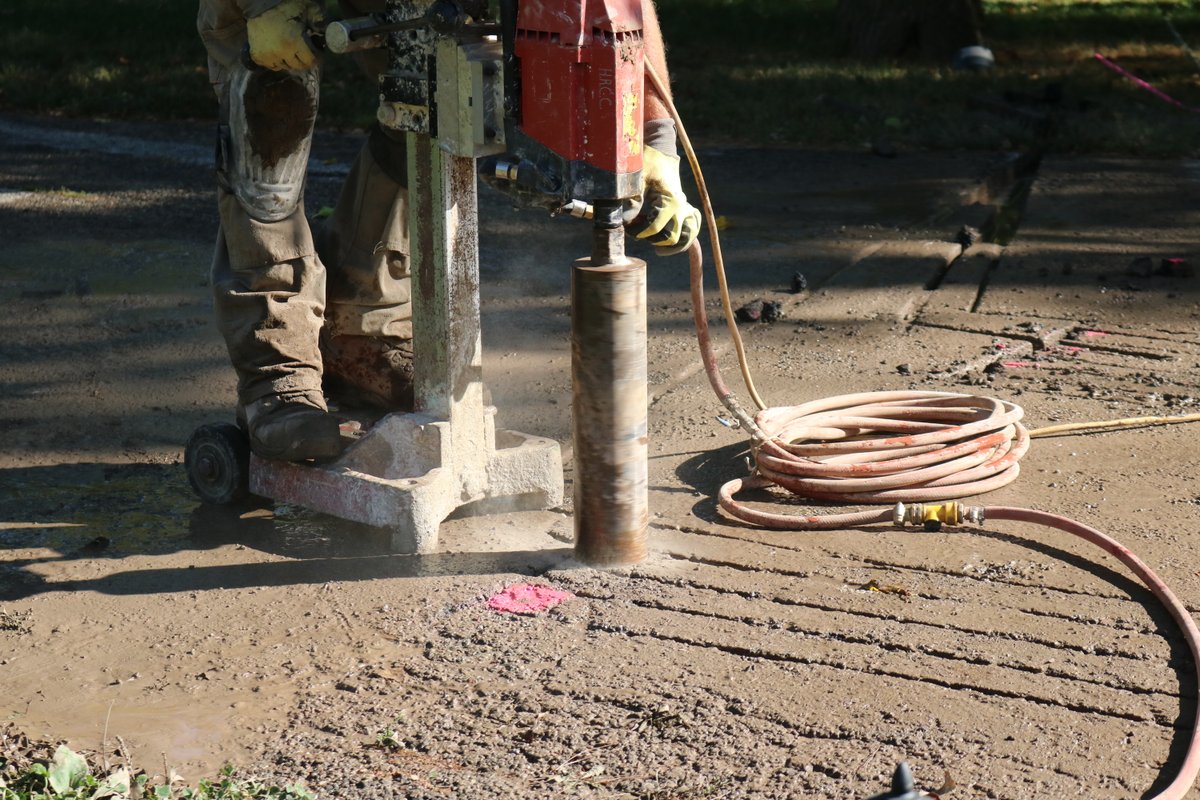
Round the corners of cuts to allow smooth cable placing in the U-turns. This can be accomplished by making additional 45° cuts at the U-turns or doing a core drilling with a core drill bit with a diameter matching the cable spacing (typically 3″). Please note that core drilling will require much more filler than the saw cut method will.
Remove any sharp edges to avoid cable damage and clean the grooves with a high-power pressure washer. Allow to dry and ensure that the grooves are free of dust and debris.
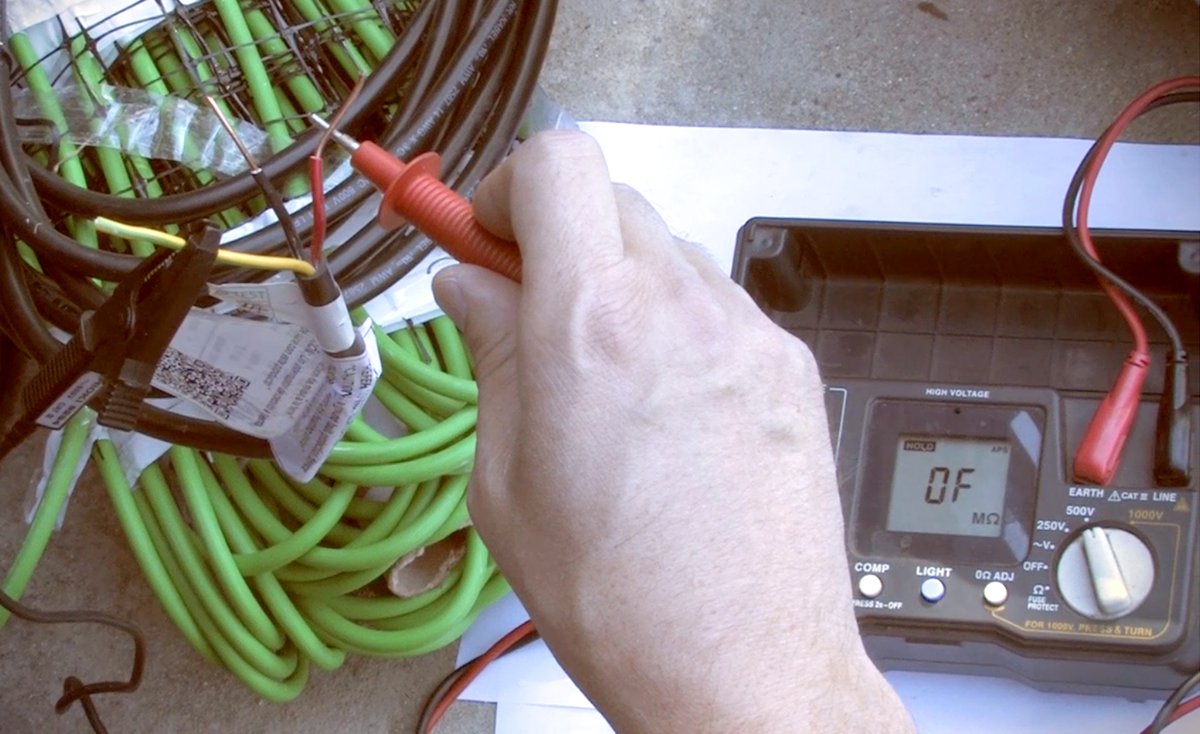
Testing your snow melting system with an ohmmeter and megohmmeter at every stage of installation will allow you to be certain that the heating element is functioning properly.
Completing these tests, and recording your readings accurately, will also qualify your project for WarmlyYours' 10-year warranty.
Make sure to consult your WarmlyYours snow melting installation manual for more information.
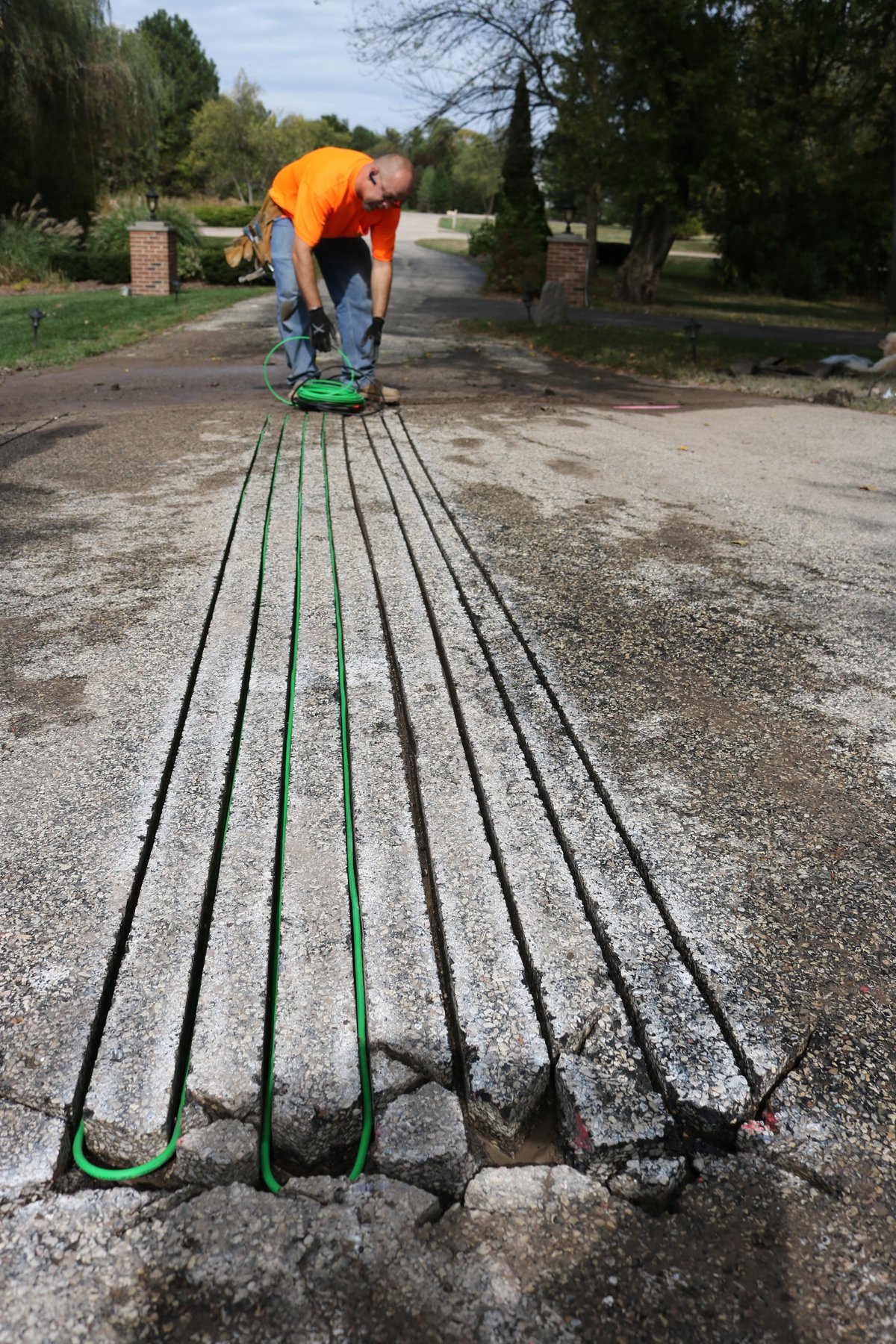
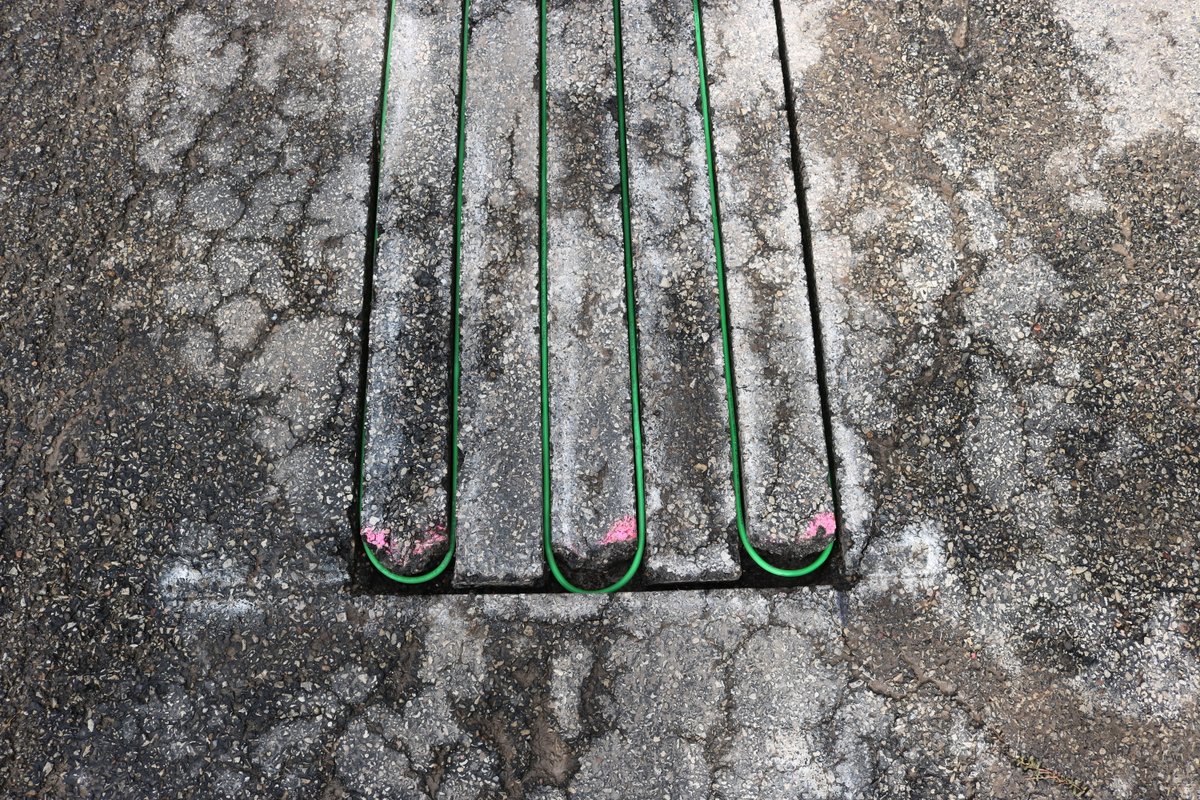
Install the conduit into the drive and run the leads into it and on into the junction box. Verify that the factory splice will be 4″ away from the conduit when installed, and start installing the cable into the grooves. Verify the length of cable used in the first run of grooves. If more cable was used than planned, coverage at the end will be reduced. If less cable was used, you may have too much cable for the last run. This is why we suggest an extra long groove cut for the last run, so that it will accommodate any extra cable. It is easier to make an extra cut while the cutter is there than it is to get the contractor back out to make additional cuts afterwards.
Do not try to pull on the cable to slide it through the grooves. Do not compress or strain the cable, run heavy machinery, equipment, or vehicles over it. Any of these actions could damage the cable.
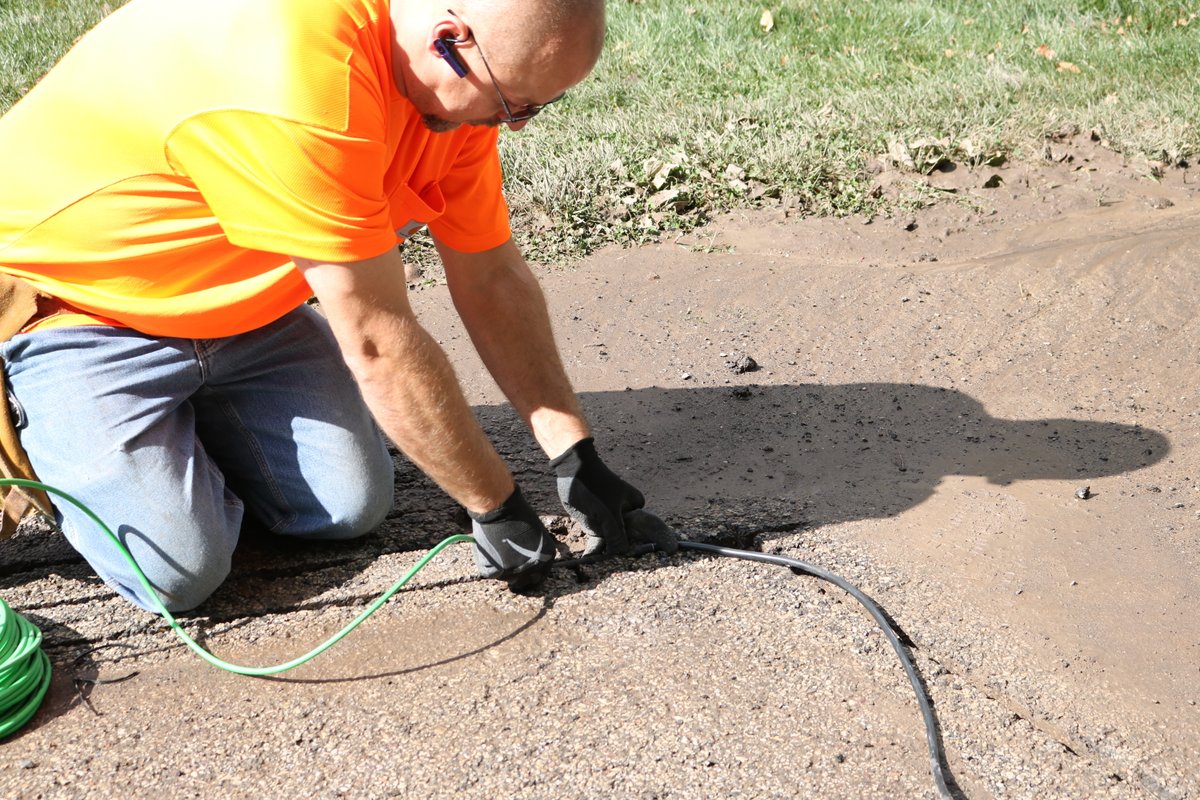
In this project, two separate heating cables (one in each tire track) are set up so that they 'begin' on the same side. This allows for one junction box to carry power to the cables.
Power is carried to each mat by a non-heating 'cold lead', which is connected to the heating cable via a manufacturer's splice.
One of the most common snow melting installation mistakes that people make is leaving this splice, and some of the heating cable, outside of the asphalt (sometimes people leave it in the conduit or simply leave it exposed). This can cause the splice, which is half heating element, to overheat and fail. By simply making sure that the splice is embedded correctly in the asphalt, you'll help ensure a problem-free installation.
Be careful to avoid stepping on or applying pressure to the factory splice or endcap.
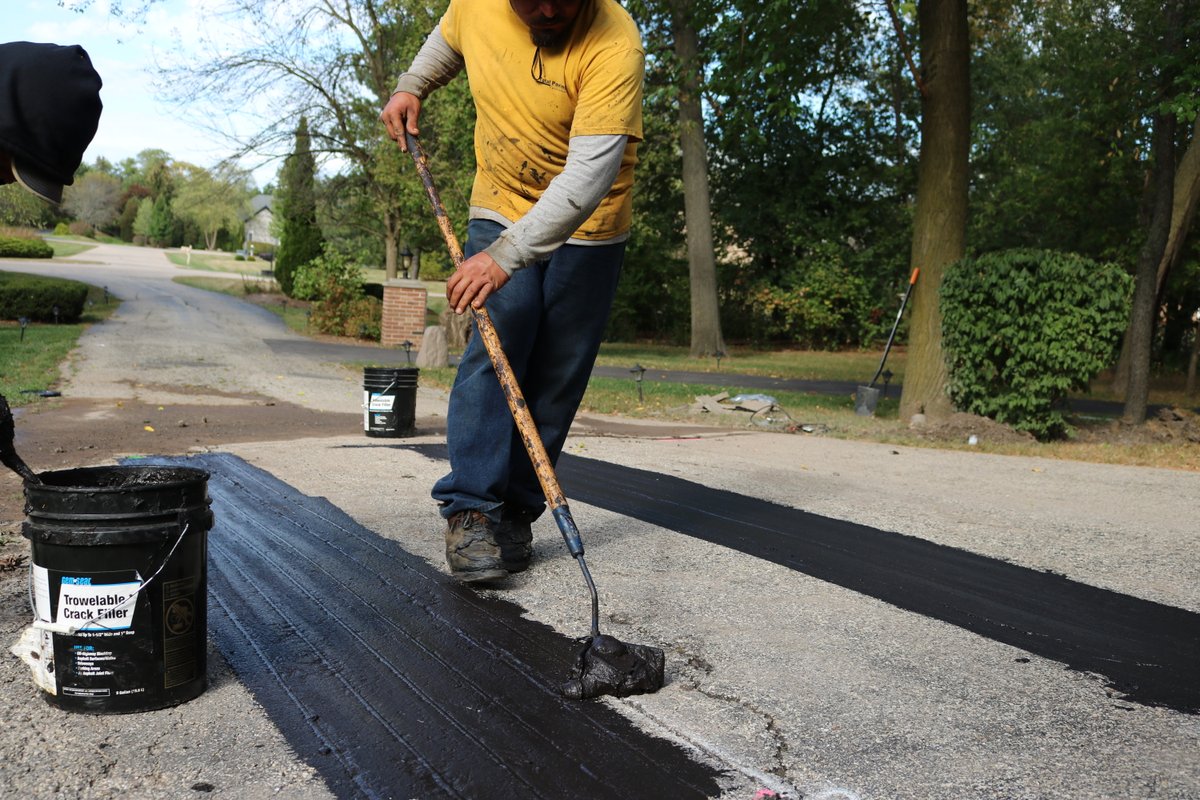
Fill all cuts with hot asphaltic sealer for asphalt retrofits, or expansion joint sealer (SikaFlex or similar) for concrete retrofits. Make sure this step is done in accordance with the filler manufacturer's recommended procedures.
A top seal-coat is not necessary, though it can be applied for aesthetic reasons.
The Junction Box
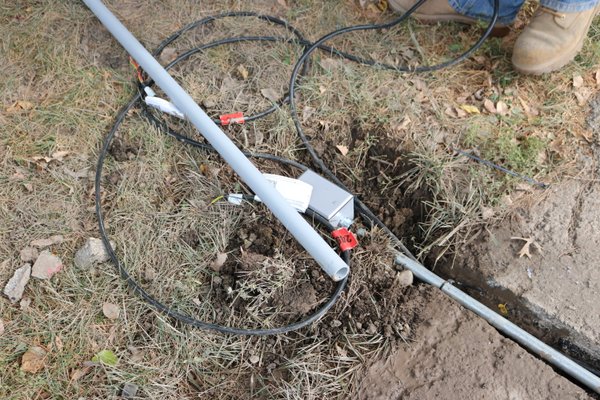
In the photo, you can see the conduits which will ultimately be attached to the junction box. There is a conduit for each cable that will contain the cold lead and another conduit for the temperature sensor (if required by the controller). The sensor measures how warm the heated asphalt gets and is a crucial component for a well-functioning snow melting system.
The pictured junction box is surface-mounted. No matter if the junction box is elevated or ground level, the most important thing is that the junction box remains accessible.
The Control for Your Snow Melting System
WarmlyYours offers a wide variety of controls for our snow melting systems - from a manual option with a timer that will only activate when you turn it on/off, to an automatic option that will turn on when it senses snow is falling.
These controls (excluding the manual and WiFi options) are able to function with the use of sensors. There are two main types of sensors: slab and aerial. Slab sensors are installed along with the heating element (but never touching it) and they can measure the conditions at the surface. Aerial sensors are installed in the open and are actually able to detect whether or not it's snowing.
For more information about the variety of snow melt controls and sensors available from WarmlyYours, check out this comparison chart.
Shop Controls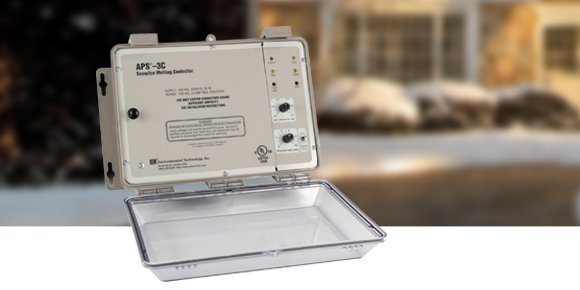
The Finished Driveway
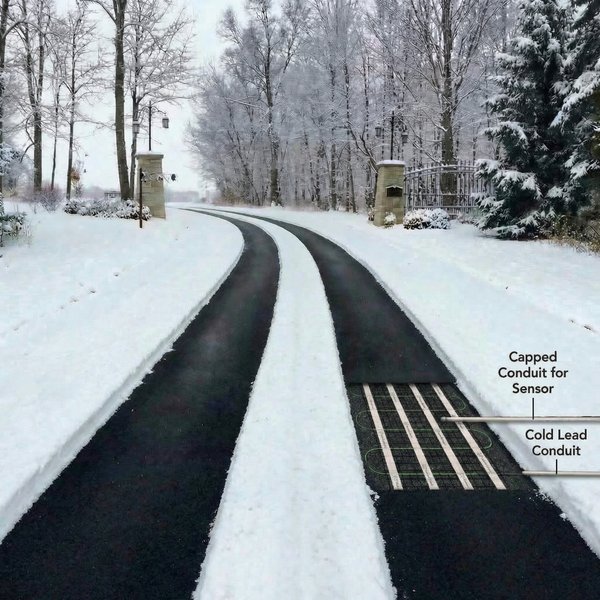
Once the driveway is completed, it's ready to be used. Just add snow! Make sure to monitor your driveway system and control throughout the first couple of snowfalls to see if any adjustments are required.
As you can see, this snow melting system in the "tire track" format will keep your driveway usable, even in the dead of winter.
In this photo, you may notice that the heated area is partially dry with a few wet sections. Most WarmlyYours snow melting systems will continue to run for a pre-determined "after-run" time after the snow stops falling. This will typically evaporate the water left behind, and in its place, you'll find clean, dry asphalt.
Snow melting systems like this allow you to do away with chemical melting agents, which will be easier on your pets and your vehicles. It will also be much easier on your body when you can officially retire the snow shovel.
Shop Snow MeltingSnow Melting Videos
Documents

PDF

PDF

PDF
Retrofit Design Guide Heated Driveways Snow Melting Posts





Consult with a Snow Melting Expert
Have questions about retrofitting a snow melting system into your existing driveway? Our experts will respond within 1 business day.
Typically respond within 1 business day
Retrofit Snow Melting FAQs
Showing all 4 questions
Yes, you can retrofit a snow melting system into a preexisting driveway made of concrete or asphalt. You can do this by using an appropriate tool to cut properly spaced lines (or trenches for tire tracks heating) in the surface. Then you can place the the heating elements in the lines (or trenches) before sealing them with either hot asphaltic sealer for asphalt retrofits, or backer rod and expansion joint sealer (SikaFlex or similar) for concrete retrofits. Of course, you'll want to make sure this step is done in accordance with the filler manufacturer’s recommended procedures. Check out our snow melting retrofit guide for more information about this process.
One option is saw cutting the grooves into the existing concrete for cable placement and filling the remaining grooves with a sealant. This depends on the preferred finished surface, an alternative option may be to install the cable or mat over an existing surface, overlay in mortar and then have brick, stone or tile installed on top. When working over an existing concrete surface, ensure that the heating cable never crosses the existing expansion joints.
Yes, but it requires removing and replacing the surface. Snow melting systems must be embedded within the concrete, asphalt, or paver base, so retrofitting involves:
Retrofit Installation Process:
- Remove existing surface – Saw-cut and excavate the area to be heated
- Prepare base – Ensure proper compaction and drainage
- Install heating system – Lay mats or cables according to SmartPlan™
- Pour new surface – Concrete, asphalt, or paver installation
- Electrical connection – Licensed electrician completes hookup
Cost-Effective Retrofit Scenarios:
- Resurfacing projects – If you're already replacing a deteriorated driveway
- Partial coverage – Heat only tire lanes or high-traffic walkways to reduce cost
- Phased installation – Start with critical areas (steps, ADA ramps) and expand later
Alternative: Surface-Mount Systems
For areas where excavation isn't feasible, we offer surface-mount heating mats for:
- Wooden decks and stairs
- Roof valleys and gutters
- Temporary or seasonal installations
Your SmartPlan™ will evaluate your existing surface and recommend the most practical installation approach based on your goals and budget.
Yes, you can install snow melting on an existing driveway through a retrofit application, though it's more complex than new construction.Retrofit installation options:
- Asphalt: Remove top layer, install cables/mats, repave—typically 1–2 weeks
- Concrete: Remove and replace concrete with heating system embedded—typically 2–4 weeks
- Pavers: Remove pavers, install cables in sand base, reinstall pavers—typically 3–5 days
Retrofit considerations:
- Higher labor costs than new construction
- Temporary disruption to driveway access
- Professional installation required (not DIY-friendly)
- Permits may be needed (check local codes)
Best retrofit option: Pavers offer the fastest, most cost-effective retrofit solution. View our complete Retrofit Application Guide to explore all retrofit options for your existing driveway. Our experts can assess feasibility and provide custom recommendations. Request a free SmartPlan with retrofit options tailored to your project.
