
5 Ways to Use a Snow-Melting System
last updated february 25, 2026

Snow melting systems are most commonly associated with driveways — but that's just the beginning. WarmlyYours installs radiant snow melting in five primary outdoor applications, each solving a specific winter safety or convenience problem. Here's a breakdown of the most popular uses, with real cost examples for each. For a full installation cost breakdown, see our heated driveway cost guide.
1. Walkways (37% of All Installations)
Walkways are the most popular snow melting application — and for good reason. A slippery front walkway is one of the most common sources of winter slip-and-fall injuries. Heating the path from your driveway to your front door keeps it dry and safe for family, guests, and delivery personnel throughout the winter.
Walkway systems are typically smaller and less expensive than driveway systems. A standard 4' × 20' front walkway (80 sq ft) can be heated for as little as $1,000 in materials, with operating costs of just $0.65/hr/hr.
2. Driveways (22% of All Installations)
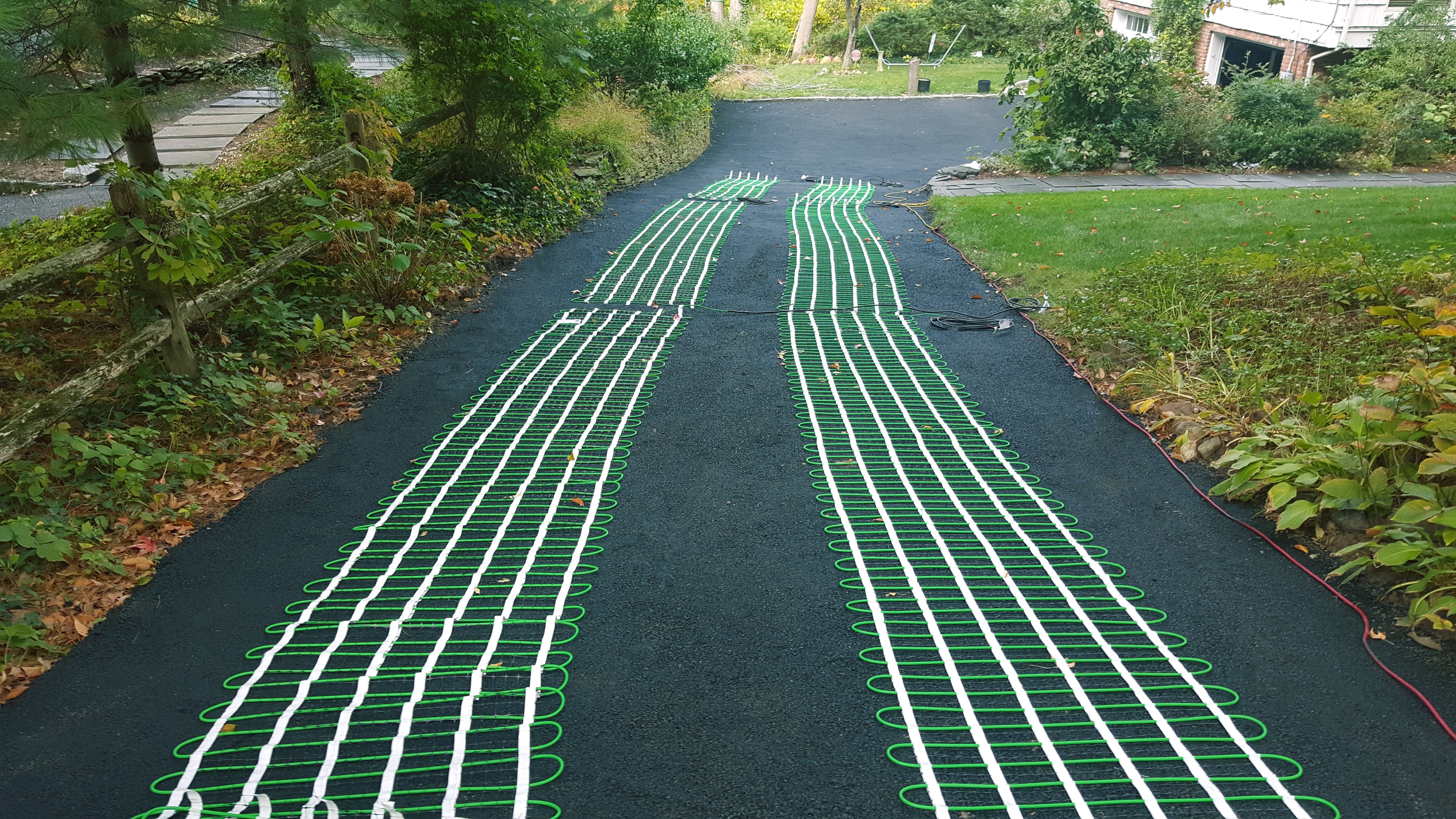
Driveway heating eliminates the need for shoveling, plowing, and de-icing chemicals — permanently. Systems can cover the full driveway surface or just the tire tracks (two parallel heated strips), which reduces installation cost by approximately 35%.
A standard 20' × 20' two-car driveway with full coverage starts at $4,750 in materials. Tire-track coverage for the same driveway starts at $2,362. Controls add $629–$3,799 depending on the automation level you choose.
3. Patios
A heated patio extends your outdoor entertaining season well into fall and early spring. Snow melting mats or cables embedded beneath pavers, concrete, or stone keep the surface dry and safe — so your outdoor kitchen, fire pit, or hot tub area remains accessible all winter.
Patio systems are priced similarly to driveway systems on a per-square-foot basis: typically $9–$16 per sq ft for materials.
4. Stairs
Icy stairs are among the most dangerous winter hazards. A snow melting system embedded in outdoor steps keeps each tread clear and dry — critical for front entry stairs, deck stairs, and any steps leading to a garage or side entrance.
Stair systems are among the most affordable applications. A typical set of front entry stairs (approx. 30–40 sq ft) can be heated for around $1,700 in materials.
5. Ramps
For homes or businesses with accessibility ramps, a snow melting system is often essential rather than optional. Ice on a sloped ramp surface is extremely dangerous for wheelchair users and anyone with mobility challenges. Automatic sensor controls ensure the system activates before ice can form — no manual intervention required.
See our full guide on maximizing the safety of accessibility ramps for more detail.
Snow Melting Applications — Quick Reference
- Walkways: Most popular application — 37% of installs
- Driveways: Full or tire-track coverage available
- Patios: Works under pavers, concrete, stone
- Stairs: Most affordable per-project cost
- Ramps: Critical for ADA accessibility in winter
What Does It Cost to Run?
All WarmlyYours snow melting systems output 50 watts per square foot. Operating costs depend on your local electricity rate and how many hours the system runs per season. For a detailed breakdown by region, see our monthly operating cost guide.
Get Started
Use our Instant Quote tool to get a fast estimate for any of these applications. Every quote includes a free SmartPlan™ — a custom installation and electrical plan from our engineering team. All systems are backed by a 10-year warranty with 24/7 support at 800-875-5285.
Have Questions About Your Project?
Our team of Radiant Experts is ready to help!
Related Articles
Stay Updated
Get the latest radiant heating news and tips delivered to your inbox.


