Heated Driveway Tire Tracks in Asphalt
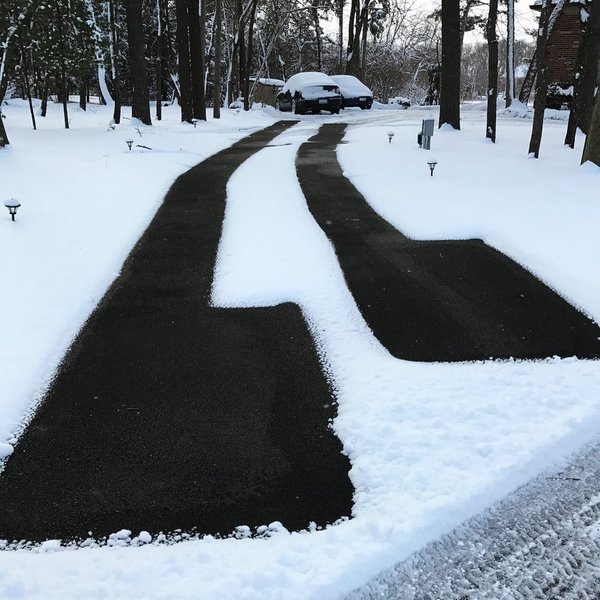
Follow our detailed guide and learn how to install a tire tracks snow melting system under an asphalt driveway.
Snow can be beautiful, but it can also deliver a huge amount of inconvenience and danger. When you have somewhere you need to be, winter can be your worst enemy.
By installing a WarmlyYours snow melting system in your driveway, you can finally put away the rock-salt and shovels and start enjoying winter again.
Why Heat Your Asphalt Driveway?
What is Snow Melting?
If you're a home owner and you've ever wondered, "how can we reduce the freezing of snow on asphalt?", then radiant snow melting systems can be of assistance.
Have you ever seen snow fall on an already warm car? It melts instantly. This is the essential idea behind snow melting systems—a heating element is embedded in your driveway and it melts the snow that falls on it.
In asphalt installations, the heating element should always be electric as asphalt can reach temperatures of 330°F, which can melt hydronic tubes. Our WarmlyYours cables and mats are rated to withstand temperatures up to 450°F.
Electric systems are also much easier to install, as they don't require costly boilers or pumps.
Learn More About Snow MeltingFree SmartPlan
Get a custom installation plan for your asphalt driveway in just 1 business day.

"I'll design a custom snow melting layout for your project, complete with cable spacing, electrical requirements, and a full quote."
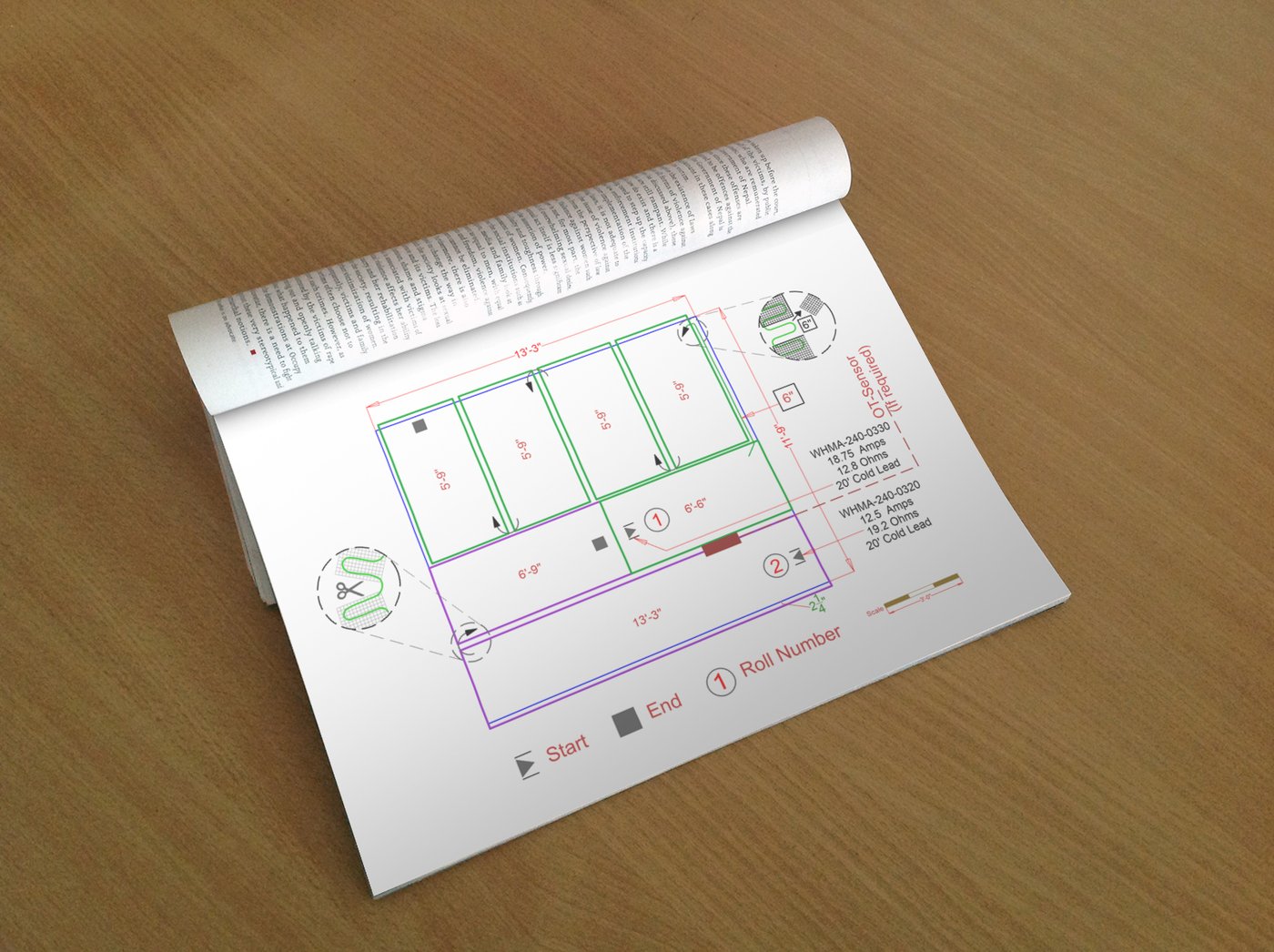
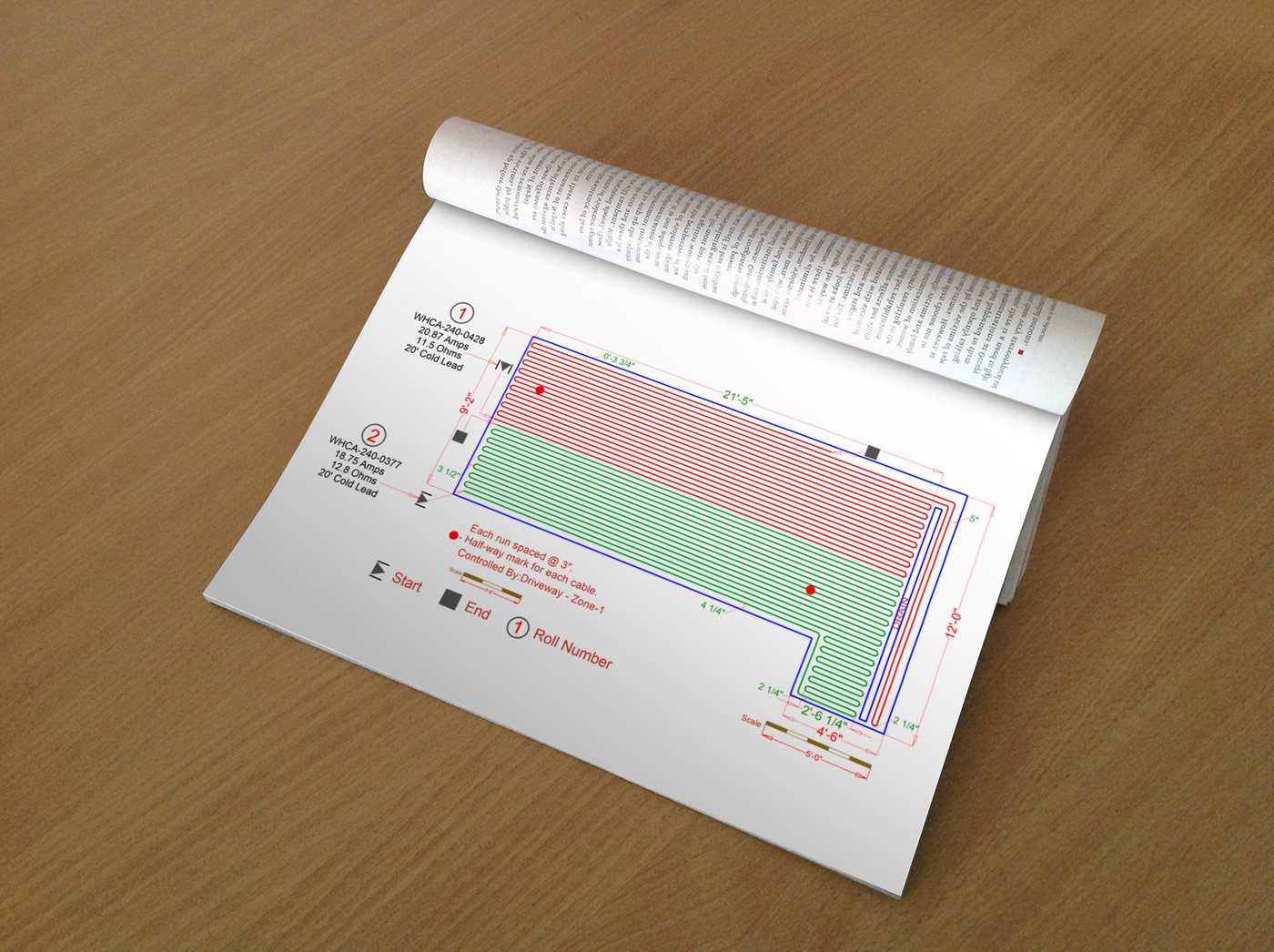
When to Install a Snow Melting System
Because the snow melting system is embedded within the driveway itself, the best time to install is when a driveway is being created, redone, or expanded.
These projects are typically undertaken from late spring to late fall. Contractors prefer warmer temperatures of 50°F and above as they have more time to work with the asphalt. At 40°F, a contractor has only 25 minutes to work with a 2" thick asphalt installation.
The heating element must be installed approximately 2-3" beneath the finished surface. The thinness of our mats (5/16") means minimal impact on overall driveway depth.
Because electric systems are modular, they can easily be expanded in the future if you decide to heat additional sections of your driveway.
Full Coverage vs. Tire Tracks
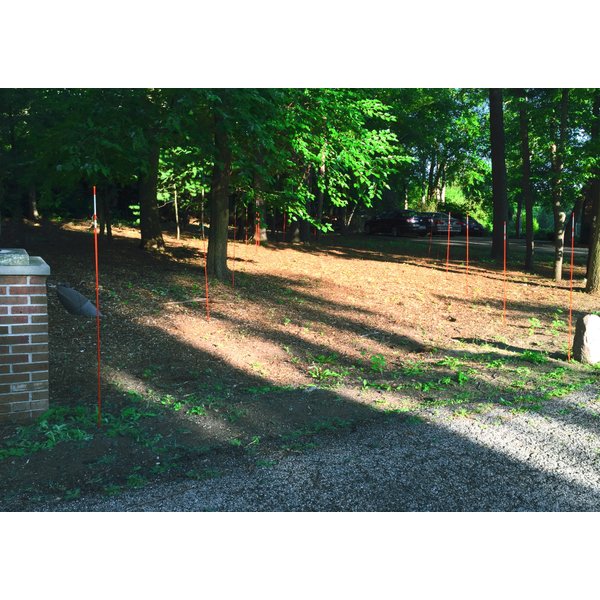
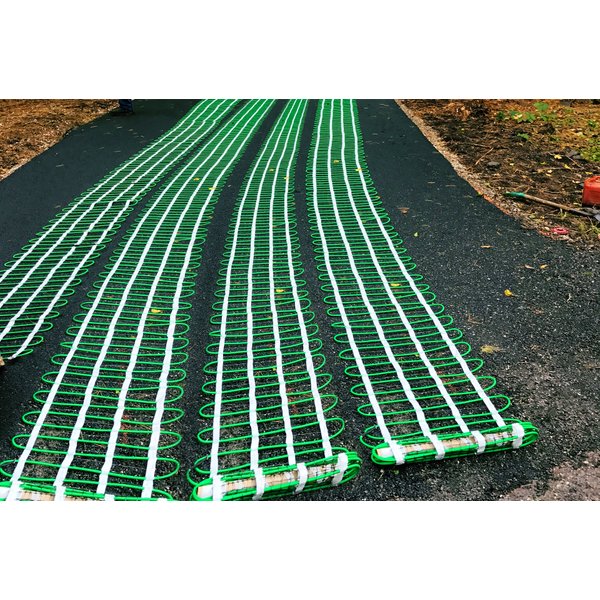
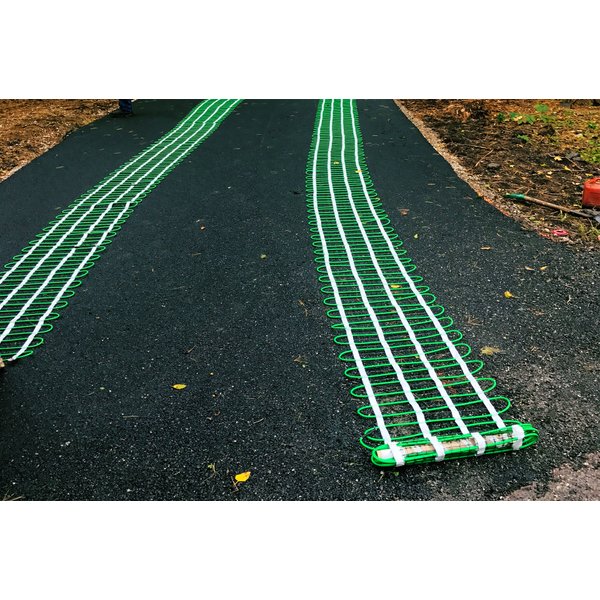
You can choose to have your entire driveway covered with snow melting, but one popular alternative is to simply heat tire tracks.
This economical option helps cut down on both installation and operating costs, while still providing great functionality.
Tire track coverage works by installing two sets of heating elements, typically 2 feet wide and the length of the driveway, which will keep the driveway passable even in heavy snowfalls.
Installing the Snow Melting System
The construction of any quality asphalt driveway involves several layers. In this project, one of the layers includes 5/16" thick snow melting mats.
Follow these steps for a successful asphalt driveway installation:

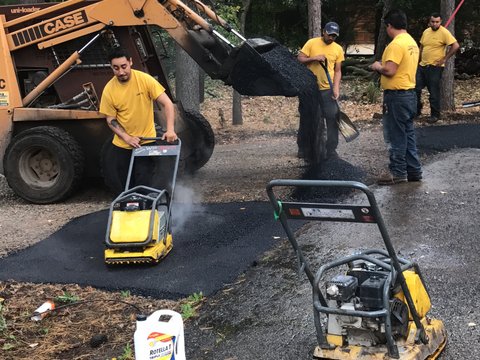
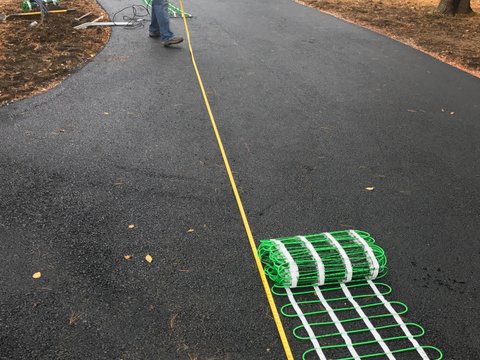
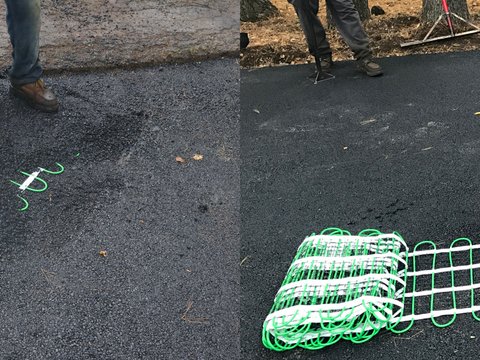
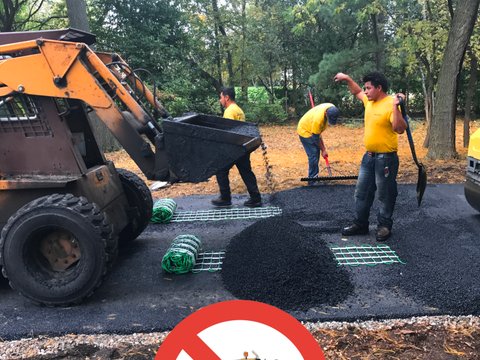


Step 1. Excavate and Compact the Ground
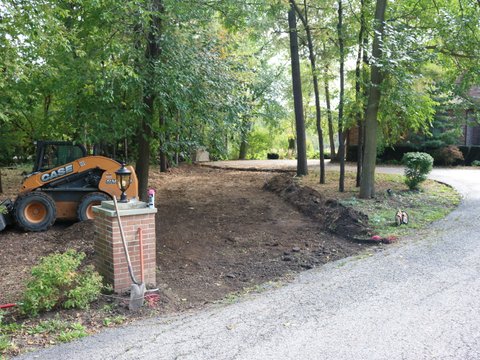
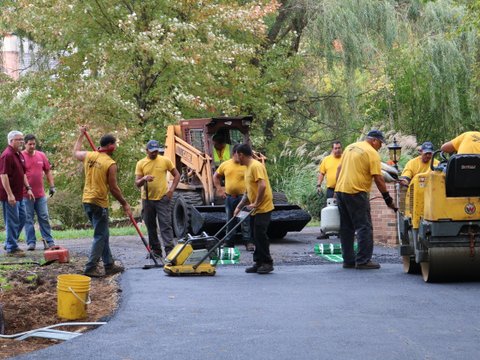
Prior to digging, contact a local utility locating firm to make sure your project won't hit any gas, water, or electrical lines. Excavate and tamp down a solid base of soil.
Tip: A front-loader and steamroller make quick work of this step.
Step 2. Add Compacted Gravel Base
Compacted gravel provides a stable base while allowing effective drainage. For most residential applications, we recommend 4" to 8" of compacted gravel.
The secret to a long-lasting asphalt driveway is a good, strong layer of compacted gravel.
Step 3. Base Coat of Asphalt (1.5"–2")
A quality driveway has a base coat poured and spread before the final layer. This increases longevity and is required for any asphalt driveway with snow melting.
We recommend this layer be between 1.5" and 2" deep.
Step 4. Dry-fitting the Snow Melting System
With the base layer down, lay out your snow melting mats to verify everything fits according to your WarmlyYours SmartPlan.
Test your system with an ohmmeter at every stage to ensure proper function and warranty coverage.
Step 5. Laying Out the Snow Melting Mats
Secure the end with a large scoop of asphalt or a stake into the binder coat. Only unroll a few feet at a time to maintain proper spacing.
Ensure the manufacturer's splice is embedded in asphalt—a common mistake is leaving it exposed.
Step 6. Spreading Asphalt Over the Mats (2"–3")
All spreading should be done with hand tools. Never use mechanized asphalt pavers as they can damage the heating element.
This "finished asphalt" layer should be between 2" to 3" deep.
The Finished Heated Driveway
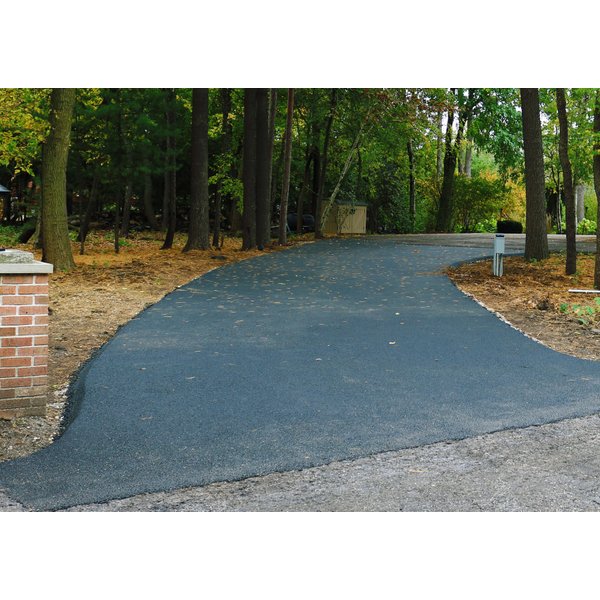
Once the heating element is embedded in 2"–3" of finished asphalt, it's safe to use traditional surfacing methods and steamrollers.
Just add snow! Monitor your system during the first few snowfalls to see if any adjustments are needed.
Controls for Driveway Snow Melting
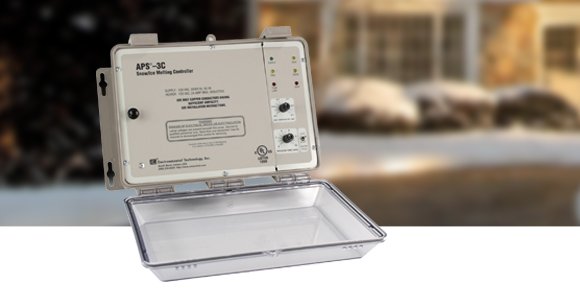
WarmlyYours offers a wide variety of controls—from manual options with timers to automatic controls that activate when they sense snow is falling.
Multi-zone controllers allow the system to heat in separate zones instead of all at once, useful for projects with limited power availability while cutting energy consumption.
For more information, check out this comparison chart.
Shop ControlsSnow Melting Products for Asphalt Driveways
Both mats and cables work great for asphalt driveway installations. Mats offer faster installation while cables provide maximum flexibility for tire tracks layouts.
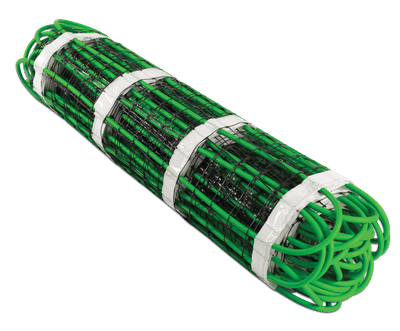
Maximum Heat Density for Heavy Snowfall (3" spacing)
-
Maximum Heat Output: Approximately 50-watts per sq. ft with 3" cable spacing for fastest snow melting
-
Best for Heavy Snowfall: Recommended for regions with 60+ inches of annual snowfall or when rapid melting is critical
-
Even Heating: Pre-attached heating elements in a serpentine pattern with consistent 3" spacing ensures uniform coverage
-
Fast and Easy Installation: Cut-and-turn design makes installation faster than cables while providing maximum heat density
-
Installation Support: Free SmartPlan™ installation plans, 24/7 phone support, and a 10-year limited warranty
Optimal Performance & Energy Balance (4" spacing)
-
Balanced Heat Output: Approximately 39-watts per sq. ft with 4" cable spacing for optimal performance and efficiency
-
Best for Moderate Snowfall: Recommended for regions with 30-60 inches of annual snowfall—our most popular choice
-
Even Heating: Pre-attached heating elements in a serpentine pattern with consistent 4" spacing ensures uniform coverage
-
Fast and Easy Installation: Cut-and-turn design makes installation faster than cables while balancing cost and performance
-
Installation Support: Free SmartPlan™ installation plans, 24/7 phone support, and a 10-year limited warranty
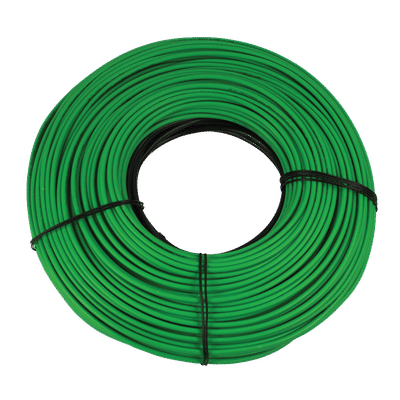
Maximum Flexibility at a Minimal Cost
-
High Heat Output: This embeddable electric heating cable provides 12-watts of heat per linear foot (nearly 50-watts per sq. ft.)
-
Embeddable in Concrete, Asphalt, or in Mortar Under Pavers: Installing a cable-based snow melting system within a new driveway, walkway, or patio means you can enjoy snow/ice free outdoor surfaces all year
-
Cost-Effective and Flexible: Snow melting cables are an less expensive (but more time consuming) alternative to snow melting mats and they provide maximum flexibility to cover round driveways, cornered patios, or outdoor stairs
-
Wide Variety of Voltages: We offer snow melting cables in 120, 208, 240, and 277 voltages and in a range of different lengths
-
Installation Support: WarmlyYours offers free SmartPlan™ installation plans, 24/7 phone support, and a 10-year limited warranty