
Is a Heated Driveway Worth It? ROI & Payback Period Explained
last updated february 25, 2026


In This Article
Yes, a heated driveway is worth the investment for most homeowners in snow-belt regions, typically paying for itself in 4–12 years through eliminated plowing costs and reduced driveway damage. Beyond the financial ROI, an electric snow melt system provides significant returns in safety, convenience, and home resale value by permanently eliminating the need for shoveling and salt.
Quick Facts
- System cost (elements + controls): $2,500–$8,000
- Turnkey project cost (elements, controls, labor, surface): $12,000–$15,000 national average
- Operating cost: $3.25/hr–$8.13/hr/hr; typically $100–$300 per season
- Plowing cost replaced: $300–$900/season (professional service)
- Payback period: 4–12 years depending on climate and snow removal spending
- Home value impact: 2–5% premium in snow-belt markets
- System lifespan: 30+ years with no moving parts to replace
A heated driveway is a significant upfront investment — but it’s one that pays dividends every winter for decades. The question isn’t really “is it expensive?” (it is, upfront). The question is whether the long-term savings, convenience, and safety benefits justify the cost for your specific situation. This article gives you the honest math to answer that question for yourself.
What Does a Heated Driveway Cost to Install?
Before calculating ROI for electric snow melt systems, you need a baseline — and there are two numbers to keep in mind.
System cost (heating elements + controls only) — what you pay for the WarmlyYours components:
| Driveway Size | Full Coverage (elements + controls) | Tire Tracks Only (elements + controls) |
|---|---|---|
| Small (10’ × 20’) | $3,190 | $2,483 |
| Standard (20’ × 20’) | $5,379 | $2,991 |
| Large (30’ × 20’) | $7,629+ | $4,129+ |
Turnkey project cost (elements + controls + demolition + new surface + electrical labor) — the number a homeowner pays a contractor for the complete job. The national average in 2026 is $12,000–$15,000 for a standard two-car driveway. If you’re already planning a driveway replacement, the incremental cost of adding snow melting is significantly lower — the surface work is happening anyway. For a full breakdown, see our heated driveway cost guide.
Best Time to Install
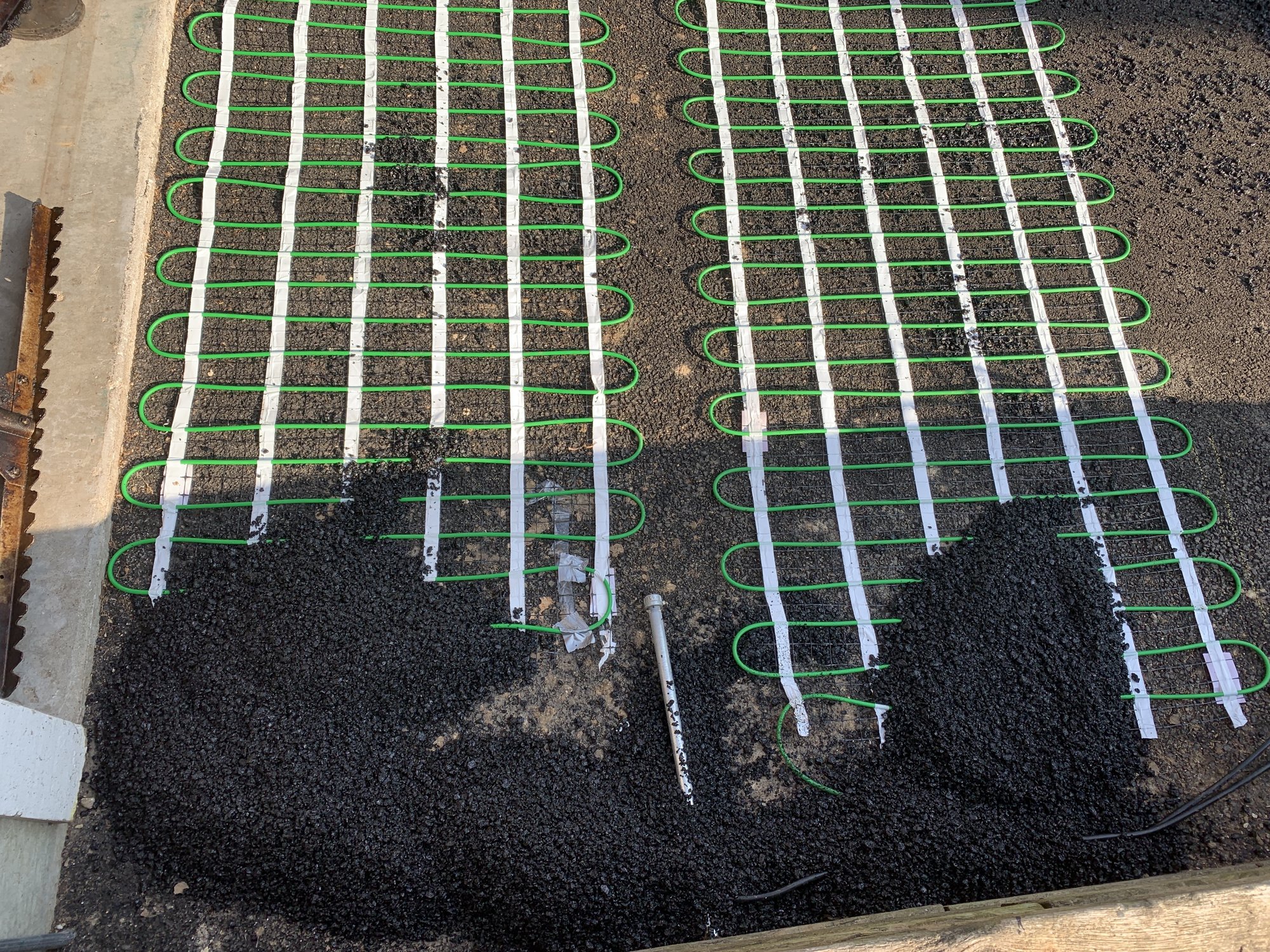
Snow melting systems must be embedded during construction or resurfacing — they can’t be retrofitted under an existing driveway. If you’re already planning a driveway replacement, adding snow melting is the most cost-effective time to do it. The incremental cost is far lower than a standalone installation later.
What Costs Does a Heated Driveway Eliminate?
The ROI calculation starts with understanding what you’re currently spending — or will spend — on snow removal and driveway maintenance. Most homeowners underestimate these costs because they’re spread across many years.
Professional Plowing
Professional driveway plowing typically costs $30–$75 per visit, with most snow-belt homeowners needing 10–20 visits per season. That’s $300–$1,500 per season — and prices have risen steadily with fuel and labor costs. Over 10 years, a homeowner paying $600/season spends $6,000 on plowing alone.
Rock Salt and De-Icing Chemicals
Rock salt costs $10–$20 per 50 lb bag, and a typical driveway requires 1–3 bags per storm. Calcium chloride and magnesium chloride — more effective but more expensive — run $20–$40 per bag. Most homeowners spend $50–$150 per season on de-icing products, adding up to $500–$1,500 over 10 years.
Concrete and Asphalt Damage from Salt
This is the cost most homeowners don’t account for. Rock salt and calcium chloride accelerate the freeze-thaw cycle in concrete, causing surface scaling, cracking, and spalling. Over 10–15 years of regular salt use, a concrete driveway typically requires $1,000–$3,000 in repairs. More significantly, salt-damaged driveways often need full replacement at 15–20 years rather than the 30+ years a well-maintained surface can last. At today’s prices, that’s a $15,000 replacement pushed forward by a decade — a hidden cost that rarely appears in ROI calculations but materially changes the math.
Slip-and-Fall Liability
This one is harder to quantify but real. Homeowners can be held liable for injuries that occur on their property due to icy conditions. A single slip-and-fall claim can cost tens of thousands of dollars in legal fees and settlements — far exceeding the cost of a snow melting system. For homeowners with elderly family members, frequent visitors, or home-based businesses, this risk reduction has genuine financial value.
What Does It Cost to Run?
Operating costs are often the first question homeowners ask — and the answer is more affordable than most expect. All WarmlyYours snow melting systems output 50 watts per square foot. At the average U.S. electricity rate, a standard 400 sq ft full-coverage driveway costs approximately $3.25/hr/hr to run.
Because automatic controls only activate the system when snow is actually falling and temperatures are below freezing, most systems run 50–150 hours per season in moderate climates — translating to $100–$300 per season in total operating costs. For a full regional breakdown, see our monthly operating cost guide.
“Automatic” Doesn’t Mean Instant
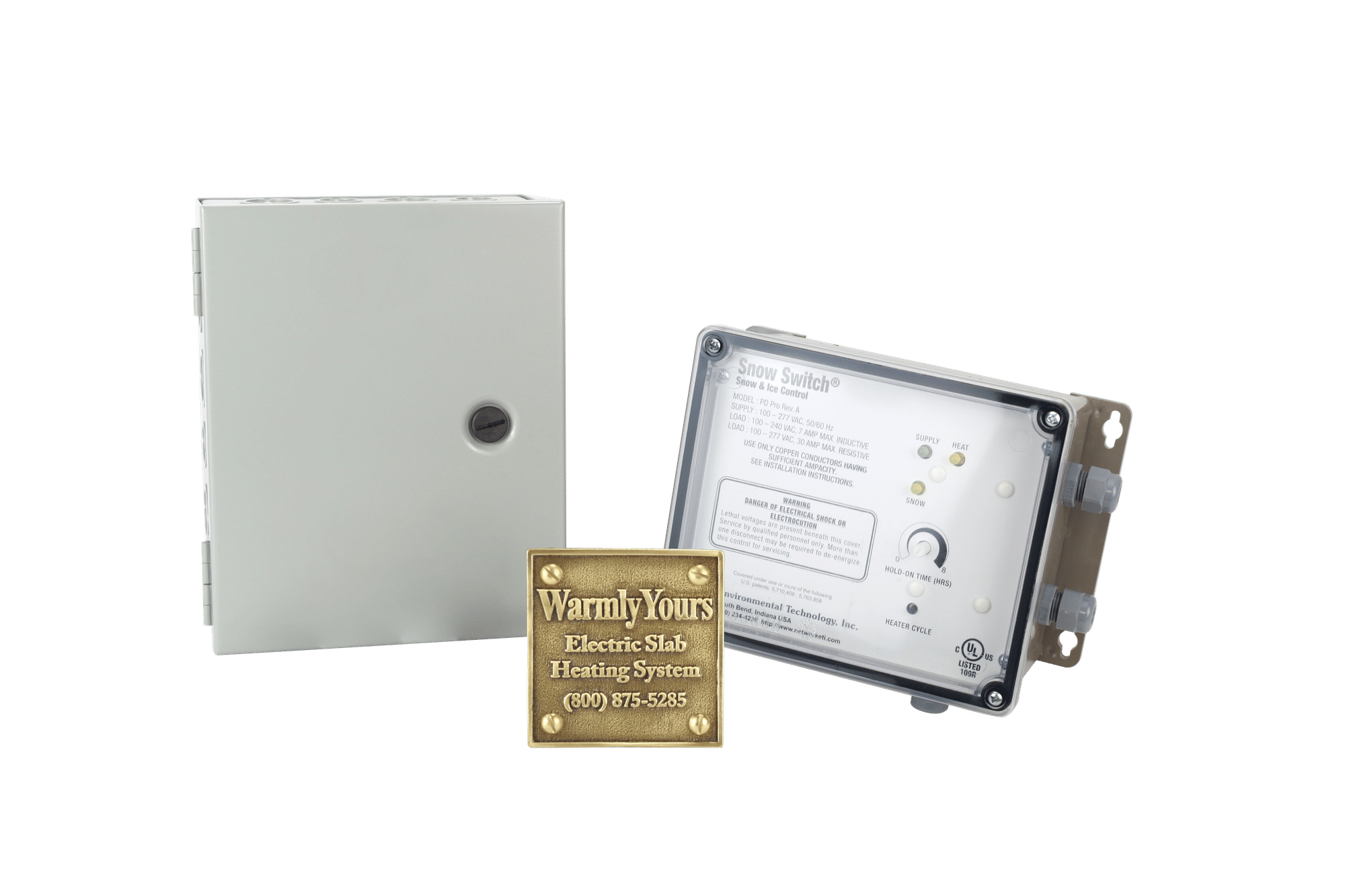
Aerial sensor controls activate the system when moisture and temperature conditions are met — but a cold slab starting from, say, 10°F takes time to warm up before it begins melting snow effectively. On very cold days, expect a 20–40 minute warm-up period before the surface is fully active. A system with a pre-heat or hold-on timer that keeps the slab slightly warm during cold snaps will respond much faster — and in heavy snow climates, this is worth the small additional operating cost.
The Electrical Capacity Question
This is the most common reason heated driveway projects stall — and it’s rarely mentioned upfront. Here’s the math every homeowner needs to know:
A 400 sq ft driveway running at 50W/sq ft draws 20,000 watts. At 240V (standard for snow melting systems):
20,000W ÷ 240V = 83.3 amps
That’s a dedicated 83-amp circuit — on top of everything else your home already draws. Many older homes have 100-amp or 200-amp total service. If your panel is already near capacity, adding a heated driveway will require an electrical panel upgrade, typically costing $2,000–$4,000 — a meaningful addition to your project budget and payback calculation.
Strategies to manage amperage:
- Tire-track coverage — heats ~160 sq ft instead of 400, reducing draw to ~33 amps
- ZoneBraker controller — splits the driveway into zones that cycle sequentially, never drawing full load simultaneously
- SmartPlan review — every WarmlyYours quote includes a free SmartPlan™ that documents exact amperage requirements so your electrician can assess feasibility before you commit
Electric vs. Hydronic: Which Is Right for You?
WarmlyYours specializes in electric snow melting systems — but it’s worth understanding how they compare to hydronic (water-based) systems, particularly for larger projects.
| Electric (WarmlyYours) | Hydronic | |
|---|---|---|
| Upfront cost | Lower | Higher (boiler + pumps + tubing) |
| Operating cost | Moderate (electricity) | Lower in gas-heated homes |
| Maintenance | None — no moving parts | Annual boiler service required |
| Best for | Residential, retrofits, smaller driveways | Very large driveways, commercial, existing boiler systems |
| Lifespan | 30+ years | 20–25 years (boiler) |
| Installation complexity | Low — mats or cables only | High — boiler, pump, tubing, controls |
For most residential homeowners replacing a standard driveway, electric is the clear choice: lower upfront cost, zero maintenance, and a lifespan that outlasts the driveway itself.
Pro Tip: Plan for Drainage
When a heated driveway melts snow, that water has to go somewhere. If your driveway isn’t properly graded toward the street or a drain, meltwater can flow to the edge of the heated zone — where it refreezes into a sheet of ice on your sidewalk or at the end of your driveway. Before installation, discuss grading and drainage with your contractor. In some cases, a trench drain at the base of the driveway is the right solution. It’s a small addition that prevents a serious hazard.
Payback Period by Climate Zone
Your payback period depends primarily on two variables: how much you currently spend on snow removal, and how many snow events your climate produces each year. Here’s a realistic breakdown based on system cost only (not turnkey project cost):
| Climate Zone | Example Cities | Snow Events/Year | Annual Savings vs. Plowing + Salt | Estimated Payback (system cost) |
|---|---|---|---|---|
| Light snow | Denver, Kansas City, Reno | 10–15 | $300–$500/yr | 8–12 years |
| Moderate snow | Chicago, Minneapolis, Cleveland | 15–25 | $500–$800/yr | 5–8 years |
| Heavy snow | Buffalo, Burlington VT, Portland ME | 25+ | $800–$1,200/yr | 4–6 years |
These estimates assume a standard 20’ × 20’ driveway with tire-track coverage, professional plowing replaced at $600/season, and operating costs of $150/season. When you factor in the deferred driveway replacement (10+ additional years of surface life without salt damage), the effective payback is meaningfully shorter than these figures suggest.
Does a Heated Driveway Add Home Value?
In snow-belt markets, yes — meaningfully so. Real estate professionals in high-snowfall regions commonly report a 2–5% premium for homes with heated driveways, particularly when the system covers the full driveway and includes automatic controls. On a $400,000 home, that’s a $8,000–$20,000 value increase — potentially exceeding the system cost entirely.
In luxury markets (Michigan lakefront, Colorado ski towns, coastal Massachusetts), a heated driveway has shifted from a premium feature to an expectation. Buyers in these markets may actively discount a home that doesn’t have one — making the ROI calculation less about payback period and more about market competitiveness.
The Hidden ROI: Why the Best Benefits Don’t Show Up on a Spreadsheet
The math above tells one part of the story. But for many homeowners, the decision to install a heated driveway isn’t primarily financial — it’s about what winter feels like to live through. These are the returns that don’t appear in any payback calculation, but that owners cite most often when asked if it was worth it.
Safety: Your Strongest Non-Financial Return
A heated driveway doesn’t just clear snow — it eliminates the conditions that create ice in the first place. Unlike plowing, which leaves a thin residual layer that refreezes overnight into invisible black ice, radiant heat evaporates moisture completely, leaving the surface bone-dry. For families with young children, elderly parents, or anyone with mobility challenges, that difference is profound.
- Black ice elimination: The system activates before ice can form — not after. There’s no “good enough” clearing that leaves a hazard behind.
- Accessibility: For household members with mobility issues, a 3-day freeze doesn’t mean being trapped indoors. The driveway is always passable, always safe.
- Liability peace of mind: You’re no longer the neighbor whose icy driveway sent a delivery driver to the hospital. That peace of mind has real value — even if it never shows up on a balance sheet.
Time: The Resource You Can’t Buy More Of — Except You Can
Every homeowner who has set a 5 AM alarm to shovel before work, or spent a Sunday afternoon waiting for a plow that never showed, understands this intuitively. A heated driveway gives you that time back — permanently, automatically, every winter for 30+ years.
- The sleep-in factor: You wake up to a clear driveway. No alarm, no shovel, no scraping. The system ran silently overnight while you slept.
- Zero logistics: No scheduling plow contractors, no last-minute hardware store runs when you’ve run out of salt during a blizzard, no worrying whether the service will show up before you need to leave.
- Cleaner home interiors: No rock salt means no white chemical residue tracked across hardwood floors, carpets, and car floor mats. The hidden cost of salt isn’t just to your driveway — it’s to everything salt touches on the way inside.
Curb Appeal and the “Dry Driveway” Effect
During a snowstorm, every house on the block is buried in white — except yours. A clear, dark, dry driveway during a storm creates an immediate visual impression that’s hard to quantify but impossible to miss. For homeowners thinking about resale, this is one of the most powerful first impressions a property can make on a potential buyer arriving for a showing in January.
Beyond aesthetics, a heated driveway signals something to buyers: that the home has been maintained with care and without cutting corners. If the owner invested in a heated driveway, they probably didn’t skip the roof inspection or ignore the HVAC either. It’s a proxy for overall home quality that buyers register — often unconsciously.
Environmental and Pet-Friendly Benefits
For homeowners who care about their landscaping, their pets, and their local environment, eliminating salt use has meaningful secondary benefits:
- Lawn and landscaping protection: Rock salt and chemical de-icers leach into soil along driveway edges, burning grass and killing plants. A heated driveway eliminates this damage entirely.
- Pet safety: Rock salt is harsh on dogs’ paws and toxic if ingested. A heated driveway is the pet-friendly choice — no chemicals, no paw burns, no post-walk foot-washing ritual.
- Groundwater health: De-icing chemicals eventually reach local waterways. Eliminating their use is a small but genuine environmental contribution.
The Bottom Line on Non-Financial ROI
A 10-year payback period sounds long — until you consider that you’re also buying 10 years of never shoveling, never worrying about a parent slipping, never tracking salt through your house, and never setting a 5 AM alarm because a storm is coming. For most homeowners who install a heated driveway, the lifestyle return is what they talk about. The financial return is just the bonus.
Who Is a Heated Driveway Worth It For?
A heated driveway makes the most financial sense when several of these factors apply:
- ✅ You currently pay for professional plowing ($300+ per season)
- ✅ You live in a moderate-to-heavy snow climate (15+ events/year)
- ✅ You’re already planning a driveway replacement or new construction
- ✅ You have a sloped driveway where ice is a genuine safety hazard
- ✅ You have elderly family members or mobility challenges in the household
- ✅ You plan to stay in the home for 10+ years
- ✅ Your driveway is concrete (salt damage savings are highest)
- ✅ Your electrical panel has capacity (or you’re budgeting for an upgrade)
Who Might Want to Skip It?
- ❌ You live in a light-snow climate and do your own shoveling
- ❌ You’re planning to sell the home within 3–5 years
- ❌ Your driveway is in good condition and not due for replacement
- ❌ Your electrical panel is at capacity and an upgrade isn’t in the budget
- ❌ Your driveway has drainage issues that haven’t been addressed
Tire Tracks: The Budget-Friendly Middle Ground
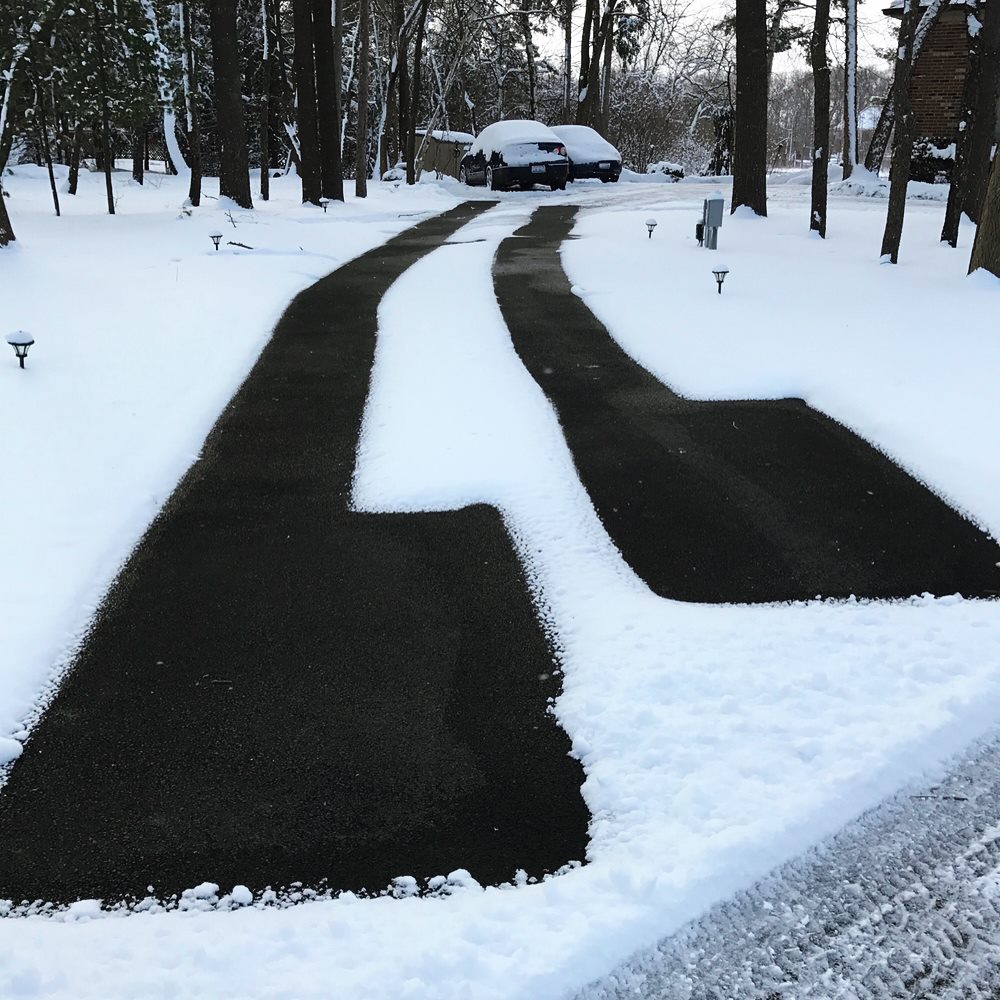
If full-coverage costs feel high, tire-track heating is a smart compromise. By heating just the two paths where your tires travel, you reduce installation cost by ~35%, operating cost by ~60%, and amperage draw by ~60% — while still keeping your driveway passable in any snowfall. Most homeowners in light-to-moderate snow climates find tire tracks deliver 80% of the benefit at 40% of the cost.
How to Calculate Your Personal ROI
Use this simple formula to estimate your own payback period:
System cost ÷ (Annual snow removal savings − Annual operating cost) = Payback years
Example: A $5,379 system replacing $600/year in plowing + $75/year in salt, with $150/year in operating costs:
$5,379 ÷ ($675 − $150) = 10.2 years
Use our Snow Melting Operating Cost Calculator to get precise operating cost estimates for an electric snow melt system for your driveway size and local electricity rate.
See Real Projects — With Real Costs
Not sure what a heated driveway system actually looks like on paper? Browse our Snow Melting Design Plan gallery — real installation layouts for driveways, walkways, ramps, and stairs, each with a custom design plan and itemized cost estimate. Find a project similar to yours and use it as a starting point for your own free SmartPlan™.
Frequently Asked Questions: Is a Heated Driveway Worth It?
There is no single payback period. It depends on what the system costs to install, what you spend on snow removal now and how much electricity it uses. A simple estimate: payback in years ≈ installed cost ÷ (annual snow removal spending you avoid − annual operating cost). Operating cost is heated area × W/sq ft ÷ 1,000 × your rate × energized hours per season; at 50 W/sq ft, 100 sq ft costs $1.00 per energized hour at an illustrative $0.20/kWh. If operating cost approaches what you pay for plowing, shoveling and salt, the system may never pay back in dollars, and the case rests on convenience and safety. Get installation figures from a quote or our heated driveway cost guide, and operating figures from the snow melting cost calculator.
A heated driveway can add meaningful resale value, particularly in snow-belt markets where buyers understand and appreciate the benefit. While there is no universal appraisal standard for heated driveways, real estate professionals in high-snowfall regions commonly report a 2–5% premium for homes with snow melting systems — especially when the system covers the full driveway and includes automatic controls.
Beyond the dollar value, a heated driveway is a strong differentiator in a competitive market. Buyers who have experienced the convenience firsthand — or who dread the prospect of shoveling — will often prioritize a home with a heated driveway over a comparable home without one.
The value impact is strongest in markets with 20+ annual snow events, where the system provides clear, recurring benefit every winter.
It depends on what matters most to you. With few storms there is less snow removal spending to replace, so a financial payback takes longer and may not happen at all; compare your installed and operating costs with what you spend on snow removal now. Other benefits don’t depend on snowfall totals: an automatic system can keep the heated area clear without shoveling and reduce salt use. In mild climates the stronger case is often ice rather than snow. A light snowfall followed by a freeze can leave a slippery surface, and a sensor-controlled system can melt it before it refreezes. For a sloped driveway or a household with mobility concerns, that can matter more than payback.
Multiply the heated area by the installed watts per square foot, divide by 1,000 for kilowatts, then multiply by your electricity rate. At 50 W/sq ft, every 100 sq ft draws 5 kW, or $1.00 per energized hour at an illustrative $0.20/kWh. For example, a 400 sq ft full-coverage driveway draws 20 kW: $4.00 per energized hour, or $24.00 for six energized hours. Tire tracks heat less area, so they cost proportionally less. Your seasonal bill depends on how many hours the system is energized, including preheating and the controller’s drying cycle, which varies with the weather. These are examples, not typical bills; enter your own area, rate and runtime in our snow melting cost calculator.
Ready to Run the Numbers for Your Driveway?
Use our Instant Quote tool to get a fast, accurate estimate for your specific driveway size and coverage preference. Every quote includes a free SmartPlan™ — a custom installation and electrical plan from our engineering team that includes exact amperage requirements, so you can assess electrical feasibility before committing. All WarmlyYours snow melting systems are backed by a 10-year warranty with 24/7 technical support at 800-875-5285.
Have Questions About Your Project?
Our team of Radiant Experts is ready to help!
Related Articles

Heated Driveway Cost in 2026
Heated Driveway Operating Costs: What to Expect on Your Electric Bill
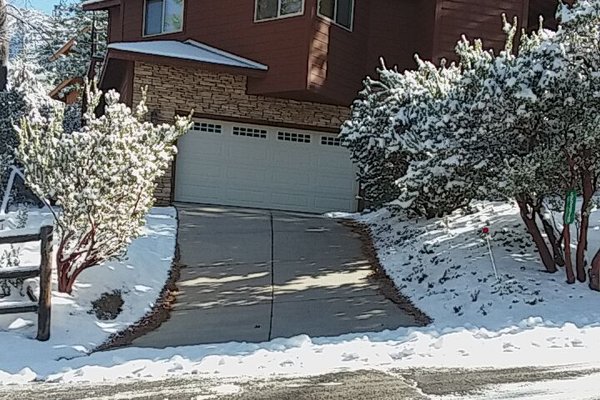
Snow Melting Systems for Steep Driveways: What Homeowners Need to Know
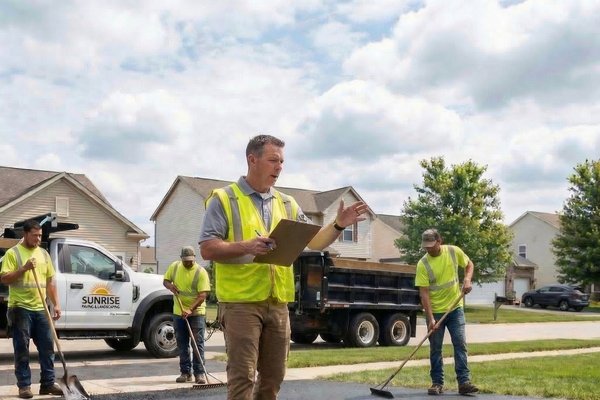
How to Replace a Driveway: 4 Steps to a Heated Surface
Stay Updated
Get the latest radiant heating news and tips delivered to your inbox.