


PEX & Plastic Pipes
Start with the manufacturer's markings and the way the line is used. Gather the pipe details needed for a product recommendation.
Plan for PEX & Plastic PipesContact Us Open
Loading contact options...
Sign In
Loading...

Frozen pipes can restrict water flow and cause serious damage when they burst. WarmlyYours heat tape for pipes provides reliable pipe freeze protection for exposed or poorly insulated plumbing throughout your home.
Choose self-regulating heat tape—which adjusts wattage based on ambient temperature to minimize energy use—or our constant-wattage heating cable for pipes, a simple and economical DIY option.
Choose heat tape and insulation for your pipe material, diameter, and lowest expected temperature. Operating cost depends on cable power, run time, and your electricity rate.
We take pride in providing both exceptional service and great products. But don't just take our word for it, check out what some of our customers have had to say.
Choose PRO-Tect Self-Regulating Heat Tape for Pipes for cut-to-length pipe heating cable, or PRO-Tect Plug-In Heat Tape for Pipes for a preassembled system. Plug-in pipe heat cable uses 7 W/ft constant wattage with a built-in thermostat; self-regulating cable adjusts output with temperature. Confirm pipe material, insulation, voltage, and circuit requirements before ordering.
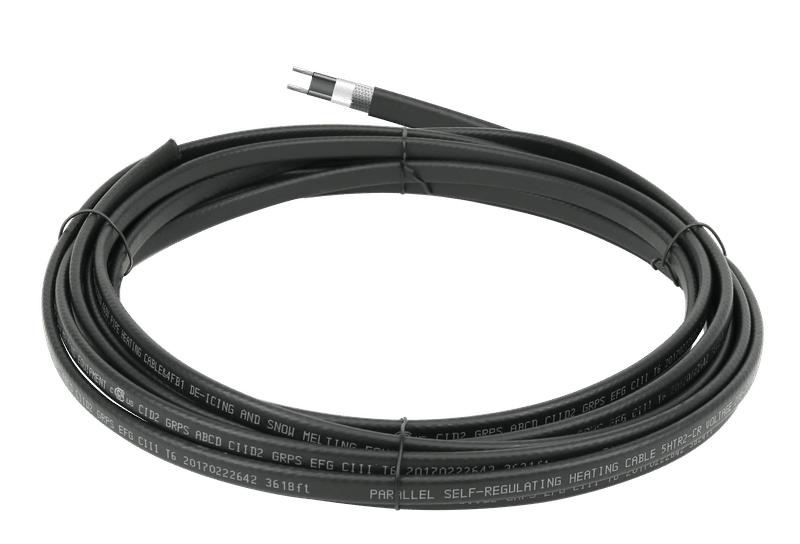
Self-regulating pipe heating cable — select wattage, voltage, and insulation for your installation
Self-regulating pipe heating cable — select wattage, voltage, and insulation for your installation
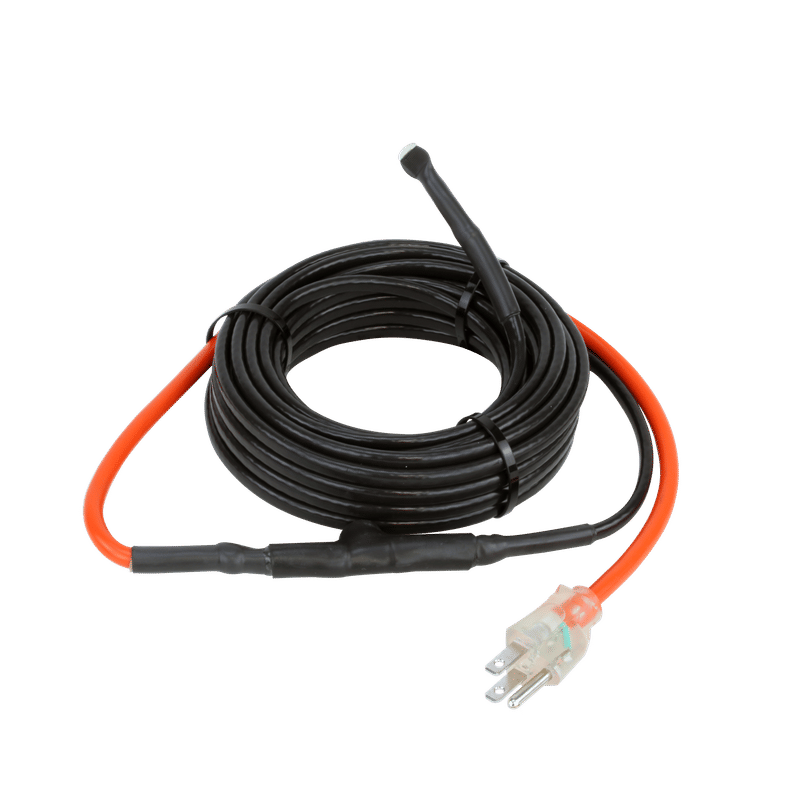
Preassembled pipe heating cable — 7 W/ft constant wattage, built-in thermostat
Preassembled pipe heating cable — 7 W/ft constant wattage, built-in thermostat
Provide us with measurements of the pipes you want to protect and receive a free quote within one business day.
Pipe material is one part of choosing heat tape. Include the size, water service, insulation, exposure, and available power when comparing systems.
Start with the manufacturer's markings and the way the line is used. Gather the pipe details needed for a product recommendation.
Plan for PEX & Plastic PipesMap the exposed aboveground sections and identify their weather exposure, insulation, and electrical supply before choosing a system.
Plan for Outdoor Water LinesMeasure the material, outside diameter, and length of each section. Mark valves, branches, supports, and transitions to plastic on your sketch. A recommendation for one diameter should not be assumed to cover a different size or material.
Include the lowest expected temperature, insulation, water service, and available power with your quote request. Use the selected product's manual for final installation details.
Photograph the accessible pipe route, nearby framing, foundation openings, valves, and electrical supply. Include any sections that continue into an unheated garage and note damaged or missing insulation.
Identify areas that cannot be reached safely or would be concealed by finished surfaces. The selected product's access, clearance, and installation requirements must fit the space. Find its documents through Pipe Heat Tape Support.
The installation process will differ somewhat depending on which type of heat tape for pipes you select (constant wattage vs. self-regulating) so you should always defer to the specific installation instructions for that particular product type. However, here are some general steps:
There are two main types of pipe freeze protection cables: self-regulating and constant wattage. Here's how they compare to each other.
Automatically adjusts its heat output based on the ambient temperature, increasing heat as temperatures drop and decreasing it as they rise.
Ideal for pipes that require variable heat output depending on environmental conditions.
Energy-efficient due to its ability to adjust heat output.
Reduces the risk of overheating and energy waste.
Generally more expensive upfront than constant wattage tape.
Final connections should be done by a licensed electrician (which generally involves added project costs).
Delivers a consistent amount of heat regardless of the surrounding temperature.
Best suited for situations where a steady and uniform heat output is required.
Simple and consistent heating, making it reliable in stable environments.
Typically less expensive than self-regulating options.
Can lead to higher energy consumption as it doesn't adjust to temperature changes.
May overheat if used in warmer conditions or improperly installed.
Consider Your Climate: For regions with fluctuating temperatures, self-regulating heat tape offers better adaptability and energy efficiency. In consistently cold environments, constant wattage heat tape might provide the steady protection needed.
Evaluate Installation Complexity: If you prefer a more straightforward installation process and consistent performance, constant wattage heat tape may be the best choice. For those looking for long-term energy savings and are comfortable with a more complex installation, self-regulating heat tape is ideal.
Assess Your Budget: Constant wattage heat tape is often more budget-friendly upfront, while self-regulating tape may save on energy costs over time, offering better long-term value.
In addition to installing a pipe freeze protection system, there is one primary action you can take to prevent a frozen pipe. Improve the insulation in the room that your pipe is located in. By improving the insulation, you will also help improve the efficiency of the heating system itself.
Upgrading a room's insulation can take a lot of different forms including adding spray insulation (if not present) or replacing outdated windows with more insulative ones. But whatever form it takes, these extra steps can greatly improve the performance of your heating system.


Provides direct, consistent heat along the length of the pipe, preventing freezing even in extreme conditions. Available in self-regulating and constant wattage options to suit different climates and needs.
Made from materials like foam or rubber, pipe sleeves provide insulation to keep pipes warm by trapping heat. Best suited for milder climates or as an additional layer of protection in combination with heat tape.
Used to warm the air around pipes, particularly in small, enclosed spaces like crawl spaces. Can be effective but inefficient and less targeted compared to heat tape.
Showing 10 of 13 questions
Follow the operating instructions for the exact cable and thermostat. A preassembled PRO-Tect pipe kit has a built-in thermostat; self-regulating cable adjusts its output but has separate system requirements. Neither feature removes the need for the specified electrical protection, correct insulation, and seasonal inspections. Disconnect damaged equipment and investigate tripped protection devices.
Heat tape is electrical equipment: improper installation, damaged cable, or misuse can cause fire or electric shock. Select cable approved for your pipe and location, follow its layout and insulation requirements, provide the specified electrical protection, and inspect it before each cold season. Do not use damaged equipment or overlap cable unless the exact product instructions permit it.
Pipe heat tape is intended for freeze prevention, not as a guaranteed way to thaw an already frozen pipe. A frozen pipe may be damaged. Have the plumbing assessed and thawed safely by a qualified professional; never use an open flame. Before future cold weather, verify cable selection, thermostat placement, insulation, and electrical protection.
Water in pipes begins to freeze at 32°F (0°C), but pipes typically don't freeze until sustained temperatures drop below 20°F (-6°C) for 6+ hours.Freezing timeline:
Factors affecting freezing time:
High-risk conditions:
Protection threshold: Activate heat tape when temperatures are forecast to drop below 20°F for more than a few hours. Smart controls automate this process. Shop controls.
Some preassembled plug-in pipe heat-tape kits can be installed by a homeowner who can follow the complete product instructions. Cable type, pipe material, access, insulation, and electrical requirements determine whether a particular project is suitable. Do not use a generic spiral-wrapping pattern or cut, cross, or overlap cable unless the exact product instructions allow it. New circuits and hardwired connections require a qualified electrician where local rules specify one. Use the specified ground-fault protection. If the pipe is already frozen or damaged, have a qualified professional assess it before proceeding.
Heat tape can help prevent exposed water pipes from freezing when the system is correctly selected, installed, insulated, and controlled. Choose cable approved for the pipe material, diameter, location, and lowest expected temperature. Compatibility with copper, PVC, PEX, or other materials depends on the exact product; no single heat tape is suitable for every pipe. Follow the cable and pipe manufacturers’ instructions, provide the specified electrical protection, and inspect the installation before each cold season. Heat tape does not guarantee protection against every freeze condition or replace a properly designed plumbing installation.
Heat tape transfers electrical heat to a pipe to help keep its contents from freezing. Self-regulating cable changes its output as surrounding conditions change; constant-wattage cable produces its rated output while energized. A thermostat or specified control determines when the system runs. Cable routing, insulation, and thermostat placement depend on the product. Do not assume the cable should spiral around a pipe, or that it can be cut, crossed, or overlapped. Follow the selected cable’s installation manual and the pipe manufacturer’s temperature limits.
There is no universal service life for heat tape. Durability depends on the product, installation, exposure, operation, and maintenance; a warranty is not a prediction of how long a cable will operate. Inspect the cable, insulation, attachments, thermostat contact, and electrical protection before each cold season, following the manufacturer’s instructions. Stop using damaged equipment and replace it as directed. Check the warranty and maintenance instructions for the exact pipe-heating product rather than relying on a general lifespan estimate.
A pipe heat-tape project includes the heating cable or kit, required controls and connection accessories, approved insulation, and any electrical or installation work. Price depends on pipe length and material, cable type, access, voltage, and available circuits. A cable-only price is not an installed-project estimate. Measure the pipes and check the selected product’s requirements before ordering. For current product options and a quote covering your installation, visit our heat tape for pipes page.
For constant-wattage cable, estimate electricity cost as cable length × watts per foot ÷ 1,000 × energized hours × your price per kWh. For example, a 30-foot cable rated at 7 W/ft uses 1.68 kWh over eight energized hours. At an illustrative $0.20/kWh, that costs about $0.34. This is an example, not a typical daily bill. Thermostat cycling changes energized hours, and self-regulating cable changes output with conditions. Use the selected product’s ratings, local electricity rate, and expected runtime to estimate your installation.
Pipes freeze when water inside them is exposed to temperatures below 32°F (0°C) for extended periods, typically in poorly insulated areas like crawl spaces, attics, exterior walls, or unheated garages.Common causes of frozen pipes:
Why pipes freeze:
Water expands as it freezes, creating pressure inside the pipe. This pressure can rupture the pipe, causing water damage, mold, and costly repairs.Prevention strategies:
Get a free quote to protect your most vulnerable pipes.
Heat tape and heating cable are common names for these electric heating products. The main difference is how they produce heat.
Choose a product approved for your pipe or roof material, location, voltage, and installation method. Pipe and roof products are not interchangeable. Compare installed cost and electricity use for your actual cable length, output, weather, and operating hours; there is no universal energy-savings percentage or payback period. Warranty length is not a guaranteed service-life estimate.
Compare Heat Tape for Pipes, Roofs & Gutters and follow the product installation manual.
Turn on heat tape when temperatures drop to 20°F (-6°C) or below and are expected to stay there for 6+ hours. For optimal protection, use automatic controls that activate cables based on temperature conditions.Manual operation:
Automatic operation (recommended):
Optimal operating temperatures:
Operating tips:
When to activate by region:
Energy-saving tip: Smart controls can reduce operating costs by 30–50% by running cables only when needed. They monitor weather forecasts and activate automatically. Shop control options.
Emergency activation: If you forgot to turn on heat tape and temps drop suddenly, activate immediately and let water drip from faucets until pipes warm up.
Compare applications in our heat tape guide, or explore heat tape for roofs and gutters and snow melting for outdoor surfaces.
Chat with us
Replies in under an hour
Your recent conversations
Email you this conversation?
We couldn't confirm your browser, so the message wasn't sent — an ad blocker or privacy extension is the usual cause. Please try again, or call us on the number at the top of the page.


