
Why You Might Need Heat Tape for Your Pipes
last updated september 12, 2023

In This Article
If you’ve never had a pipe freeze in the winter, where the frozen water expands and causes a huge icy fountain spraying from your broken pipes, then consider yourself lucky. It doesn’t happen to everyone in every house, but if it happens to you, you’ll never forget it. You’ll end up with a massive ice sculpture emanating from pipes that were never meant to be spewing water and costly damage to the surrounding areas.
People have tried a lot of different methods over the years to ensure that pipes stay in good working order over the cold winter months, mainly including wrapping the pipes in insulation or foam to keep the water inside from freezing. But sometimes that just isn’t enough.
Heat Tape for Pipes
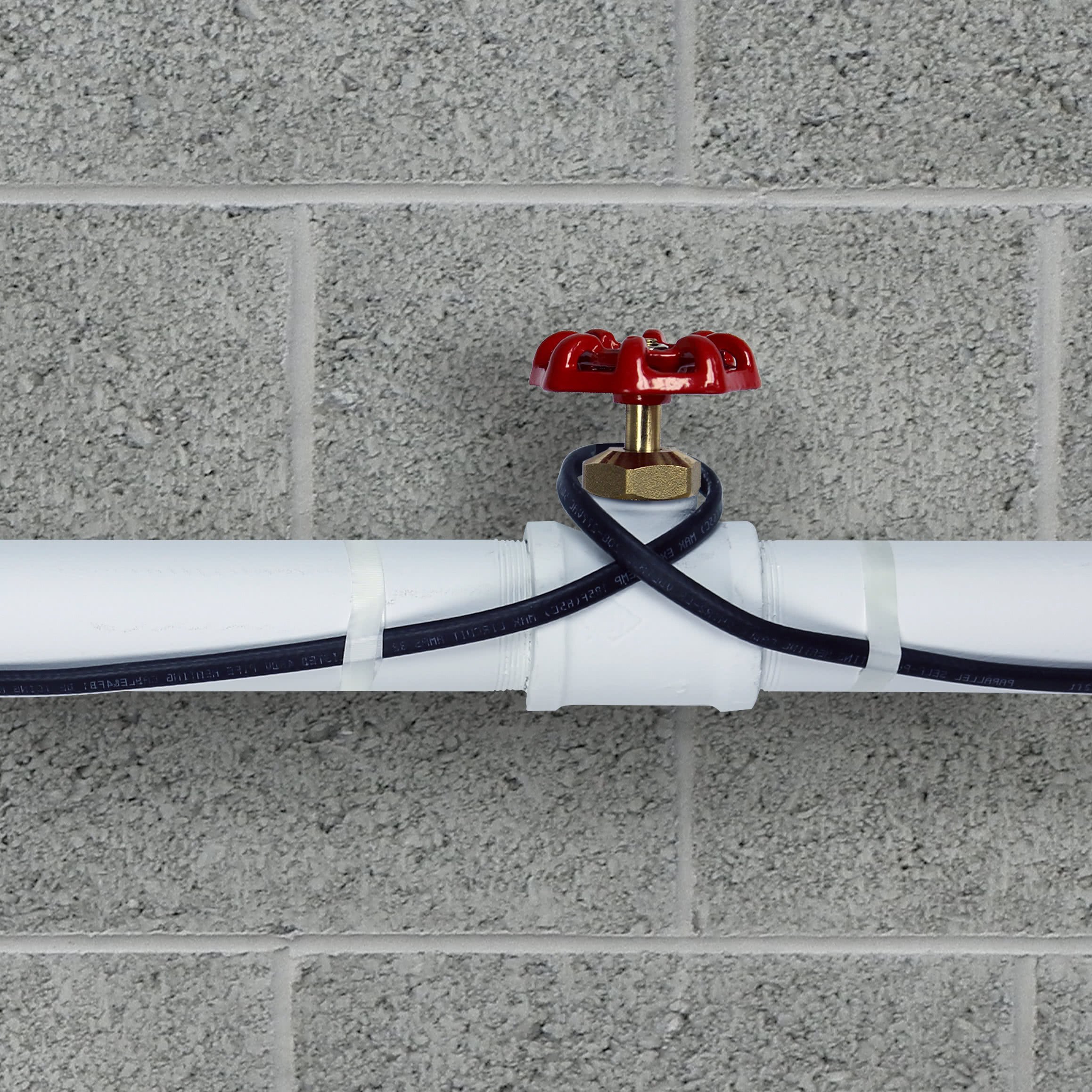
Heat tape for pipes, also called heat tracing, is electric heating cable designed to help prevent approved water pipes from freezing when properly selected, installed, insulated, and controlled.
Heat tape is not adhesive tape or a substitute for insulation. It attaches to the outside of a pipe in the layout specified for the exact product. Do not spiral, cross, or overlap cable unless its instructions explicitly permit that arrangement.
Electrical resistance produces heat in the cable, which transfers to the pipe. The system’s freeze-protection capacity depends on pipe size and material, insulation, ambient temperature, and installation.
Types of Heat Tape: Self-Regulating vs. Constant Wattage
Heat tape is available in two different versions: self-regulating and constant wattage. A self-regulating heat tape will increase or decrease its power output (and therefore its effect on the sub-zero pipes) automatically in response to how warm or cool the pipe’s surface temperature is. This is because self-regulating cables are made with a specialized core that becomes more conductive when it’s cold.
Self-regulating heat tape adjusts its output along the cable as its temperature changes. Overlap is allowed only where the exact product instructions permit it. Cut-to-length products must stay within their specified circuit lengths and use approved connection and end-seal kits; they cannot be cut to any arbitrary length.
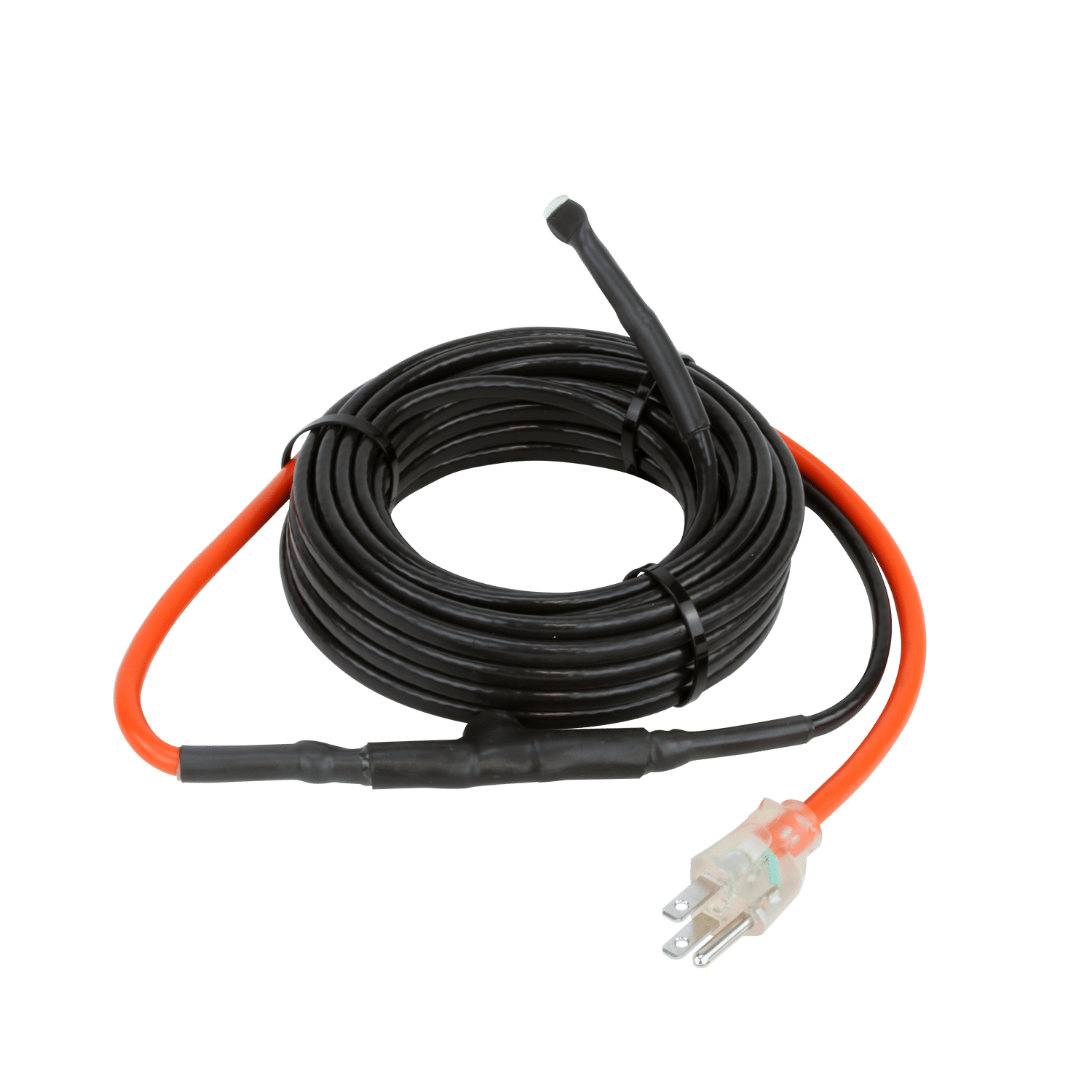
Constant wattage heat tape typically comes with a plug-in electrical connection which makes it very DIY-friendly. These heating elements are called “constant wattage” because the wattage per linear foot remains constant unlike self-regulating. WarmlyYours offers constant wattage cables that provide 7 watts per linear foot in 3′, 6′, 9′, 12′, 15′, 18′, 24′, 30′, 40′, 60′, and 80′ lengths.
Constant wattage cable must not cross or overlap, and fixed-length heating cable must not be shortened. Use the prescribed layout, thermostat placement, insulation, and electrical protection.
Where Would You Use Heat Tape?
If you live in a cold region and have read this far then you probably already have some ideas of places where you could use heat tape to help save your pipes. But here are some of the most popular locations for installation.
Exterior Pipes
Exposed water pipes may benefit from heat tape rated for the pipe material and outdoor location. Do not assume a cable is approved for irrigation, refrigerant lines, or every other pipe application. Check the product’s permitted uses and temperature limits before installation.
Use the specified type and thickness of insulation and the required weather protection. Insulation and cable sizing must suit the lowest design temperature; adding more insulation or cable without checking the instructions is not a substitute for correct design.
Interior Pipes
Pipes in poorly insulated areas can be vulnerable to freezing even inside a building. Check whether the heat tape is approved for the particular location, and do not conceal cable in a wall or other inaccessible space unless its instructions expressly permit it.
Inspect exposed basement and crawl-space water pipes for drafts and inadequate insulation. Select an approved heat tape system where needed, and keep required inspection and connection points accessible.
Sewer and Drain Pipes
Do not assume water-pipe heat tape is suitable for sewer or drain piping. These applications require a product specifically approved for the pipe material, location, and service. Ask a qualified professional to assess the installation.
Why Install Heat Tape for Pipes?
Correctly selected and installed heat tape can reduce the risk of frozen water pipes. It does not guarantee uninterrupted water flow or prevent every plumbing failure, and a frozen pipe should be assessed and thawed safely by a qualified professional.
Installation requirements vary by cable type and location. Follow the current manual, and use a qualified installer for work that requires electrical or plumbing expertise.
Inspect the cable and connections before each cold season, following the manufacturer’s maintenance instructions. Replace damaged equipment and check insulation, controls, and electrical protection.
Select a listed product approved for the intended use. Certification does not make an incorrectly installed or damaged cable safe. Never use heat tape contrary to its installation instructions.
To see how constant wattage pipe freeze protection cables are installed, click the image below:
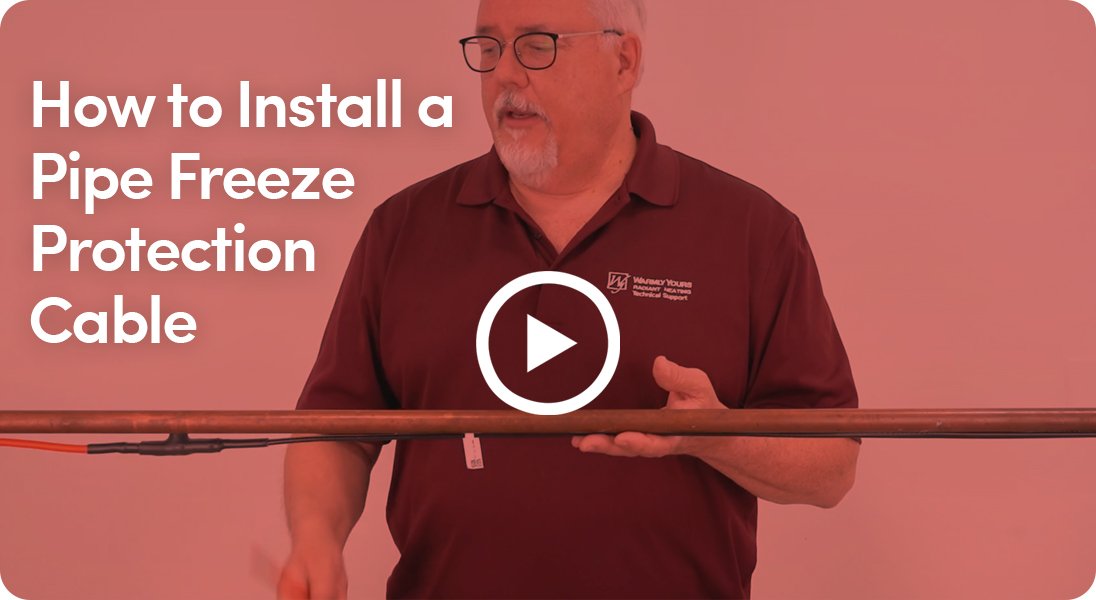
Learn more about pipe freeze protection by clicking here.
Have Questions About Your Project?
Our team of Radiant Experts is ready to help!
Related Articles

Stay Updated
Get the latest radiant heating news and tips delivered to your inbox.
Comments