

Engineered Wood Floor Heating
Engineered wood floor heating pairs perfectly with floating engineered hardwood. Environ™ mats roll out beneath your floor—no mortar, no adhesive—delivering radiant heat that makes engineered wood feel as warm as it looks.
Get an Instant Quote
Answer a few quick questions and we'll match you with the best floor heating system.
Jump to
Why Heat Engineered Wood Floors?
Engineered wood is one of the best hardwood options for radiant heat—its layered construction resists warping and handles temperature changes better than solid hardwood.
Engineered for Heat
Engineered wood's cross-ply construction is dimensionally stable. It handles the gentle temperature changes from radiant heat without warping or gapping.
Simple Installation
TempZone mats and cables install in thinset under glue-down engineered wood, or Environ mats go directly under floating click-lock planks.
Affordable to Operate
Most zones cost just pennies per hour to heat. Use our operating cost calculator to estimate your monthly energy costs.
Engineered Wood Floor Heating Reviews
We take pride in providing both exceptional service and great products. But don't just take our word for it, check out what some of our customers have had to say or View All Reviews.


Featured Floor Heating Projects
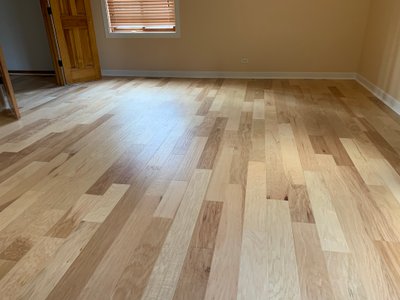
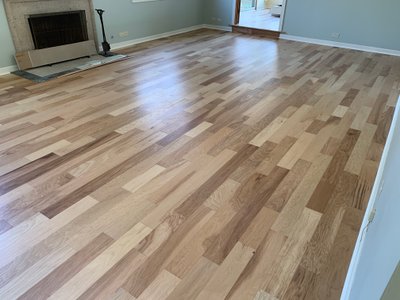
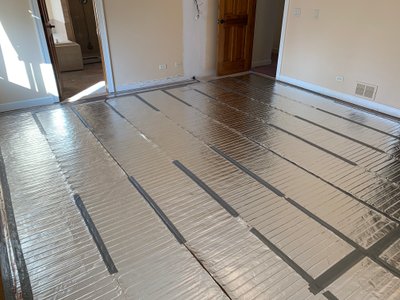
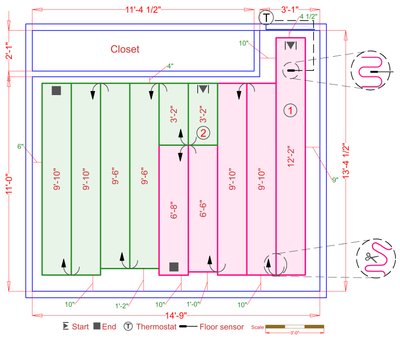
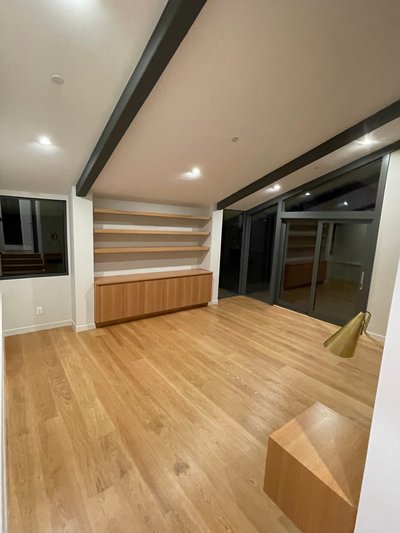
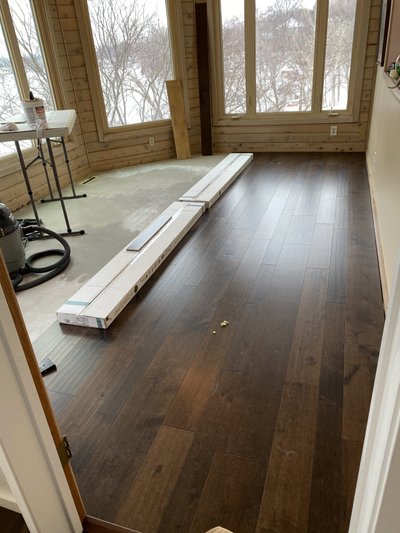
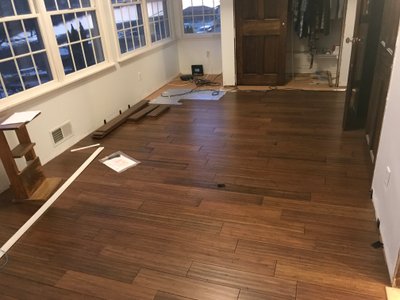
How Much Does Engineered Wood Floor Heating Cost?
The cost depends on whether your engineered wood is floating or glued down. For floating engineered wood, Environ Flex Rolls cost C$12–C$18 per square foot—no adhesive or self-leveling cement required, saving on materials. For glue-down installations, TempZone products cost C$6–C$17 per square foot plus self-leveling cement.
A 150 sq.ft. living room with floating engineered wood and about 100 heated square feet would cost between C$1,200 and C$1,800 for heating materials. Operating costs are remarkably low—typically C$0.10–C$0.25 per hour depending on room size. Use the calculator below to estimate your costs.
Operating Cost Calculator for Floor Heating
Estimate your daily and monthly energy costs based on room size and local rates.
ft²
¢/kWh
Estimated Cost
C$0.13
per hour
C$0.51
per day
C$15.30
per month
Free SmartPlan
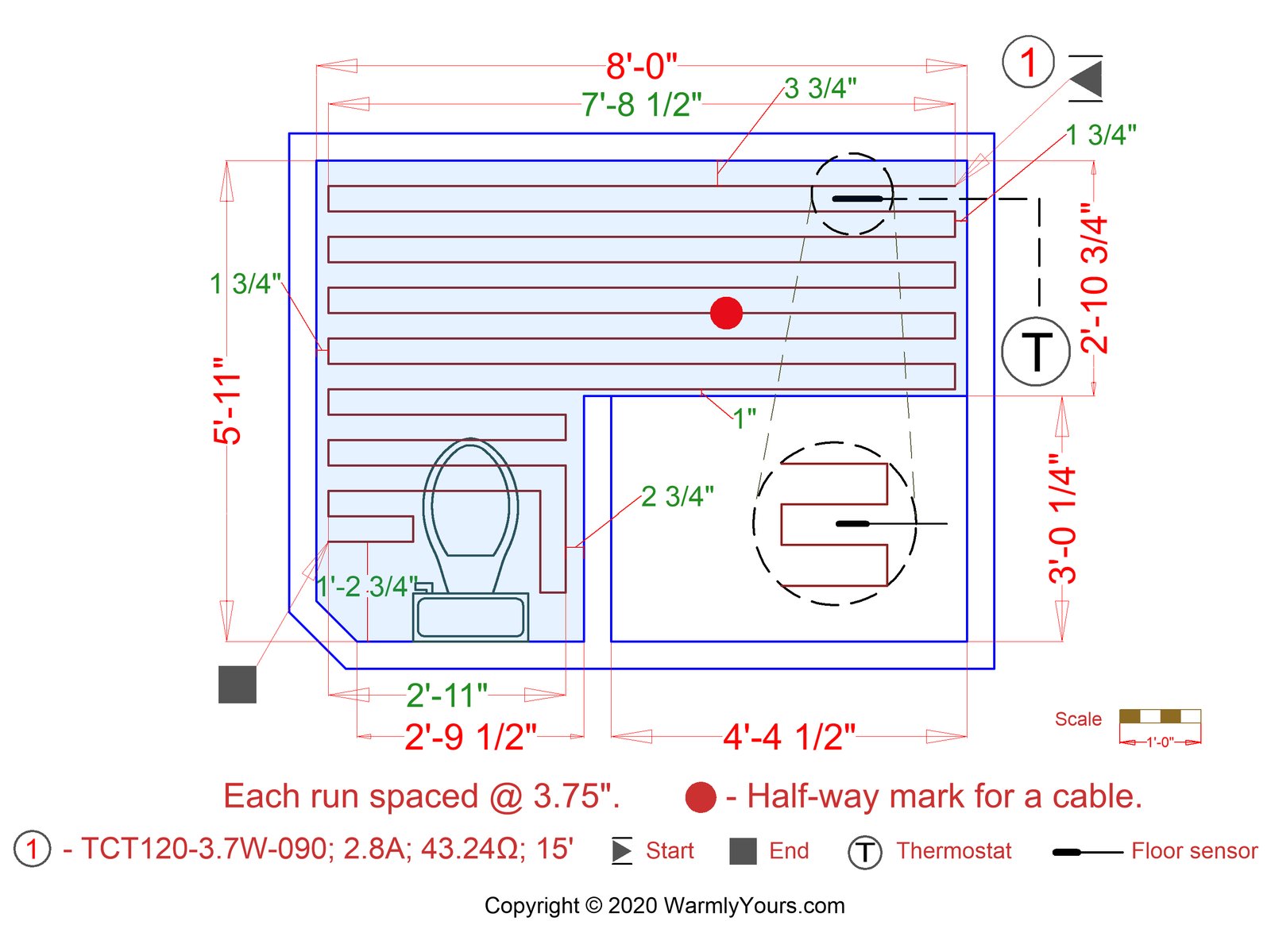
Get a custom installation plan for your engineered wood floor in just 1 business day.

"I'll create a custom installation layout showing exactly where your heating elements go, plus a complete materials list with pricing."
Floor Heating Systems for Floating Engineered Wood
A floating wood floor can come in many different finishes and construction types, from solid hardwood to engineered wood. This degree of variety means that you're sure to find the right look and feel for your project and recent advances have made floating flooring material easy to maintain.
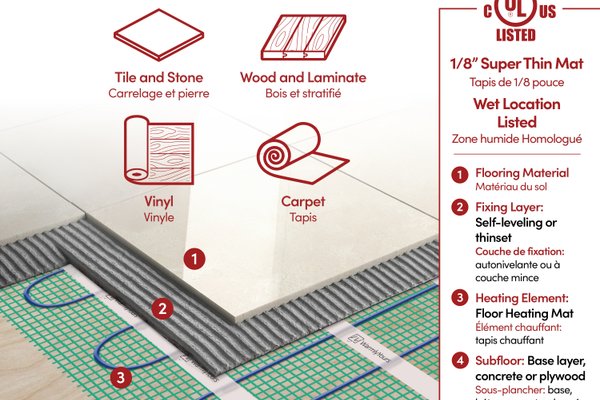
The "floating" installation method refers to the fact that the floor covering is not attached to the subfloor via nails or adhesives, which is why they are best paired with our Environ product line for radiant heating. Besides ease of installation, the adhesive-less installation of Environ heating elements can also mean significant cost savings for your project as there is no need to purchase thinset or self-leveling cement to embed the heating element in (though it should be installed with an underlayment like cork). Environ's ultra-thin construction is specifically designed to provide even heating for your new floor.
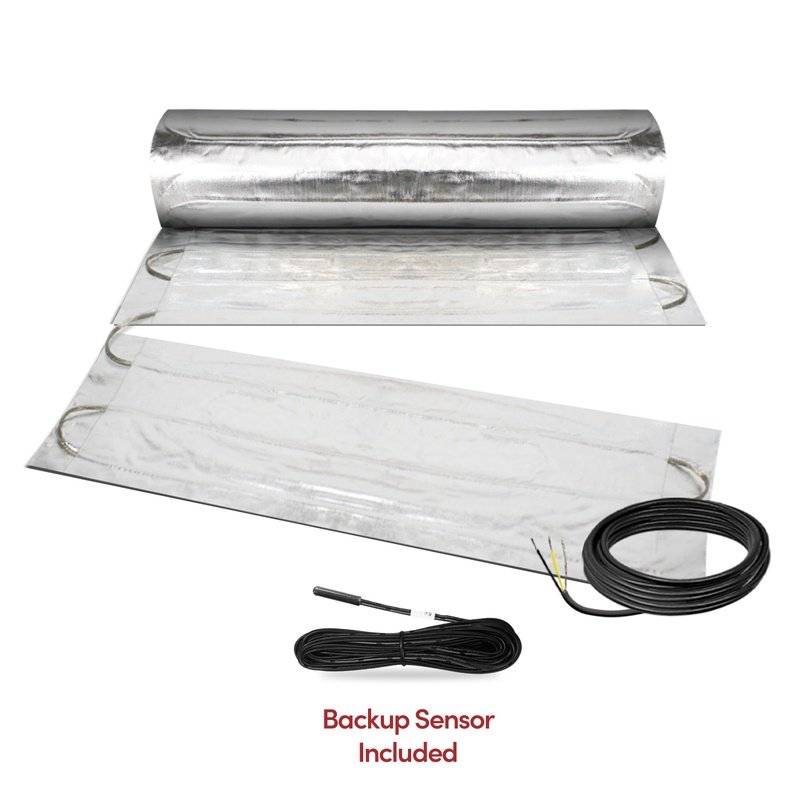
Cut, Turn, and Heat
WarmlyYours Environ Flex Rolls are designed for use under carpet (U.S. only), laminate and floating wood. The mats can be installed easily and quickly for large spaces.
Features
- Flexible roll design cuts and turns to follow your layout
- Ideal for floating laminate, engineered wood, or carpet
- Dry installation—no mortar or adhesives
- 10 Year Warranty under Laminate & Floating Hardwood, 5 Year under Carpet (Us Only)
- 12 Watts Per Sq. Ft
We've Got Your Back: A Backup Floor Sensor
Every complete WarmlyYours floor heating system—TempZone™, Environ™, or Slab Heat—ships with two floor sensors: one with the heating mat or cable and one with the thermostat. Install the backup right beside the primary sensor and run both leads to the thermostat box, but connect only the primary; the backup stays disconnected until it is needed.
The floor sensor lives under your tile, wood, carpet, or concrete, where it tells the thermostat how warm the floor really is. If that sensor is ever nicked during installation or fails years down the road, replacing it would normally mean tearing up the finished floor.
With the backup already embedded in the floor, the fix takes minutes: turn off power at the breaker, disconnect the original sensor at the thermostat, connect the backup, and your heat is back on. No torn-up floor, no new flooring, no second installation. Follow your thermostat's instructions, or have a qualified electrician make the swap.
Installer tip: Install both sensors side by side, centered between the heating wires, and test each one for 8–15 kΩ before covering the floor. For Slab Heat, place the sensors in capped 3/4″ rigid metal conduit between cable runs, clear of the heating cable, as the Slab Heat installation manual describes.
Mat & Roll Floor Heating Systems for Glued Engineered Wood
When engineered wood is installed with the glue-down method, the flooring is adhered directly to the subfloor with adhesive, creating a stable and seamless surface. For radiant heating in these installations, our TempZone™ systems are ideal. The heating element is first embedded in a layer of self-leveling cement, which both protects the cable and provides a smooth, uniform surface for the adhesive. This ensures efficient heat transfer while maintaining the integrity of the wood flooring installation.
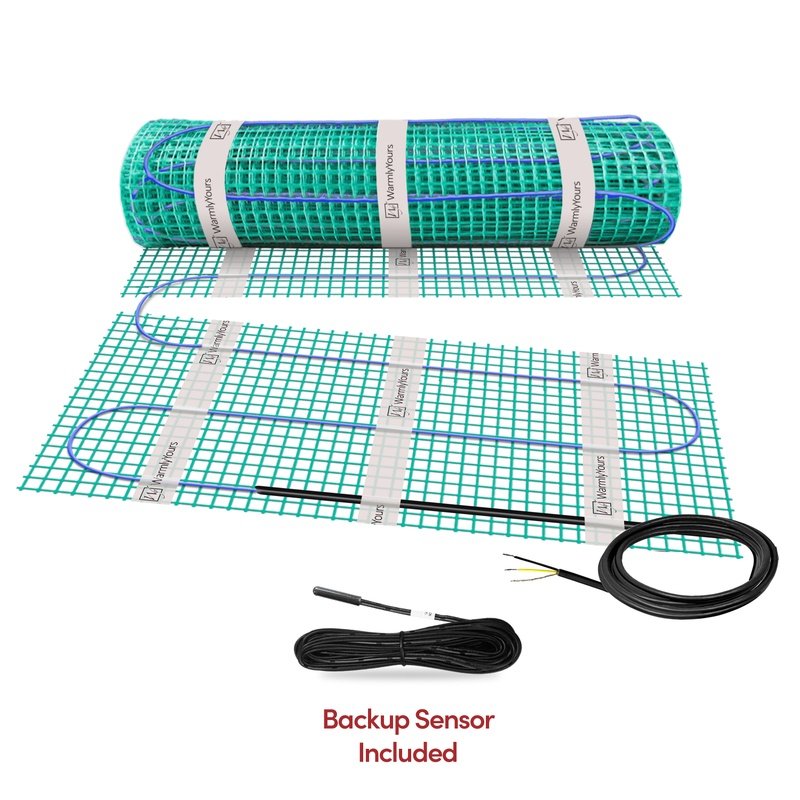
Roll Out, Cut, and Fit
TempZone™ Flex Roll installs underneath ceramic tile, natural stone, hardwood, wood, and other popular flooring materials, giving homeowners radiant in-floor heating that's truly luxurious.
Features
- Ideal for full-room coverage (primary or supplemental heat)
- Pre-spaced heating cable for fast, consistent installation
- Most popular choice for bathrooms & kitchens
- 25 Year Warranty
- 15 Watts Per Sq. Ft
Place, Connect, and Heat
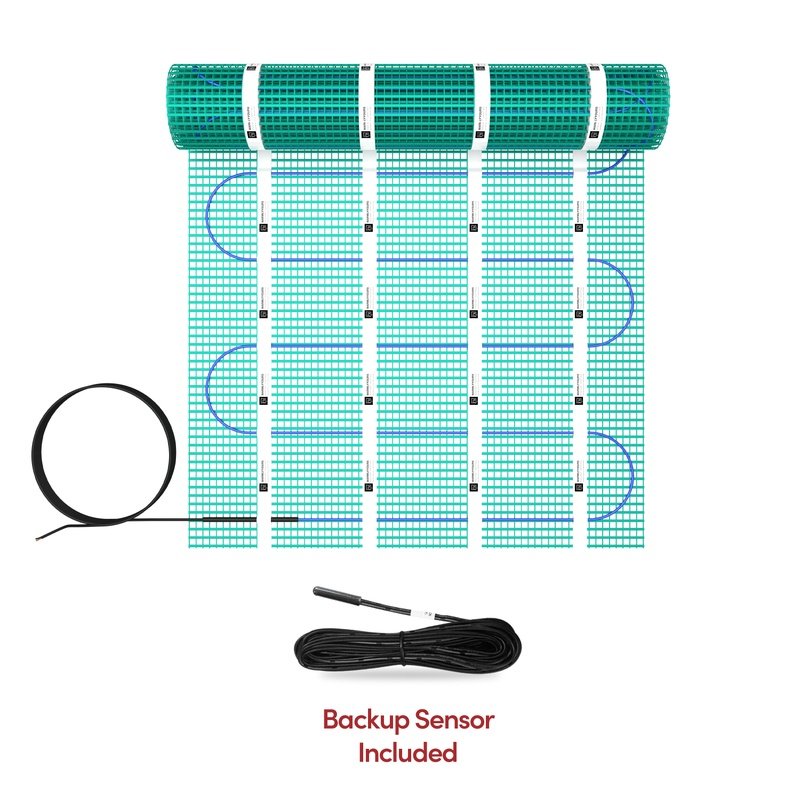
TempZone™ Easy Mats allow for radiant heating of smaller, simpler areas at an affordable cost. These under floor mats are perfect for providing targeted heating for moderately sized bathroom and kitchen floors.
Features
- Pre-sized mats for quick installs with no complex cuts
- Perfect for spot heating (vanities, entryways, small spaces)
- Cost-effective and beginner-friendly option
- 25 Year Warranty
- 15 Watts Per Sq. Ft
Made‑to‑Measure Warmth for Any Layout
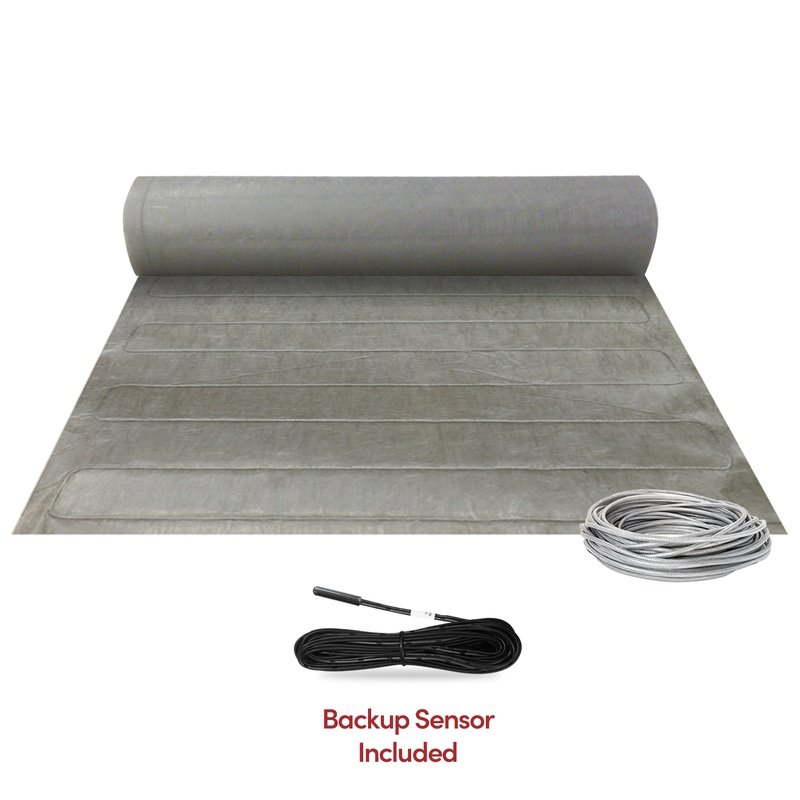
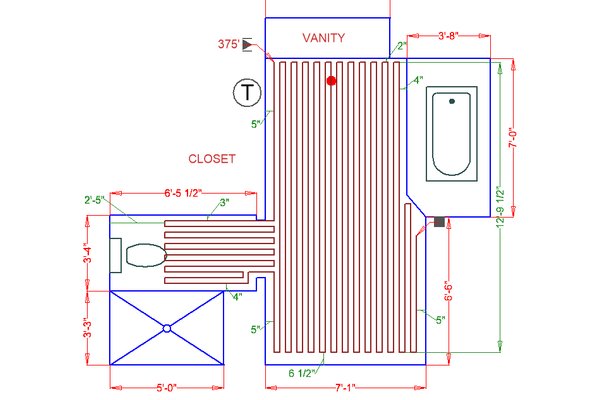
TempZone™ Custom Mats for tile, stone or hardwood floors were designed to offer the most optimal fit for rooms of any shape. Our custom-fit mats were developed to follow curves and angles with ease.
Features
- Designed to your exact floor plan for edge‑to‑edge coverage
- No on‑site cuts or turns—faster, cleaner installation
- Ideal for curves, angles, and obstacles like islands and vanities
- 25 Year Warranty
- 12-15 Watts Per Sq. Ft
Snap-In, Secure, and Heat
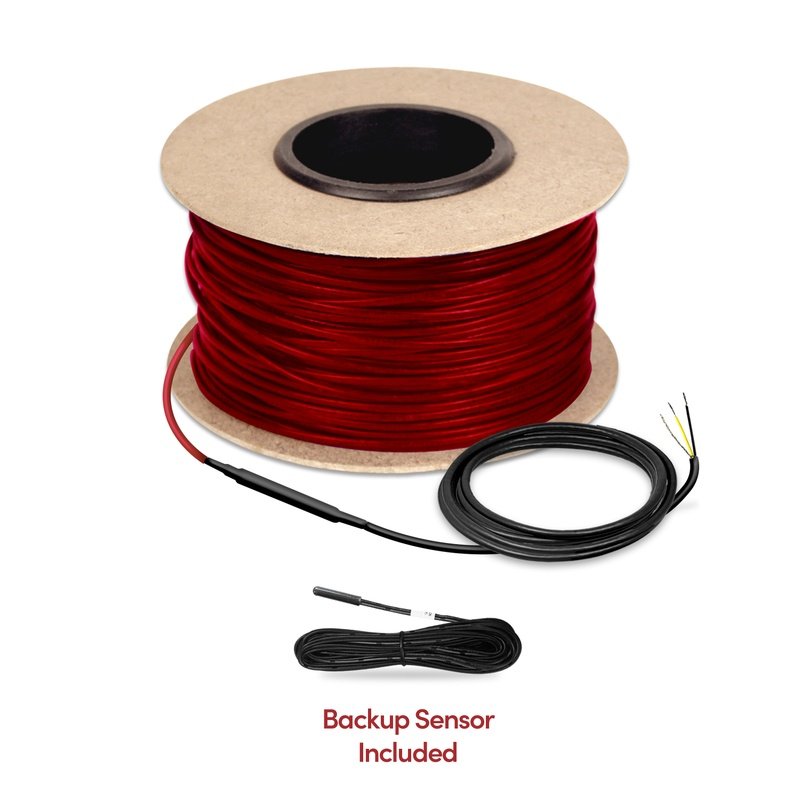
TempZone™ Cable is ultra-low EMF by design and is available in two voltage options and a range of lengths to meet the requirements of any installation.
Features
- Works under tile, stone, and luxury vinyl floors
- Provides radiant heat and crack isolation
- Flexible layouts for irregular or custom-shaped rooms
- 25 Year Warranty
- 9-15 Watts Per Sq. Ft
Pro‑exclusive: Measure, Lay, and Heat
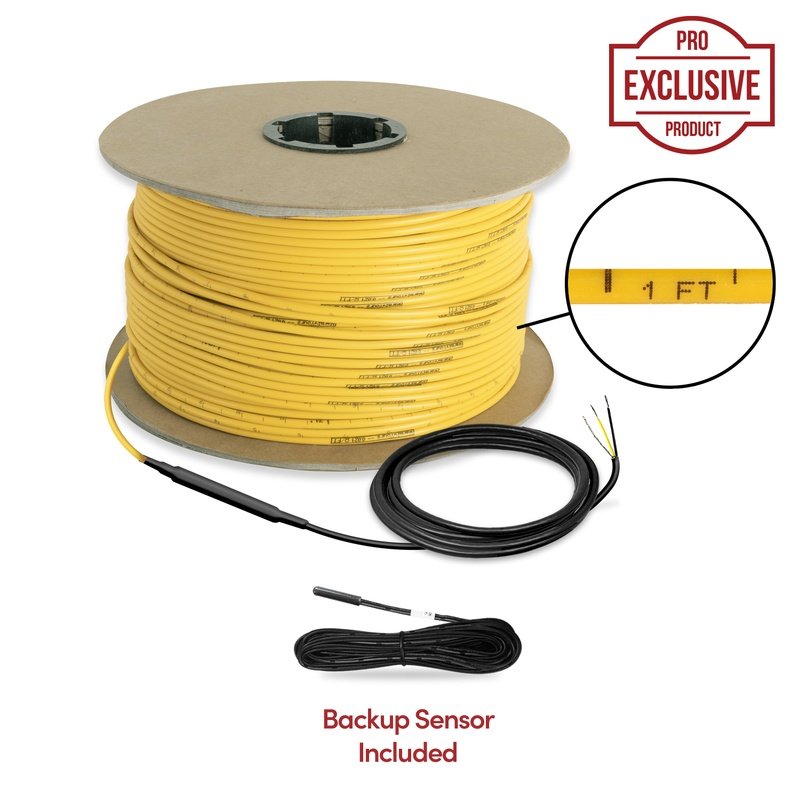
TempZone™ Ruler Cable is ultra-low EMF by design and is available in two voltage options and a range of lengths to meet the requirements of any installation.
Features
- Built-in ruler markings for precise, repeatable spacing
- Ideal for large areas requiring consistent coverage
- Flexible, durable cable for clean turns and complex layouts
- Comes with easy-to-read hash marks at every half-inch, inch, and foot increment on the cable
- Can be used to heat some of the most popular floor coverings like tile, stone, marble, luxury vinyl tile, and more
How to Install Floor Heating Under Engineered Wood
The installation method depends on how your engineered wood is installed. Floating engineered wood (click-lock) pairs with our Environ system—a simple, adhesive-free installation. Glue-down engineered wood uses TempZone products embedded in self-leveling cement. Engineered wood's cross-ply construction makes it one of the most dimensionally stable hardwood options for radiant heat.
Floating Engineered Wood (Environ Mats)
- 1 Prepare Subfloor Clean and level the subfloor (concrete, plywood, or existing flooring).
- 2 Roll Out Mats Roll out Environ Mats according to your SmartPlan layout.
- 3 Secure & Connect Secure mats with tape and connect leads to the thermostat location.
- 4 Test System Test the heating system with an ohmmeter (before, during, and after installation).
- 5 Install Underlayment Install a thin, radiant-compatible underlayment such as cork over the mats.
- 6 Install Engineered Wood Install floating click-lock engineered wood flooring over the underlayment.
- 7 Connect Thermostat Wire the thermostat, set maximum floor temperature to 85°F, and enjoy warm engineered wood floors.
Glue-Down Engineered Wood (TempZone Mats or Cable)
- 1 Prepare Subfloor Clean and level the subfloor.
- 2 Lay Heating Element Roll out TempZone Flex Roll or install TempZone Cable with fixing strips per your SmartPlan layout.
- 3 Test System Test the heating system with an ohmmeter (before, during, and after installation).
- 4 Embed in Self-Leveling Cement Embed the heating element in self-leveling cement and allow it to fully cure.
- 5 Adhere Engineered Wood Adhere engineered wood flooring to the cured surface using the manufacturer's recommended adhesive.
- 6 Connect Thermostat Wire the thermostat, set maximum floor temperature to 85°F, and enjoy warm engineered wood floors.
Compatibility Tips
- Temperature limit: Keep the floor surface at or below 85°F to protect the wood. Our smart thermostats with floor sensors enforce this automatically.
- Why engineered wood? Unlike solid hardwood, engineered wood's cross-ply construction resists warping and handles the gentle temperature changes from radiant heat without gapping.
- Underlayment: For floating installations, use a thin cork underlayment. Avoid thick foam pads that insulate against heat transfer.
Floor Heating Videos
Documents

PDF

PDF

PDF

PDF
Engineered Wood Radiant Floor Heating Posts








Frequently Asked Questions
Showing 10 of 16 questions
Always check with the flooring manufacturer to see what they will cover when it comes to floor heating. In most cases there will be a floor temperature limit - this can be programmed into a programmable or smart thermostat. Check for installation instructions and requirements before adding floor heating.
For best results, we recommend a 1”- 1.5” maximum distance between the heating cable and the top of the floor. Nailed down hardwood will require sleepers to run the cable safely between board nails. Be sure to use 3/8" to 3/4" of self-leveling cement to embed the heating element.
The most important factor for the wood floor chosen is structural stability.
According to the USDA Forest Service, this list shows most dimensionally stable to least:
- Mesquite
- Australian Cypress
- Teak
- Santos Mahogany
- American Cherry
- South Yellow Pine
- Douglas Fir
- American Walnut
- Brazilian Cherry
- Hard Maple
- Red Oak
- True Hickory
- American Beech
Engineered is the most structurally stable compared to natural hardwood, so it will work the best with floor heating.
If you do want to go with Hardwood, quartersawn or riftsawn narrow planks are the most structurally stable and would work best for this application.
Overall the most important factor for the room is relative humidity. Keeping a consistent humidity and temperature in the home will help wood floors last for many years to come.
Yes. Floating engineered wood is the easiest installation. Environ Flex Roll lays directly on the subfloor and the planks float on top with no thinset or mortar required. The low-profile mat adds almost no floor height, making it well suited to remodels with existing door and cabinet clearances.
Yes. WarmlyYours systems work under floating engineered wood and laminate over a basement slab, as long as the slab is dry and a vapor barrier plus insulating underlayment go down first. Solid hardwood is not recommended below grade because it can cup or gap with seasonal moisture.
Yes. Engineered hardwood is one of the best wood floors for electric radiant heat because its cross-layered core resists expansion. Keep the floor surface at or below 85°F and maintain 30–50% indoor relative humidity. Use a floor-sensing thermostat to enforce the temperature limit automatically.
Aim for planks 5/8 inch or thinner. Thicker wood insulates the floor and slows heat transfer, forcing higher system temperatures. Narrower boards under 5 inches wide are also safer than wide planks, which show seasonal gapping more readily. Always confirm the limits in your flooring manufacturer’s radiant-heat warranty.
Yes, but with important precautions. Hardwood and engineered wood are sensitive to temperature and humidity changes.
Safe Temperature Limits
- Maximum floor temperature: 85°F (29°C)
- Maximum room temperature: 75°F (24°C)
- Maintain humidity between 30–50%
Best Systems for Wood Bedrooms
- TempZone Flex Roll (15W/sq.ft., with floor sensor)
- TempZone Easy Mat (15W/sq.ft., pre-spaced)
- TempZone Cable (9–15W/sq.ft., customizable spacing)
Installation Requirements
- Floor sensor is mandatory
- Thermostat must regulate temperature precisely
- Acclimation period required before covering with wood
- Professional installation recommended
Why Wood Needs Care
Wood expands and contracts with temperature changes. Radiant floor heating, when properly installed with a floor sensor and thermostat, prevents excessive expansion/contraction and maintains wood floor integrity. The key is keeping temperatures stable and within safe limits.
Get Expert Guidance
WarmlyYours' free SmartPlan includes all specifications for wood floor heating, including temperature limits, sensor placement, and acclimation procedures. Our 26 years of experience with 300,000+ installations means we know exactly how to keep your wood floors safe and beautiful.
85°F (29°C) measured at the floor surface is the accepted maximum for engineered wood. Exceeding it can dry the wood and cause gapping or cupping. Pair the system with a thermostat that has a floor sensor and set a hard high limit, and hold indoor relative humidity between 30% and 50%.
Engineered wood is the most structurally stable option for floor heating. For solid hardwood, dimensionally stable species like Mesquite, Teak, and American Cherry work best. We recommend using quartersawn or riftsawn narrow planks and maintaining consistent indoor humidity to ensure the longevity of your wood floors.
It depends on how the flooring is fastened:
- Floating engineered wood: Environ Flex Roll, installed directly under the planks.
- Nailed or stapled planks: TempZone Cable run between sleepers.
- Glue-down over subfloor: TempZone Flex Roll in thinset.
All are available in 120V and 240V.
Choose dimensionally stable species that move least with changes in moisture — such as American cherry, walnut, mesquite, or quartersawn oak. Avoid wide plank widths and less stable species like hickory and beech. Engineered hardwood is the most stable option overall; for solid nailed floors, species choice matters most.
Not when installed correctly. Damage comes from overheating and dry air, not radiant heat itself. Keep the surface at or below 85°F, hold humidity at 30–50%, let planks acclimate before installation, and raise temperatures gradually at startup. A floor-sensor thermostat prevents the overheating that causes gapping and cupping.