
Step-by-Step: Installing Radiant Heat Under LVT in a Finished Basement (Real Project)
last updated february 21, 2026

In This Article
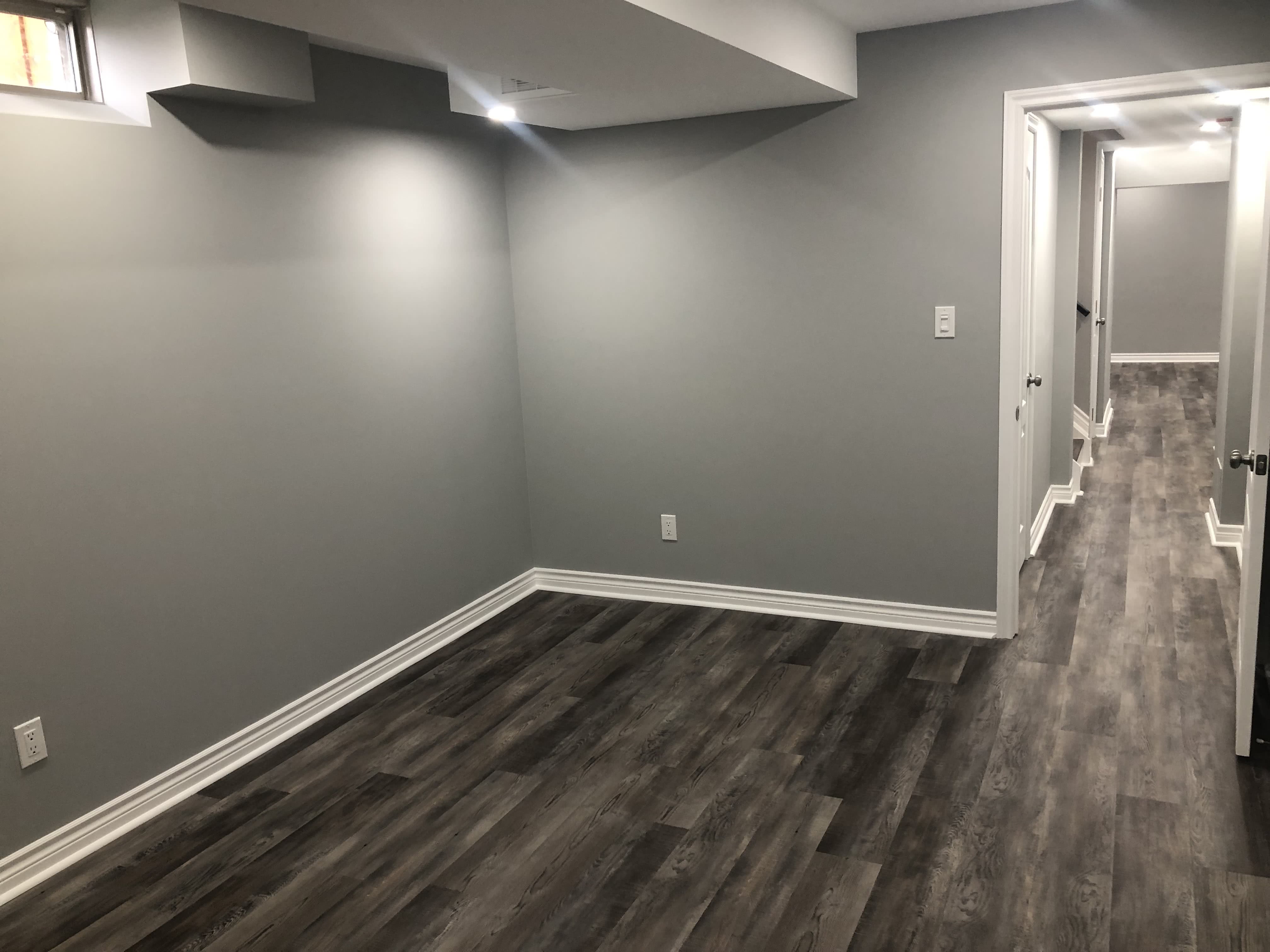
Cold basement floors are one of the most common complaints from homeowners — and one of the most fixable. This is the story of how GTA Basement Experts solved exactly that problem: a finished basement renovation in the Greater Toronto Area where electric radiant floor heating was installed under luxury vinyl tile (LVT) from start to finish.
This isn’t a theoretical guide. Every step here happened on a real job site, planned with WarmlyYours SmartPlan® and executed by a professional contractor. If you’re planning a similar project — whether DIY or with a contractor — this walkthrough gives you the full picture.
Why This Basement Needed Radiant Floor Heating
Concrete slabs are natural heat sinks. Without insulation or a supplemental heat source, basement floors stay cold year-round — even when the rest of the house is warm. For a family converting their basement into a usable playroom and living area, that was a dealbreaker.
Forced air wasn’t a good option for this space — the ductwork would have required significant modification, and floor-level warmth from radiant heat is far more effective in basement environments where cold radiates up from the slab. Electric radiant floor heating under LVT was the clear choice: low-profile, no maintenance, and fully compatible with the flooring they’d already selected.
Step 1: Design with SmartPlan®
Before a single cable was unrolled, the project was designed using WarmlyYours SmartPlan® — a free custom layout service where WarmlyYours engineers map out your exact heating coverage, cable spacing, sensor placement, and electrical requirements based on your room dimensions.
For this project, SmartPlan produced:
- A scaled floor plan showing exact TempZone Flex Roll placement
- Cable spacing recommendations optimized for LVT temperature limits
- Sensor wire placement to protect the flooring from overheating
- An electrical diagram showing circuit requirements and thermostat wiring
Start Here Before You Buy
SmartPlan is free and takes the guesswork out of sizing. Submit your room dimensions and WarmlyYours engineers will design your entire system — including a parts list and electrical diagram. Request your free SmartPlan →
Step 2: Prepare the Concrete Subfloor
Basement concrete slabs require specific prep before any heating system goes down. The contractor completed the following before installation:
- Swept and vacuumed the slab surface clean of all debris
- Marked all air vents and perimeter edges to be dammed before self-leveling cement
- Applied primer to the concrete to improve adhesion for the self-leveling cement
- Laid ThermalSheet® insulating underlayment across the slab — critical for basement installs to prevent heat from escaping downward into the concrete rather than upward through the floor
Don’t Skip the Underlayment on Concrete
Installing radiant heat directly on a concrete slab without insulating underlayment wastes significant energy — heat goes down instead of up. ThermalSheet® under the heating system dramatically improves efficiency and reduces operating costs.
Step 3: Test the Heating System Before Installation
Before laying a single roll, the contractor tested the TempZone Flex Roll with a digital ohmmeter to verify the resistance reading matched the factory specification printed on the label. This baseline reading gets recorded — it’s compared again during and after installation to confirm no damage occurred.
The WarmlyYours Circuit Check was also attached at this stage. This small device stays connected to the system throughout installation and alarms if the circuit is broken — catching any accidental damage to the cable before cement is poured.
Step 4: Lay Out the TempZone® Flex Roll
Following the SmartPlan layout, the contractor unrolled the TempZone Flex Roll across the prepared subfloor, cutting and turning the mesh (never the cable) to navigate around permanent fixtures. The mesh was secured every 6–8 inches using hot glue to keep it flat — critical because the heating element naturally wants to float when self-leveling cement is poured.
Step 5: Place the Floor Sensor
The floor sensor is the most important safety component when heating under LVT. It tells the thermostat the actual surface temperature — preventing the floor from exceeding the vinyl manufacturer’s maximum (typically 80–85°F / 27–29°C).
Per SmartPlan recommendations, the sensor was:
- Placed at least 6 inches into the heated area
- Run parallel between — and never crossing — the heating cable
- Secured with hot glue to prevent movement during the cement pour
- Tested with an ohmmeter before pouring to confirm a good reading
Step 6: Run the Cold Lead to the Thermostat Box
The 15-foot factory-attached cold lead was routed from the heating element up to the thermostat box location on the wall — staying above the subfloor and never crossing over the heating cable. It was secured with tape to prevent movement during the cement pour. A final ohmmeter reading was taken at this stage.
Step 7: Pour Self-Leveling Cement
With the Circuit Check still connected and showing green, the contractor mixed and poured self-leveling cement to fully encapsulate the heating system. A minimum ⅜-inch layer was applied — enough to protect the cable and create a smooth, flat surface for the LVT installation above.
Key Tips for the Cement Pour
Dam all perimeter edges, air vents, and doorways before pouring. Follow the SLC manufacturer’s moisture requirements and mixing instructions carefully. Rushed or improperly mixed cement can cause surface cracking that telegraphs through the vinyl above.
Step 8: Install the LVT
Once the self-leveling cement cured completely and the surface was verified flat, the luxury vinyl tile was installed per the flooring manufacturer’s instructions. For this project, a click-lock LVT was used — no glue required — which also made future replacement possible without disturbing the heating system below.
Step 9: Connect the Thermostat
A licensed electrician made the final connections — wiring the cold lead and floor sensor to the thermostat. The thermostat’s floor temperature limit was programmed to the vinyl manufacturer’s maximum to ensure the sensor would cut power before the floor ever reached a damaging temperature.
For this project the homeowners chose the nSpire Touch Programmable Thermostat, which allows them to set weekday and weekend schedules — keeping the basement warm when the kids are down there and saving energy overnight.
Watch: How to Install Electric Floor Heating with LVT
This WarmlyYours webinar covers the full installation process for TempZone systems under luxury vinyl tile — including subfloor prep, cable layout, self-leveling cement, and thermostat wiring.
The Results
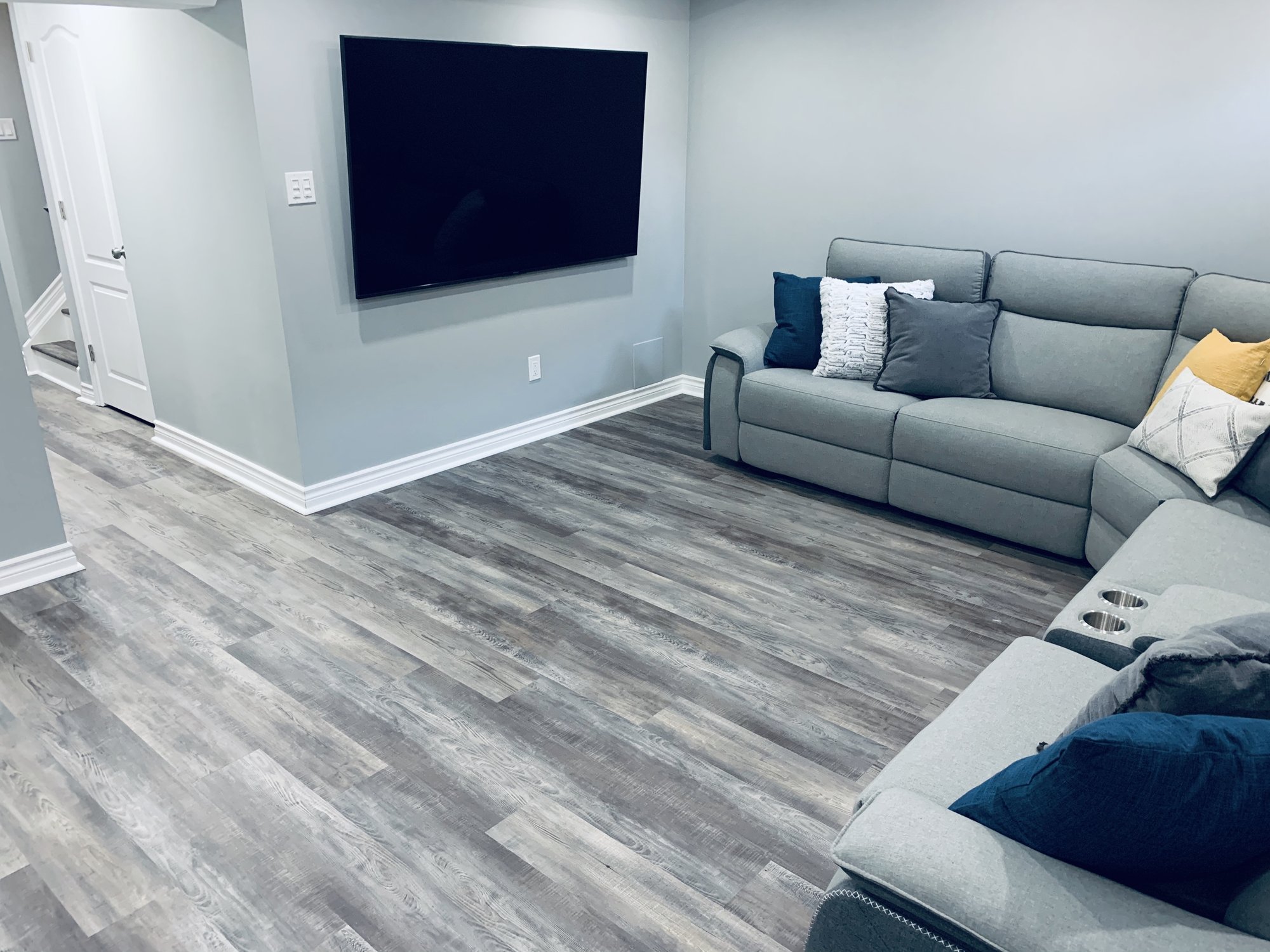
The finished basement is now a warm, inviting space the family uses year-round. The radiant system operates at approximately $0.10–$0.15 USD per hour — far less than the cost of running a portable electric space heater, and with far superior comfort since the warmth rises evenly from the entire floor surface rather than blowing from a single point.
The LVT looks exactly as intended — no bumps, no visible heating elements, no compromise to the flooring aesthetic. The system is completely silent and requires zero maintenance.
Products Used in This Project
Every product used in this installation is available directly from WarmlyYours. Use the links below to learn more or add to your project quote.
- Heating system: TempZone® Flex Roll — see LVT-compatible systems →
- Underlayment: ThermalSheet® Insulating Underlayment →
- Thermostat: nSpire Touch Programmable Thermostat →
Frequently Asked Questions: Basement Radiant Floor Heating Under LVT
Operating costs for electric radiant floor heating in a basement depend on your local electricity rate, the size of the heated area, and how many hours per day the system runs.
As a real-world example, a finished basement playroom in Whitchurch-Stouffville, Ontario cost approximately $0.19 CAD per hour to operate — significantly less than running a portable electric space heater, and with whole-floor comfort rather than point-source heat.
In the US, typical operating costs range from $0.01–$0.15 USD per hour depending on system size and local electricity rates. Use the WarmlyYours Operating Cost Calculator to estimate your specific project.
Yes — insulating underlayment is strongly recommended when installing electric radiant floor heating over a concrete basement slab. Without it, a significant portion of the heat will conduct downward into the cold concrete rather than upward through the floor surface where you want it.
WarmlyYours recommends ThermalSheet® insulating underlayment for basement slab installations. It improves system efficiency, reduces operating costs, and helps the floor reach target temperature faster.
Skipping underlayment on a basement slab is one of the most common — and most costly — installation mistakes.
Most of the installation — laying out the heating element, placing the floor sensor, and pouring self-leveling cement — can be completed as a DIY project by a competent homeowner. However, the final thermostat wiring connection must be completed by a licensed electrician in most jurisdictions.
WarmlyYours makes DIY installation easier with:
- SmartPlan® — a free custom layout service that maps out your exact cable placement, sensor location, and electrical requirements
- Circuit Check — a monitoring device that alerts you if the heating cable is damaged during installation
- 24/7 technical support — available throughout your installation
Always check local electrical codes before beginning any floor heating installation.
Electric radiant floor heating can serve as a primary heat source in a well-insulated basement, particularly for finished basement spaces used as living areas, playrooms, or home offices.
Unlike forced air systems, radiant heat warms objects and people from the floor up — which is especially effective in basements where cold radiates upward from the concrete slab. This makes it a more efficient and comfortable option than forced air in below-grade spaces.
For larger or poorly insulated basements, a heat loss calculation (available free through WarmlyYours SmartPlan®) will confirm whether the system can meet the full heating load or whether it should supplement an existing system.
Plan Your Own Basement LVT Project
Ready to do the same in your basement? The best starting point is always a free SmartPlan — WarmlyYours engineers will design your exact system, including a parts list, electrical diagram, and installation layout, at no cost.
For more on choosing the right LVT and heating system combination, read our complete guides:
- Luxury Vinyl Tile & Floor Heating: The Complete Guide →
- LVT vs. LVP: Which Is Right for Radiant Heat? →
- Step-by-Step Installation Guide for LVT →
See More Real Projects
Curious how other homeowners have transformed their spaces with radiant floor heating? Browse hundreds of real customer installations — basements, bathrooms, kitchens, and more. View all project showcases →
Ready to Warm Up Your Basement?
Get a free SmartPlan design and instant quote — our engineers will map out your exact system based on your room dimensions, subfloor type, and flooring choice.
Have Questions About Your Project?
Our team of Radiant Experts is ready to help!
Related Articles
Best Way to Heat a Concrete Slab Floor: Compare In-Slab vs. Above-Slab Systems
How to Install Radiant Heating In or On a Concrete Floor

9 Pros and Cons of Radiant Floor Heating (Honest Review)
Stay Updated
Get the latest radiant heating news and tips delivered to your inbox.


