

Snow Melting for Concrete Surfaces
Concrete is the most popular surface for snow melting systems. Heating cables embed directly in the pour—driveways, walkways, patios, stairs, and loading docks stay clear of snow and ice all winter.
Get an Instant Quote
Answer a few quick questions and we'll match you with the best snow melting system.
Jump to
Why Concrete is Ideal for Snow Melting
Excellent Thermal Mass
Concrete absorbs and retains heat exceptionally well, making it the most efficient surface for embedded snow melting systems.
Direct Embed Installation
Heating cables attach to rebar or wire mesh and are poured directly into the concrete—no sand bed or mortar layer required.
Works for Any Application
Driveways, walkways, patios, stairs, ramps, loading docks—any concrete surface can be heated.
Eliminate Slip Hazards
Concrete becomes dangerously slick when icy. A snow melting system keeps surfaces clear and safe automatically.
No Salt, No Damage
Eliminate chemical deicers that cause spalling, pitting, and surface deterioration on concrete.
Affordable to Operate
Systems run only during snow events. A typical residential driveway costs a few dollars per snow event to operate.
10-Year Warranty
All WarmlyYours snow melting cables and mats are backed by a 10-year manufacturer warranty.
Increase Property Value
A heated driveway or walkway is a premium feature that adds lasting value and curb appeal to any property.
Snow Melting Customer Reviews
We take pride in providing both exceptional service and great products. But don't just take our word for it, check out what some of our customers have had to say.


Concrete Snow Melting Projects
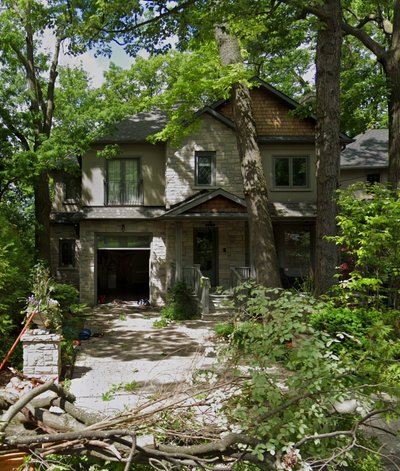
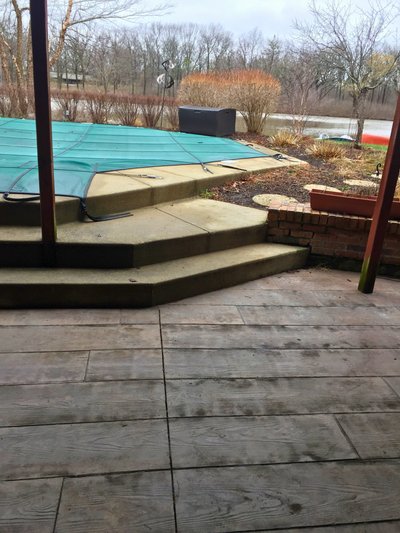
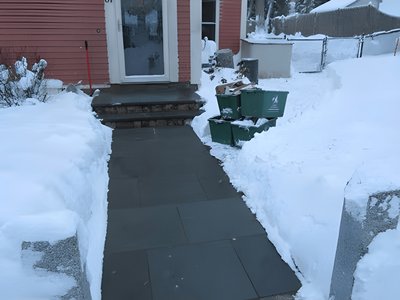
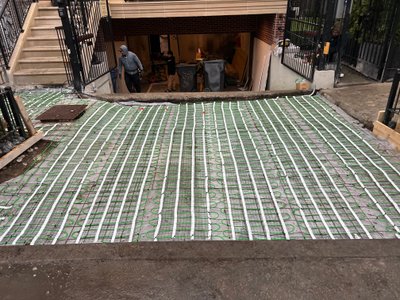
See how homeowners and contractors installed snow melting systems in concrete driveways, walkways, patios, and more.
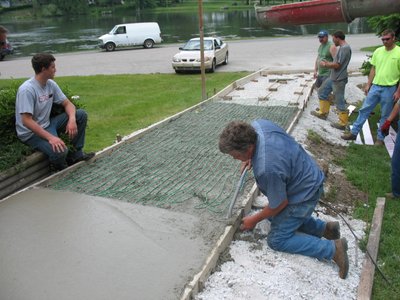

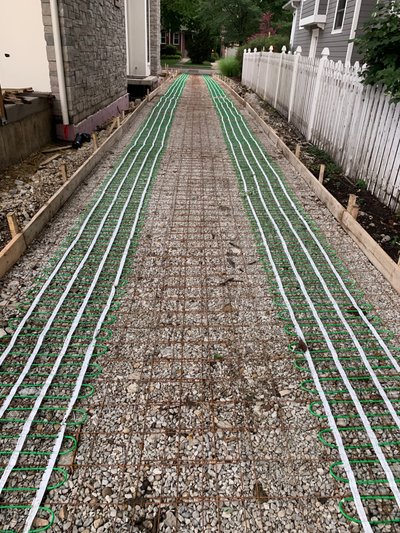
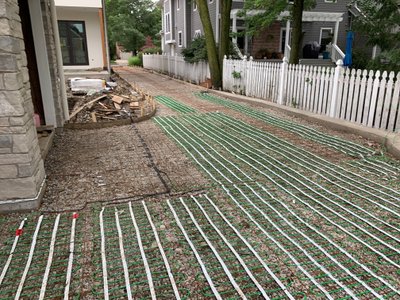

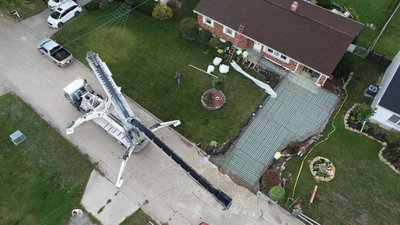




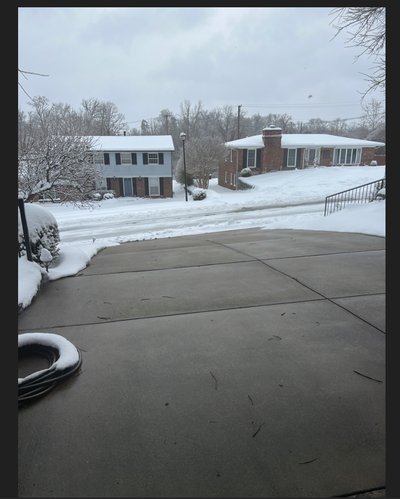
How Snow Melting Works in Concrete
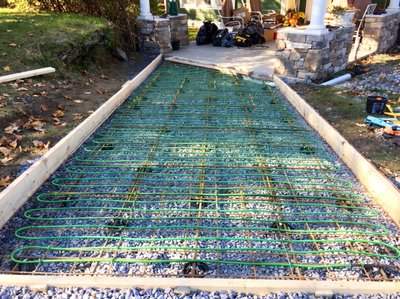
Snow melting cables are embedded 2–3 inches below the finished concrete surface during a new pour or full replacement. When snow falls, the system heats the concrete mass from within, melting snow and ice on contact.
Unlike pavers (where cables sit in a sand bed) or asphalt (where cables are laid on the base course), concrete installations benefit from the material's superior thermal conductivity and mass. Heat transfers evenly across the surface with minimal loss.
The system can be controlled manually with a timer, or automatically with sensors that detect snowfall and surface temperature—activating only when needed.
Learn More About Snow MeltingFree SmartPlan
Get a custom installation plan for your concrete project in just 1 business day.

"I'll design a custom snow melting layout for your project, complete with cable spacing, electrical requirements, and a full quote."
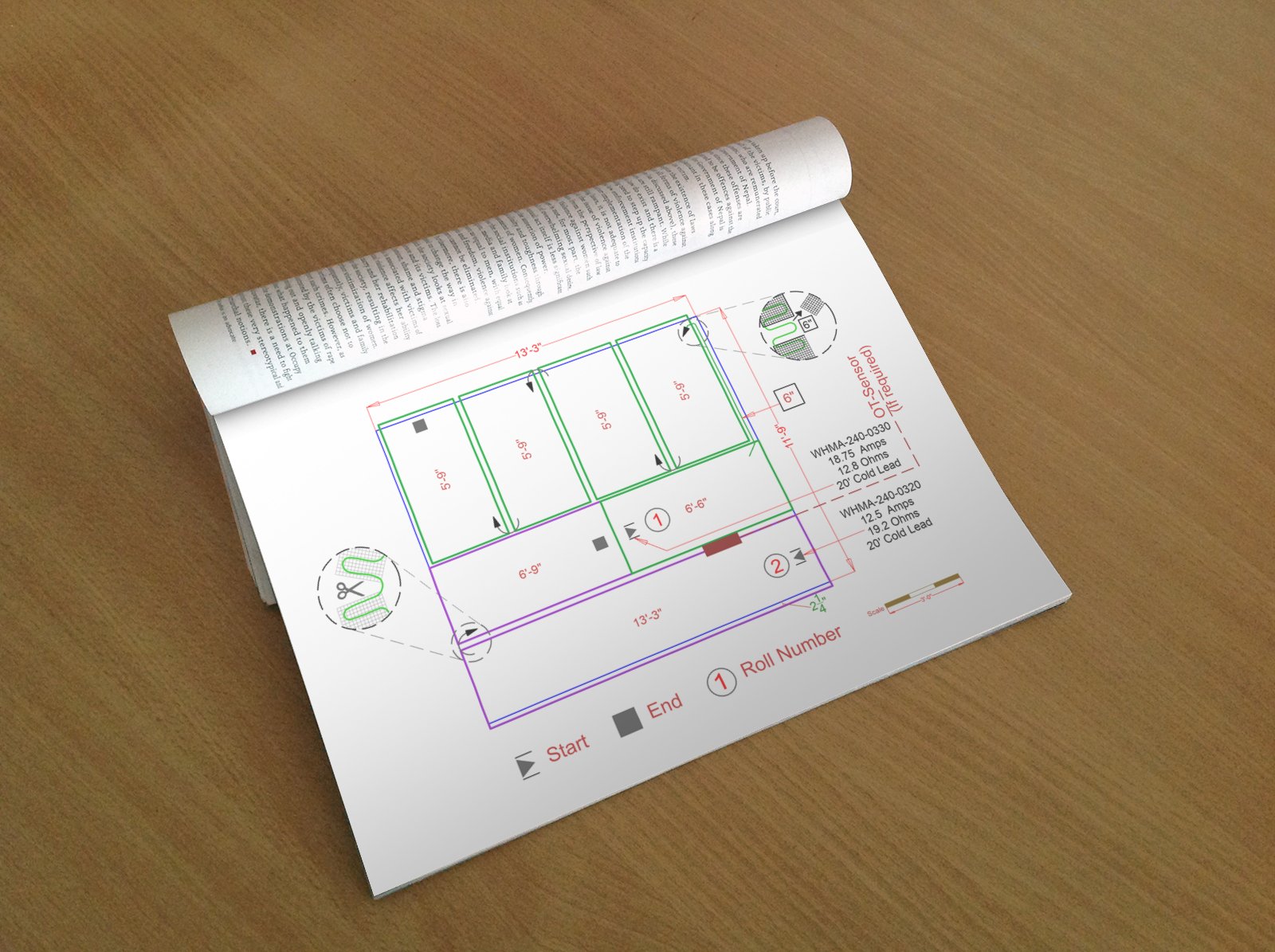
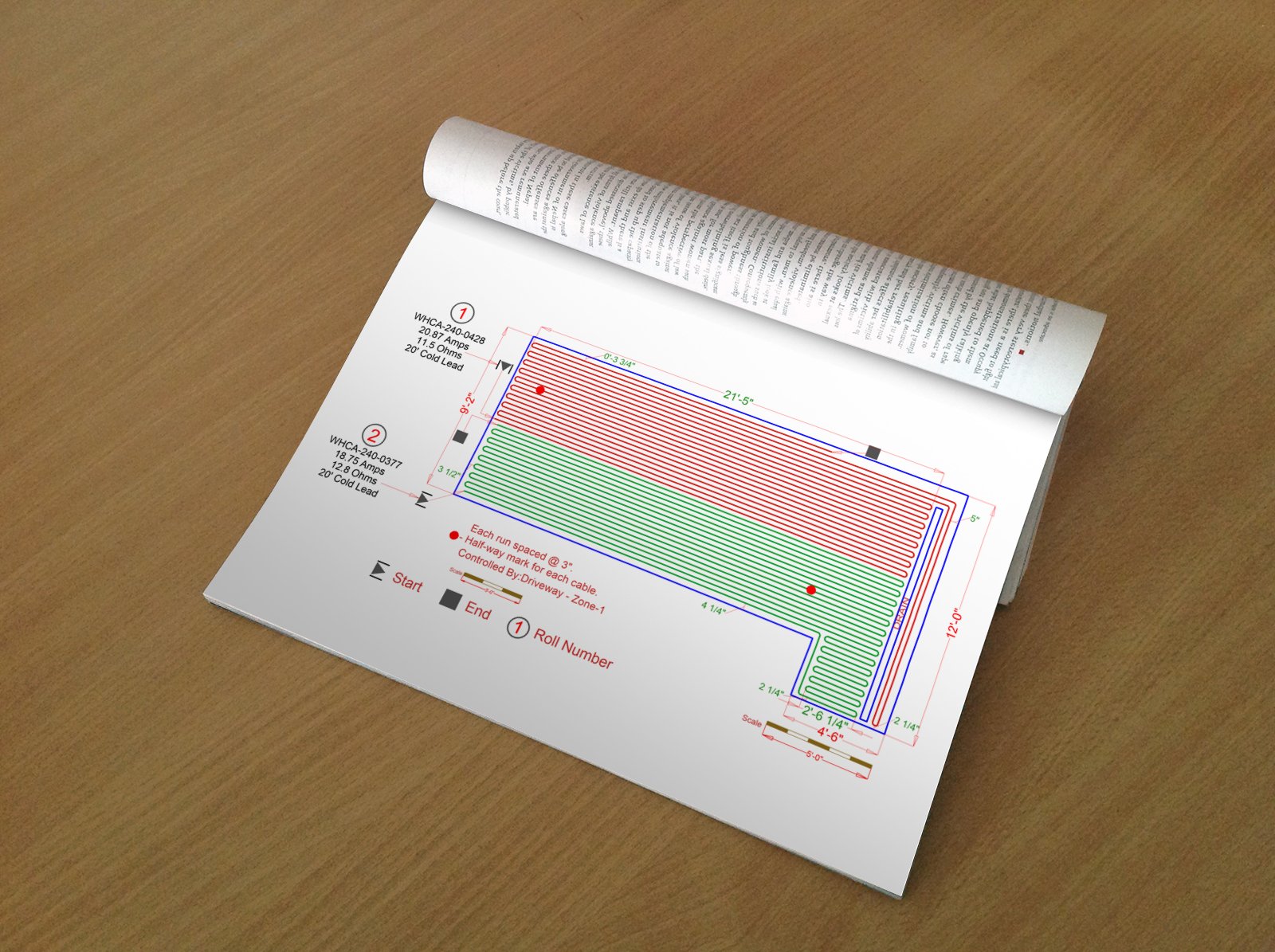
How to Install Snow Melting in Concrete
Concrete is the most straightforward surface for snow melting installation. The heating cables are attached to a rebar or wire mesh framework and embedded directly in the concrete pour. Here's what the process looks like:
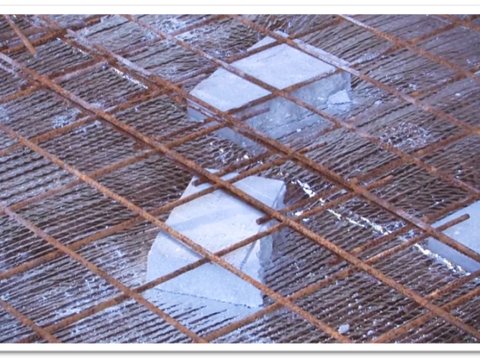
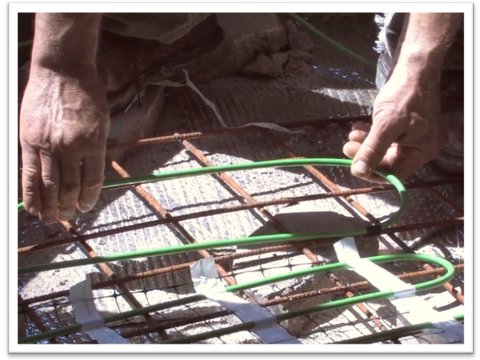
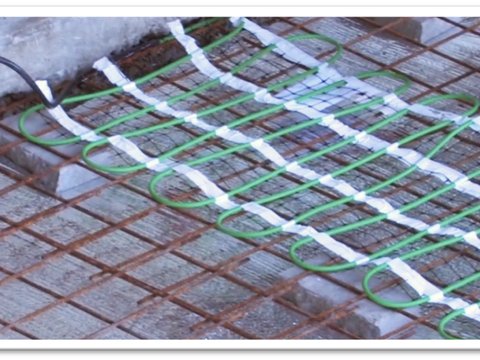
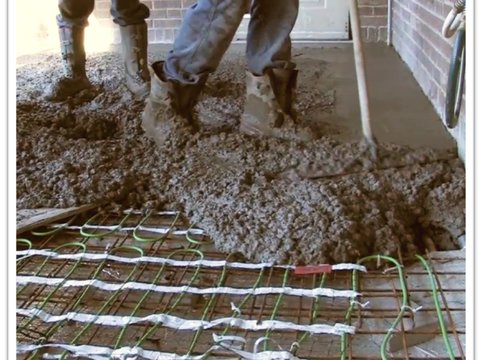
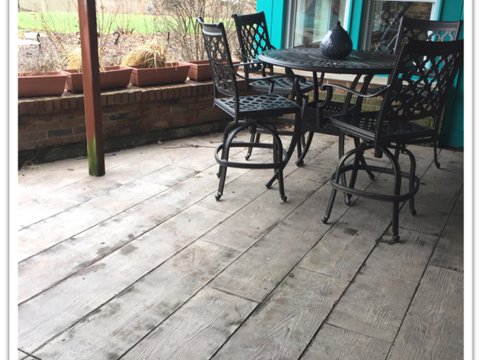
Step 1. Prepare the Rebar or Wire Mesh Framework
Before the concrete pour, install a rigid framework (rebar or wire mesh) that positions the heating cables 2–3 inches below the finished surface. The framework is propped up on wire chairs or small pavers to maintain proper depth.
Tip: Avoid frameworks with sharp edges or burrs that could damage cable insulation.
Step 2. Dry-Fit the Snow Melting System
Before attaching anything permanently, lay out your snow melting cables or mats on the framework to verify placement matches your WarmlyYours SmartPlan design.
Identify any issues now—it's much easier to adjust before the cables are secured. Call us at (800) 875-5285 with questions.
Step 3. Attach Cables to the Framework
Secure the heating cables to the mesh at 3-inch spacing using wire ties or zip-ties. This keeps the cable flat and prevents it from "floating" during the concrete pour.
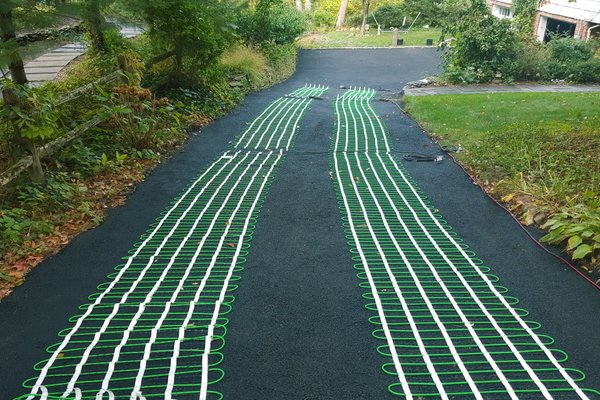
Mats maintain 3-inch spacing automatically. Cables offer more flexibility for irregular shapes but require careful spacing.
Never allow heating cables to overlap, touch, or cross.
Step 4. Ensure the Splice is Embedded
The "cold lead" connects to the heating cable via a manufacturer's splice. This splice must be fully embedded in the concrete.
Leaving the splice exposed is the most common installation mistake—it can overheat and cause system failure.
Always verify the splice is below the concrete surface before the pour.
The Finished Surface
Concrete can be poured in a single stage (pour over the framework) or in two stages (base layer, then framework, then top layer). Both methods work well—your contractor will choose based on the project.
Once cured, your heated concrete surface is ready. The system is invisible, maintenance-free, and designed to last the lifetime of the concrete.
Snow Melting Products for Concrete
Both mats and cables embed directly in concrete. Mats install faster for rectangular areas; cables offer maximum flexibility for custom shapes, curves, and tire-track layouts.

Maximum Heat Density for Heavy Snowfall (3″ spacing)
Ideal for heavy snowfall regions (60+ inches annually) or high-traffic commercial areas. The 3-inch cable spacing delivers maximum heat density (~50 watts/sq.ft) for the fastest snow melting performance. Best for: Northern climates, steep driveways, loading docks, emergency exits, and areas requiring rapid clearing.
Features
- Maximum Heat Output: Approximately 50-watts per sq. ft with 3″ cable spacing for fastest snow melting
- Best for Heavy Snowfall: Recommended for regions with 60+ inches of annual snowfall or when rapid melting is critical
- Even Heating: Pre-attached heating elements in a serpentine pattern with consistent 3″ spacing ensures uniform coverage
- Fast and Easy Installation: Cut-and-turn design makes installation faster than cables while providing maximum heat density
- Installation Support: Free SmartPlan™ installation plans, 24/7 phone support, and a 10-year limited warranty
Optimal Performance & Energy Balance (4″ spacing)
The versatile choice for moderate snowfall regions (30-60 inches annually). The 4-inch cable spacing provides an optimal balance of melting performance (~39 watts/sq.ft) and energy efficiency. Best for: Most residential driveways, walkways, and patios in typical winter climates.
Features
- Balanced Heat Output: Approximately 39-watts per sq. ft with 4″ cable spacing for optimal performance and efficiency
- Best for Moderate Snowfall: Recommended for regions with 30-60 inches of annual snowfall—our most popular choice
- Even Heating: Pre-attached heating elements in a serpentine pattern with consistent 4″ spacing ensures uniform coverage
- Fast and Easy Installation: Cut-and-turn design makes installation faster than cables while balancing cost and performance
- Installation Support: Free SmartPlan™ installation plans, 24/7 phone support, and a 10-year limited warranty

Maximum Flexibility at a Minimal Cost
WarmlyYours Snow Melt Cables offer a high heat output solution to keep your driveway, walkway, or patio snow-free. Embeddable in concrete, asphalt, or under pavers, these cables provide a flexible and cost-effective alternative to mats. Choose from a variety of voltages and lengths to suit your outdoor heating needs, ensuring safe, dry surfaces all winter long. Benefit from our 10-year warranty and 24/7 customer support for peace of mind.
Features
- High Heat Output: This embeddable electric heating cable provides 12-watts of heat per linear foot (nearly 50-watts per sq. ft.)
- Embeddable in Concrete, Asphalt, or in Mortar Under Pavers: Installing a cable-based snow melting system within a new driveway, walkway, or patio means you can enjoy snow/ice free outdoor surfaces all year
- Cost-Effective and Flexible: Snow melting cables are an less expensive (but more time consuming) alternative to snow melting mats and they provide maximum flexibility to cover round driveways, cornered patios, or outdoor stairs
- Wide Variety of Voltages: We offer snow melting cables in 120, 208, 240, and 277 voltages and in a range of different lengths
- Installation Support: WarmlyYours offers free SmartPlan™ installation plans, 24/7 phone support, and a 10-year limited warranty
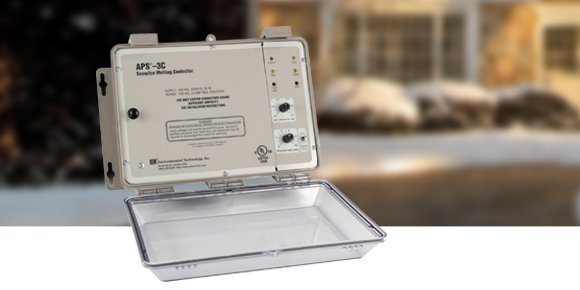
Controls for Concrete Snow Melting
WarmlyYours offers controls ranging from simple manual timers to fully automatic systems that detect snowfall and activate on their own.
Concrete installations can use both slab sensors (embedded in the concrete to measure surface temperature and moisture) and aerial sensors (mounted above ground to detect precipitation). Slab sensors work particularly well in concrete because they can be poured right into the slab alongside the heating cables.
For a full comparison of available controls and sensors, see our comparison chart.
Shop ControlsConcrete Surfaces You Can Heat
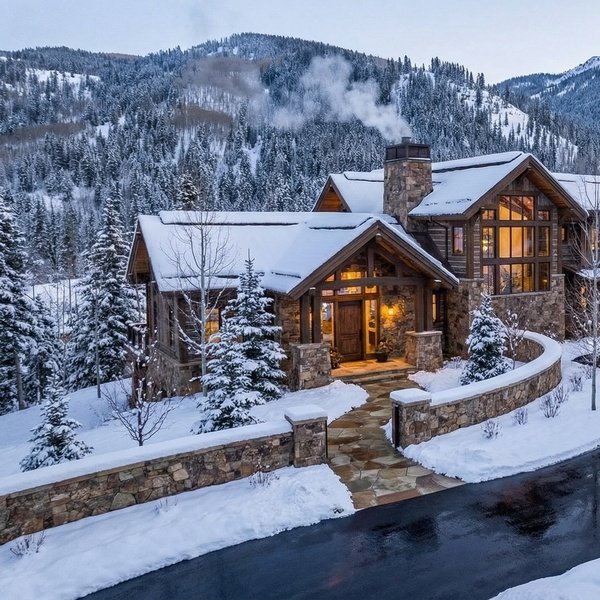
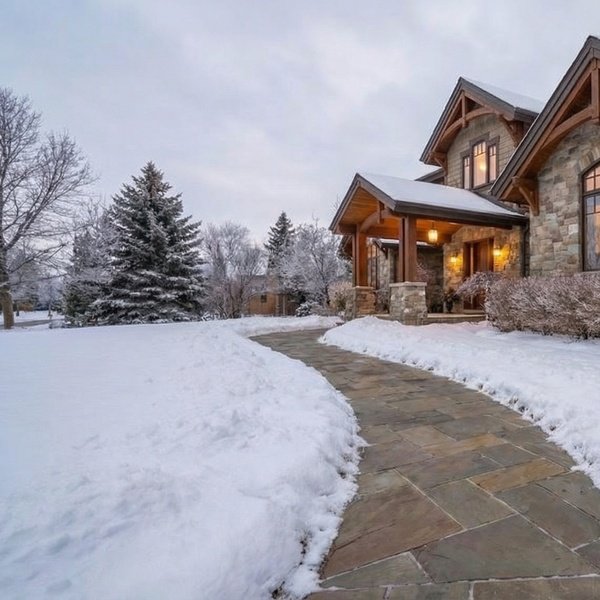
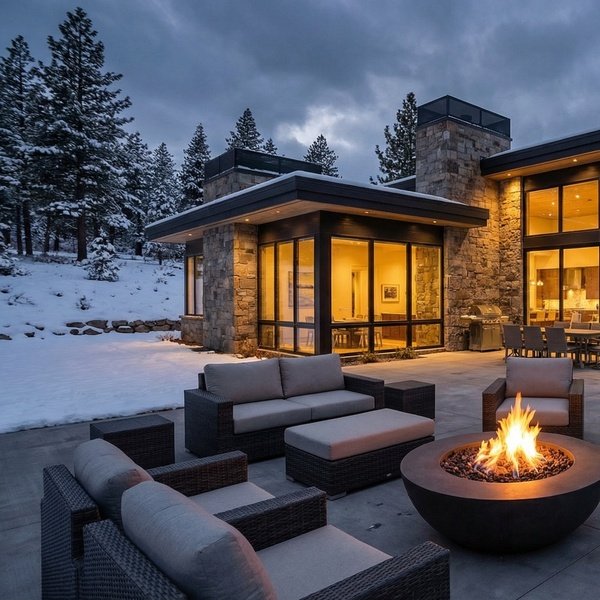
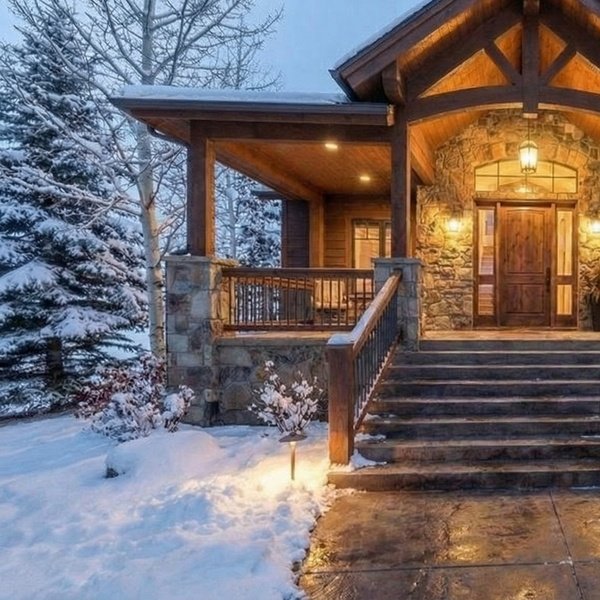
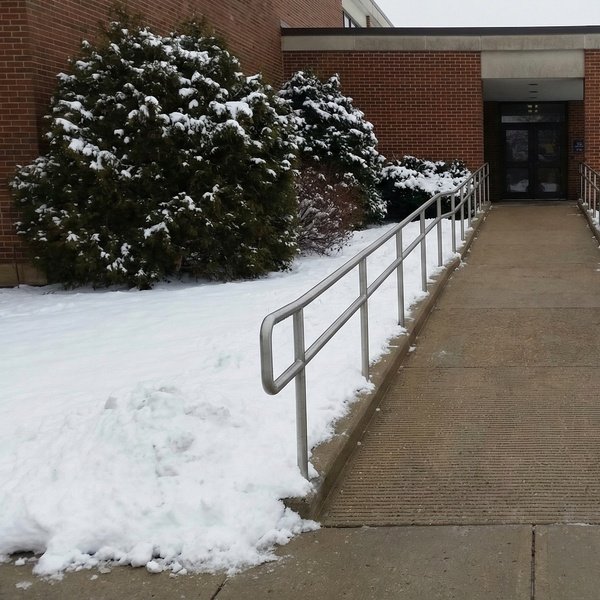
Snow melting systems work in any poured concrete surface. Explore the most common applications:
Concrete vs. Other Surfaces for Snow Melting
All three major surface types work with snow melting systems, but each has different installation requirements:
| Concrete | Asphalt | Pavers & Stone | |
|---|---|---|---|
| Installation Method | Cables embed directly in the pour | Cables laid on base course, asphalt poured over | Cables in sand or mortar bed under pavers |
| Thermal Efficiency | Excellent—concrete retains heat | Good—asphalt absorbs heat quickly | Good—depends on paver thickness |
| Best For | Driveways, walkways, patios, stairs | Driveways, parking lots | Patios, walkways, driveways |
| Sensor Options | Slab sensors + aerial sensors | Aerial sensors only | Aerial sensors only |
| Surface Finishes | Stamped, stained, polished, brushed, exposed aggregate | Standard asphalt | Brick, stone, cobblestone, interlocking |
| Learn More | You're here | Asphalt | Pavers & Stone |
Snow Melting in Concrete Videos
Documents

PDF

PDF
Concrete Snow Melting Posts




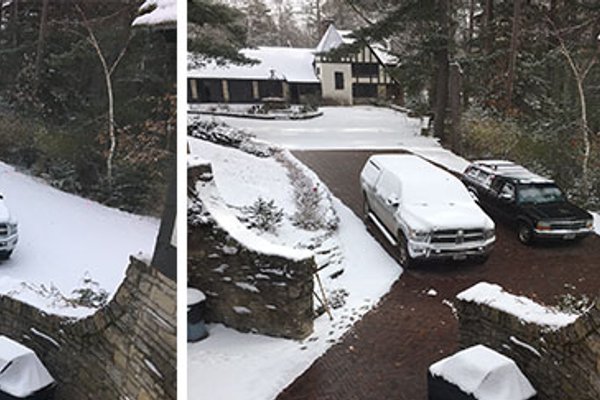
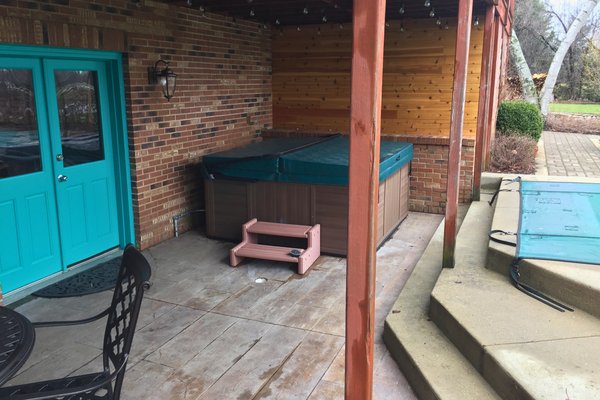


Consult with a Snow Melting Expert
Have questions about heating your concrete driveway, walkway, or patio? Our experts will respond within 1 business day.
Typically respond within 1 business day
Snow Melting in Concrete FAQs
Showing 10 of 17 questions
To ensure optimal performance, snow melting heating elements should be installed so that they are consistently 2"-3" from the finished surface. For installations using pavers, the maximum thickness for pavers installed over heating elements is 2.5".
Adding a full snow melting system to an existing, intact concrete slab requires a retrofit approach: saw-cutting channels into the surface, embedding the heating cables, and filling the channels with concrete or a suitable patching compound. This is more labour-intensive than installing during a new pour.
A more common approach is to install snow melting during a concrete overlay or full replacement. If your slab is due for resurfacing, that's the ideal time to add a heating system.
WarmlyYours offers a retrofit design guide that walks through the process step by step.
Yes. Concrete is the most popular surface for snow melting systems. Electric heating cables attach to rebar or wire mesh and are poured directly into the concrete—no sand bed or additional layers required. The cables sit 2–3 inches below the finished surface and heat the concrete mass from within, melting snow and ice on contact.
Snow melting works in any poured concrete surface: driveways, walkways, patios, stairs, ramps, and loading docks. The system is invisible once installed and designed to last the lifetime of the concrete.
Yes, you can install snow melting on an existing driveway through a retrofit application, though it's more complex than new construction.Retrofit installation options:
- Asphalt: Remove top layer, install cables/mats, repave—typically 1–2 weeks
- Concrete: Remove and replace concrete with heating system embedded—typically 2–4 weeks
- Pavers: Remove pavers, install cables in sand base, reinstall pavers—typically 3–5 days
Retrofit considerations:
- Higher labor costs than new construction
- Temporary disruption to driveway access
- Professional installation required (not DIY-friendly)
- Permits may be needed (check local codes)
Best retrofit option: Pavers offer the fastest, most cost-effective retrofit solution. View our complete Retrofit Application Guide to explore all retrofit options for your existing driveway. Our experts can assess feasibility and provide custom recommendations. Request a free SmartPlan with retrofit options tailored to your project.
Yes. Concrete installations are the best candidate for slab sensors because the sensor can be poured directly into the slab alongside the heating cables. Slab sensors measure the surface temperature and moisture level of the concrete, activating the system only when conditions call for melting.
Concrete is the only surface type that reliably supports slab sensors—asphalt and paver installations typically use aerial sensors instead.
Yes, snow melting works on all three surface types, but installation methods differ:Asphalt:
- Heating cables/mats embedded in asphalt layer
- Best for new construction or overlay applications
- Cost: $8–$18/sq.ft. installed
- View Asphalt Design Guide
Concrete:
- Cables/mats embedded in concrete slab
- Ideal for new driveways or complete replacement
- Cost: $10–$25/sq.ft. installed
- View Concrete Design Guide
Pavers:
- Cables installed in sand base beneath pavers
- Best retrofit option for existing driveways
- Cost: $12–$22/sq.ft. installed
- View Paver Design Guide
Pro tip: Pavers offer the most flexibility for retrofitting existing driveways. All three options deliver the same reliable snow melting performance with proper installation.
A properly installed snow melting system does not cause concrete to crack. In fact, it can help prevent cracking by eliminating the freeze-thaw cycles and chemical deicers (salt, calcium chloride) that are the primary causes of concrete spalling and surface deterioration.
The heating cables are designed to expand and contract with the concrete. Proper installation—correct cable depth, spacing, and placement of control joints—ensures the system and the slab work together without issues.
With an embedded snow melting system, concrete offers the highest thermal efficiency. Concrete's superior thermal mass means it retains heat longer and distributes it more evenly across the surface. Asphalt absorbs heat quickly but doesn't retain it as well.
Without a heating system, natural snowmelt depends on surface colour (darker asphalt absorbs more solar radiation) and ambient conditions. But for heated installations, concrete's thermal conductivity gives it the edge in melting performance and energy efficiency.
Snow melting cables should be embedded 2–3 inches below the finished concrete surface. The cables are attached to rebar or wire mesh at the correct depth before the concrete is poured.
If the cables are too shallow, they may cause hot spots or surface cracking. Too deep and the system will take longer to melt snow and use more energy. Your WarmlyYours SmartPlan will specify the exact depth for your project.
Installing a snow melting system in a concrete driveway involves securing the heating cables or mats to the rebar or wire mesh before the concrete is poured. The heating elements must be positioned 2 to 3 inches below the finished surface. Once the concrete is poured and cured, the system will efficiently melt snow and ice, keeping your driveway clear.
Snow melting systems use electric heating cables or mats embedded in outdoor surfaces to melt snow and ice as it falls.How it works step-by-step:
- Heating element activation: When snow/ice is detected, the control system activates heating cables or mats embedded in the surface
- Heat generation: Cables/mats generate 50 watts per square foot (mats) or 12 watts per linear foot (cables)
- Snow melting: Heat melts snow and ice on contact, preventing accumulation
- Water drainage: Melted water drains away naturally
- Automatic shutoff: System stops when snow event ends (smart controls)
Control options determine operation:
- Manual control: You turn system on/off manually
- Thermostat control: Activates when temperature drops below freezing
- Moisture sensor: Detects snow/ice and activates automatically
- WiFi control: Remote operation + automatic weather-based activation
Why it's effective:
- Proactive (melts snow as it falls, not after accumulation)
- Automatic (smart controls require no manual intervention)
- Efficient (only runs during snow events)
- Safe (eliminates shoveling and slip hazards)
System components:
- Heating cables or mats (embedded in surface)
- Thermostat/sensor (detects temperature/moisture)
- Control panel (manages operation)
- Power supply (240V or 120V, depending on system)
View installation videos to see snow melting systems in action.
Installation timeline varies by surface type and project size:New Construction:
- Asphalt: 1–2 weeks (excavation, cable/mat placement, repaving)
- Concrete: 2–4 weeks (formwork, cable/mat placement, curing)
- Pavers: 3–5 days (base prep, cable placement, paver installation)
Retrofit (Existing Driveway):
- Asphalt: 1–2 weeks (removal, installation, repaving)
- Concrete: 2–4 weeks (removal, replacement, curing)
- Pavers: 3–5 days (removal, installation, reinstallation)
Factors affecting timeline:
- Project size (larger projects take longer)
- Weather conditions (concrete curing requires time)
- Contractor availability (experienced installers work faster)
- Permits (approval delays can extend timeline)
Professional installation recommended. Find a certified installer or request a free SmartPlan with installation timeline estimates.
Heated driveway installation costs $8–$25 per square foot, depending on size, surface type, and system choice:
- Small driveway (500 sq.ft.): $4,000–$12,500
- Medium driveway (1,000 sq.ft.): $8,000–$25,000
- Large driveway (2,000 sq.ft.): $16,000–$50,000
Cost factors:
- Surface type: Asphalt is typically cheaper than concrete or pavers
- System type: Mats ($249+) vs. Cables ($229+) affect material costs
- Labor: Professional installation adds $2–$8 per sq.ft.
- Controls: Basic manual ($200–$400) to premium WiFi ($800–$1,500)
Get an accurate quote: Use our Instant Quote Builder or request a free SmartPlan with custom pricing for your project.
The cost of a concrete snow melting system depends on the area size, product choice (mats vs. cables), and installation complexity. As a general guide:
- Product cost: $12–$22 per square foot for WarmlyYours snow melting mats or cables
- Installation labour: Varies by region — the heating system adds 1–2 hours to a standard concrete pour
- Controls: $200–$800 depending on manual vs. automatic with sensors
A popular cost-saving option is tire-track coverage, which heats only the wheel paths instead of the full surface—cutting product costs roughly in half.
Use our Snow Melting Cost Calculator for an instant estimate for your project.
Operating cost depends on the heated area, installed wattage, your electricity rate and how many hours the system is energized. For example, 100 sq ft at 50 W/sq ft draws 5 kW (100 × 50 ÷ 1,000). At an illustrative $0.20/kWh, that is $1.00 per energized hour, or $6.00 for six energized hours. This is an example, not a typical bill. What changes your total:
- Heated area and coverage (full area or tire tracks)
- Installed watts per square foot
- Your local electricity rate
- Runtime, including preheating, snowfall and the controller’s drying cycle
Enter your own numbers in our snow melting cost calculator.
It depends on your climate, the area you need kept clear and what snow removal costs you now. An automatic system melts snow on the heated area during a storm, which can reduce shoveling, plowing and deicer use. Weigh that against two separate costs. Installation covers mats or cable, controls, electrical work and the driveway surface; our heated driveway cost guide breaks these down. Operating cost depends on area, wattage, electricity rate and runtime. For example, 100 sq ft at 50 W/sq ft is 5 kW: $1.00 per energized hour at an illustrative $0.20/kWh, or $6.00 for six energized hours. That is an example, not a typical bill. Compare your quote and a cost calculator estimate with your current snow removal costs.
Snow melting systems work with all standard concrete finishes: broom-finished, stamped, stained, polished, brushed, and exposed aggregate. The heating cables are embedded below the surface and are unaffected by the finish applied on top.
Stamped and decorative concrete are especially popular with snow melting because the system eliminates the need for salt or chemical deicers—which would damage decorative finishes over time.