Contact Us After Hours
Loading contact options...
Sign In
Loading...
Showing 10 of 15 questions
The breaker and wire sizes are selected based on the total amperage of the WarmlyYours heating system connected to a single thermostat. This information is on the WarmlyYours heating system's installation plan, electrical plan, or UL label. Based on guidelines from the National Electrical Code: loads up to 16 Amps may utilize 12 gauge wire with a 20-Amp breaker, and loads up to 12 Amps - 14 gauge wire with a 15-Amp breaker. Local code and/or other factors may change these guidelines.
In theory, it is possible, if no other options are available. We do not recommend it, but If the thermostat is controlling the floor temperature with a floor sensor, then it can go on an exterior wall. It is important that the floor sensor gets located in an area of the floor not hit by sunshine.
If the thermostat will be controlling the air temperature with the built-in ambient sensor, then it should go on an interior wall.
Relays can fail due to excessive current or voltage. When a relay is exposed to too much current, the contacts can burn out. High voltage can also damage the coil. Other reasons include mechanical wear and tear, dust or dirt buildup, and moisture. These factors can cause the relay to malfunction or stop working entirely. Regular maintenance and using the relay within its specified limits can help prevent failures.
A GFCI/GFEP (Ground Fault Circuit Interrupter / Ground Fault Equipment Protection) works differently than a circuit breaker by specifically detecting a small imbalance in electrical current between the hot and neutral wires, which indicates a potential ground fault (like a person touching a live wire), and instantly shutting off the power to prevent shock, while a circuit breaker only trips when there's a significant overload in current flow on the circuit, like a short circuit or too many appliances plugged in.
No, a circuit breaker will NOT protect against a power surge; a circuit breakers primary function is to protect against excessive current flow (overload), while a surge protector is specifically designed to handle voltage spikes, which are what power surges are considered to be.
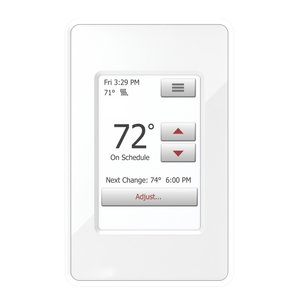
The flashing digits indicate that the actual (measured) floor temperature exceeds the thermostat temperature limit.
The temperature limit is set for either tile (104°F/40°C) or laminate (82°F/28°C) when the thermostat is first set up or re-configured.
For example: When the floor type (protection) is set to laminate, the limit defaults to 82°F/28°C. If the floor temperature goes above this - whether due to radiant floor heating or external heating sources, then the digits will flash and the heating is switched off.
Turning the temperature up or down will not affect the flashing digits. And leaving the thermostat alone with flashing digits does not harm the system.
Tip: To turn off the heated floor (ex. for months when it is not needed), on the outer edge of the thermostat, depress the lower right side button for 3-5 seconds. This will also turn it back on.
Most of the installation — laying out the heating element, placing the floor sensor, and pouring self-leveling cement — can be completed as a DIY project by a competent homeowner. However, the final thermostat wiring connection must be completed by a licensed electrician in most jurisdictions.
WarmlyYours makes DIY installation easier with:
Always check local electrical codes before beginning any floor heating installation.
Yes — insulating underlayment is strongly recommended when installing electric radiant floor heating over a concrete basement slab. Without it, a significant portion of the heat will conduct downward into the cold concrete rather than upward through the floor surface where you want it.
WarmlyYours recommends ThermalSheet® insulating underlayment for basement slab installations. It improves system efficiency, reduces operating costs, and helps the floor reach target temperature faster.
Skipping underlayment on a basement slab is one of the most common — and most costly — installation mistakes.
Turn the power (circuit breaker typically) to the thermostat off for 5 minutes and then back on to reset the thermostat.
If there is power to the thermostat and it still doesn't appear to work, then the next step toward a solution is to take Ohm measurements of the floor heating system.
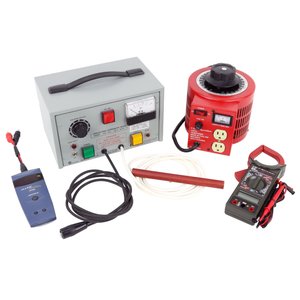
This is done with a digital multi-meter that can select a low 200 Ohm (Ω) scale. To conduct this test, turn off the circuit breaker. Remove the thermostat completely from the wall and disconnect the wires connected to the LOAD connections at the back of the thermostat. Disconnect the ground wires from the house ground, and do the test shown on the links below. If you are uncomfortable doing this test, contact a qualified electrician.
Please follow one of these guides based on the type of heating system installed:
For a quick overview of the testing process:
Here is a video showing how the test is done
Here is a video showing how to locate and identify the floor heating wires
If the system still does not function, contact +1 (800) 875-5285 WarmlyYours Technical Support and provide the Ohm measurements for further assistance.
Operating costs for electric radiant floor heating in a basement depend on your local electricity rate, the size of the heated area, and how many hours per day the system runs.
As a real-world example, a finished basement playroom in Whitchurch-Stouffville, Ontario cost approximately $0.19 CAD per hour to operate — significantly less than running a portable electric space heater, and with whole-floor comfort rather than point-source heat.
In the US, typical operating costs range from $0.01–$0.15 USD per hour depending on system size and local electricity rates. Use the WarmlyYours Operating Cost Calculator to estimate your specific project.
Electric radiant floor heating can serve as a primary heat source in a well-insulated basement, particularly for finished basement spaces used as living areas, playrooms, or home offices.
Unlike forced air systems, radiant heat warms objects and people from the floor up — which is especially effective in basements where cold radiates upward from the concrete slab. This makes it a more efficient and comfortable option than forced air in below-grade spaces.
For larger or poorly insulated basements, a heat loss calculation (available free through WarmlyYours SmartPlan®) will confirm whether the system can meet the full heating load or whether it should supplement an existing system.
GFCI can fail for various reasons, such as wear and tear, moisture, corrosion, power surges, faulty wiring, or improper installation. Some of these causes can be prevented by regular inspection and maintenance, while others may require professional assistance. It is important to note that GFCI devices (ex. thermostat, breakers, outlets) should be tested regularly as these do wear out over time.
Do you need support or specifications for a specific model? Identify your model below.