
In This Article
Yes, electric radiant floor heating can serve as a room's primary heat source. WarmlyYours TempZone™ systems provide 15 watts per square foot—delivering 25% more heat than the 12-watt industry standard—making them powerful enough to be the sole provider of warmth.
Quick Summary
- Primary Heating: Radiant floors can be a primary heat source if the heat output (BTUs/hr) is greater than the room's heat loss.
- Wattage Advantage: WarmlyYours TempZone™ systems deliver 15 watts per square foot—the highest in the industry—compared to the 12-watt standard of most competitors.
- Coverage: For primary heating, we recommend covering at least 80% of the floor area.
- Insulation: Proper insulation in walls, windows, and subfloors is critical to maintaining efficiency.
- Calculation: Always use a Heat Loss Calculator to verify suitability before installation.
Primary Heating Comparison
| Feature | WarmlyYours TempZone™ | Industry Standard |
|---|---|---|
| Wattage Output | 15 Watts/sq. ft. | 12 Watts/sq. ft. |
| Heating Power | 25% More Heat | Standard Heat |
| Primary Heat Suitability | High (Ideal for most rooms) | Moderate (Often supplemental) |
| Recommended Coverage | 80%+ of floor area | 90%+ of floor area |
The Power of 15 Watts
When considering radiant heat as a primary source, watt density is the most critical factor. Most floor heating systems on the market top out at 12 watts per square foot. While 12 watts is sufficient for supplemental floor warming, it often falls short when tasked with heating an entire room, especially in colder climates.
WarmlyYours TempZone™ mats and cables are engineered to provide 15 watts per square foot. This 25% increase in power allows the system to reach target temperatures faster and maintain comfort even when outdoor temperatures plummet. This higher output is often the deciding factor in whether a room can successfully transition away from traditional forced-air or baseboard heating. For a deeper dive into how this compares to other systems, read our comparison of radiant heat vs. conventional heat.
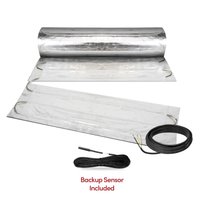
For many primary heating projects, the TempZone™ Flex Roll is the go-to choice due to its ease of installation and industry-leading 15-watt output. The 1.5' x 15' roll is our most popular size, providing 22.5 square feet of coverage—perfect for standard bathrooms and small kitchens.
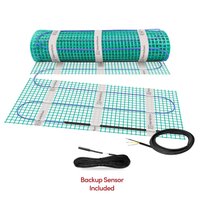
For installations under floating floors like laminate, engineered wood, or carpet, we offer Environ™ Flex Rolls. Unlike TempZone, Environ systems are designed to provide 12 watts per square foot. This lower wattage is intentional, as many floating flooring materials have strict temperature limits to prevent warping or damage. While 12 watts is slightly lower than our TempZone line, it remains an excellent option for supplemental warmth or primary heating in well-insulated spaces.
Energy Efficiency & Smart Control
One of the most common misconceptions about electric floor heating is that it is expensive to run. In reality, when paired with a programmable or smart thermostat, radiant heating is one of the most energy-efficient ways to heat your home. By using a thermostat to schedule your heating, you ensure that the system is only drawing power when the room is actually in use.
Furthermore, because radiant heat warms people and objects directly, most users find they can set their thermostat 2–4°F lower than they would with a forced-air system while maintaining the same level of comfort. This "zone control" allows you to heat only the rooms you are using, rather than wasting energy heating the entire house with a central furnace.
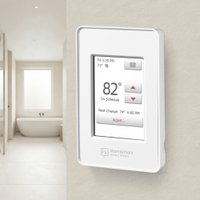
The nSpire Touch programmable thermostat is an excellent choice for maximizing efficiency, featuring an intuitive interface and energy usage monitoring.
Heat Loss Suspects
If too much heat escapes from your home, a floor-heating system would be a better supplementary heating option instead of a primary heating source. A few things will play a major role in determining exactly how much heat your room loses. First, if your room includes any exterior doors and/or windows, it is susceptible to heat loss. According to a Washington Post article, air leaks through gaps around doors and windows are responsible for as much as 21 percent of your home’s heat loss. The extent to which your room is sealed will depend on how much heat is able to escape.
A fireplace is another typical offender. Even if the damper is closed, air often escapes out of the chimney. Approximately 14 percent of your home’s heat loss comes from fireplaces, the Washington Post article states.
Calculating Your Heat Loss
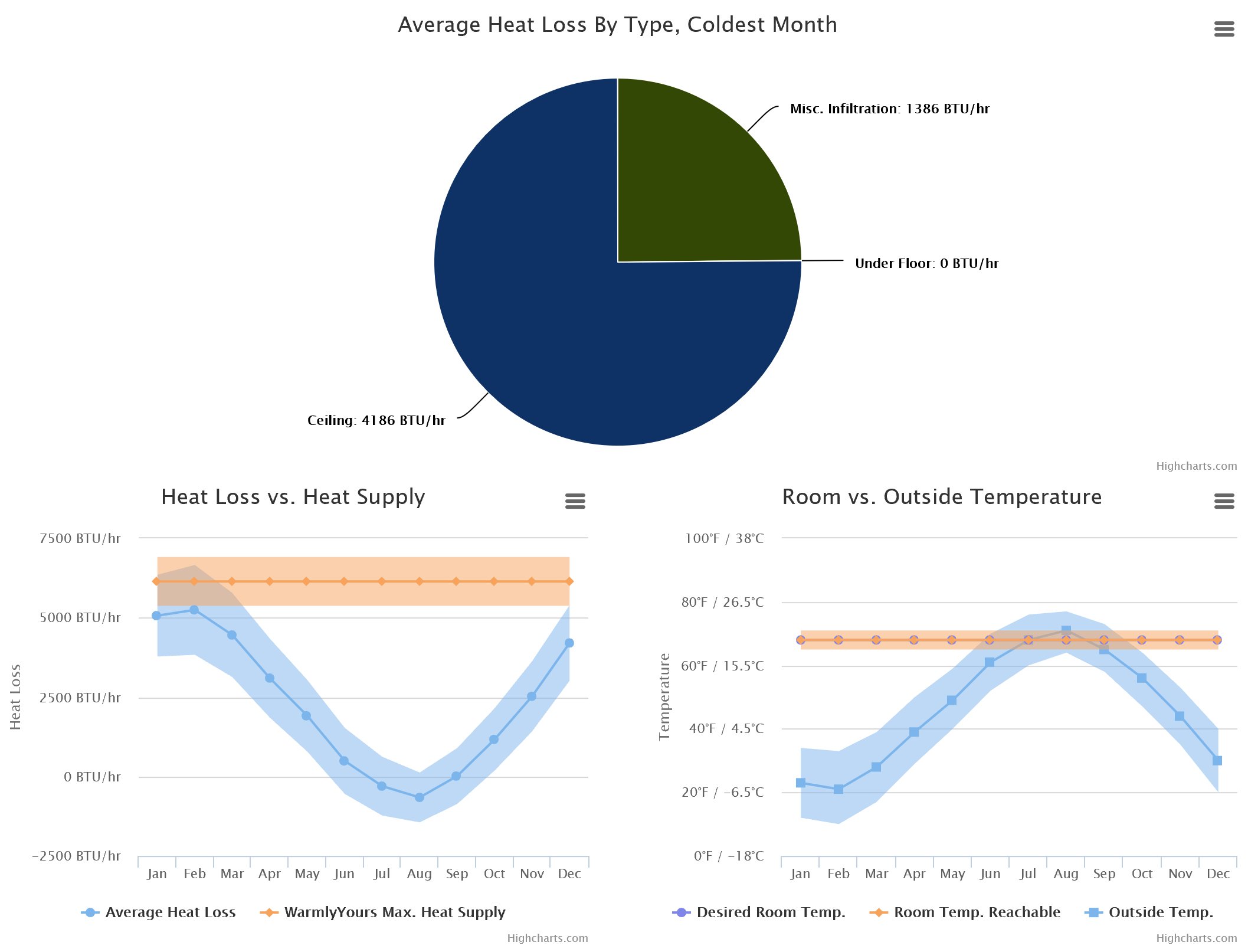
WarmlyYours’s Heat Loss Calculator will ask how well your room is sealed, how many fireplaces it has, and more in order to determine how much heat is being lost. As a result, you’ll find out if radiant floor heat can be your primary heat source! To help determine if this technology is the best fit for your specific home, check out our guide: Is Radiant Right for My House?
For example, take a 150-square-foot room located in the Midwest with an average sealing factor. The room is located above a heated room and the ceilings in the room are 9 feet. According to WarmlyYours’s Heat Loss Calculator, a floor-heating system can be the primary heat source for this room. It also notes that it would cost about $141.77 to operate the system during the coldest month of the year. However, if the room has a fireplace and a poor sealing factor, it is only suggested to use radiant floor heat as a supplementary heat source.
How to Calculate Your Room's Heat Loss
Determining if radiant floor heating can be your primary heat source requires a clear understanding of your room's thermal dynamics. Follow these steps to calculate your heat loss and verify system suitability.
Step-by-Step Heat Loss Calculation
- Step 1: Gather Dimensions: Measure the total square footage and ceiling height of the room.
- Step 2: Assess Insulation: Note the type and R-value of insulation in the walls, ceiling, and subfloor.
- Step 3: Identify Openings: Count all exterior windows and doors, noting their size and sealing quality.
- Step 4: Check for Fireplaces: Identify any fireplaces, as they are significant sources of air leakage.
- Step 5: Run the Calculator: Enter your data into the WarmlyYours Heat Loss Calculator.
- Step 6: Compare BTU/hr: Ensure the system's BTU output exceeds the calculated heat loss.
Primary Heating for Specific Spaces
While radiant floor heating is a popular choice for bathrooms and kitchens, it is increasingly being used as the primary heat source in specialized living spaces. Its ability to provide consistent, draft-free warmth makes it ideal for areas where traditional heating methods might be impractical or inefficient.
- Tiny Houses: In a tiny house, every square inch counts. Radiant floor heating eliminates the need for bulky radiators or vents, providing efficient primary heat while freeing up valuable wall space.
- Basements: Concrete slabs in basements are notorious for being cold. By installing radiant heat, you turn the floor itself into a giant radiator, making the space comfortable year-round.
- Sunrooms: A sunroom can be difficult to heat due to high glass exposure. Radiant heat provides the steady thermal output needed to keep these spaces usable even during the coldest winter months.
Radiant Panels as Primary Heat
While floor heating is a popular choice, radiant heating panels offer another powerful primary heating solution. These panels can be mounted on walls or ceilings, providing targeted warmth that is especially effective in rooms with high ceilings or limited floor space. When properly sized, radiant panels can maintain comfortable temperatures as a standalone system in well-insulated spaces or tiny homes.
Frequently Asked Questions
Can radiant floor heating be a primary heat source?
Yes, radiant floor heating can be a primary heat source if its heat output exceeds the room's heat loss. For best results, we recommend using a 15-watt system, covering at least 80% of the floor, and ensuring the space is well-insulated. Use our Heat Loss Calculator to verify your specific needs.
Why is 15 watts per square foot better for primary heating?
Most systems provide only 12 watts per square foot, which often lacks the power for primary heating in cold climates. WarmlyYours TempZone™ delivers 15 watts—a 25% increase. This higher output allows the system to overcome heat loss more effectively, providing reliable primary warmth even when outdoor temperatures drop.
How many watts per square foot does TempZone™ deliver?
WarmlyYours TempZone™ Flex Rolls and Easy Mats deliver 15 watts per square foot, the maximum allowed by the National Electrical Code. This provides 25% more heating power than the 12-watt industry standard. TempZone™ Cable can be spaced to deliver between 8 and 15 watts per square foot depending on your needs.
How long does radiant floor heating take to warm up?
Radiant floor heating typically takes 30-60 minutes to warm up, depending on floor type, insulation, and room size. Tile and stone floors heat faster (30-45 minutes), while thicker materials like hardwood may take 45-60 minutes.
For optimal efficiency, use a programmable thermostat to schedule heating before you wake up or arrive home. Once warm, the system maintains temperature efficiently. WarmlyYours thermostats include smart scheduling features and floor temperature sensors for precise control. WarmlyYours provides a backup sensor in every order.
How Much Does Radiant Floor Heating Cost to Operate During Game Day?
Radiant floor heating costs just $0.01 to $0.15 per hour to operate, making it one of the most energy-efficient heating solutions available. Installation costs vary based on room size and flooring type, but the long-term savings on energy bills make it a smart investment. Use our Operating Cost Calculator to see exactly how much you'll save for your specific space.
Do I need insulation when installing floor heating over concrete?
Yes, we strongly recommend installing insulation like ThermalSheet™ over concrete slabs. Concrete acts as a "heat sink," absorbing warmth that should go to your floor. Insulation directs the heat upward, significantly improving efficiency, reducing warm-up times, and allowing the system to function effectively as a primary heat source.
Do you need underlayment for radiant floor heating?
Underlayment is recommended for floating floors (laminate, LVP, wood) and installations over cold subfloors like concrete. It provides thermal insulation to prevent heat loss and improves system efficiency. For tile and stone, the system is typically embedded in thinset, so a separate underlayment is often unnecessary.
Can radiant floor heating be the primary heat source in a tiny house?
Yes, radiant floor heating is an excellent primary heat source for tiny houses in mild to moderate climates. Because tiny houses have small footprints, the 15-watt output of TempZone™ can easily maintain comfort while saving valuable wall space. Ensure the structure is well-insulated and use our Heat Loss Calculator to confirm.
Is electric radiant floor heating a good primary heat source for a basement?
Yes, electric radiant floor heating is ideal for basements because it warms the cold concrete slab and provides consistent heat from the ground up. In well-insulated finished basements, it can serve as the primary heat source, turning a typically chilly space into a comfortable, year-round living area.
Is radiant floor heating enough to heat a sunroom in winter?
Radiant floor heating can heat a sunroom if the space has high-quality insulation and double-pane glass. Since sunrooms have high heat loss, a 15-watt system is essential. In extremely cold climates or poorly insulated sunrooms, it is best used as a supplemental source to keep the floor comfortable.
Can radiant heat panels be used as a primary heat source?
Yes, radiant heating panels can serve as a primary heat source in well-insulated spaces like home offices or tiny houses. For optimal performance, the panels should be sized to meet the room’s specific heat loss requirements. They provide efficient, targeted warmth without the noise or dust of forced-air systems.
Ready to Upgrade Your Home's Comfort?
Don't settle for cold spots and inefficient heating. Whether you're planning a basement remodel, a tiny house build, or simply want to add luxury to your bathroom, WarmlyYours has the 15-watt advantage you need for reliable primary heat.
Take the next step today:
- Calculate your room's heat loss to verify suitability.
- Get a free, instant quote for your project.
- Call our radiant heating experts at (800) 875-5285 for a personalized consultation.
Have Questions About Your Project?
Our team of Radiant Experts is ready to help!
Related Articles
WarmlyYours SmartPlan™ Floor Heating Install Plan Saves Time & Effort

Answering Some of Electric Floor Heating’s Most Frequently Asked Questions (FAQs)

How Much Does Radiant Floor Heating Cost in 2026?
Winterize Your Garage and Driveway with Radiant Heating
Stay Updated
Get the latest radiant heating news and tips delivered to your inbox.