Contact Us After Hours

Loading...

Loading contact options...

Sign In

Loading...

Loading...

Bathroom Floor Heating

Bathroom Floor Heating

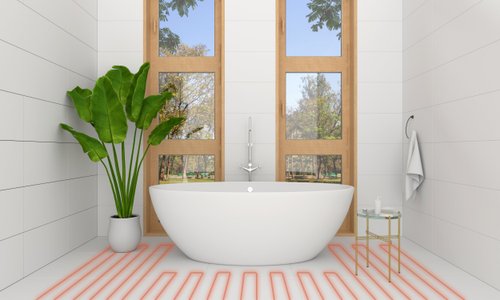
A heated bathroom floor turns cold tile into a spa-like retreat every morning. Explore all floor heating systems designed for bathrooms—browse products, get instant quotes, compare operating costs, and request free installation plans for layouts similar to yours.

See Projects View Products

Get an Instant Quote

Answer a few quick questions and we'll match you with the best floor heating system.
sq. ft.
Typical bathrooms: 40–60; kitchens: 100–200
Choose the surface you're installing under.
Optional — select if known.
 

Why Install Heated Floors in the Bathroom?

Tile and stone floors conduct radiant heat beautifully—turning your bathroom from the coldest room in the house into a warm, spa-like retreat. A bathroom floor heating system is one of the most popular home upgrades for comfort and resale value.

Spa-Like Comfort Step onto warm tile after every shower. Radiant heat transforms your bathroom into a personal retreat—no cold tile shock, ever.
Primary or Supplemental Heat Our systems deliver 15 watts per square foot—enough to serve as your bathroom's main heat source. No bulky radiators needed.
Pennies Per Day A typical 35 sq.ft. bathroom costs about $0.05–$0.15/hour to heat. Use our calculator below to estimate your costs.
Simple Installation TempZone mats roll right out on the subfloor. Most bathroom installs take just a few hours—watch our installation videos to see how.
Boosts Home Value 20% of home buyers consider floor heating a desired luxury. It's an upgrade that pays for itself when it's time to sell.
Clean & Energy Efficient Radiant heat warms objects directly—no fans, no ductwork, no circulating dust or allergens. More efficient than forced-air systems.

How Much Does a Heated Bathroom Floor Cost?

The cost of heated bathroom floors depends on the heating system, bathroom size, and installation method. Electric radiant floor heating for bathrooms typically ranges from $5–$12 per square foot for mats, rolls, or cables with fixing strips, and $15–$20 per square foot for cables with an uncoupling membrane. The larger the project, the lower the price per square foot.

Heated Bathroom Floor Cost by System Type

System Price / Sq Ft Best For
TempZone™ Cable with Grip Strips $5–$8 Custom layouts, odd-shaped bathrooms
TempZone™ Flex Roll $8–$12 Quick install, rectangular rooms
TempZone™ Cable + Prodeso Membrane $15–$20 Tile with crack isolation & waterproofing

Typical Heated Bathroom Floor Costs by Room Size

Bathroom Type Size Heated Area Estimated Cost
Powder Room 25 sq ft ~15 sq ft $75–$300
Standard Bathroom 50 sq ft ~35 sq ft $175–$700
Master Bathroom 80+ sq ft ~55 sq ft $275–$1,100

Labor & Electrical Costs

In addition to the heating system, budget for $5–$15 per square foot for tile or flooring installation over radiant heat, and $200–$500 for an electrician to wire the thermostat and breaker connection.

Operating Cost Calculator for Floor Heating Estimate your daily and monthly energy costs based on room size and local rates.
ft²
¢/kWh
Estimated Cost
$0.04
per hour
$0.15
per day
$4.50
per month

Rolls & Mats For Tile, Stone & Hardwood

WarmlyYours TempZone™ Flex Roll and TempZone™ Floor Heating Cable can be installed underneath ceramic tile, natural stone, hardwood, wood and other popular flooring materials, giving homeowners radiant in-floor heating that's truly luxurious. TempZone™ Flex Rolls are a more expensive option than the cable product but they require less time and effort to install.

TempZone Flex with Backup Sensor

Roll Out, Cut, and Fit

TempZone™ Flex Roll installs underneath ceramic tile, natural stone, hardwood, wood, and other popular flooring materials, giving homeowners radiant in-floor heating that's truly luxurious.

Features
  • Ideal for full-room coverage (primary or supplemental heat)
  • Pre-spaced heating cable for fast, consistent installation
  • Most popular choice for bathrooms & kitchens
  • 25 Year Warranty
  • 15 Watts Per Sq. Ft
TempZone Easy Mat with Backup Floor Sensor

Place, Connect, and Heat

TempZone™ Easy Mats allow for radiant heating of smaller, simpler areas at an affordable cost. These under floor mats are perfect for providing targeted heating for moderately sized bathroom and kitchen floors.

Features
  • Pre-sized mats for quick installs with no complex cuts
  • Perfect for spot heating (vanities, entryways, small spaces)
  • Cost-effective and beginner-friendly option
  • 25 Year Warranty
  • 15 Watts Per Sq. Ft
TempZone Custom with Backup Sensor

Made‑to‑Measure Warmth for Any Layout

TempZone™ Custom Mats for tile, stone or hardwood floors were designed to offer the most optimal fit for rooms of any shape. Our custom-fit mats were developed to follow curves and angles with ease.

Features
  • Designed to your exact floor plan for edge‑to‑edge coverage
  • No on‑site cuts or turns—faster, cleaner installation
  • Ideal for curves, angles, and obstacles like islands and vanities
  • 25 Year Warranty
  • 12-15 Watts Per Sq. Ft

Cable for Tile, Stone & Hardwood

TempZone Cable with Backup Sensor

Snap-In, Secure, and Heat

TempZone™ Cable is ultra-low EMF by design and is available in two voltage options and a range of lengths to meet the requirements of any installation.

Features
  • Works under tile, stone, and luxury vinyl floors
  • Provides radiant heat and crack isolation
  • Flexible layouts for irregular or custom-shaped rooms
  • 25 Year Warranty
  • 9-15 Watts Per Sq. Ft
TempZone Ruler Cable with Backup Sensor

Pro‑exclusive: Measure, Lay, and Heat

TempZone™ Ruler Cable is ultra-low EMF by design and is available in two voltage options and a range of lengths to meet the requirements of any installation.

Features
  • Built-in ruler markings for precise, repeatable spacing
  • Ideal for large areas requiring consistent coverage
  • Flexible, durable cable for clean turns and complex layouts
  • Comes with easy-to-read hash marks at every half-inch, inch, and foot increment on the cable
  • Can be used to heat some of the most popular floor coverings like tile, stone, marble, luxury vinyl tile, and more

Shower Floor Heating

Our shower heating products are approved for wet locations such as a shower floor or bench. These products can help ensure that your entire tile shower is comfortable on chilly mornings.

TempZone Shower Mat with Backup Floor Sensor

Step In, Warm Up, Relax

TempZone™ Shower Mats have been exclusively designed to provide warmth to a shower floor. The TempZone™ Shower Floor Mats ensure that your first step into your shower is a warm and soothing experience. The Shower Floor Mats are engineered to cover traditional shower floor areas and have taken the shower drain into consideration with a pre-cut hole to accommodate it.

Features
  • Pre-shaped mats designed for shower floors
  • Adds luxury comfort to bathrooms & spa showers
  • Compatible with waterproofing systems
  • 25 Year Warranty
  • 15 Watts Per Sq. Ft
TempZone Shower Mat What is Included Group Shot with Label

Sit, Soak, and Stay Warm

TempZone™ Shower Bench Mats have been designed to provide warmth to a shower bench and provide a luxuriant experience. Our Shower Bench Mats are installed beneath the shower bench itself so that they can efficiently radiate heat upwards.

Features
  • Pre‑sized mats warm benches for spa‑like comfort
  • Pairs perfectly with in‑shower floor heating
  • Compatible with popular waterproofing systems
  • 25 Year Warranty
  • 15 Watts Per Sq. Ft

Bathroom Floor Heating Projects

See how real homeowners installed heated bathroom floors with radiant floor heating—including costs, product choices, and installation details.

How Do You Install Bathroom Floor Heating?

Installing heated floors in a bathroom depends on your floor covering type and room shape, but most electric radiant floor heating systems follow a similar process. Here's a general overview of how to install a heated bathroom floor.

The most common flooring for bathroom radiant heat is tile, though waterproof vinyl and natural stone are growing in popularity. Tile conducts heat efficiently and resists moisture—making it the ideal surface for a bathroom floor warmer. One popular bathroom floor heating system is TempZone™ Cable paired with the Prodeso Uncoupling Membrane, which provides crack isolation while reducing installation time.

How to Install Bathroom Floor Heating Under Tile

  • Step 1: Clean the subfloor and make sure it is clear of dirt, dust, and grease.
  • Step 2: Pre-cut the membrane based on your installation plan.
  • Step 3: Dry-fit the membrane pieces to make sure they fit properly.
  • Step 4: Align all of the cable channels between pieces of the membrane.
  • Step 5: Adhere the membrane to the subfloor with the right thinset.
  • Step 6: Test the floor heating cable with an ohmmeter (before, during, and after installation).
  • Step 7: Secure the floor heating cable in the membrane channels at proper spacing.
  • Step 8: Install tiles by back-buttering and working your way out of the room.
  • Step 9: Wait until the thinset has completely cured before turning on the heating system. Enjoy your warm bathroom flooring!

For a comprehensive walkthrough with photos and pro tips, see our detailed step-by-step installation guide.

Bathroom Floor Heating Customer Reviews

Rated 4.91/5 based on 676 reviews

We take pride in providing both exceptional service and great products. But don't just take our word for it, check out what some of our customers have had to say.

Frequently Asked Questions

Showing 10 of 19 questions

Yes. Heated bathroom floors are one of the most popular home upgrades for both comfort and resale value. They eliminate the cold-tile shock after a shower, provide energy-efficient supplemental or primary heat, and cost only pennies per day to operate. About 20% of home buyers consider radiant floor heating a desired luxury feature.

Was this helpful? Yes No

DIY installation is possible, but professional installation is recommended. Here's what you need to know.

DIY Installation: Pros and Cons

Pros:

  • Save on labor costs ($500–$2,500)
  • Control over installation timeline
  • Learn how the system works
  • Satisfaction of completing the project yourself

Cons:

  • Requires careful planning and precision
  • Mistakes can damage the system or void warranty
  • Electrical connections must be done by a licensed electrician (non-negotiable)
  • Testing requires specialized equipment (multimeter/ohmmeter)
  • Flooring installation over heating elements requires skill
  • One error can be expensive to fix

What You Can DIY:

Heating Element Installation (If you're experienced):

  • Measure and plan layout carefully
  • Position heating mat or cable according to SmartPlan™
  • Secure cables with tape or clips
  • Maintain proper spacing (follow manufacturer guidelines)
  • Avoid placing under fixtures

What Requires a Professional:

Electrical Connections (Licensed Electrician Required):

  • Connecting thermostat to main power supply
  • GFCI protection setup
  • Breaker installation
  • Code compliance verification
  • This is non-negotiable—improper electrical work is dangerous and voids warranty

Testing (Before Flooring Installation):

  • Resistance testing with multimeter
  • Verification that readings match specifications
  • Identifying problems before they're covered by flooring

Flooring Installation:

  • Applying thinset mortar or self-leveling compound correctly
  • Proper tile or flooring installation over heating elements
  • Ensuring no damage to cables during installation

Recommended Approach: Hybrid Installation

Best practice for DIY-minded homeowners:

  1. Hire a professional to handle electrical connections
  2. You install the heating element (if comfortable)
  3. Hire a professional flooring installer to cover the system
  4. Licensed electrician does final connections and testing

This balances cost savings with professional expertise for critical components.

Before You Start:

Get a detailed SmartPlan™:

  • Installation diagram showing exact cable/mat placement
  • Electrical plan for your electrician
  • Testing specifications
  • Step-by-step instructions

Get a free SmartPlan™ (delivered in one business day).

Critical Success Factors:

  • Follow your SmartPlan™ exactly
  • Measure twice, install once
  • Test the system before covering with flooring
  • Use only a WarmlyYours-approved thermostat with GFCI
  • Have a licensed electrician handle all electrical work
  • Don't skip steps or take shortcuts

Professional Installation Benefits:

  • Warranty protection (many warranties require professional installation)
  • Expert problem-solving if issues arise
  • Guaranteed code compliance
  • Peace of mind
  • Faster completion

Bottom Line: DIY heating element installation is possible for experienced homeowners, but electrical connections and flooring installation should be handled by professionals. The safest and most reliable approach is hiring professionals for the entire project. Either way, never skip the electrical work—hire a licensed electrician.

Was this helpful? Yes No

No. Heating elements should only be installed in usable floor areas. Avoid placing them under permanent fixtures like bathtubs, toilets, and vanities.

Why Not Under Fixtures:

Bathtubs:

  • Heating under a tub wastes energy (the tub insulates the heat)
  • Creates unnecessary heat that doesn't benefit the bathroom
  • Difficult to access if repairs are needed
  • Risk of damage during tub installation or maintenance

Toilets:

  • No benefit to heating under a toilet
  • Wastes energy
  • Complicates installation and future repairs

Vanities & Cabinets:

  • Heat is trapped and wasted
  • Can damage cabinet materials over time
  • Reduces system efficiency

Where to Install Heating Elements:

Focus on:

  • Open floor areas where people walk barefoot
  • In front of the vanity (where you stand to brush teeth, wash hands)
  • Around the toilet base (for comfort and safety)
  • Entrance areas (for that luxurious warm floor feeling)
  • Any open floor space

Measure Your Usable Floor Area:

Step 1: Measure total bathroom dimensions

  • Length and width of the room

Step 2: Identify and exclude permanent fixtures

  • Bathtub footprint
  • Toilet base
  • Vanity footprint
  • Built-in cabinets or shelving

Step 3: Calculate usable floor area

  • Total square footage minus fixture areas = Heated area

Example:

  • Total bathroom: 50 sq.ft.
  • Bathtub: 10 sq.ft.
  • Toilet: 2 sq.ft.
  • Vanity: 8 sq.ft.
  • Usable heated area: 30 sq.ft.

Get Expert Help:

Submit your floor plan to WarmlyYours and our engineers will:

  • Identify the optimal usable floor area
  • Recommend the right product size
  • Create a custom installation diagram
  • Provide an itemized quote

Get a free SmartPlan™ (delivered in one business day) or use the Quote Builder for instant pricing.

Bottom Line: Install heating elements only in open floor areas where people walk barefoot. This maximizes comfort, efficiency, and cost-effectiveness while avoiding wasted energy under fixtures.

Was this helpful? Yes No

Yes, but it requires removing the existing flooring first. Electric radiant floor heating is installed on top of the subfloor, beneath the finished floor covering. If you're already planning a bathroom renovation or re-tiling project, adding heated floors is straightforward and cost-effective. For a hassle-free installation, request a free SmartPlan™ with your room dimensions.

Was this helpful? Yes No

No. Electric radiant floor heating is surprisingly efficient. A typical 35 sq ft bathroom uses about 210 watts—roughly the same as two light bulbs—and costs just $0.03–$0.05 per hour to operate at average U.S. electricity rates. Using a programmable thermostat to schedule heating only during morning and evening routines keeps monthly costs under $5 for most bathrooms.

Was this helpful? Yes No

Yes, radiant floor heating significantly increases home resale value and buyer appeal. It's one of the most sought-after luxury features in today's real estate market.

Why Buyers Love Radiant Heating:

Luxury & Comfort:

  • Perceived as a high-end, premium feature
  • Creates a spa-like bathroom experience
  • Demonstrates attention to detail and quality craftsmanship
  • Sets your home apart from competitors

Energy Efficiency:

  • Eco-conscious buyers are attracted to efficient systems
  • Lower operating costs appeal to budget-minded buyers
  • Reduces overall home energy consumption
  • Aligns with green home trends

Health & Safety:

  • Reduced slip and fall risk (especially appealing to families with children or elderly relatives)
  • Better air quality (no dust circulation)
  • Mold and mildew prevention
  • Creates a healthier home environment

Real Estate Market Reality:

Featured in Listings: When you look at most home listings, radiant floor heating is one of the #1 features highlighted. Real estate agents know it's a major selling point that catches buyer attention.

Professional Endorsement: Real estate professionals note that radiant heating is a sought-after amenity that:

  • Increases buyer interest
  • Justifies higher asking prices
  • Reduces time on market
  • Appeals to a wide range of buyers

Competitive Advantage: In a competitive market, radiant floor heating:

  • Distinguishes your home from similar properties
  • Creates a memorable impression on potential buyers
  • Demonstrates modern home upgrades
  • Suggests overall quality and maintenance

Estimated Value Increase:

While specific statistics are limited, real estate professionals report:

  • Modest increase in perceived value (varies by market and buyer demographics)
  • Faster sales due to increased buyer interest
  • Ability to command higher asking price in competitive markets
  • Better negotiating position with multiple offers

The exact value increase depends on:

  • Your local real estate market
  • Home price range
  • Buyer demographics in your area
  • Overall home condition and upgrades

Strategic Selling Point:

When listing your home:

  • Highlight radiant floor heating prominently
  • Emphasize comfort, luxury, and efficiency
  • Mention energy savings
  • Showcase the spa-like bathroom experience
  • Appeal to eco-conscious and comfort-focused buyers

Long-Term Investment:

Beyond resale value:

  • 25–30+ year lifespan means decades of comfort
  • Minimal maintenance required
  • Increases daily enjoyment of your home
  • Improves quality of life for your family
  • Creates a more inviting, welcoming home

Bottom Line: Radiant floor heating is a luxury upgrade that increases home resale value, attracts buyer interest, and sets your property apart in a competitive market. It's one of the most sought-after features in real estate today—making it a smart investment for both comfort and home value.

Was this helpful? Yes No

The most popular method is electric radiant floor heating, installed between the subfloor and your finished flooring. Systems like TempZone™ Flex Rolls or TempZone™ Cable are placed under tile, stone, or luxury vinyl and controlled by a thermostat with a floor sensor. The heating elements warm the floor surface directly—no ductwork or radiators needed. Most bathroom installations take just a few hours.

Was this helpful? Yes No

Accurate measurement is critical for getting the right system size and price. Here's how to do it correctly.

Step-by-Step Measurement Process:

Step 1: Measure Total Bathroom Dimensions

  • Measure the length of the room (wall to wall)
  • Measure the width of the room (wall to wall)
  • Multiply length × width = Total bathroom square footage
  • Example: 8 ft. long × 6 ft. wide = 48 sq.ft. total

Step 2: Identify Permanent Fixtures List all fixtures that will NOT be heated:

  • Bathtub (measure length × width)
  • Toilet base (typically 2–3 sq.ft.)
  • Vanity/sink cabinet (measure length × width)
  • Built-in shelving or cabinets
  • Shower enclosure (if separate from tub)

Step 3: Calculate Fixture Square Footage Measure each fixture:

  • Bathtub: 5 ft. × 2.5 ft. = 12.5 sq.ft.
  • Toilet: 2.5 ft. × 1.5 ft. = 3.75 sq.ft.
  • Vanity: 4 ft. × 2 ft. = 8 sq.ft.
  • Total fixtures: 24.25 sq.ft.

Step 4: Calculate Usable Floor Area Total bathroom sq.ft. − Fixture sq.ft. = Usable heated area

Example: 48 sq.ft. − 24.25 sq.ft. = 23.75 sq.ft. usable

Real-World Examples:

Powder Room:

  • Total: 15 sq.ft.
  • Toilet: 3 sq.ft.
  • Small vanity: 4 sq.ft.
  • Usable area: 8 sq.ft.
  • Recommended: 3' × 2' or 2' × 3' Easy Mat ($130–$145)

Standard Bathroom:

  • Total: 45 sq.ft.
  • Bathtub: 12 sq.ft.
  • Toilet: 3 sq.ft.
  • Vanity: 8 sq.ft.
  • Usable area: 22 sq.ft.
  • Recommended: 3' × 5' Easy Mat or Flex Roll ($220)

Master Bathroom:

  • Total: 75 sq.ft.
  • Bathtub: 15 sq.ft.
  • Toilet: 3 sq.ft.
  • Double vanity: 12 sq.ft.
  • Usable area: 45 sq.ft.
  • Recommended: 3' × 6' or 3' × 8' Easy Mat or Flex Roll ($255–$290)

Pro Tips:

  • Don't forget to exclude doorway swing areas if they'll have a door
  • Include open floor space in front of vanity (where you stand)
  • Include floor space around toilet base

Let WarmlyYours Do the Work:

Don't want to measure yourself? Submit your floor plan to WarmlyYours:

Our engineers will:

  • Calculate exact usable floor area
  • Recommend the perfect product size
  • Create a custom installation diagram
  • Provide an itemized quote

Get a free SmartPlan™ (delivered in one business day).

Bottom Line: Measure total bathroom size, subtract permanent fixtures, and you have your usable floor area. This determines your system size and cost. When in doubt, let WarmlyYours' engineers calculate it for you.

Was this helpful? Yes No

For a typical 50-square-foot bathroom, a complete electric underfloor heating system usually costs between $500 and $1,000 for materials, including the heating element, thermostat, and (if needed) membrane/insulating underlayment. Operating costs are remarkably low, often averaging just $0.10 to $0.25 per day depending on your local electricity rates and usage habits. You can use our interactive calculator to get a precise estimate for your specific project.

Operating Cost Calculator for Floor Heating Estimate your daily and monthly energy costs based on room size and local rates.
sq. ft.
¢/kWh

Was this helpful? Yes No

The cost of bathroom floor heating is more affordable than most homeowners expect. Here's the real breakdown:

Heating Element Costs:

  • Basic heating mats/cables: $6–$20 per square foot
  • With waterproof membrane: $9+ per square foot

Real-World Examples by Bathroom Type:

Powder Room (11–20 sq.ft. usable floor):

  • Heating element: about $180 
  • Total with installation materials: $350-$450

Standard Bathroom (35–45 sq.ft. usable floor):

  • Heating element: about $400
  • Total with installation materials: $550-$650

Master Bathroom/Double Vanity (50–75 sq.ft. usable floor):

  • Heating element: $500-$600
  • Total with installation materials: $650-$850

Professional Installation:

  • Labor costs: $500–$2,500 (depending on complexity)
  • Electrical connection: $200–$500 (licensed electrician)

Total Project Cost Range:

  • Small bathroom: About $1,000
  • Medium bathroom: About $1,500
  • Large master bathroom: About $2,000

What's Included in the Cost:

  • Heating mat or cable system
  • Thermostat
  • Installation materials (thinset, self-leveling compound)
  • Electrical work
  • Flooring (not included in heating system cost)

Get an Exact Quote:

Every bathroom is different. Use the WarmlyYours Quote Builder to get a precise estimate for your specific bathroom size and layout. Or submit your floor plan for a free SmartPlan™—delivered in one business day—that includes product selection, installation diagram, electrical plan, and operating cost estimates.

Bottom Line:

Bathroom floor heating is surprisingly affordable—often less than $1,500 for a complete installation, making it one of the most cost-effective home comfort upgrades available.

Was this helpful? Yes No

For a typical 50 sq ft bathroom with about 35 sq ft of heated area, electric floor heating costs between $175 and $700 for the heating system alone, depending on the product type. TempZone™ Cable with Grip Strips is the most affordable at $5–$8/sq ft, while TempZone™ Cable with a Prodeso Membrane runs $15–$20/sq ft. Add $5–$15/sq ft for tile installation and $200–$500 for electrical hookup.

Was this helpful? Yes No

A complete electric floor heating system consists of two essential components: the heating element (either a pre-spaced mat or loose cable) and a specialized thermostat. But most systems will also incorporate a floor sensor to monitor temperature. Cable-based systems may also use an uncoupling membrane for tile protection. If you're installing over a cement slab or a poorly insulated space, you may also want to include thermal insulation to prevent heat loss. Together, these parts ensure safe, efficient, and consistent warmth throughout your room.

Was this helpful? Yes No

Bathroom floor heating has specific electrical requirements for safety and proper operation. Understanding these ensures your system works correctly and meets code.

GFCI Protection (Built-In to WarmlyYours Thermostats):

  • GFCI = Ground Fault Circuit Interrupter
  • Required by electrical code for all bathroom circuits
  • Protects against electrical shock from water exposure
  • Detects ground faults and cuts power instantly
  • WarmlyYours thermostats have GFCI protection built-in
  • This is why it's critical to use a thermostat designed specifically for electric floor heating

Electrical Specifications:

Voltage:

  • Most residential systems: 120V or 240V
  • Larger bathrooms may require 240V for efficiency
  • Your electrician will determine based on system size

Wattage:

  • Varies by system size and type
  • Typical bathroom systems: 90–270 watts
  • Larger master bathrooms: 300–400+ watts
  • Your SmartPlan™ will specify exact wattage for your system

Circuit Requirements:

  • Dedicated circuit recommended (not shared with other bathroom devices)
  • Proper breaker size based on system wattage
  • Adequate amperage for safe operation

What Your Electrician Needs to Know:

When you get a quote or SmartPlan™, it includes:

  • Electrical Plan: Detailed specifications including voltage, wattage, and ohm readings
  • Circuit requirements: What breaker size is needed
  • GFCI specifications: How the system must be protected
  • Connection details: How to safely connect thermostat and power supply

Installation Process:

  1. Heating element installed by flooring contractor
  2. Thermostat positioned between heating loops (not touching cables)
  3. System tested with multimeter before flooring is installed
  4. Licensed electrician connects thermostat to main power supply
  5. GFCI protection verified (built into thermostat) before system is commissioned
  6. Final testing to confirm proper operation

Important Safety Notes:

  • Always hire a licensed electrician for electrical connections
  • Never attempt electrical work yourself
  • Use only a thermostat designed for electric floor heating (GFCI built-in)
  • Improper electrical installation voids warranty and creates safety hazards

Get Professional Guidance:

Get a free SmartPlan™ which includes:

  • Detailed electrical plan with all specifications
  • Voltage and wattage requirements
  • GFCI protection details
  • Information to share with your electrician

Your electrician will use this plan to safely install and connect your system to code.

Bottom Line: Bathroom floor heating requires proper voltage/wattage and a dedicated circuit. WarmlyYours thermostats have GFCI protection built-in, making them essential for safe operation. Always use a licensed electrician for electrical connections.

Was this helpful? Yes No

Bathroom floor heating is incredibly cheap to operate. The actual cost depends on your system size and local electricity rate.

WarmlyYours System Power Output:

  • Most systems: 10–15 watts per square foot
  • Actual wattage varies based on product type and spacing

Real Operating Cost Examples (at $0.12/kWh average):Small Bathroom (6–9 sq.ft. heated area):

  • Per hour: $0.01–$0.02
  • Per day (2–3 hours): $0.02–$0.06
  • Per month: $0.60–$1.80
  • Per year: $7–$22

Standard Bathroom (15–20 sq.ft. heated area):

  • Per hour: $0.02–$0.03
  • Per day (3 hours): $0.06–$0.09
  • Per month: $1.80–$2.70
  • Per year: $22–$32

Master Bathroom (25–30 sq.ft. heated area):

  • Per hour: $0.03–$0.05
  • Per day (3 hours): $0.09–$0.15
  • Per month: $2.70–$4.50
  • Per year: $32–$54

Cost Varies by:

  • Your local electricity rate — $0.10–$0.18+ per kWh depending on region
  • Heated floor area — Larger areas cost more to heat
  • Daily usage — How many hours per day you use the bathroom
  • Thermostat settings — Lower temperatures = lower costs

Maximize Energy Savings:

Use a programmable thermostat like the nSpire Touch or nJoy WiFi to:

  • Set heating schedules around your daily routine
  • Lower temperature when bathroom is unoccupied
  • Avoid unnecessary heating during warmer months

Calculate Your Exact Costs:

Use the WarmlyYours Operating Cost Calculator to estimate your specific monthly and annual costs based on your local electricity rate, heated area size, and usage patterns.

Bottom Line:

Most bathroom floor heating systems cost less than $1–$5 per month to operate—one of the most energy-efficient heating solutions available.

Was this helpful? Yes No

Bathroom floor heating provides multiple safety advantages that make bathrooms safer and more hygienic.

Reduced Slip and Fall Risk: Wet bathroom floors are slippery and dangerous. Radiant floor heating addresses this directly:

  • Warms the floor surface, which accelerates drying of wet surfaces
  • Rapid drying minimizes slippery areas
  • Reduces likelihood of slips and falls—especially important for children and elderly family members
  • Creates a safer environment for everyone, especially during morning and evening routines

Elimination of Burn Hazards: Traditional heating methods (space heaters, wall-mounted heaters) pose burn risks:

  • Radiant heating elements are concealed beneath the flooring
  • No exposed hot surfaces to touch or burn against
  • Completely safe for children and pets
  • No risk of accidental contact with heating elements

Enhanced Air Quality: Unlike forced-air heating systems:

  • Radiant heating doesn't circulate dust, allergens, or particles
  • No air movement means cleaner, healthier bathroom air
  • Particularly beneficial for people with allergies or respiratory sensitivities
  • Creates a more hygienic environment

Space Optimization: Radiant heating eliminates the need for visible heating units:

  • No bulky space heaters or wall-mounted units
  • Frees up valuable bathroom space
  • Reduces clutter and potential tripping hazards
  • Creates a cleaner, more organized bathroom aesthetic

Humidity & Mold Control: Warm floors help manage moisture:

  • Reduces condensation on walls, mirrors, and windows
  • Lowers overall bathroom humidity
  • Inhibits mold and mildew growth
  • Creates a healthier, fresher-smelling bathroom

Temperature Control: Programmable thermostats prevent overheating:

  • Set safe, comfortable floor temperatures (typically 82°F)
  • Prevents excessively hot floors that could cause discomfort
  • Maintains consistent, gentle warmth
  • No on/off cycling that can create temperature extremes

Bottom Line: Bathroom floor heating is one of the safest heating solutions available. It reduces slip hazards, eliminates burn risks, improves air quality, and creates a healthier, more hygienic bathroom environment for your entire family.

Was this helpful? Yes No

Most bathroom flooring materials work great with radiant heating. The key is choosing materials that conduct heat well and resist moisture.

Excellent Choices:

Ceramic & Porcelain Tile:

Natural Stone (Marble, Granite, Slate, Travertine):

  • Excellent heat conductor and retains warmth very well
  • Efficiently transfers heat from the system
  • Floors feel luxurious and warm
  • Thicker stones may take slightly longer to heat up initially, but then release heat slowly for consistent comfort
  • Can potentially save energy due to excellent heat retention
  • Moisture-resistant when properly sealed
  • Premium aesthetic appeal

Luxury Vinyl Tile/Plank (LVT/LVP):

Good Choices:

Engineered Hardwood:

Laminate:

  • Moisture-resistant varieties work
  • Requires proper waterproofing
  • Avoid standard laminate in high-moisture bathrooms
  • Laminate floor heating guide

Avoid:

Solid Hardwood:

  • Too sensitive to moisture and temperature fluctuations
  • Risk of cupping, warping, or splitting
  • Not recommended for bathrooms

Standard Carpet:

  • Traps moisture underneath
  • Creates mold risk
  • Reduces heat transfer efficiency

Pro Tip: Tile and natural stone are the #1 choices for bathrooms because they combine excellent heat conductivity, moisture resistance, durability, and aesthetic appeal. LVT/LVP is an excellent budget-friendly alternative.

Bottom Line: Choose tile, natural stone, or LVT/LVP for best results. Avoid solid hardwood and standard carpet. These materials maximize comfort, durability, and the benefits of radiant heating.

Was this helpful? Yes No

The main considerations are upfront cost and installation timing. Electric radiant floor heating must be installed during a flooring renovation—not after. It also adds modest cost to your project (starting at $5/sq ft). However, operating costs are very low ($0.03–$0.15/hour for a typical bathroom), and the 25-year warranty on TempZone™ systems means maintenance is virtually zero.

Was this helpful? Yes No

All three systems deliver excellent results—the choice depends on your bathroom layout, complexity, and installation experience.

TempZone Flex Rolls

Roll Out, Cut, and Fit. Flex Rolls offer flexibility for custom bathroom layouts and irregular shapes. You can cut and turn the mat to navigate around fixtures like toilets, vanities, and shower bases. They're ideal for bathrooms where you need to work around obstacles or want a custom fit.

  • Flexible for any bathroom shape
  • Cut and turn as needed
  • Great for DIY and professional installations
  • Starting at $119

TempZone Easy Mats

Place, Connect, and Heat. Easy Mats come pre-spaced at a fixed 3" spacing (15 watts/sq.ft.) in standard sizes. They're the fastest option for straightforward bathroom layouts—just lay them down, connect them, and you're ready for flooring. Perfect for rectangular bathrooms without complex obstacles.

  • Pre-spaced and ready to install
  • Standard sizes (6–210 sq.ft.)
  • Fastest installation for simple layouts
  • Ideal for smaller to medium bathrooms
  • Starting at $130

TempZone Cable

Snap-In, Secure, and Heat. Cable offers maximum flexibility and is preferred by experienced installers working on complex bathroom projects. You can space the cable exactly as needed (9–15 watts/sq.ft. depending on spacing), making it ideal for bathrooms with challenging layouts, multiple zones, or specific climate needs.

  • Maximum customization
  • Professional-grade for complex layouts
  • Available in multiple voltage options
  • Ultra-low EMF by design
  • Starting at $139

How to Choose

  • Easy Mats if your bathroom is rectangular and straightforward
  • Flex Rolls if your bathroom has curves, angles, or fixtures to work around
  • Cable if you're an experienced installer or need precise spacing for climate optimization

All three systems are compatible with tile, stone, and work with both thinset and self-leveling compound. Get a free SmartPlan to see which system is best for your specific bathroom layout.

Was this helpful? Yes No

Bathrooms account for approximately 70% of all electric underfloor heating installations. This isn't a coincidence—bathrooms are uniquely suited to radiant floor heating for several reasons.

The Bathroom Problem:

Bathrooms are one of the most uncomfortable rooms in the home, especially in winter. Cold tile floors are unpleasant to step on barefoot, and bathrooms are where people are most vulnerable—wet, barefoot, and often in a hurry.

Why Bathrooms Are Perfect for Radiant Heating:

1. Barefoot Comfort:

Bathrooms are the one room where people walk barefoot regularly. Radiant floor heating eliminates the shock of cold tile, creating a luxurious, spa-like experience every time you step onto the floor.

2. Compact Spaces = Efficient Heating:

Bathrooms are typically small (11–100 sq.ft. depending on type). Electric floor heating is incredibly efficient in compact spaces because:

  • Less area to heat = lower operating costs
  • Faster warm-up times
  • More consistent temperature control

3. Straightforward Installation:

Bathroom layouts are predictable. Most of the floor area is usable (excluding just the toilet, tub, and vanity). This makes planning and installation simpler than larger spaces.

4. Safety Benefits:

Wet bathroom floors are slippery. Radiant heating dries floors faster, reducing slip and fall risks—especially important for children and elderly family members.

5. Moisture Management:

Radiant heating keeps bathroom floors warm and dry, reducing mold and mildew growth that thrives in cold, damp environments.

6. High ROI for Small Investment:

A typical bathroom floor heating system costs $300–$600 for the heating element, making it one of the most affordable home comfort upgrades available.

Bottom Line:

Bathrooms are the #1 application for electric floor heating because they deliver maximum comfort, safety, and efficiency in a compact, easy-to-heat space. It's the perfect marriage of luxury and practicality.

Was this helpful? Yes No

Other Products for Your Bathroom