

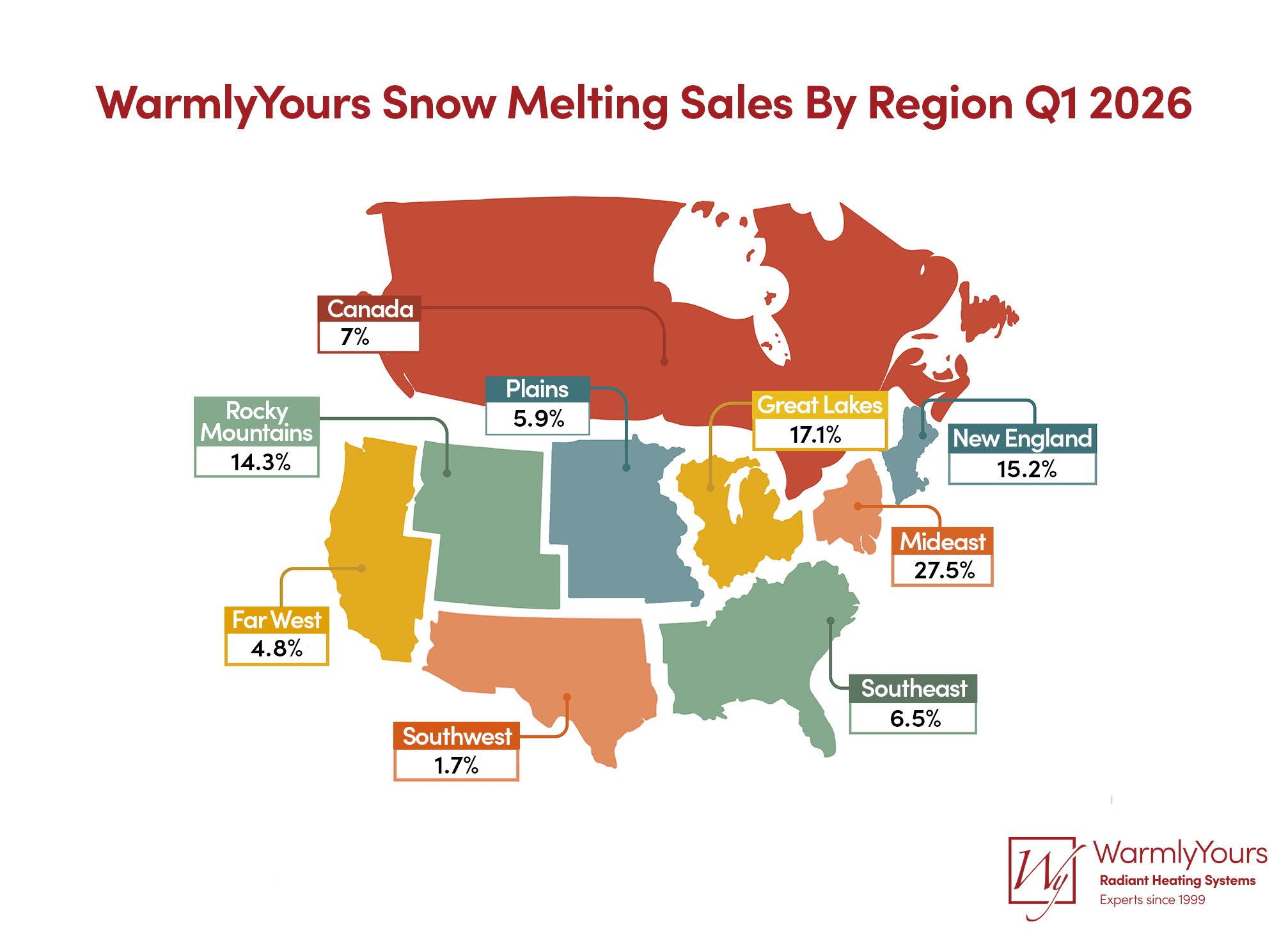
WarmlyYours reports a 10.9% revenue increase in Q1 2026, driven by a 20.7% surge in snow melting systems and a 40.2% growth in towel warmers. Despite a national 3.6% decrease in existing-home sales, radiant heating demand remains resilient as homeowners shift toward high-value property reinvestment.
The first quarter of 2026 was a mix of complex economic signals, shifting consumer priorities, and a notable pivot in the radiant heating industry. While the broader national housing and remodeling markets are navigating a period of normalization and “downshifting,” WarmlyYours has seen a remarkable surge in specific categories—most notably in snow melting systems.
In this report, we analyze the sales data from Q1 2026 and compare it to the same period in 2025 to generate proprietary data insights and explore the underlying drivers behind these trends.
Which Products Grew the Fastest in Q1 2026?
For WarmlyYours, Q1 2026 was defined by a 10.9% increase in total company revenue compared to Q1 2025. This growth is particularly significant given the cooling trends observed in the wider remodeling sector.
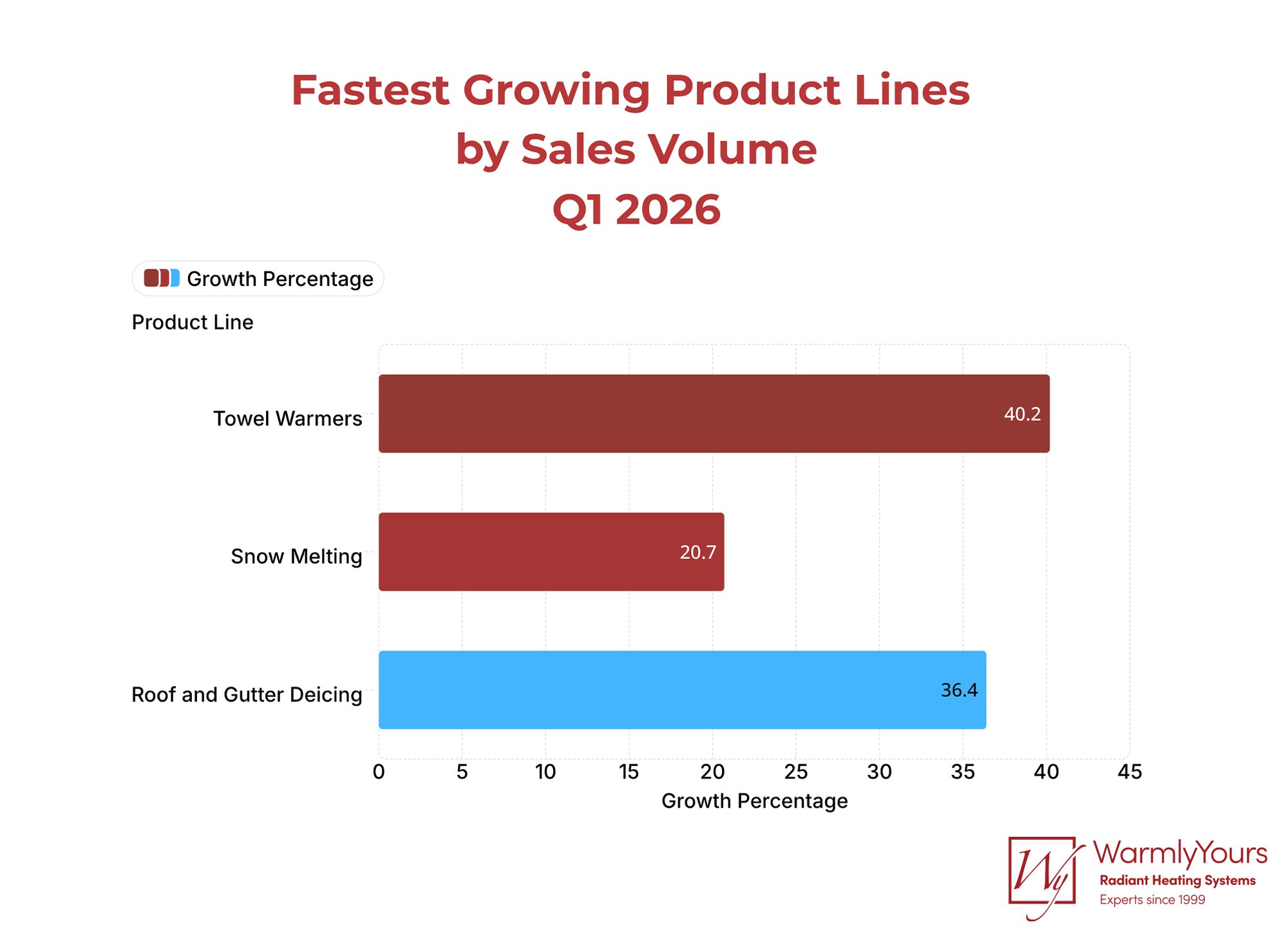
Towel Warmers had the fastest rate of change for a WarmlyYours product line in the first quarter with 40.2% growth compared to a year prior. A huge driving factor for towel warmer growth has been e-commerce efforts by WarmlyYours. So far this year, we’ve seen a 188.7% increase in first quarter Amazon sales of towel warmers (which helped to drive total Amazon sales up 154.4%) along with a 26.4% increase in general e-commerce sales of towel warmers.
Towel warmers are a natural fit for the e-commerce marketplace due to their ease of installation and their visual appeal, but WarmlyYours has also put a concerted effort into optimizing their marketing support for these products online. This has entailed new and better imagery along with optimizations for product listings and even paid, in-platform advertising campaigns. We expect to see growth continue in this product category as further optimizations are made.
Roof and gutter deicing cables were also up in the first quarter of 2026. These heating elements come in two main variants offered by WarmlyYours: self-regulating and constant wattage. The self-regulating version is “cut-to-length” and sold by the foot whereas the constant wattage cables are sold in predetermined lengths in kits.
The constant wattage version of these products has also proven popular with e-commerce partners with first quarter growth rates of 172.5% with general e-tailers and an astronomical increase on Amazon with 858% growth.
We expect to see continued sales growth for roof and gutter deicing cables as we continue to fully optimize these items.
Why Did Snow Melting Sales Increase by 20.7% in Early 2026?
But according to WarmlyYours first-party research, the largest sales volume increase for a product line so far this year has come from snow melting, which was up 20.7% compared to Q1 2025.
This double-digit surge suggests that homeowners and property managers are no longer viewing electric snow melting systems as a “nice-to-have” luxury, but rather as a critical investment in safety, independence, and asset protection.
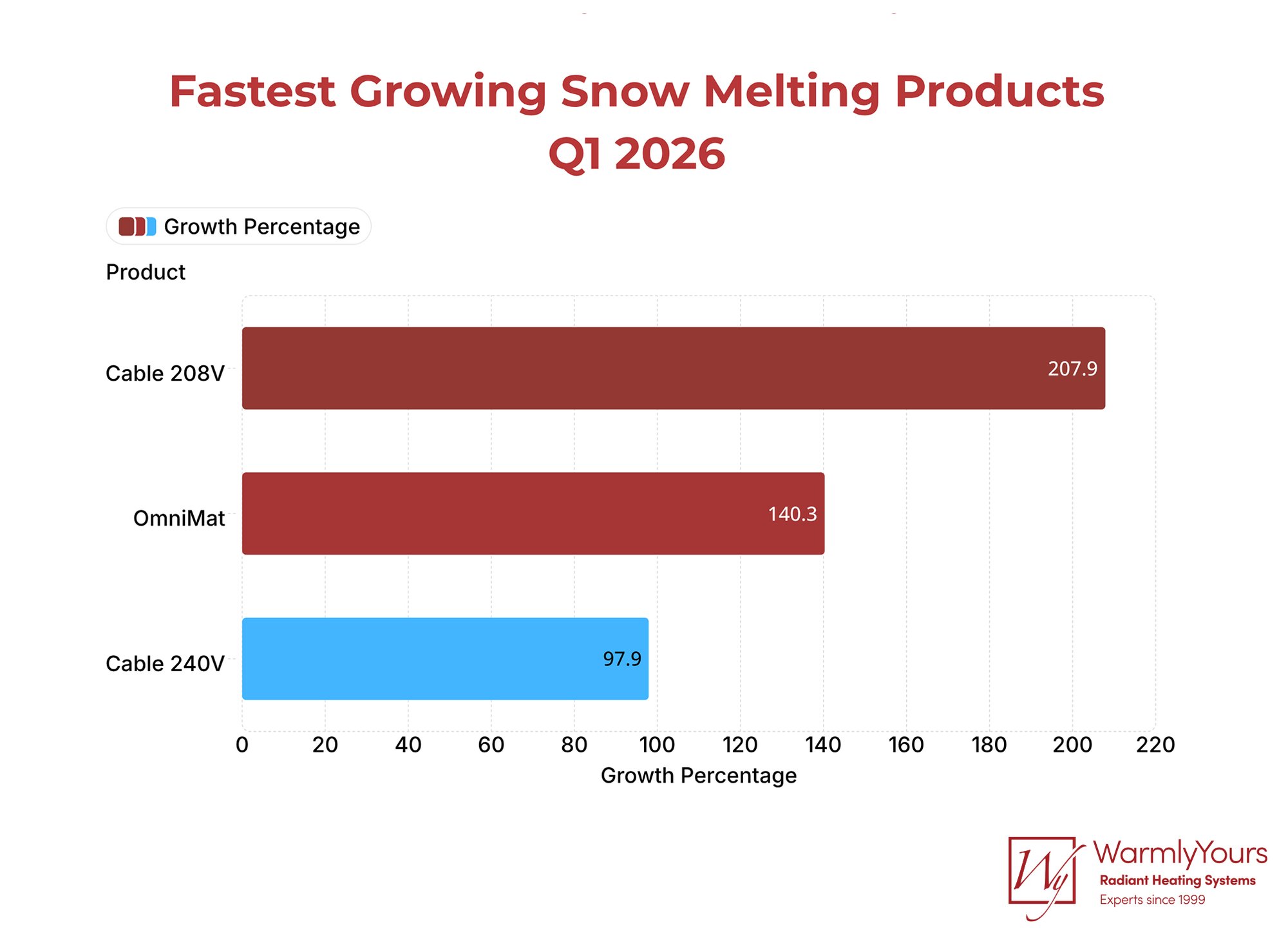
An interesting commercial trend discovery that emerged in Q1 2026 was that the fastest growing snow melting product in total WarmlyYours sales was the Snow Melting 208V Cable, which was up 207.9% in consolidated sales. This product, along with our Snow Melting 277V Cable, is primarily used in commercial projects where the input voltage available is different from residential applications. The increased popularity of this product is almost certainly due to efforts from WarmlyYours, particularly the sales team, to be proactive in developing and maintaining relationships with commercial customers.
The second fastest growing product was our Snow Melting OmniMat, available in both 120V and 240V variants, which was up 140.3%. The OmniMat is distinguished from our PowerMat snow melting mat by the spacing of the heating elements. The OmniMat has 4” spacing whereas the PowerMat has 3” spacing. This means that the OmniMat has a lower operating cost than the PowerMat and its heat output is often more than adequate for most users. This has led to the increased growth, particularly with homeowners who appreciate the energy savings without having to sacrifice practicality.
Our Snow Melting 240V Cable was our third fastest growing snow melting product in the first quarter (up 97.9%). Our 240V snow melting products are often used in larger residential projects such as driveways or patios without increasing the power load as much as 120V heating elements would.
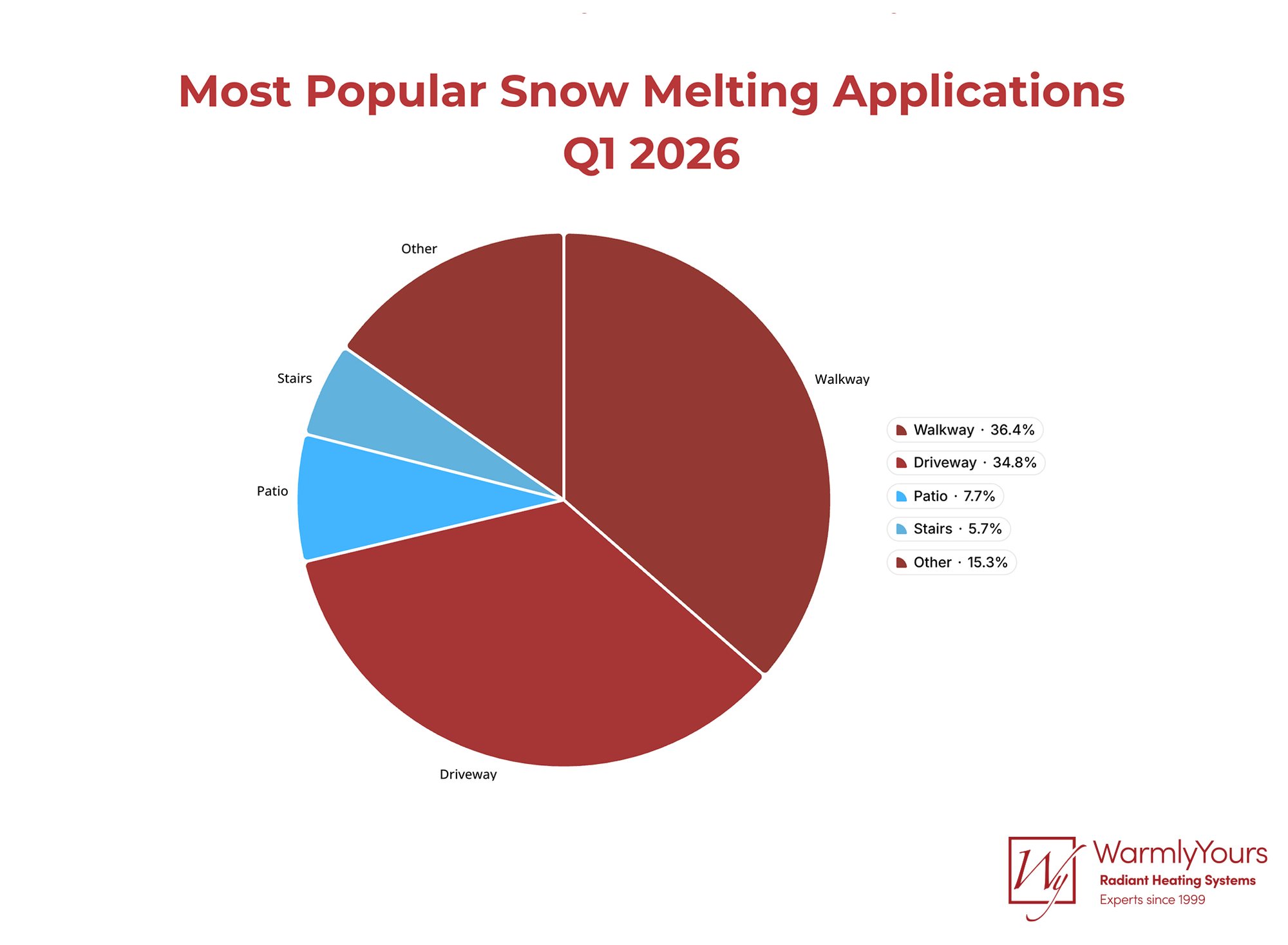
We can actually see this preference for larger (in terms of square footage) project types in the top applications for snow melting systems in the first quarter of 2026 with walkways, driveways, and patios making up 36.4%, 34.8%, and 7.7%, respectively.
Outdoor stairs, a project type that almost always makes use of snow melting cable vs. mats, made up 5.7% of snow melting projects in the first quarter and further speaks to the popularity of the 240V cable.
Another interesting data point as it relates to our first quarter snow melting sales is which customer segments were purchasing the most. The fastest growing segment in Q1 2026 were homeowners (up 75.1%), followed by Amazon (up 64.3%), and general e-commerce (up 51.6%). These customer segments have a large degree of overlap, as many homeowners will purchase our snow melting systems from us directly or from e-tailers.
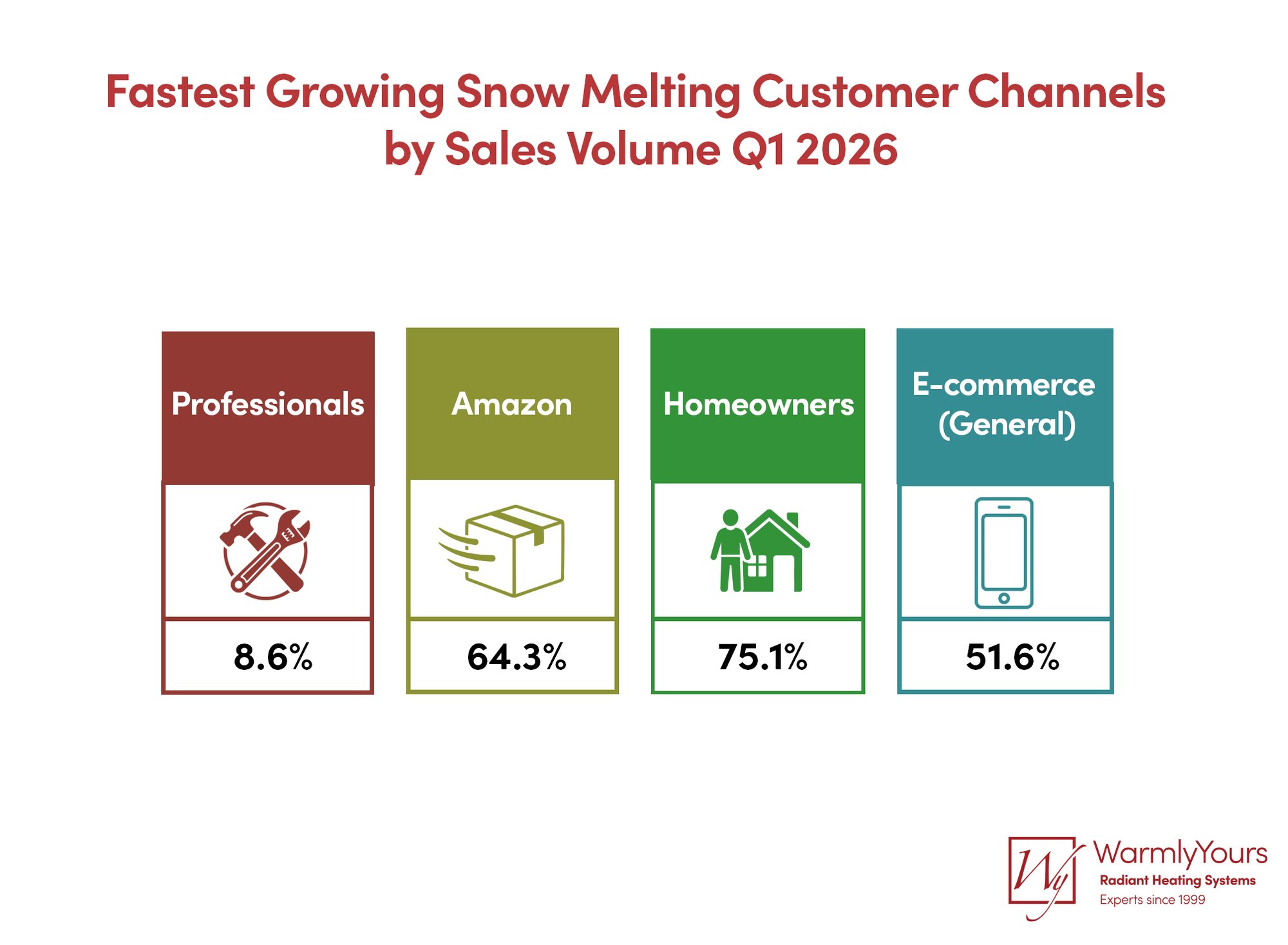
But the largest sales volume gain for snow melting sales in Q1 2026 came from our professional customers who were up 8.6% compared to last year. While residential demand remains a cornerstone of the business, the true engine behind the recent surge in snow melting volume is the professional customer segment. For WarmlyYours, this growth is rooted in a fundamental shift: moving beyond being a simple vendor to becoming a technical ally for the people in the field. Julia Billen, Owner and President of WarmlyYours, emphasizes that the success of these complex systems relies entirely on the confidence of the installer.
"Let’s be honest: in the world of electric snow melting, a product is only as good as the pro installing it," said Billen. "You can have the best tech on the planet, but if the trade professionals don't feel supported, it’s just cable in a box. That’s why we’ve gone all-in on our relationships with electricians and pavers. We’re not just their supplier; we’re the 'secret weapon' in their back pocket. By backing them up with 24/7 tech support and precision engineering, we’re giving them the confidence to tackle huge commercial installs and own the winter. When our pros win, we win—it’s as simple as that."
The most popular snow melting heating element for professional customers in Q1 2026 was our 240V cable (up 45%), followed by the PowerMat (up 28%), and the OmniMat (up 13%).
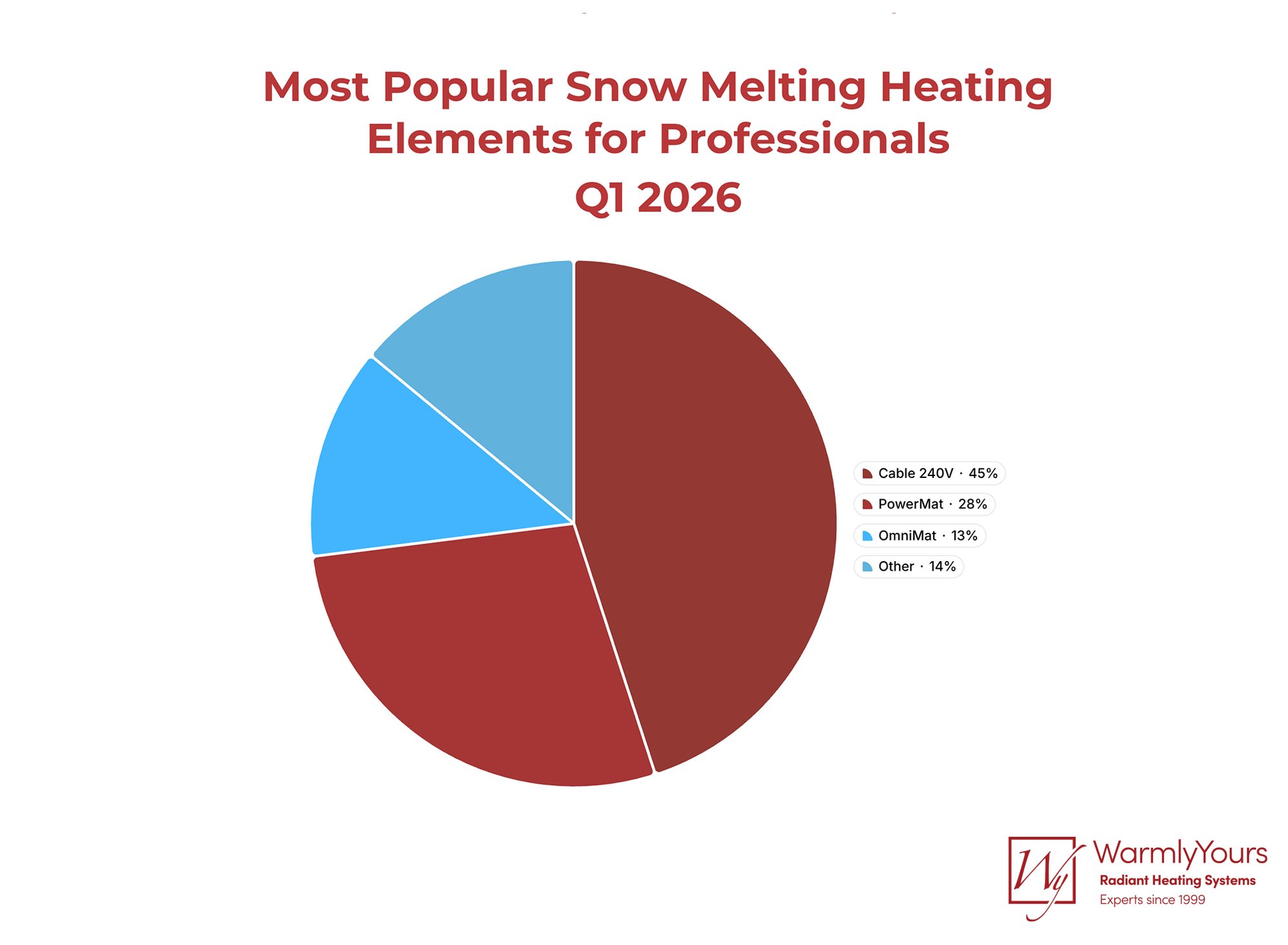
There is a lot of overlap between the most popular snow melting products for general audiences and the most popular for professional customers but the PowerMat is an exception. The 3” spacing between heating elements brings the per sq. ft. heat output up to nearly 50 watts. This exceptional heat performance lends itself well to commercial applications like entry ways for businesses where liability concerns can outweigh the increased operating costs.
Is the National Housing Market Entering a Slowdown in 2026?
While WarmlyYours’ internal data shows growth, the broader national context provides a necessary reality check. According to the National Association of Realtors (NAR), existing-home sales saw a 3.6% decrease in March 2026.
Lawrence Yun, the chief economist for NAR, said that low consumer confidence and softer than expected job growth are contributing to this decrease but that inventory continues to be the primary factor.
“Inventory remains a major constraint on the market,” Yun said. “The inventory-to-sales ratio, or supply-to-demand ratio, is below historical norms. An additional 300,000 to 500,000 homes for sale would help bring the market closer to normal conditions and allow consumers to make purchase decisions without feeling rushed.”
The NAR has adjusted its 2026 housing outlook in response to climbing mortgage rates. Existing-home sales growth is now capped at 4%, while the forecast for new-home sales has been downgraded from a 5% gain to flat. Despite these volume adjustments, the price outlook remains steady, with median home values still expected to climb 4% by year-end.
“Mortgage rates have been rising, and that has led us to trim our home sales outlook for the year,” said Yun. “Even with a more modest pace of sales growth, home prices continue to steadily increase due to minimal inventory growth.”
This decrease in home sales is a critical indicator for the radiant heating industry. When fewer people are moving, more people are choosing to renovate their current homes. This “stay-put” economy often favors high-value upgrades like radiant heating.
Homeowners who might have considered selling are instead deciding to turn their existing bathroom into a “barefoot sanctuary” or their driveway into a maintenance-free zone. They are investing in the long-term comfort and value of their current asset rather than navigating a challenging buying market defined by inventory shortages and fluctuating rates.
The Remodeling Market: Preparing for the Downshift
The outlook for the remodeling sector requires a cautious approach as we look toward the second half of the year. The Joint Center for Housing Studies of Harvard University (JCHS) has projected that remodeling growth is set to downshift in late 2026.
After years of growth in the home improvement sector, the market is entering a period of normalization. A JCHS report suggests that the double-digit gains seen in previous years are likely to taper off. The Leading Indicator of Remodeling Activity (LIRA) forecasts a mid-year peak of 2.1% in year-over-year renovation expenditures, followed by a downshift to 1.6% growth in the final quarter.
The current outlook for the renovation industry suggests a period of cautious but steady growth. According to Rachel Bogardus Drew, Director of the Remodeling Futures Program, the recent modest recovery in single-family home sales and construction permits is providing a necessary boost to the remodeling sector. Even as the market recovered from previous lows, these foundational housing metrics are expected to drive a nominal increase in renovation projects throughout the year.
While a slight deceleration in this growth pace is anticipated toward the end of the year, the sheer scale of the market remains massive. Projections indicate that total homeowner spending on improvements will reach an impressive $518 billion by the close of 2026. This high level of investment suggests that while the market's "speed" may fluctuate, the overall volume of work provides a stable environment for high-value infrastructure upgrades.
“Remodeling trends closely track the health of the broader housing market,” said Chris Herbert, Managing Director of the Center. “If interest rates begin to ease, that could provide a much-needed boost to both housing construction and retail sales of building materials, which for now continue to pose significant headwinds to homeowner improvement spending.”
Which Regions Are Seeing the Biggest Radiant Heating Sales Increases?
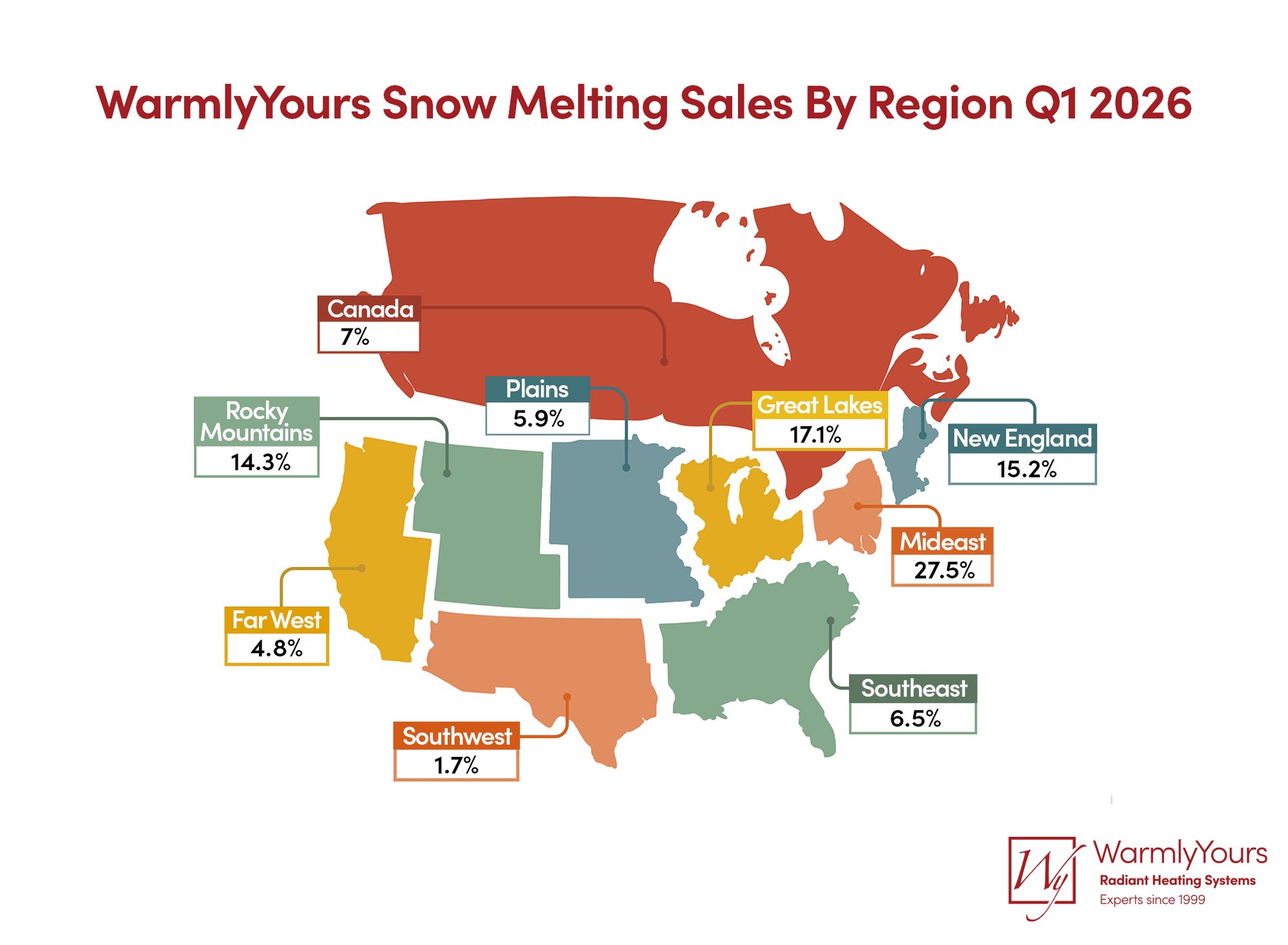
Our proprietary data insights from Q1 2026 revealed several geographic “hotspots” where radiant heating demand significantly outpaced the national average.
Iowa: We saw a notable increase in snow melting inquiries and sales in the Midwest, likely driven by a series of late-season storms that highlighted the limitations of traditional snow removal.
- Syracuse, NY: Known for its record-breaking snowfall, Syracuse continues to be a primary market for our Snow Melt PowerMats. The “tire track” installation method has become particularly popular here as a cost-effective way to handle lake-effect snow.
- Commercial Growth: Beyond residential driveways, we’ve seen a rise in commercial applications for heated ramps and stairs. Businesses are increasingly viewing snow melting as a liability-reduction tool, ensuring safe access for employees and customers without the constant need for salting and sanding.
Looking Ahead: The Strategy for Q2 and Beyond
As we move into the second quarter of 2026, the radiant heating industry stands at a crossroads. The growth in snow melting (20.7%) and total revenue (10.9%) demonstrates that there is still a significant appetite for high-quality, comfort-focused home improvements.
In a “downshifting” market, our role as an empowering partner becomes even more vital. We will continue to lead with:
- Authoritative Data: Providing homeowners with “pennies a day” operating cost transparency so they can make informed decisions.
- Transparent Realities: Being honest about installation complexities while providing the 24/7 customer support with our in-house tech support team.
- SmartPlan™ Innovation: Continuing to refine our custom designs to make radiant heating accessible for every budget and room layout.
Conclusion
Q1 2026 has shown us that while the national housing market may be cooling, the desire for “Comfort Inside and Out” is not. By focusing on the practical benefits of snow melting—safety, asset protection, and independence—we are helping homeowners navigate a changing economic landscape with confidence.
Whether it’s a “barefoot-friendly” bathroom floor or a “magic” clear driveway, radiant heating remains the gold standard for modern home comfort.
Sources:
- Relevant WarmlyYours internal sales data
- NAR Report: “Existing-Home Sales Decreased 3.6% in March” — nar.realtor
- Harvard JCHS: “Remodeling Growth Set to Downshift by Late 2026” — jchs.harvard.edu
Have Questions About Your Project?
Our team of Radiant Experts is ready to help!
Related Articles

2025 Annual Industry Report: Record Q4 Sales Propelled Growth
2025 Q1 Industry Report: Towel Warmers Propel Radiant Heat Sales

Snow Melting Mats vs. Cables: Which to Choose for your Heated Driveway
Stay Updated
Get the latest radiant heating news and tips delivered to your inbox.