

Heated LVP & LVT Flooring
A heated floor under LVP or LVT is a proven setup: TempZone™ electric systems embed in thinset or self-leveling cement under glue-down luxury vinyl, with even warmth and efficient heat transfer. For floating click-lock LVP, Environ™ mats are an option—see compatibility for your exact floor.
Get an Instant Quote
Answer a few quick questions and we'll match you with the best floor heating system.
Jump to
Why Install Floor Heating Under Luxury Vinyl?
LVT and LVP are thin, heat-conductive, and waterproof—making them one of the best modern flooring options for radiant heat.
Excellent Heat Conductor
Luxury vinyl is thin and transfers heat efficiently. Your floors reach target temperature quickly and maintain even warmth across the surface.
Works with All LVT/LVP Types
TempZone systems install under glue-down luxury vinyl. Environ Mats work under floating click-lock LVP. We have a solution for every installation method.
Pennies Per Hour
LVT's heat conductivity means lower energy costs. Use our calculator below to estimate operating costs for your space.
Clean & Allergy-Friendly
No fans, no ductwork, no circulating dust or allergens. Radiant heat warms objects directly—silent and completely invisible.
Safe & Certified
All our systems are cULus listed. Smart thermostats keep floor temperatures in the safe range for luxury vinyl—no risk of overheating.
Smart Thermostat Control
Program your floors to warm up before you wake. Our smart thermostats optimize comfort and energy use automatically.
Luxury Vinyl Floor Heating Customer Reviews
We take pride in providing both exceptional service and great products. But don't just take our word for it, check out what some of our customers have had to say.


Featured Projects for Luxury Vinyl (LVT/LVP)
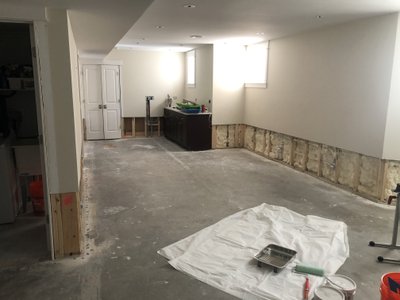
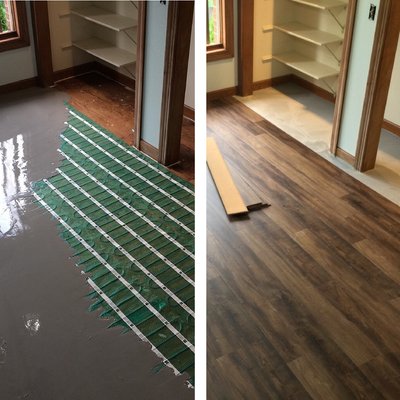
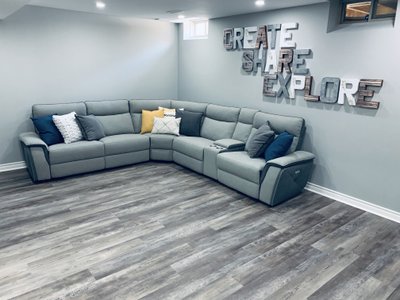
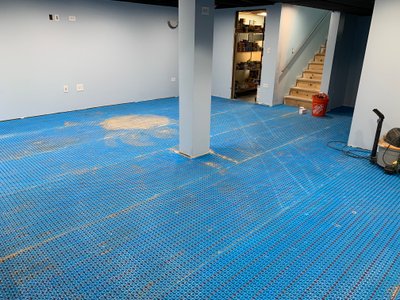
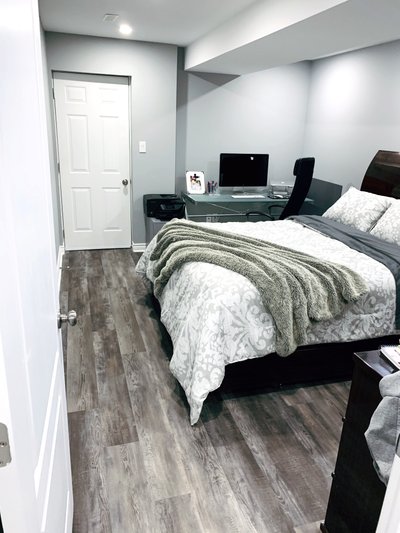
See real LVT/LVP installations with radiant heat and explore project details.

Benefits of Radiant Heating for LVT and LVP
Under luxury vinyl, electric radiant heat turns the whole floor into a low-temperature heat emitter: the thin wear layer and stable backing respond quickly, so you get even comfort without cranking the thermostat. Pair that with a floor sensor and a smart thermostat and you keep surface temperatures within manufacturer limits—typically 85°F or below—while still feeling warm underfoot.
Compared with forcing hot air through ducts or relying on baseboards alone, in-floor heat stays where you live and walk. The table below summarizes how that difference shows up day to day on vinyl floors.
Radiant Floor Heat vs. Traditional Heating for Vinyl Floors
Traditional systems warm the air first; radiant warms the floor you stand on. That distinction matters for LVT and LVP because you feel comfort sooner and avoid blowing dust around the room.
| Topic | Electric radiant under LVT/LVP | Traditional forced air / perimeter heat |
|---|---|---|
| How heat reaches you | Warms the floor surface; heat radiates upward to furniture and occupants | Heats air; warm air stratifies toward the ceiling |
| Comfort on vinyl | Even warmth across the room; warm feet at lower air temperatures | Cold floors are common until the whole volume of air is heated |
| Air quality & noise | No fans or duct turbulence—minimal dust circulation | Fans, registers, and ducts move dust and allergens |
| Control & safety | Floor sensor caps surface temperature for manufacturer-approved radiant use | Room stats don’t always reflect floor surface temperature under vinyl |
| Zoning | Room-by-room control—heat only spaces you use | Whole-home conditioning is typical; harder to target one vinyl room |
How Much Does Luxury Vinyl Floor Heating Cost?
TempZone heating systems for luxury vinyl tile (LVT) and luxury vinyl plank (LVP) typically cost C$6–C$17 per square foot. Flex Rolls are ideal for large rectangular rooms, while cables with fixing strips work well for complex layouts. A 150 sq.ft. kitchen with about 100 heated square feet would cost between C$600 and C$1,700 for heating materials.
Luxury vinyl is an excellent surface for radiant heating—it's thin, conducts heat well, and warms up quickly. Most LVT/LVP manufacturers approve use with radiant floor heating as long as the surface temperature stays below 85°F. Operating costs are typically C$0.10–C$0.25 per hour. Use the calculator below to estimate your costs.
Operating Cost Calculator for Floor Heating
Estimate your daily and monthly energy costs based on room size and local rates.
ft²
¢/kWh
Estimated Cost
C$0.16
per hour
C$0.64
per day
C$19.20
per month
Free SmartPlan
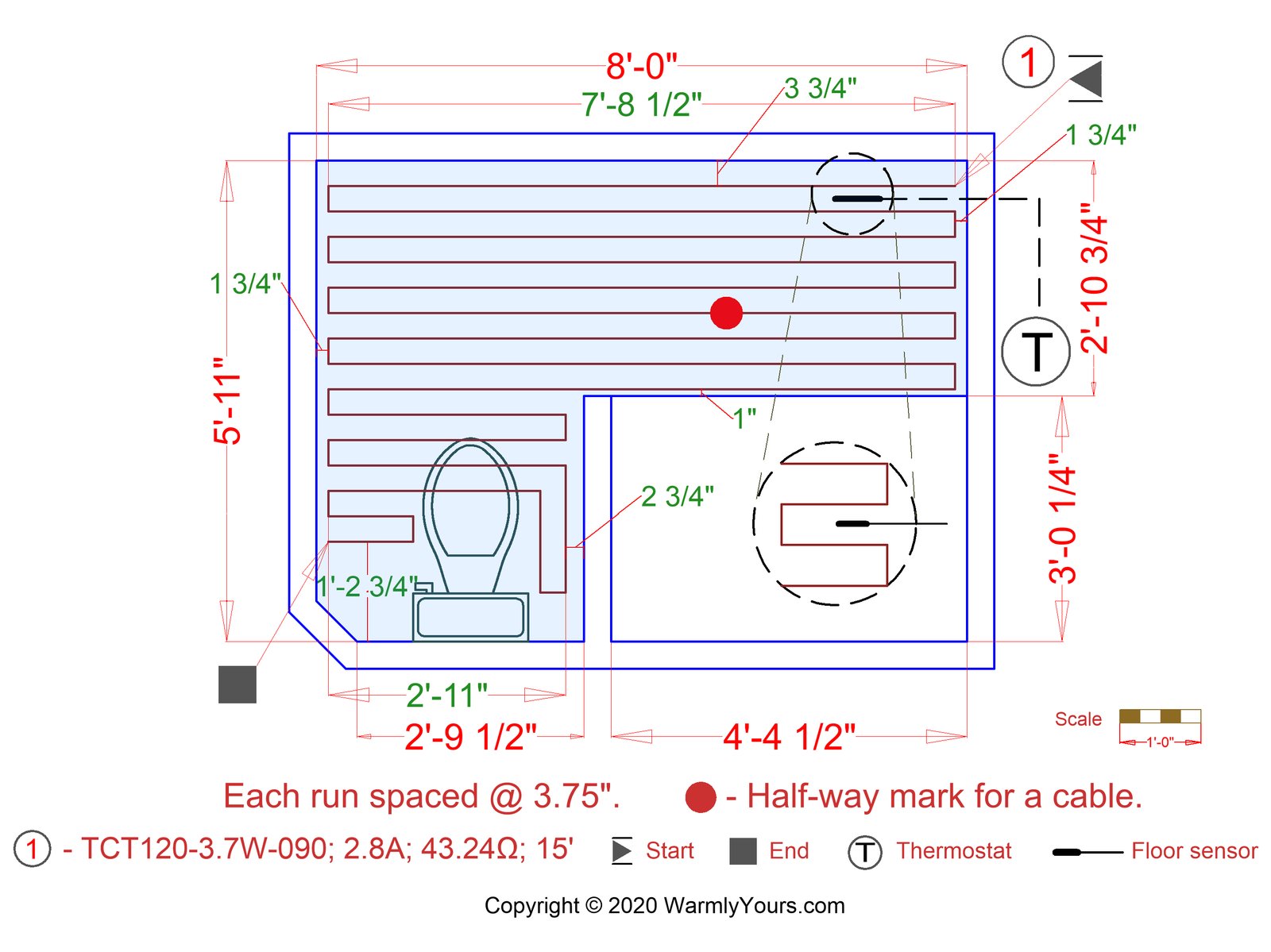
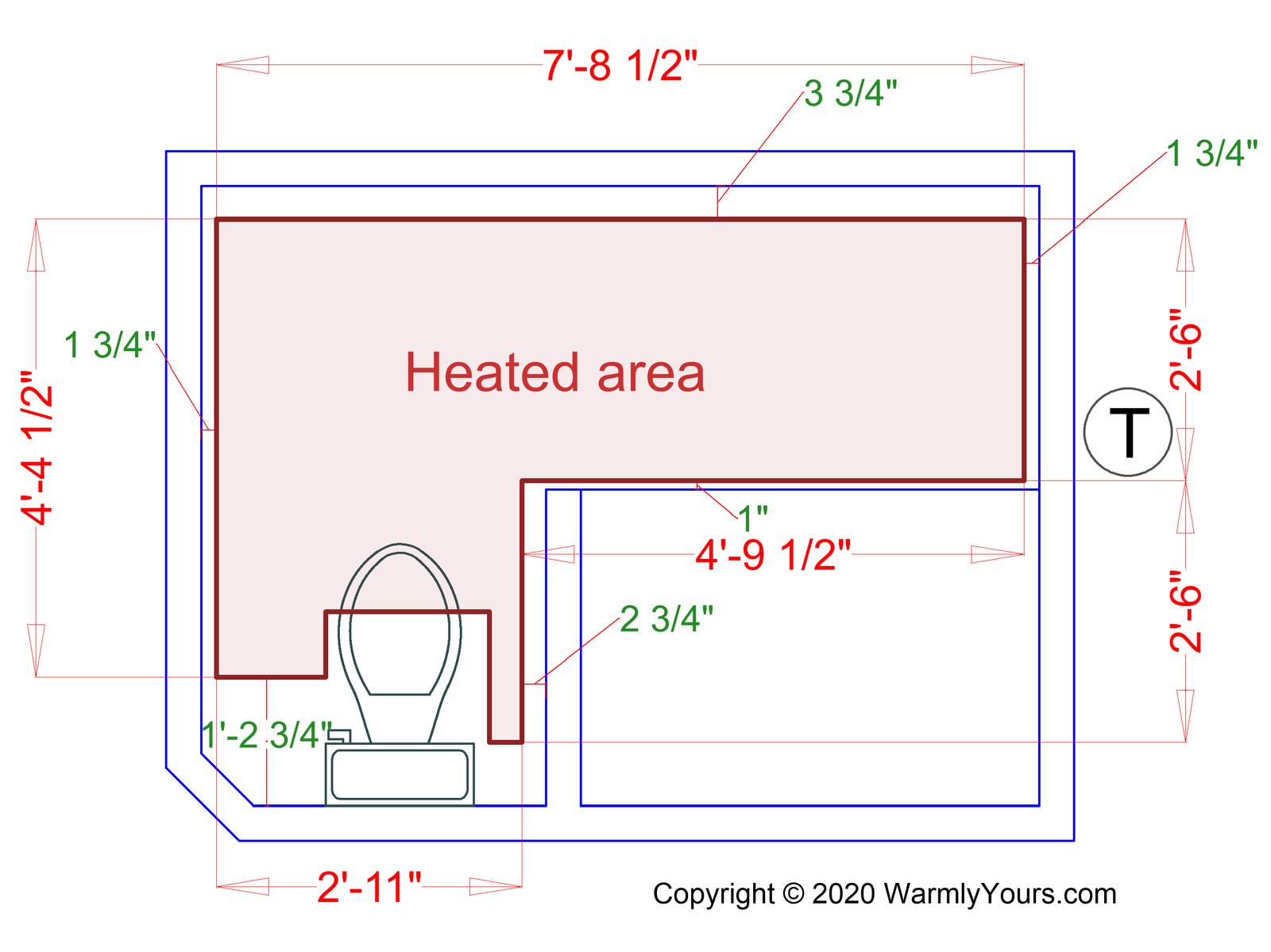
Get a custom installation plan for your luxury vinyl floor in just 1 business day.

"I'll create a custom installation layout showing exactly where your heating elements go, plus a complete materials list with pricing."
Heating Solutions compatible with Luxury Vinyl Flooring
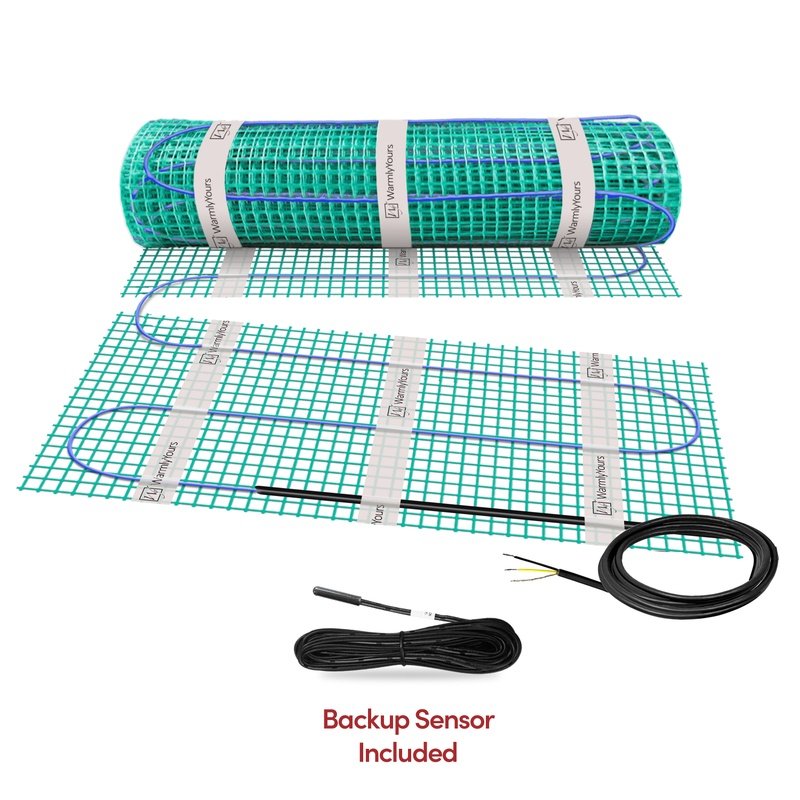
Roll Out, Cut, and Fit
TempZone™ Flex Roll installs underneath ceramic tile, natural stone, hardwood, wood, and other popular flooring materials, giving homeowners radiant in-floor heating that's truly luxurious.
Features
- Ideal for full-room coverage (primary or supplemental heat)
- Pre-spaced heating cable for fast, consistent installation
- Most popular choice for bathrooms & kitchens
- 25 Year Warranty
- 15 Watts Per Sq. Ft
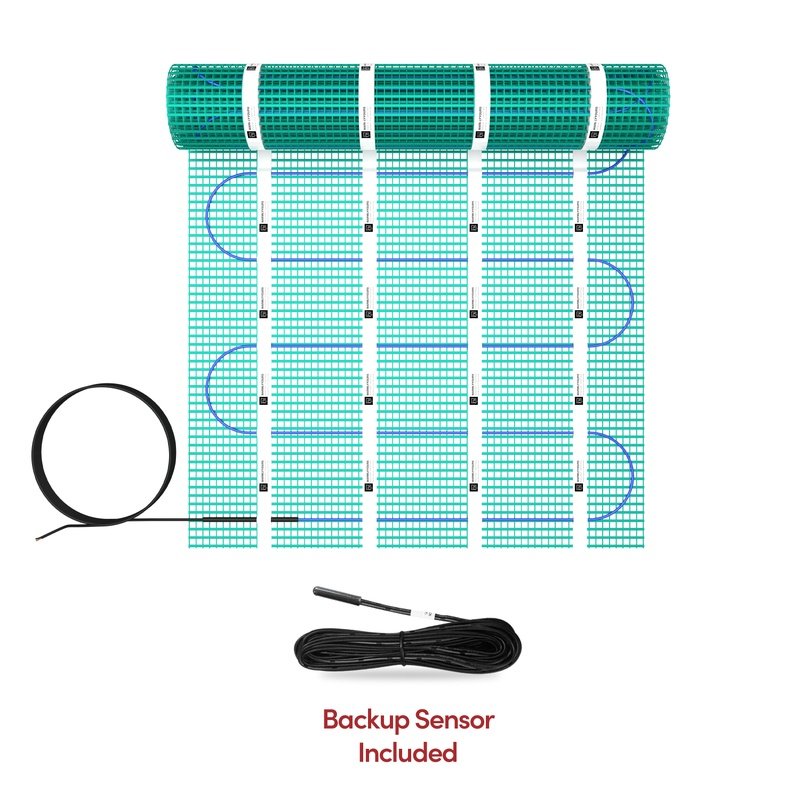
Place, Connect, and Heat
TempZone™ Easy Mats allow for radiant heating of smaller, simpler areas at an affordable cost. These under floor mats are perfect for providing targeted heating for moderately sized bathroom and kitchen floors.
Features
- Pre-sized mats for quick installs with no complex cuts
- Perfect for spot heating (vanities, entryways, small spaces)
- Cost-effective and beginner-friendly option
- 25 Year Warranty
- 15 Watts Per Sq. Ft
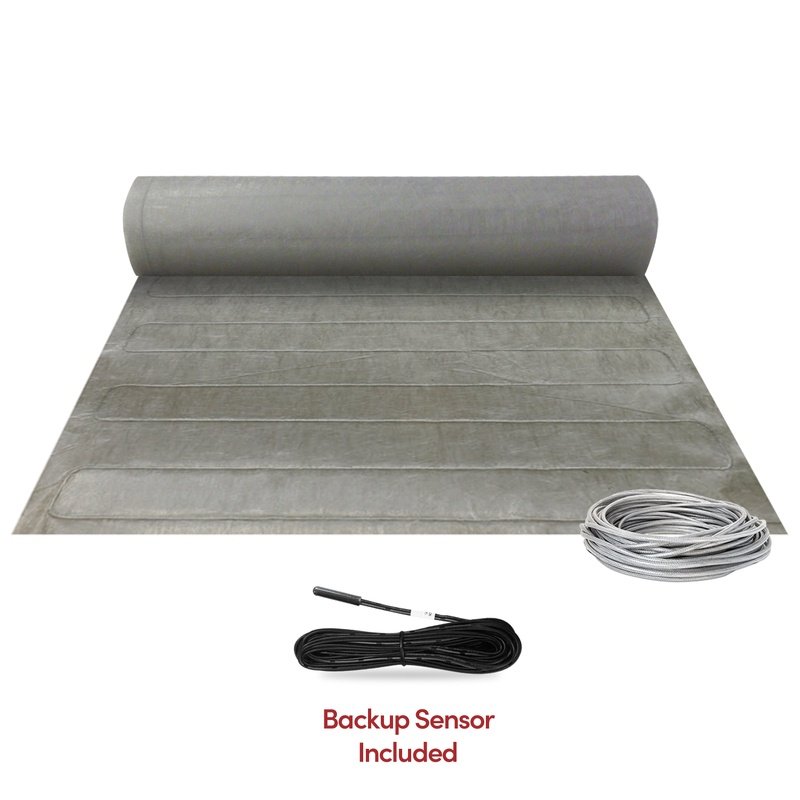
Made‑to‑Measure Warmth for Any Layout
TempZone™ Custom Mats for tile, stone or hardwood floors were designed to offer the most optimal fit for rooms of any shape. Our custom-fit mats were developed to follow curves and angles with ease.
Features
- Designed to your exact floor plan for edge‑to‑edge coverage
- No on‑site cuts or turns—faster, cleaner installation
- Ideal for curves, angles, and obstacles like islands and vanities
- 25 Year Warranty
- 12-15 Watts Per Sq. Ft
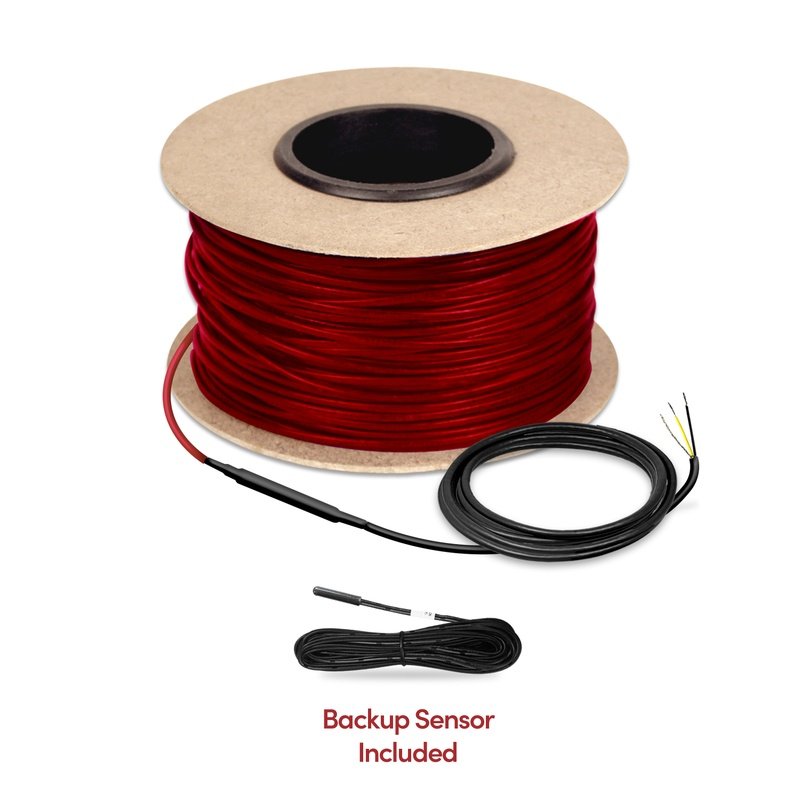
Snap-In, Secure, and Heat
TempZone™ Cable is ultra-low EMF by design and is available in two voltage options and a range of lengths to meet the requirements of any installation.
Features
- Works under tile, stone, and luxury vinyl floors
- Provides radiant heat and crack isolation
- Flexible layouts for irregular or custom-shaped rooms
- 25 Year Warranty
- 9-15 Watts Per Sq. Ft
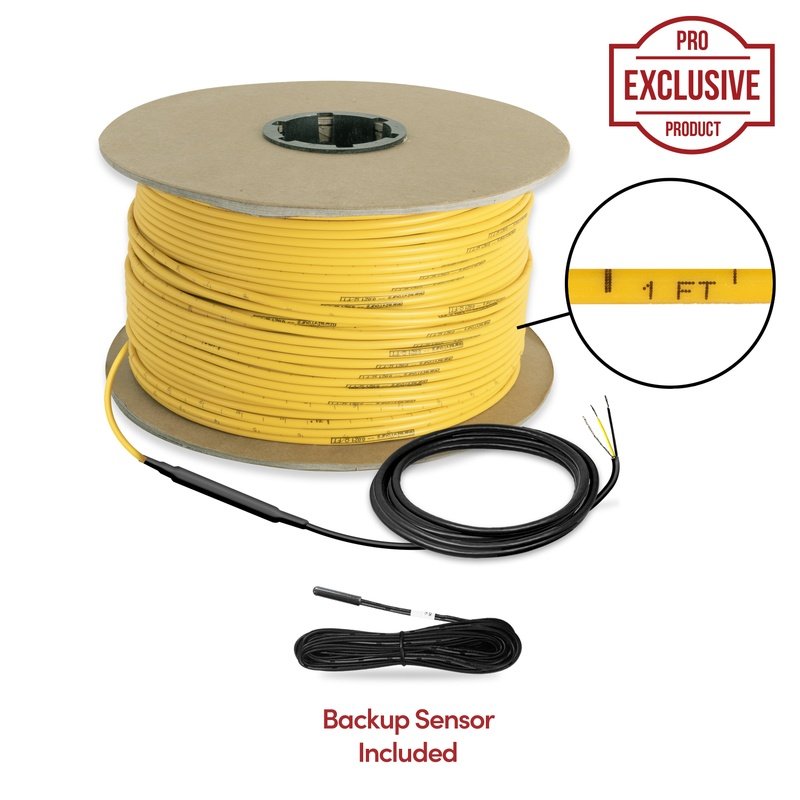
Pro‑exclusive: Measure, Lay, and Heat
TempZone™ Ruler Cable is ultra-low EMF by design and is available in two voltage options and a range of lengths to meet the requirements of any installation.
Features
- Built-in ruler markings for precise, repeatable spacing
- Ideal for large areas requiring consistent coverage
- Flexible, durable cable for clean turns and complex layouts
- Comes with easy-to-read hash marks at every half-inch, inch, and foot increment on the cable
- Can be used to heat some of the most popular floor coverings like tile, stone, marble, luxury vinyl tile, and more
Great for:
Kitchen
Bathroom
Basement
Laundry Room
|
Also works with:
Tile & Stone
Laminate
Engineered Wood
We've Got Your Back: A Backup Floor Sensor
Every complete WarmlyYours floor heating system—TempZone™, Environ™, or Slab Heat—ships with two floor sensors: one with the heating mat or cable and one with the thermostat. Install the backup right beside the primary sensor and run both leads to the thermostat box, but connect only the primary; the backup stays disconnected until it is needed.
The floor sensor lives under your tile, wood, carpet, or concrete, where it tells the thermostat how warm the floor really is. If that sensor is ever nicked during installation or fails years down the road, replacing it would normally mean tearing up the finished floor.
With the backup already embedded in the floor, the fix takes minutes: turn off power at the breaker, disconnect the original sensor at the thermostat, connect the backup, and your heat is back on. No torn-up floor, no new flooring, no second installation. Follow your thermostat's instructions, or have a qualified electrician make the swap.
Installer tip: Install both sensors side by side, centered between the heating wires, and test each one for 8–15 kΩ before covering the floor. For Slab Heat, place the sensors in capped 3/4″ rigid metal conduit between cable runs, clear of the heating cable, as the Slab Heat installation manual describes.
How to Install Floor Heating Under Luxury Vinyl (LVT/LVP)
For glue-down LVT/LVP, TempZone™ cable or mats embed in self-leveling cement (or thinset, per your assembly) so the heating element is fully encapsulated before the vinyl goes down. For floating click-lock LVP, Environ™ flexible mats are typically the better match—always confirm your flooring manufacturer’s radiant guidelines.
The self-leveling encapsulation method gives vinyl the flat, stable substrate it needs; never install LVT/LVP directly over an exposed heating mat.
Step-by-Step Installation
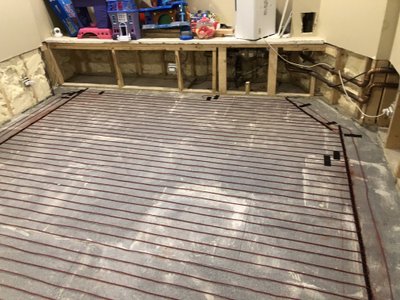
- Step 1: Clean and level the subfloor, making sure it is free of dirt, dust, and debris.
- Step 2: Use your SmartPlan installation plan to mark the placement of the heating mat or cable.
- Step 3: Roll out TempZone Flex Roll (cutting the mesh to turn at row ends) or install TempZone Cable with fixing strips per your SmartPlan layout.
- Step 4: Test the heating system with an ohmmeter—check resistance before, during, and after installation.
- Step 5: Pour self-leveling cement over the heating element to create a smooth, flat surface for vinyl installation.
- Step 6: Once the self-leveling cement has cured, install LVT or LVP flooring per the manufacturer's instructions.
- Step 7: Wire the thermostat, set maximum floor temperature to 85°F, and enjoy!
Compatibility Tips
- Temperature limit: Most LVT/LVP manufacturers approve radiant heating as long as the floor surface stays below 85°F. Our smart thermostats with floor sensors enforce this automatically.
- Self-leveling cement is key: Vinyl flooring requires a perfectly flat substrate. Self-leveling cement encapsulates the heating element and provides the smooth surface that LVT and LVP need—never install vinyl directly over exposed heating mats.
- Thin and efficient: Luxury vinyl is thin and conducts heat well, meaning your floors reach target temperature quickly and operate efficiently.
Radiant comfort is also how we show up as a team: read what it means to BE RADIANT—the culture behind WarmlyYours.
Luxury Vinyl Floor Heating Videos
Documents

PDF

PDF

PDF
Luxury Vinyl Tiles Radiant Floor Heating Posts





Frequently Asked Questions
Showing all 9 questions
Since most Luxury Vinyl Tile (LVT) manufacturers set a maximum temperature for radiant floor heating, the system should have little to no effect on the rubber/cork backing.
Pre-attached backing can act as an insulating layer though, meaning it can prevent the radiant heating from efficiently directing heat up through the floor. Please check with the manufacturer for the r-value of the product. Look for an assembled plank with an r-value of less than 1. The lower the r-value, the better!
Yes. LVT, LVP, WPC and solid-core vinyl can all be heated as long as the flooring manufacturer approves radiant heat. WarmlyYours recommends TempZone™ cable, Flex Roll or Easy Mat embedded in 3/8”–1/2” of self-leveling cement, which gives the vinyl the flat, solid surface it needs. Always confirm the limits in the flooring’s installation and warranty documents.
In nearly every case, yes. Vinyl needs a solid, flat surface, and many manufacturers require at least 1/2” of separation between the plank and the heating element. Encasing TempZone™ cable or mats in 3/8”–1/2” of self-leveling cement satisfies both requirements. Prepare and prime the subfloor exactly as the self-leveling cement manufacturer specifies.
Most vinyl manufacturers cap surface temperature at roughly 80–85°F (27–29°C). Karndean Designflooring specifies 80°F, while Tarkett Transcend and Paradigm Flooring allow 85°F. Use a thermostat with a floor sensor and set its maximum floor-temperature limit accordingly, then follow any temperature setback recommendation published by your flooring manufacturer.
Install the floor sensor in the self-leveling cement beneath the vinyl and use the thermostat’s maximum floor-temperature limit to stay within your flooring’s rating, typically 80–85°F. Program gentle setbacks instead of large temperature swings, and follow any setback guidance from the flooring manufacturer so the planks are not stressed by rapid changes.
Choose TempZone™ for vinyl floors: Flex Rolls or Easy Mats for open, rectangular areas, and TempZone™ Cable with fixing strips for irregular layouts. Both get embedded in self-leveling cement. Avoid Environ™ products, which are built for carpet, laminate and floating wood and cannot provide the solid surface and 1/2” separation most vinyl manufacturers require.
Not if the flooring is rated for underfloor heating and is installed and operated within its temperature limit. Karndean, Tarkett, Paradigm, Forbo Marmoleum, Congoleum Triversa and FUSION Hybrid Floors all permit embedded radiant heat. Approved lists change often, so check the current installation manual and warranty document for your exact product before buying.


