
How Waterproof Are Your Electrical Appliances?
last updated august 29, 2026

What Does an IP Rating Mean? (Quick Definition)
An IP (Ingress Protection) rating is a two-digit code that tells you how well an electrical device is sealed against solids and water. Read it one digit at a time:
- First digit (0–6) = solids. How well the device keeps out fingers, tools, wires and dust. 0 means no protection; 6 means completely dust tight.
- Second digit (0–8) = water. How much moisture the device can take. 0 means no protection; 4 means splashing water from any direction; 7 means brief immersion in up to 1 m of water.
So IP44 means “protected against solid objects larger than 1 mm and against splashing water from any direction” — the practical minimum for most bathroom light fixtures. An X in place of a digit (for example IPX4) simply means that category was not tested or rated.
If you’ve ever dropped your cell phone in a pool of water, you’ve probably wondered exactly how waterproof your phone is. Likewise, if you’ve touched or splashed water onto an electrical outlet or lighting fixture in your bathroom, you may have worried about how dangerous that could be. That is exactly why IP ratings exist — and why they matter so much when you are choosing bathroom lighting, mirrors and outlets that live within reach of water. Here is how to read them, digit by digit.
International or Ingress Protection (IP) ratings are international markings developed by the International Electrotechnical Commission to identify the degree of protection provided against solid foreign objects, such as fingers and dust, and liquid infiltration. The ratings consist of two digits — one which applies to solid particles and the other which applies to liquid ingress. If no data is available to specify a protection rating, the letter “X” is used. If no protection is offered, the number “0” is used.
Solid Particle Protection
The first digit in an IP rating refers to the electrical device’s protection against solid particles. Solid particle protection can be rated anywhere from 0 to 6. A rating of 1 means the device is protected against any accidental touch from a body part greater than 50 mm in size, such as the back of the hand. It is not protected from deliberate body contact, though. A rating of 2 means that fingers or similar objects greater than 12.5 mm are safe when coming into contact with the device. A rating of 3 means the device is protected from tools and thick wires greater than 2.5 mm in size. A rating of 4 means it’s protected against most wires and narrow screws greater than 1 mm in size. A rating of 5 means the device is “dust protected,” which means dust is not entirely prevented from entering the device, but it must enter in a large enough quantity to interfere with the operation of the device. Finally, a rating of 6 means the device is “dust tight.” This means the device is completely protected from dust infiltration.
Liquid Ingress Protection
The second digit in an IP rating refers to the electrical device’s protection against liquid ingress. Liquid ingress protection is rated from 0 to 8 (excluding road vehicle ratings). A rating of 1 means the device can withstand 10 minutes of dripping water equivalent to 1 mm of rainfall per minute when mounted in an upright position and rotated at 1 rotation per minute. A rating of 2 means the device can tolerate 10 minutes of dripping water equivalent to 3 mm of rainfall per minute when tilted at a 15-degree angle and rotating. A rating of 3 means the device is protected against spraying water from an oscillating fixture or spray nozzle with a counterbalanced shield at an angle up to 60 degrees. A rating of 4 means the device can tolerate splashing water from any direction with an oscillating fixture or spray nozzle with no shield. A rating of 5 means the device can withstand water coming from a nozzle at any direction. A rating of 6 means that powerful water jets will not cause any harmful effects when coming into contact with the device from any direction. A rating of 7 means the device can be immersed in up to 1 m of water for 30 minutes without any damage. Finally, a rating of 8 is similar to a 7 rating, but the depth of the water and duration of time is to be specified by the manufacturer. Generally, the depth should be up to 3 m, and the duration should be longer than 30 minutes.

Beyond these numerical ratings, additional letters can be used to provide further information about the device. For instance, the letter “f” means it is oil resistant; “H” means it is a high-voltage device; “M” means the device was moving during a water test; “S” means the device was standing still during a water test; and “W” refers to weather conditions.
Put the two digits together and the code becomes easy to read. If an electrical socket is rated IP22, the first digit (2) means it is protected against the insertion of fingers, and the second digit (2) means it stays safe when exposed to vertically or nearly vertically dripping water. IP22 is the typical minimum requirement for indoor electrical accessories. Step up to IP44 and you gain protection from objects as small as 1 mm plus splashing water from any direction; step up to IP67 and the fixture can be briefly immersed in up to 1 m of water.
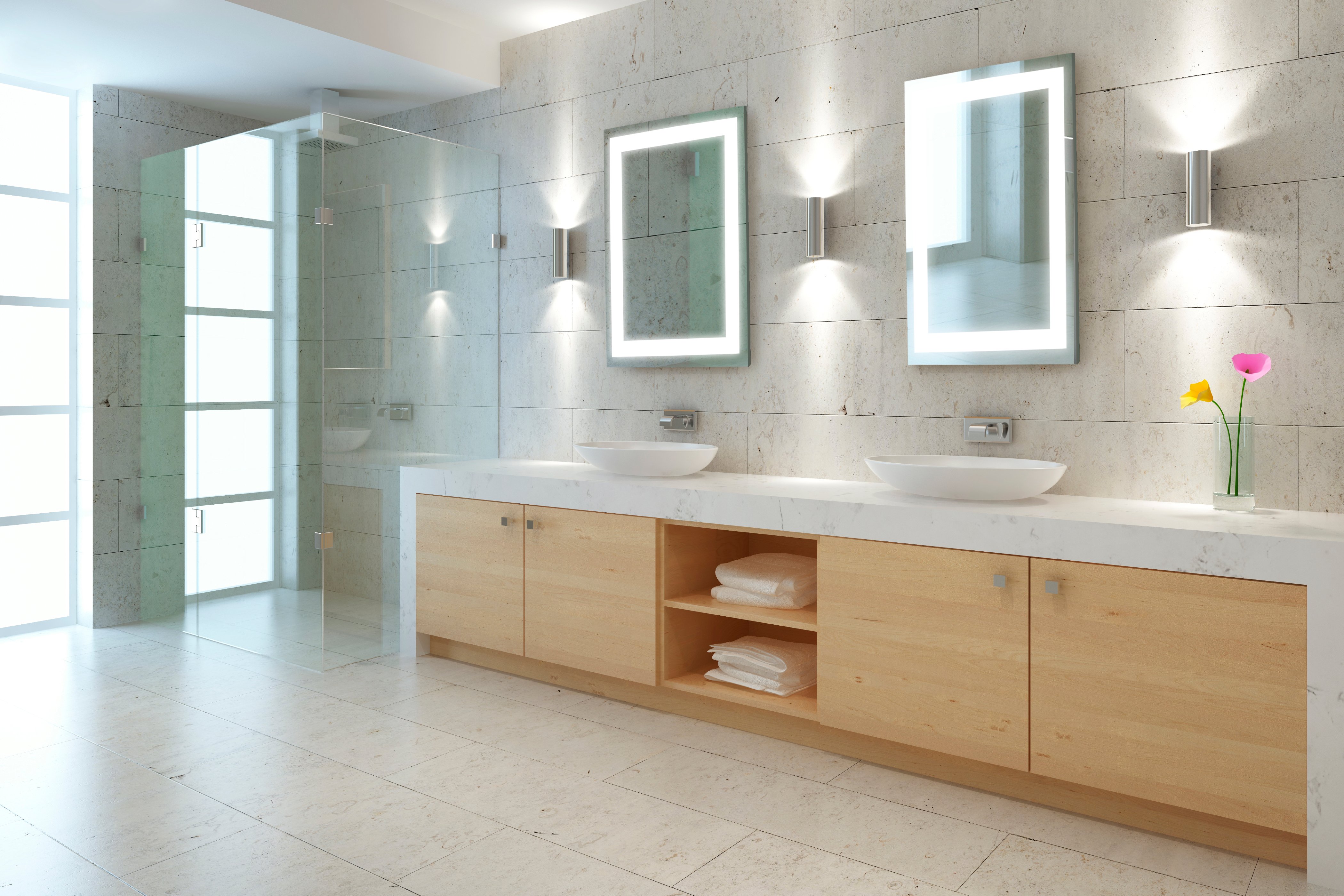
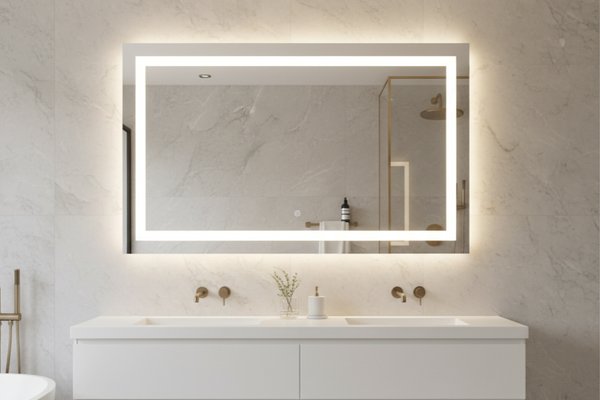
Another example is WarmlyYours Radiant Heating’s new Marquee LED mirrors, which feature an IP rating of IP44. This means they are protected against the infiltration of most wires, slender screws, etc., that are greater than 1 mm in size. They are also protected against water splashing against the fixture from any direction, which is vital for bathroom lighting fixtures. This rating qualifies the mirrors for use in specific bathroom zones that are subject to some contact with water — zones 2 and 3, to be specific.
Bathroom Installation Zones
When referring to electrical fixtures in the bathroom, it’s important to consider where the fixture is located to ensure that the fixture you install has the proper protections in place.
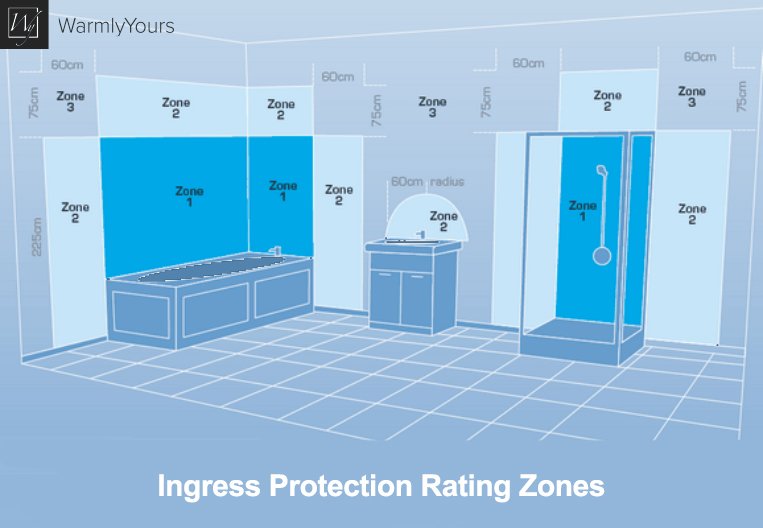
When it comes to bathroom lighting, there are three possible zones. Zone 1 is located inside the bath or shower. Any light fixture installed in this zone must be low voltage with an IP rating of at least IP67. An IP67 rating will ensure that the fixture is protected against water immersion. Zone 2 is the area above the bath or shower, up to 7 feet 4 inches from the floor. A minimum rating of IP45 is required in this zone; however, an IP67 rating is typically suggested. Zone 2 is also located nearly 2 feet from the perimeter of the bath or shower and 7 feet 4 inches high. A minimum rating of IP44 is required in this zone. Beyond Zone 2 is Zone 3, where no water is likely to be found. Thus, there are no IP rating requirements in these areas. However, because it is still located in the bathroom, it’s recommended that electrical fixtures with a rating of at least IP20 be used.
The short version: check the first digit for solids, the second digit for water, and match the code to the bathroom zone where the fixture will be installed. For more information about WarmlyYours’s Marquee LED mirrors and their IP44 rating, click here.
Have Questions About Your Project?
Our team of Radiant Experts is ready to help!
Related Articles

Stay Updated
Get the latest radiant heating news and tips delivered to your inbox.
