Are Towel Warmers Worth It? Here's What You Need to Know
last updated march 21, 2026

In This Article
Towel warmers are often associated exclusively with warming bathroom towels — but their functionality extends far beyond this singular use. They can dry delicate clothing, warm swimsuits, heat blankets and robes, and add supplemental warmth to any room. And at just $0.03/day per day to operate, towel warmers are one of the most affordable luxury upgrades available for your home.
Quick Facts: Are Towel Warmers Worth It?
- Operating cost: As little as $0.03/day per day — less than a cup of coffee per month.
- Price range: $355–$650+ for WarmlyYours models — starting with the Tahoe 6 at $355.
- Customer rating: 4.84/5 stars from 191 reviews.
- Lifespan: 25+ years with 304-grade stainless steel construction.
- Safety: cULus listed, IP44 rated, TempSmart™ overheat protection on every model.
- Installation: 15–30 minutes (plug-in) or 1–2 hours with an electrician (hardwired).
- Warranty: 2–5 years depending on model — industry-leading.
Ready to shop? Browse our complete collection of towel warmers and heated towel racks — plug-in and hardwired, in every finish.
Where, When, and How to Use a Towel Warmer
Towel warmers — also known as heated towel racks — are versatile additions to any home. While they're most commonly installed in bathrooms, their placement depends on your space and needs. Nearly every home with a shower or tub is a great candidate. If you have an unused section of wall or an existing non-heated towel bar, it can often be replaced with an electric model without taking up additional space.
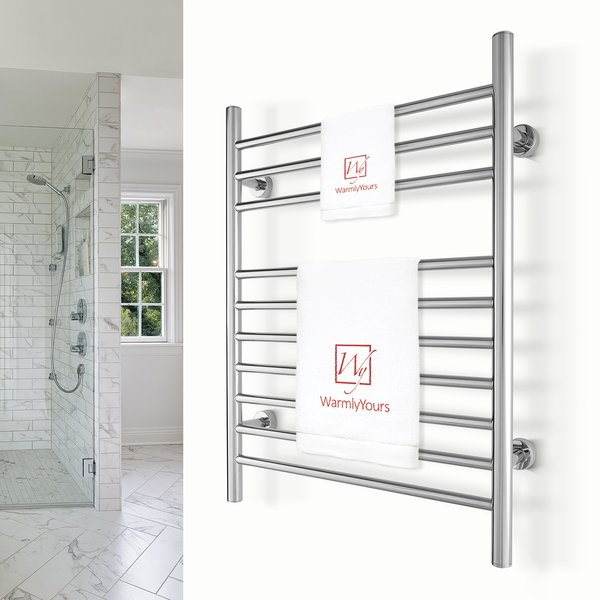
Beyond the bathroom, towel warmers bring comfort and convenience to a variety of spaces:
- Mudroom or Laundry Area: Perfect for drying wet coats, hats, gloves, or delicate laundry items — keeps outerwear warm and ready during colder months.
- Sunroom: Provides supplemental heat in cooler seasons and warms throw blankets for a cozy afternoon.
- Indoor Pool Area: Ideal for drying swimsuits and towels after a swim — ensures you always have a warm towel waiting post-dip.
Towel Material Tip
Towel warmers work best with towels and fabrics made from natural materials like cotton and bamboo. Avoid microfiber or synthetic quick-dry towels — these are not recommended for heated racks.
The Benefits of Owning a Towel Warmer
Electric towel warmers offer a range of benefits that enhance both comfort and functionality in your home:
- Increased Comfort: Experience the luxury of wrapping yourself in a warm, cozy towel after every shower or bath — elevating your daily routine to spa-like comfort.
- Hygiene Benefits: Warm, dry towels discourage the growth of mold, mildew, and bacteria — keeping your towels fresher between washes.
- Fewer Laundry Cycles: Dry towels last 3–4 uses before washing vs. 1–2 for damp ones — real savings over time.
- Energy Efficiency: At 60–150W, most towel warmers cost less to run than a standard light bulb left on all day.
- Supplemental Heat: A 150W model adds 512 BTU/hr of gentle radiant warmth — enough to take the chill off a cold bathroom.
- Versatile Drying: Works equally well for swimsuits, delicates, gym clothes, and winter gear.
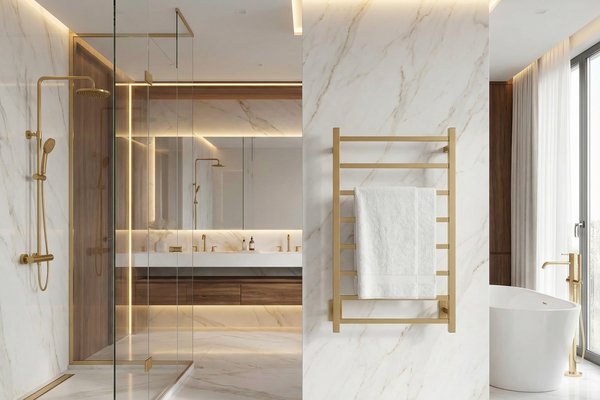
- Design Upgrade: Available in matte black, brushed gold, polished stainless, and more — replaces a basic towel bar with a statement fixture.
Connection Types: Plug-In, Hardwired, and Dual Connect
WarmlyYours towel warmers come in three connection types — each suited to a different installation situation.
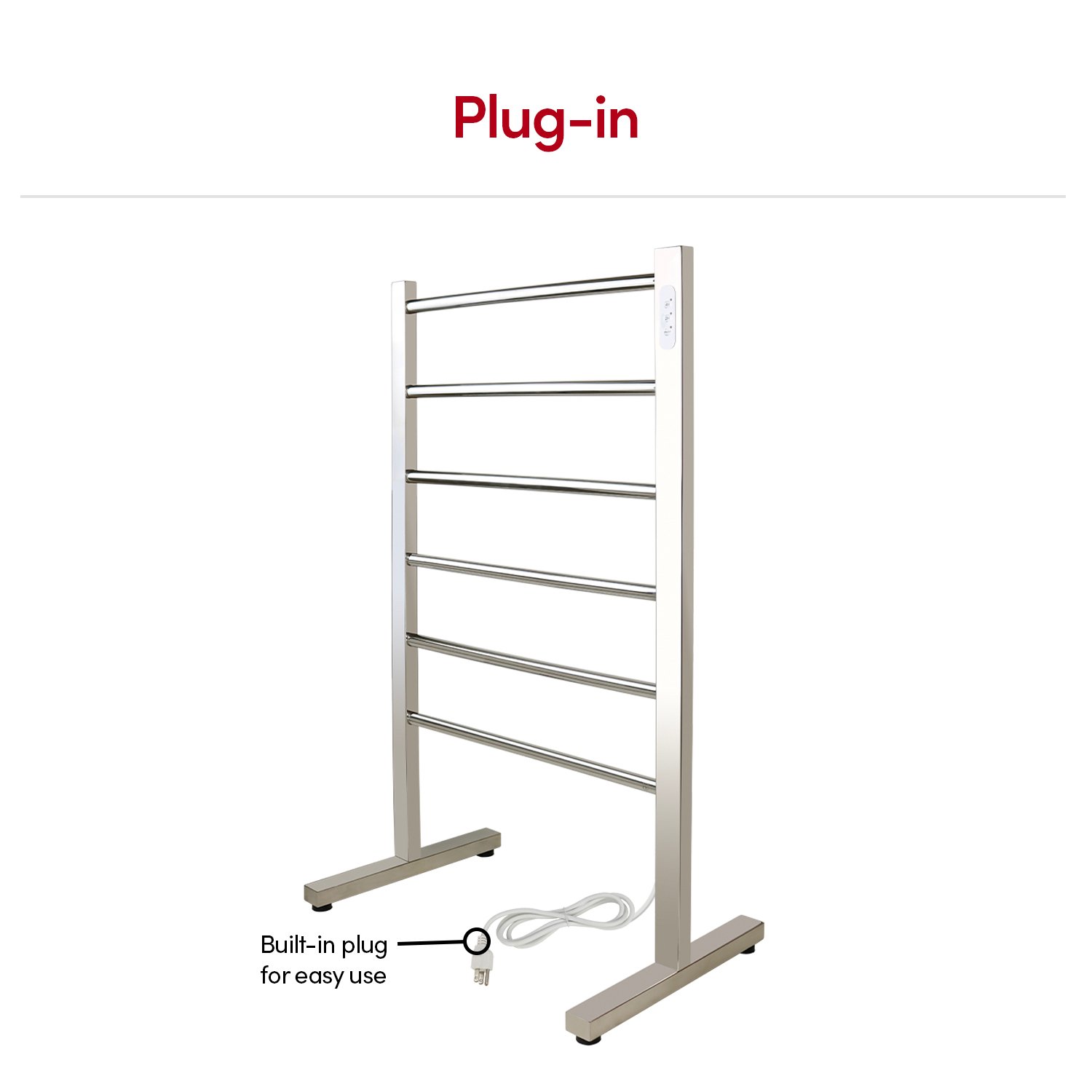
Plug-In Towel Warmers
Plug-in models connect to a standard GFCI outlet — no electrician required. They're ideal for renters, finished walls, or anyone who wants flexibility. The Ibiza Freestanding is the ultimate plug-in option — it requires no wall mounting at all. Just place it and plug it in.
Hardwired Towel Warmers
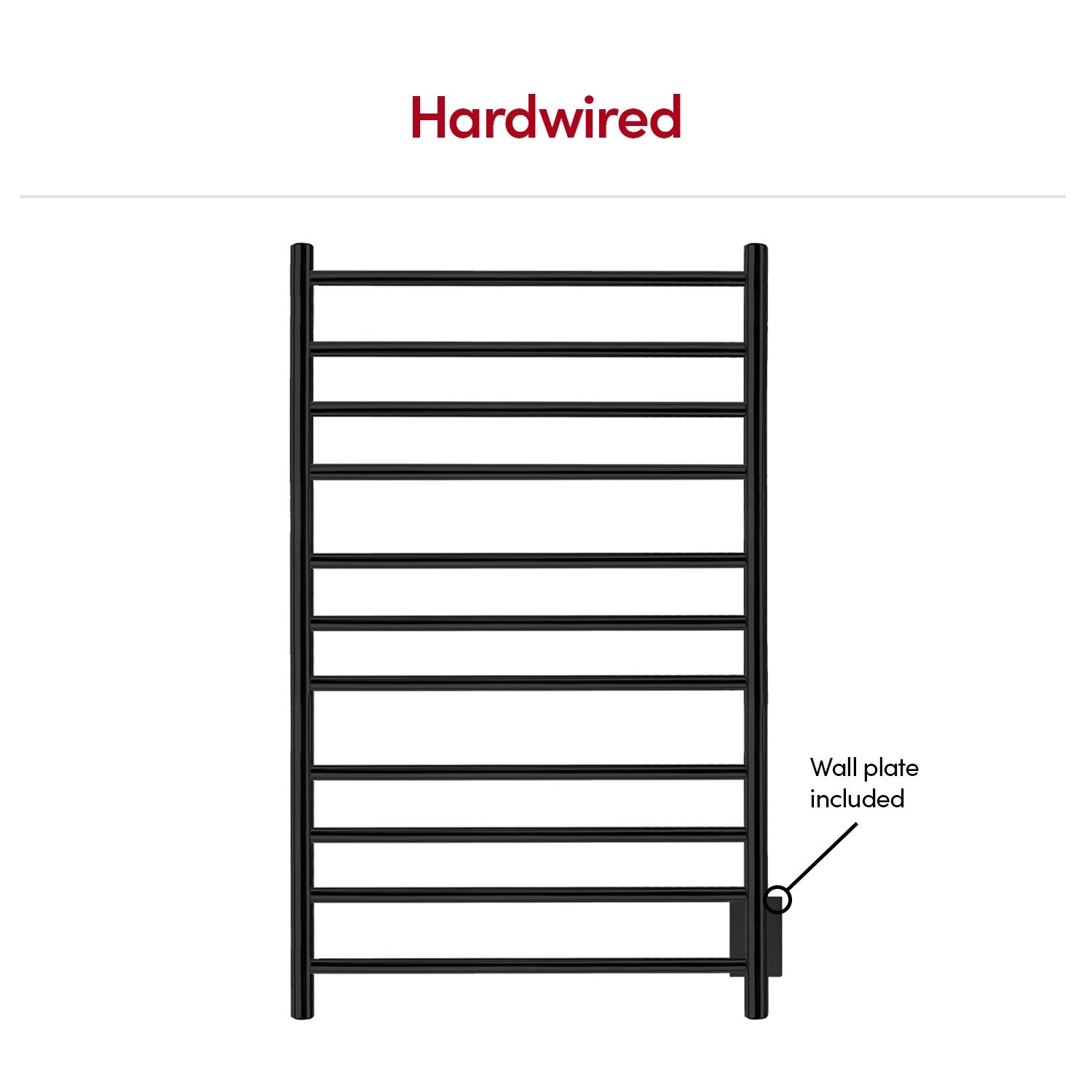
Hardwired models connect directly to your home's electrical system — no visible cord, no outlet required. A licensed electrician handles the electrical connection, but the physical mounting is DIY-friendly. Available on the Tahoe, Maple, Malta, and Grande.
Dual Connect Towel Warmers
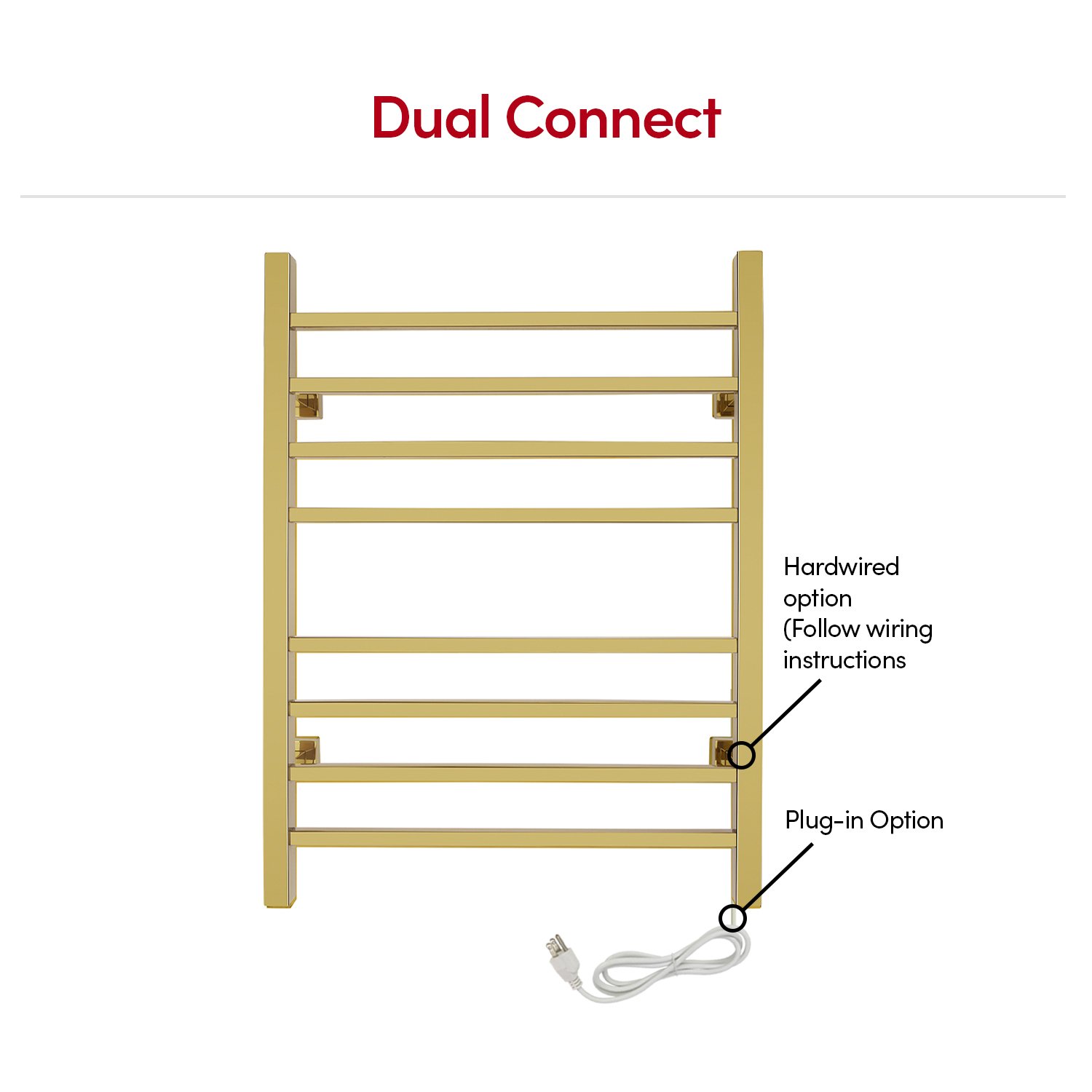
Dual connect models ship ready to plug in and can be converted to hardwired by a licensed electrician at any time — making them ideal for anyone who wants flexibility now and a permanent installation later. Available on the Infinity, Sierra, and Summit.
Installation Considerations
Proper installation ensures optimal performance and safety. Key factors to consider:
- Location: Install at least 24" from the edge of any tub or shower. Mount with the bottom bar 24–36" from the floor for easy access.
- Electrical Requirements: All models operate on standard 120V AC. GFCI protection is required — either a GFCI outlet (plug-in) or GFCI-protected circuit (hardwired).
- Safety Features: Look for cULus listing, IP44 moisture rating, and TempSmart™ overheat protection — all standard on every WarmlyYours model.
For the complete step-by-step installation guide with videos, see: How to Install a Towel Warmer.
Control Options
Every WarmlyYours towel warmer includes a built-in on/off switch. Three optional hardwired controls add scheduling and smart home capability:
| Control | Price | Best For |
|---|---|---|
| 4-Setting Countdown Timer | $69 | 30 min / 1 hr / 2 hr / 4 hr presets — simple and reliable |
| Programmable Timer | $89 | Up to 50 weekly on/off events — set it and forget it |
| Hardwired WiFi Switch | $109 | Alexa, Google Assistant, Apple Home, SmartThings — full smart home control |
Electric vs. Hydronic Towel Warmers
There are two types of heated towel racks: electric and hydronic. Here's how they compare:
| Feature | Electric | Hydronic |
|---|---|---|
| Heat source | Internal electric element | Home's hot water system |
| Installation | Plug-in or hardwired — no plumbing | Requires plumber — major renovation |
| Heat output | 100–682 BTU/hr | ~1,200 BTU/hr |
| Best for | Any home — retrofit or new build | New construction with hydronic heating |
| Control | Independent — on/off anytime | Tied to central heating system |
For most North American homes, electric is the practical choice — no plumbing required, easy to install, and fully independent of your central heating system.
Is a Towel Warmer Worth the Investment?
WarmlyYours towel warmers start at $355 for the Tahoe 6 and go up to $650+ for large premium models. Running a 100W model for 2 hours per day costs just $0.98/month per month. With a 25+ year lifespan and a 2–5 year warranty depending on model, the per-year cost of ownership is remarkably low.
The combination of daily comfort, hygiene benefits, energy efficiency, and design versatility makes a towel warmer one of the highest-value bathroom upgrades available. It's not just a luxury — it's a practical improvement to your daily routine that pays for itself over time.
Ready to Find Your Model?
Browse the full towel warmer collection, read our Complete Guide to Electric Towel Warmers, or call our team at 800-875-5285 — available 7 days a week.
Frequently Asked Questions: Are Towel Warmers Worth It?
Are towel warmers worth it?
Yes, towel warmers are absolutely worth it. They provide luxury comfort at minimal cost—typically just 15¢ per day to operate. Beyond comfort, towel warmers offer hygiene benefits (warm towels kill bacteria), convenience (no more damp towels), and energy efficiency (using 60-150 watts, far less than a tumble dryer).With over 4.84/5 stars from 191 customer reviews, WarmlyYours towel warmers deliver high performance at low cost. They're particularly valuable in bathrooms where you want warm, dry towels ready after every shower. When you factor in the durability (25+ years), safety features (TempSmart™ temperature control), and aesthetic appeal (available in 20+ styles and finishes), a towel warmer becomes both a practical investment and a luxury upgrade.
What are the pros and cons of towel warmers?
Heated towel racks offer many benefits, though there are a few considerations to keep in mind:
Pros:
- Warm, cozy towels – Step out of the shower to spa-like luxury every day
- Towel drying – Keeps towels dry between uses, extending time between washes
- Reduces mildew & bacteria – Dry towels don't develop musty odors
- Energy efficient – Costs only 15-25¢ per day to operate
- Bathroom heating – Adds supplemental warmth to cold bathrooms
- Versatile – Also dries swimsuits, delicates, and winter gear
- Style enhancement – Modern designs in finishes like brushed gold and matte black
- Year-round use – Benefits extend beyond winter
Cons:
- Installation required – Wall-mounted models need mounting; hardwired units need an electrician
- Wall space needed – Requires dedicated bathroom wall space (or floor space for freestanding)
- Not instant – Takes 15-30 minutes to fully warm towels (solution: use a timer)
- Initial cost – Higher upfront investment than a basic towel bar (but long-term savings on laundry)
For most homeowners, the daily comfort and hygiene benefits far outweigh these minor considerations.
Will a towel warmer dry wet towels?
Yes, absolutely. Towel warmers are excellent for drying damp towels between uses. They help reduce moisture, which discourages mildew growth and keeps towels fresher longer—eliminating that musty smell that happens when towels sit damp in a hamper.
Beyond drying, towel warmers provide hygiene benefits: warm towels naturally kill bacteria and create a more sanitary, spa-like experience. This is one of the top reasons homeowners choose towel warmers—not just for warmth and comfort, but for practical towel care.
How much does a towel warmer cost?
Towel warmer prices range from $115–$650+, depending on size, design, and features:
- Budget-friendly models: $115–$250 (compact, plug-in options like Elements and Palma)
- Mid-range models: $250–$450 (popular choices like Infinity, Riviera, Sierra)
- Premium models: $450–$650+ (large, high-capacity models like Milan, Vida, Bellagio)
Operating costs are minimal: Most WarmlyYours towel warmers cost just $0.01–$0.03 per hour to run (approximately $2–$7 per month). This is far less than running a tumble dryer, making towel warmers one of the most affordable luxury upgrades for your bathroom.For personalized pricing and recommendations, contact our team or call 800-875-5285.
What is the point of a towel warmer?
Incorporating a towel warmer into your home is a delightful blend of luxury and functionality, transforming daily routines into moments of relaxation and elegance. It not only provides warm towels but also subtly enhances your bathroom's ambiance, making every exit from the shower or bath a comforting experience.These appliances excel in reducing moisture and dampness, thus effectively mitigating the risk of mold and mildew development.Their sustainable design means they operate with energy efficiency, providing warmth without significantly impacting your energy usage, which is a win-win for eco-conscious households.With this intelligent device, towels remain fresh and free from the stale odors often associated with humid environments. In doing so, towel warmers not only act as a luxurious amenity but also significantly contribute to maintaining a healthier and more inviting home environment. By investing in a towel warmer, you're embracing a perfect harmony of style, convenience, and hygiene that enhances the everyday beauty of your life.
Have Questions About Your Project?
Our team of Radiant Experts is ready to help!
Related Articles
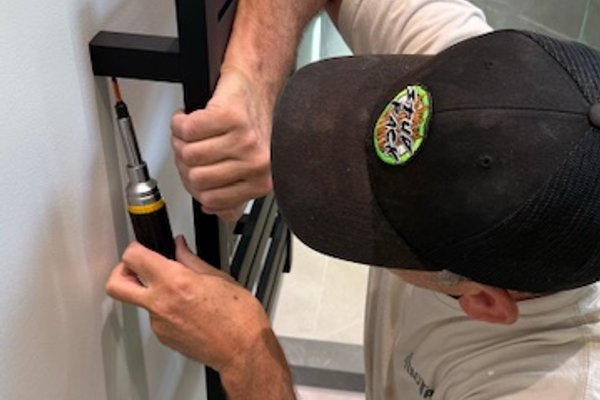
How to Install a Towel Warmer: Hardwired, Plug-in & Dual Connect
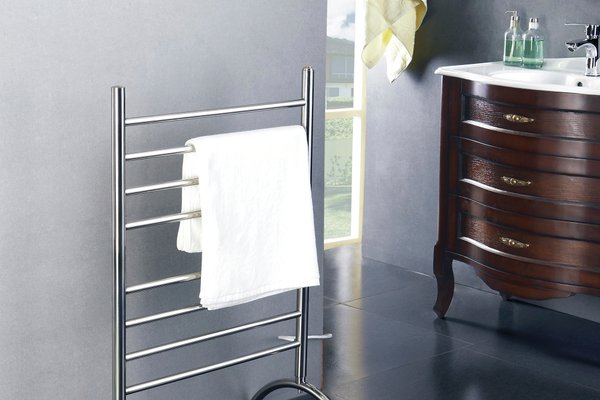
Towel Warmer Not Working? How to Troubleshoot & Fix It
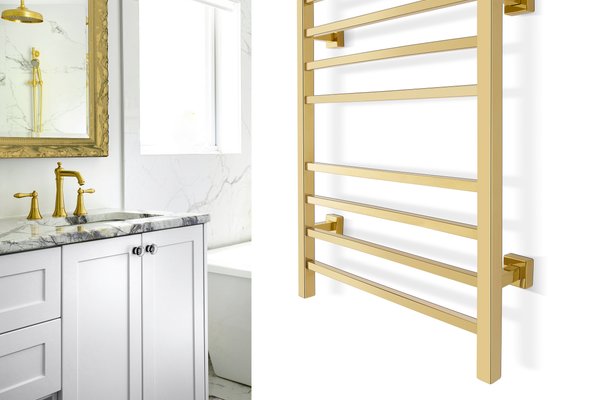
What Towel Warmer is Right For You?
The Complete Guide to Electric Towel Warmers: Everything You Need to Know
Stay Updated
Get the latest radiant heating news and tips delivered to your inbox.