

In This Article
If you’ve ever stepped onto a freezing bathroom tile in the middle of winter, you likely understand the appeal of a heated tile floor. But what exactly is it, and how does it work? At its simplest, you can think of an underfloor heating system like a high-tech heating blanket for your entire floor—providing consistent, gentle warmth exactly where you need it.
Unlike traditional forced-air systems that blow hot air through vents—often creating drafts, circulating dust, and leaving cold spots—underfloor heating turns your entire floor into a giant, gentle radiator. This method, known as radiant heating, warms the people and objects in a room directly, rather than just heating the air.
Why Homeowners Choose Radiant Heat
- Even Comfort: Eliminates cold spots and drafts entirely.
- Energy Efficiency: Operates at lower temperatures than traditional radiators while providing the same level of comfort.
- Silent Operation: No noisy blowers, fans, or ductwork.
- Improved Air Quality: Doesn’t circulate dust, pet dander, or allergens.
- Design Freedom: Invisible heating means no unsightly vents or baseboards dictating your furniture layout.
How Does Underfloor Heating Work?
There are two primary types of underfloor heating systems: electric and hydronic (water-based). While both achieve the same result—a beautifully warm floor—they are designed for very different types of projects but heated tile floors are the most common.
Electric Floor Heating (Best for Remodels)
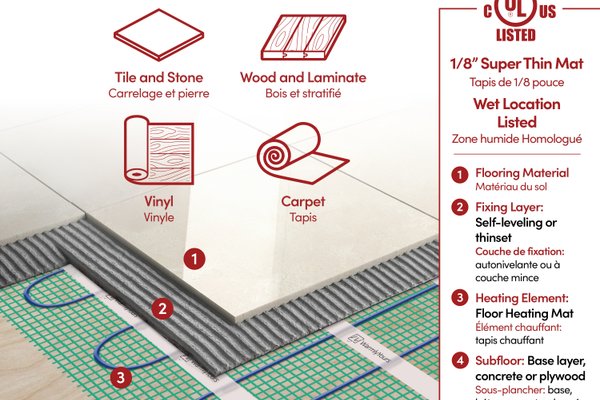
Electric floor heating systems use ultra-thin heating cables or mats installed directly beneath your flooring material (usually embedded in thinset or self-leveling cement). They are powered by your home’s electrical panel and controlled by a dedicated smart thermostat.
Because they are incredibly thin and easy to install, electric systems are the go-to choice for single-room renovations, such as bathroom remodels, kitchen upgrades, or basement finishing.
Hydronic Floor Heating (Best for New Construction)
Hydronic systems pump heated water through a network of PEX tubing installed within a thick concrete slab or specialized subfloor panels. The water is heated by a boiler or water heater.
Because hydronic systems require a boiler, a pump, and significant floor buildup, they are typically only installed during new home construction or major, whole-house gut renovations. For a deeper dive into the differences between these two systems, check out our guide on Electric vs. Hydronic Floor Heating.
System Components
To ensure your electric floor heating system operates safely and efficiently, several key components must work together:
- Heating Element: The core of the system, consisting of either a pre-spaced mat (for easy installation) or a loose cable (for maximum flexibility in custom layouts).
- Thermostat: A specialized control unit designed specifically for radiant heat, allowing you to set schedules and monitor energy usage.
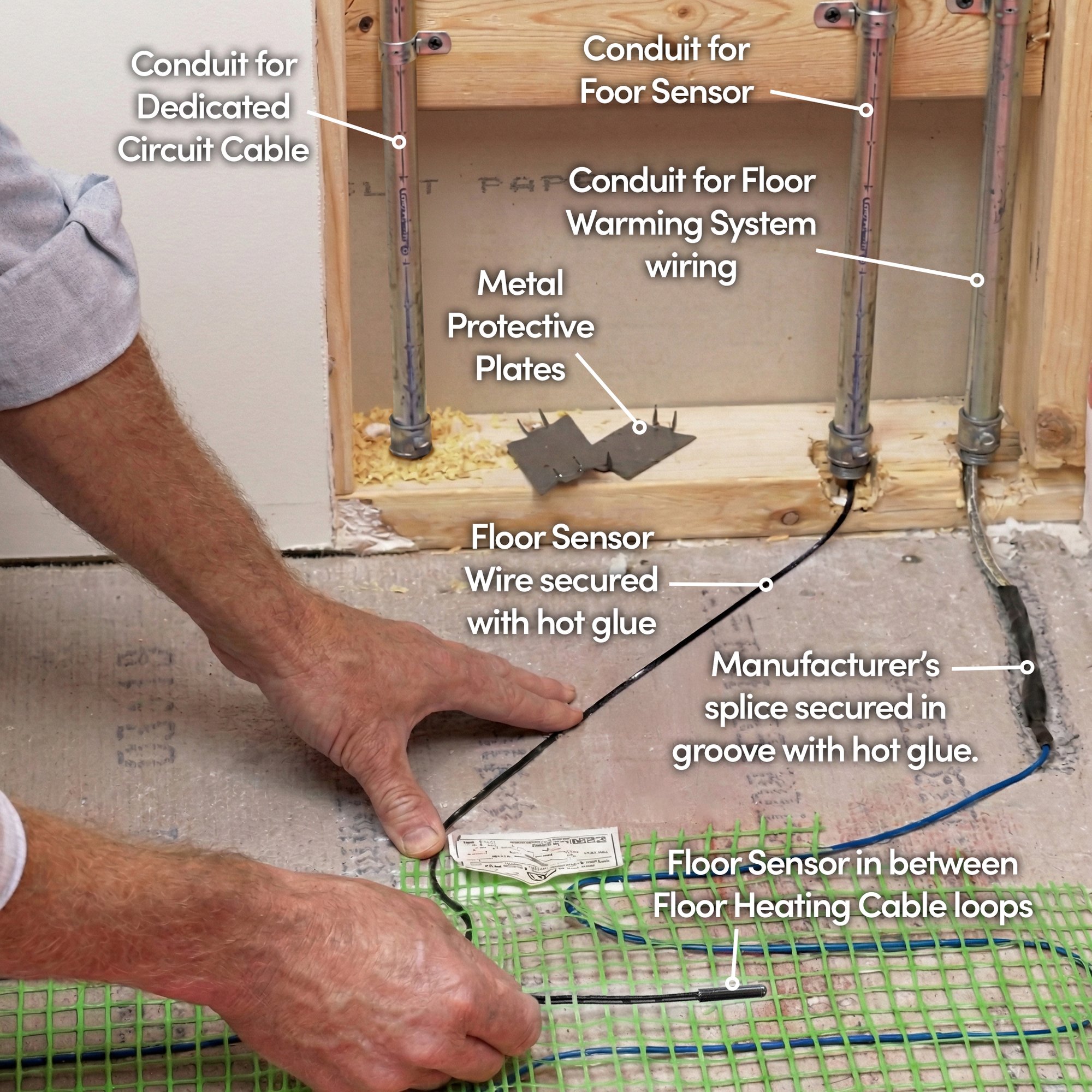
- Floor Sensor: A small probe installed beneath the flooring that communicates directly with the thermostat to maintain your desired floor temperature.
- Uncoupling Membrane: (Optional) Often used with cable-based systems to provide waterproofing and protect tile from subfloor movement.
- Thermal Insulation: (Optional) Recommended for installations over concrete slabs to prevent heat loss and improve warm-up times.
Installation and Cost
One of the biggest misconceptions about an electric underfloor heating system is that it is prohibitively expensive. In reality, the cost of the system is often comparable to the cost of the flooring material itself. You can even use our instant quote tool to see exactly what a system would cost for your specific room.
Operating Costs vs. Installation Costs
While the upfront cost is reasonable, homeowners are often surprised by how cheap electric systems are to run. Because radiant heat is so efficient, and because you can use a programmable thermostat to only heat the floor when you are using the room, the operating costs are minimal. For example, running a typical 1,000-watt bathroom system costs just $0.16/hr to operate.
Floor Buildup & Installation Height
A major concern during renovations is whether adding floor heating will raise the floor height, creating awkward transitions at doorways. Electric mats and cables add very little height—often less than 3/8th inch (much less for floating systems like Environ)—making them perfect for retrofits. In contrast, hydronic systems can raise floors by an inch or more.
Maintenance & Reliability
Unlike hydronic systems that require regular boiler maintenance and flushing, electric floor heating systems require zero ongoing maintenance. Once installed under the tile, there are no moving parts to break. In the rare event a cable is damaged (usually during the initial flooring installation), professionals can use thermal imaging to pinpoint the exact location and repair a single tile without tearing up the whole floor.
Primary vs. Supplemental Heat
While often installed for the luxury of warm feet (supplemental heat), electric underfloor heating can be used as a room’s primary heat source. This depends on the room’s insulation, the number of windows, and the local climate. A proper heat loss calculation will determine if the floor heating alone can keep the room at a comfortable 70°F during the winter.
Start with a Plan
Every successful electric floor heating project starts with a good design. Use our SmartPlan™ service to get a custom installation layout and exact pricing for your room.
Curious what the running / operating cost would be for your project in your area? Use our operating cost calculator.
Operating Cost Calculator for Floor Heating
Estimate your daily and monthly energy costs based on room size and local rates.
"Most homeowners are surprised how affordable radiant floor heating is to operate—often just pennies a day for a bathroom. It's the kind of everyday luxury that pays for itself in comfort!"
— Rae RadiantReady to Warm Up Your Home?
An electric underfloor heating system delivers spa-like comfort, lower operating costs, and a noticeable boost in resale value—all with zero ongoing maintenance. Whether you’re remodeling a single bathroom or finishing a basement, getting started is easier than you think.
Price your own heated tile floor in minutes with our free online design and instant quote tool, or let our experts build a custom layout with the SmartPlan™ service—free and ready in one business day. Have questions? Our team offers 24/7 technical support to help you plan the perfect floor heating project.
Frequently Asked Questions
Radiant floor heating typically takes 30-60 minutes to warm up, depending on floor type, insulation, and room size. Tile and stone floors heat faster (30-45 minutes), while thicker materials like hardwood may take 45-60 minutes.
For optimal efficiency, use a programmable thermostat to schedule heating before you wake up or arrive home. Once warm, the system maintains temperature efficiently. WarmlyYours thermostats include smart scheduling features and floor temperature sensors for precise control. WarmlyYours provides a backup sensor in every order.
Yes, radiant floor heating can be used as a primary heat source in well-insulated homes, particularly in moderate climates. However, most North American homes use it as supplemental heating to enhance comfort and reduce reliance on forced-air systems.For primary heating, you need:
- Proper insulation (walls, windows, attic)
- Adequate watt density (typically 15 watts/sq.ft. or higher)
- Coverage across 80%+ of floor area
- Climate-appropriate system design
Not sure if your home qualifies? Use our free Heat Loss Calculator to determine if radiant floor heating can serve as your primary heat source. This tool calculates your room's heat requirements based on insulation, climate, and construction details.WarmlyYours also offers free consultation with our engineering team to assess whether your home is suitable for primary heating. Our 24/7 support and 26 years of experience across 300,000+ installations ensure you get the right system for your needs.
An electric underfloor heating system doesn't need to be left on all the time. The system can be completely turned off or set back to a lower temperature when not in use. If you have a programmable floor heating thermostat, then the system can also be set to operate only during specific times.
WarmlyYours’ TempZone™ product is most commonly installed under tile, stone, and marble flooring, but can also be installed under many other popular floor covering options such as hardwood, vinyl and linoleum. We also have our Environ system, which is an electric floor heating product as well and is specially designed for installation under carpet (in the U.S. only), laminate and floating wood. WarmlyYours can accommodate any flooring type with either of the electric radiant floor heating products that we offer. If your flooring type isn't listed here, just give us a call at (800) 875-5285 and we will be happy to discuss it with you.
Yes, but any furniture that may trap heat, such as pieces with an enclosed bottom, should be avoided. Furniture on legs with a clearance of at least 3" is permissible.
A complete electric floor heating system consists of two essential components: the heating element (either a pre-spaced mat or loose cable) and a specialized thermostat. But most systems will also incorporate a floor sensor to monitor temperature. Cable-based systems may also use an uncoupling membrane for tile protection. If you're installing over a cement slab or a poorly insulated space, you may also want to include thermal insulation to prevent heat loss. Together, these parts ensure safe, efficient, and consistent warmth throughout your room.
Have Questions About Your Project?
Our team of Radiant Experts is ready to help!
Related Articles
Heated Floor Systems: The Complete Guide to Components & Options

Electric vs. Hydronic Radiant Floor Heating: Which is Right for You?

Can Radiant Floor Heat Be Your Primary Heat Source?

How to Install Bedroom Underfloor Heating
Stay Updated
Get the latest radiant heating news and tips delivered to your inbox.