
Electric Floor Heating Overview with Scott
Transform Your Home with Radiant Warmth Solutions
Are you tired of stepping onto cold tiles each morning? Discover how electric floor heating can revolutionize your home comfort without a hefty price tag.
In this video, Scott from WarmlyYours delves into the transformative benefits of electric floor heating. Not only does it warm your floors, but it can also heat entire rooms efficiently. Imagine stepping into a spa-like bathroom every day, all while keeping energy costs to a minimum.
Here's a sneak peek at what you'll learn in Scott's overview:
- 🔥 How to achieve luxurious warmth with electric in-floor heating
- 💡 The cost-effective way to enjoy warm tiles, with daily operating expenses as low as 20-25 cents
- ✅ Ensuring safety with UL-listed systems, suitable for various home areas like bathrooms and kitchens
- 🌡️ Simple installation steps, including the role of professional electricians
Embrace the comfort of radiant warmth in your home. By following Scott's expert insights, you'll enjoy cozy, energy-efficient floors that add both luxury and value to your living spaces.
Transcript
Hello, I'm Scott from WarmlyYours, and today I'd like to talk to you about electric floor heating. Electric floor heating is becoming increasingly popular, and you may have seen it featured on HGTV or in home remodeling magazines. One of the great advantages of electric floor heating is that it transforms your bathroom into a spa-like retreat. Not only does it warm the tiles underfoot, but it can also heat the entire room, creating a cozy and inviting atmosphere.
You might be wondering about the operating costs of our system. If you utilize the pre-programmed thermostat settings, which allow for a couple of hours of heating in the morning and a few hours at night, you can expect the daily operating cost to be around 20 to 25 cents. This makes it an economical choice for maintaining comfort in your home.
Safety is another important consideration when it comes to electric floor heating. Rest assured, our system is UL listed specifically for these applications, ensuring that it meets rigorous safety standards. This means you can confidently use it not only in bathrooms but also in kitchens or any area where tile is installed.
Once the tile setter has installed the heating system beneath the floor, the next step is to call an electrician. The electrician will wire the warming rolls to the thermostat and then connect the thermostat to a dedicated circuit in your home. It’s that simple! For more information, please visit warmlyyours.com.
Bonjour, je suis Scott de WarmlyYours, et aujourd'hui j'aimerais vous parler du chauffage électrique par le sol. Le chauffage électrique par le sol est de plus en plus populaire, et vous l'avez peut-être vu sur HGTV ou dans des magazines de rénovation. L'un des grands avantages du chauffage électrique par le sol est qu'il transforme votre salle de bains en un véritable spa. Non seulement il réchauffe les carreaux sous les pieds, mais il peut également chauffer l'ensemble de la pièce, créant ainsi une atmosphère douillette et accueillante.
Vous vous interrogez peut-être sur les coûts de fonctionnement de notre système. Si vous utilisez les réglages préprogrammés du thermostat, qui permettent de chauffer quelques heures le matin et quelques heures la nuit, vous pouvez vous attendre à ce que le coût de fonctionnement quotidien soit de l'ordre de 20 à 25 cents. Il s'agit donc d'un choix économique pour maintenir le confort dans votre maison.
La sécurité est une autre considération importante lorsqu'il s'agit de chauffage électrique par le sol. Soyez rassuré, notre système est homologué UL spécifiquement pour ces applications, ce qui garantit qu'il répond à des normes de sécurité rigoureuses. Cela signifie que vous pouvez l'utiliser en toute confiance non seulement dans les salles de bains, mais aussi dans les cuisines ou dans toute autre zone où des carreaux sont posés.
Une fois que le carreleur a installé le système de chauffage sous le sol, l'étape suivante consiste à appeler un électricien. L'électricien raccordera les rouleaux chauffants au thermostat, puis connectera le thermostat à un circuit dédié dans votre maison. C'est aussi simple que cela ! Pour plus d'informations, veuillez consulter le site warmlyyours.com.
Hola, soy Scott de WarmlyYours, y hoy me gustaría hablarle de la calefacción por suelo radiante eléctrico. La calefacción por suelo radiante eléctrico es cada vez más popular, y es posible que lo haya visto en HGTV o en revistas de remodelación del hogar. Una de las grandes ventajas de la calefacción por suelo radiante eléctrico es que transforma su cuarto de baño en un refugio tipo spa. No sólo calienta las baldosas bajo los pies, sino que también puede calentar toda la habitación, creando un ambiente acogedor y acogedor.
Puede que se pregunte por los costes de funcionamiento de nuestro sistema. Si utiliza los ajustes preprogramados del termostato, que permiten un par de horas de calefacción por la mañana y unas pocas horas por la noche, puede esperar que el coste de funcionamiento diario sea de unos 20 a 25 céntimos. Esto lo convierte en una opción económica para mantener el confort en su hogar.
La seguridad es otra consideración importante cuando se trata de calefacción por suelo radiante eléctrico. Puede estar seguro de que nuestro sistema está homologado por UL específicamente para estas aplicaciones, lo que garantiza que cumple las rigurosas normas de seguridad. Esto significa que puede utilizarlo con toda confianza no sólo en cuartos de baño, sino también en cocinas o en cualquier zona donde se instalen baldosas.
Una vez que el alicatador ha instalado el sistema de calefacción bajo el suelo, el siguiente paso es llamar a un electricista. El electricista conectará los rodillos calefactores al termostato y, a continuación, conectará el termostato a un circuito dedicado de su casa. Así de sencillo Para más información, visite warmlyyours.com.
Witam, jestem Scott z WarmlyYours, a dziś chciałbym porozmawiać o elektrycznym ogrzewaniu podłogowym. Elektryczne ogrzewanie podłogowe staje się coraz bardziej popularne i być może widziałeś je w HGTV lub w magazynach poświęconych przebudowie domu. Jedną z największych zalet elektrycznego ogrzewania podłogowego jest to, że przekształca ono łazienkę w miejsce przypominające spa. Nie tylko ogrzewa płytki pod stopami, ale może również ogrzać całe pomieszczenie, tworząc przytulną i zachęcającą atmosferę.
Być może zastanawiasz się nad kosztami eksploatacji naszego systemu. Jeśli korzystasz z zaprogramowanych ustawień termostatu, które pozwalają na kilka godzin ogrzewania rano i kilka godzin w nocy, możesz oczekiwać, że dzienny koszt eksploatacji wyniesie około 20 do 25 centów. To sprawia, że jest to ekonomiczny wybór dla utrzymania komfortu w domu.
Bezpieczeństwo to kolejna ważna kwestia, jeśli chodzi o elektryczne ogrzewanie podłogowe. Zapewniamy, że nasz system jest wymieniony na liście UL specjalnie dla tych zastosowań, zapewniając, że spełnia rygorystyczne normy bezpieczeństwa. Oznacza to, że można go śmiało używać nie tylko w łazienkach, ale także w kuchniach lub innych miejscach, w których układane są płytki.
Gdy płytkarz zainstaluje system ogrzewania pod podłogą, następnym krokiem jest wezwanie elektryka. Elektryk podłączy rolki grzewcze do termostatu, a następnie podłączy termostat do dedykowanego obwodu w domu. To takie proste! Więcej informacji można znaleźć na stronie warmlyyours.com.
Related Resources
-

PDF · THE-FUNDAMENTALS-OF-ELECTRIC-FLOOR-HEATING-PRESENTATION-A
The Fundamentals of Electric Floor Heating - Presentation (English)
Presentation slides for our March 2018 Webinar. We go in depth on electric floor heating products and how they work to add warmth and comfort to your home.
-
Product · TRT120-1.5x04
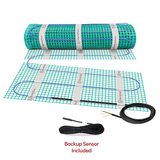
TempZone™ Flex Roll 120V 1.5′ x 4′, 6 sq.ft., 0.8A
Never step onto cold tile again! WarmlyYours TempZone™ Flex Rolls keep your tile, stone or marble floors, warm and barefoot friendly all year round. Perfect for installation in ...
-

Guide
Bathroom Floor Heating: How Much It Costs and How to Install (2026)
How much does a heated bathroom floor cost? See real 2026 pricing by room size, plus a complete installation guide, thermostat options, and operating costs.
-
Page
Heated Tile Floors
Related Questions
Showing all 2 questions
Bathroom floor heating is incredibly cheap to operate. The actual cost depends on your system size and local electricity rate.
WarmlyYours System Power Output:
- Most systems: 10–15 watts per square foot
- Actual wattage varies based on product type and spacing
Real Operating Cost Examples (at $0.12/kWh average):Small Bathroom (6–9 sq.ft. heated area):
- Per hour: $0.01–$0.02
- Per day (2–3 hours): $0.02–$0.06
- Per month: $0.60–$1.80
- Per year: $7–$22
Standard Bathroom (15–20 sq.ft. heated area):
- Per hour: $0.02–$0.03
- Per day (3 hours): $0.06–$0.09
- Per month: $1.80–$2.70
- Per year: $22–$32
Master Bathroom (25–30 sq.ft. heated area):
- Per hour: $0.03–$0.05
- Per day (3 hours): $0.09–$0.15
- Per month: $2.70–$4.50
- Per year: $32–$54
Cost Varies by:
- Your local electricity rate — $0.10–$0.18+ per kWh depending on region
- Heated floor area — Larger areas cost more to heat
- Daily usage — How many hours per day you use the bathroom
- Thermostat settings — Lower temperatures = lower costs
Maximize Energy Savings:
Use a programmable thermostat like the nSpire Touch or nJoy WiFi to:
- Set heating schedules around your daily routine
- Lower temperature when bathroom is unoccupied
- Avoid unnecessary heating during warmer months
Calculate Your Exact Costs:
Use the WarmlyYours Operating Cost Calculator to estimate your specific monthly and annual costs based on your local electricity rate, heated area size, and usage patterns.
Bottom Line:
Most bathroom floor heating systems cost less than $1–$5 per month to operate—one of the most energy-efficient heating solutions available.
Bathroom floor heating has specific electrical requirements for safety and proper operation. Understanding these ensures your system works correctly and meets code.
GFCI Protection (Built-In to WarmlyYours Thermostats):
- GFCI = Ground Fault Circuit Interrupter
- Required by electrical code for all bathroom circuits
- Protects against electrical shock from water exposure
- Detects ground faults and cuts power instantly
- WarmlyYours thermostats have GFCI protection built-in
- This is why it's critical to use a thermostat designed specifically for electric floor heating
Electrical Specifications:
Voltage:
- Most residential systems: 120V or 240V
- Larger bathrooms may require 240V for efficiency
- Your electrician will determine based on system size
Wattage:
- Varies by system size and type
- Typical bathroom systems: 90–270 watts
- Larger master bathrooms: 300–400+ watts
- Your SmartPlan™ will specify exact wattage for your system
Circuit Requirements:
- Dedicated circuit recommended (not shared with other bathroom devices)
- Proper breaker size based on system wattage
- Adequate amperage for safe operation
What Your Electrician Needs to Know:
When you get a quote or SmartPlan™, it includes:
- Electrical Plan: Detailed specifications including voltage, wattage, and ohm readings
- Circuit requirements: What breaker size is needed
- GFCI specifications: How the system must be protected
- Connection details: How to safely connect thermostat and power supply
Installation Process:
- Heating element installed by flooring contractor
- Thermostat positioned between heating loops (not touching cables)
- System tested with multimeter before flooring is installed
- Licensed electrician connects thermostat to main power supply
- GFCI protection verified (built into thermostat) before system is commissioned
- Final testing to confirm proper operation
Important Safety Notes:
- Always hire a licensed electrician for electrical connections
- Never attempt electrical work yourself
- Use only a thermostat designed for electric floor heating (GFCI built-in)
- Improper electrical installation voids warranty and creates safety hazards
Get Professional Guidance:
Get a free SmartPlan™ which includes:
- Detailed electrical plan with all specifications
- Voltage and wattage requirements
- GFCI protection details
- Information to share with your electrician
Your electrician will use this plan to safely install and connect your system to code.
Bottom Line: Bathroom floor heating requires proper voltage/wattage and a dedicated circuit. WarmlyYours thermostats have GFCI protection built-in, making them essential for safe operation. Always use a licensed electrician for electrical connections.
Get a Free Floor Heating Quote
Our Radiant Experts are ready to help. Start with a free, no-obligation quote for your project.

