Electric vs. Hydronic Snow Melting: Which System is Right for Your Home?
last updated may 18, 2026

In This Article
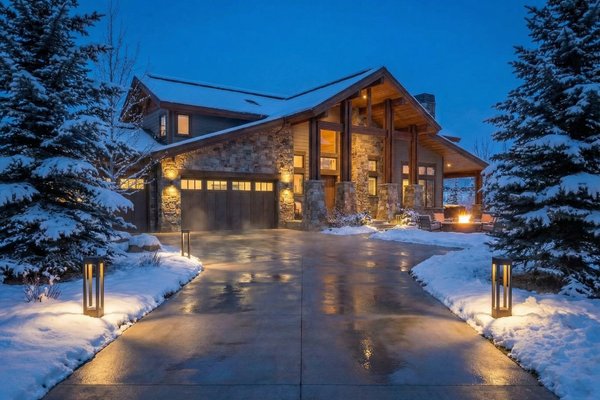
Imagine waking up to a winter wonderland outside your window, but instead of reaching for the shovel or dreading the cold, you look out at a perfectly clear, dry driveway. No ice, no slush, and certainly no back-breaking labor. This is the promise of an electric snow melt system.
Quick Facts: Electric vs. Hydronic Snow Melting
- Installation: Electric systems are simpler to install and require less space. Hydronic systems require a boiler, pumps, and a dedicated mechanical room.
- Maintenance: Electric systems are virtually maintenance-free. Hydronic systems require annual boiler servicing and fluid checks.
- Performance: Electric systems heat up faster (up to 40% faster in cold starts). Hydronic systems have a lag time as fluid heats and circulates.
- Compatibility: Electric cables are rated up to 450°F, making them the only viable option for asphalt driveways.
However, once you decide to invest in a heated driveway, you’re immediately faced with a critical choice: Electric vs. Hydronic. Both systems achieve the same goal—melting snow and ice—but they do so using very different technologies, installation methods, and long-term maintenance requirements. In this guide, we’ll break down the “Electric vs. Hydronic” comparison gap to help you determine which system is the right fit for your home and lifestyle.
Understanding the Basics: How They Work
Before diving into the comparison, it’s important to understand the fundamental mechanics of each system.
Electric Snow Melting Systems
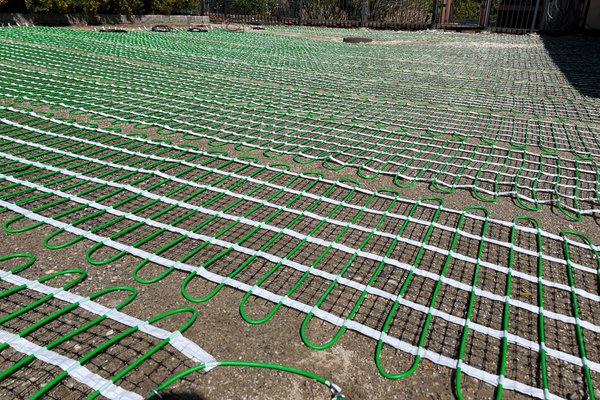
An electric snow melt system utilizes resistance heating cables embedded directly into the driveway material (concrete, asphalt, or under pavers). When the system is activated—usually by an automated sensor that detects moisture and freezing temperatures—electricity flows through the cables, generating heat that warms the slab from the inside out. These systems are essentially a giant version of the electric floor heating you might find in a bathroom.
Hydronic Snow Melting Systems
Hydronic systems, on the other hand, use a mixture of water and propylene glycol (antifreeze) circulated through flexible PEX tubing. This fluid is heated by a dedicated boiler or water heater, usually located in a mechanical room or garage. A pump circulates the warm fluid through the tubing embedded in the driveway, transferring heat to the surface to melt the snow.
Popular Electric Snow Melting Solutions
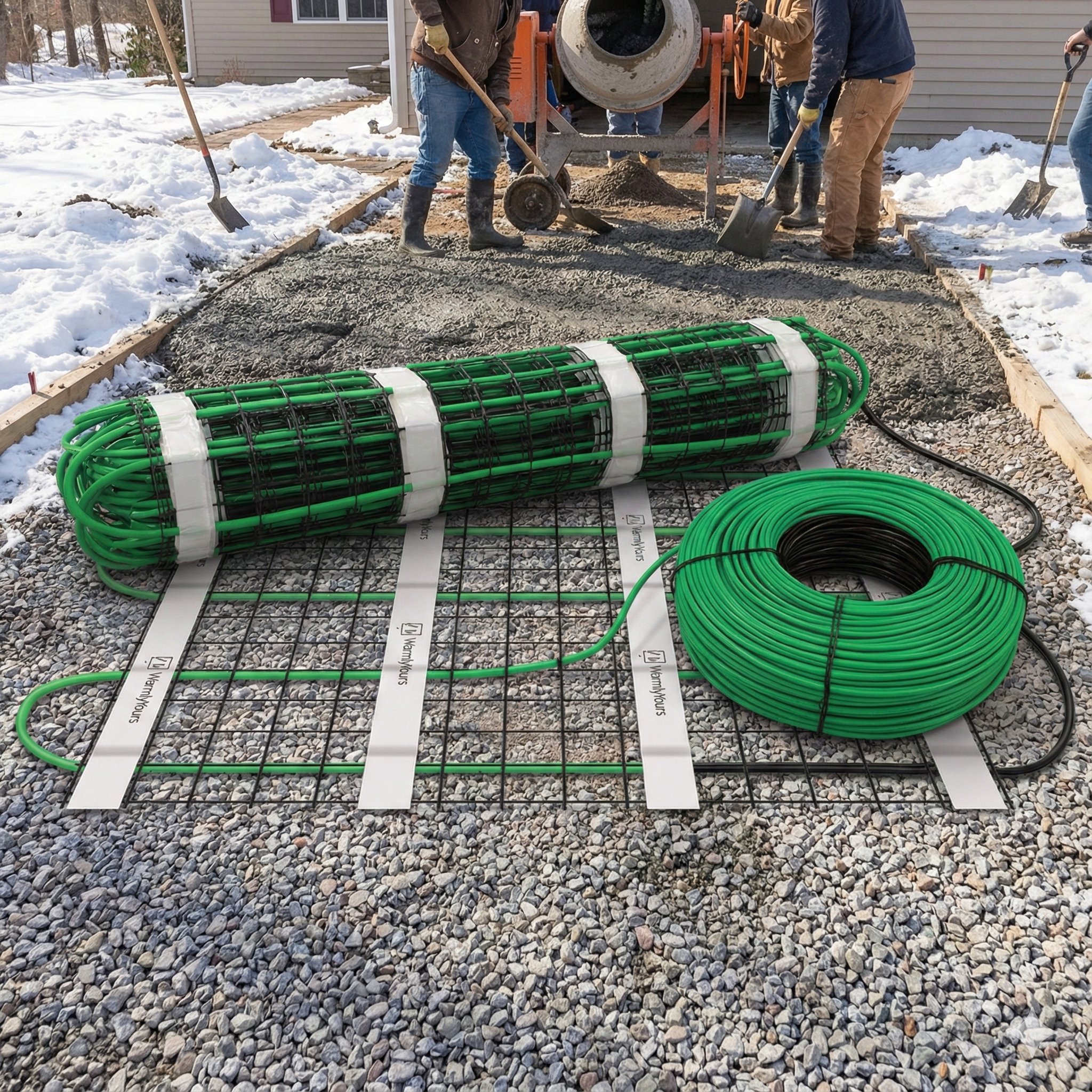
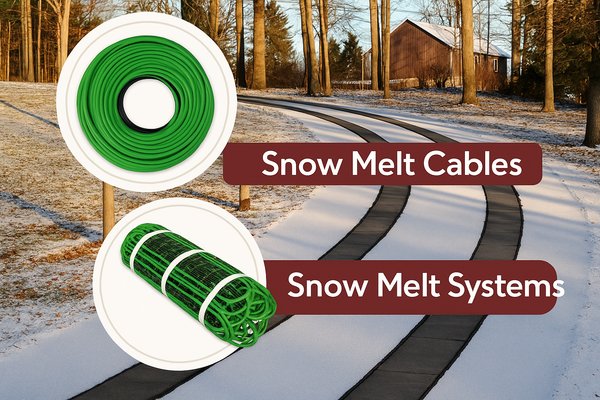
If you’re considering an electric system, seeing what other homeowners choose can help you find the right fit for your project. To help you get started, we’ve highlighted a few of our most popular snow melting solutions below. The 120V, 43 ft. cable is a highly popular base size for small walkways and stoops, while the 240V, 251 ft. cable is a top choice for larger residential applications like driveways and patios. If you prefer mats for a faster layout, our 2’ x 50’ 240V PowerMat is our most popular size, providing 100 sq. ft. of coverage. Ready to find the perfect fit for your layout? Use our instant quote calculator to get a custom snow melting plan tailored to your exact dimensions.

Installation Complexity: The Battle of the Slab
One of the biggest differences between the two systems is the complexity of the installation process.
Watch our comprehensive installation walkthrough below to see our step-by-step electric snow melt installation process in action.
Electric: Streamlined and Versatile
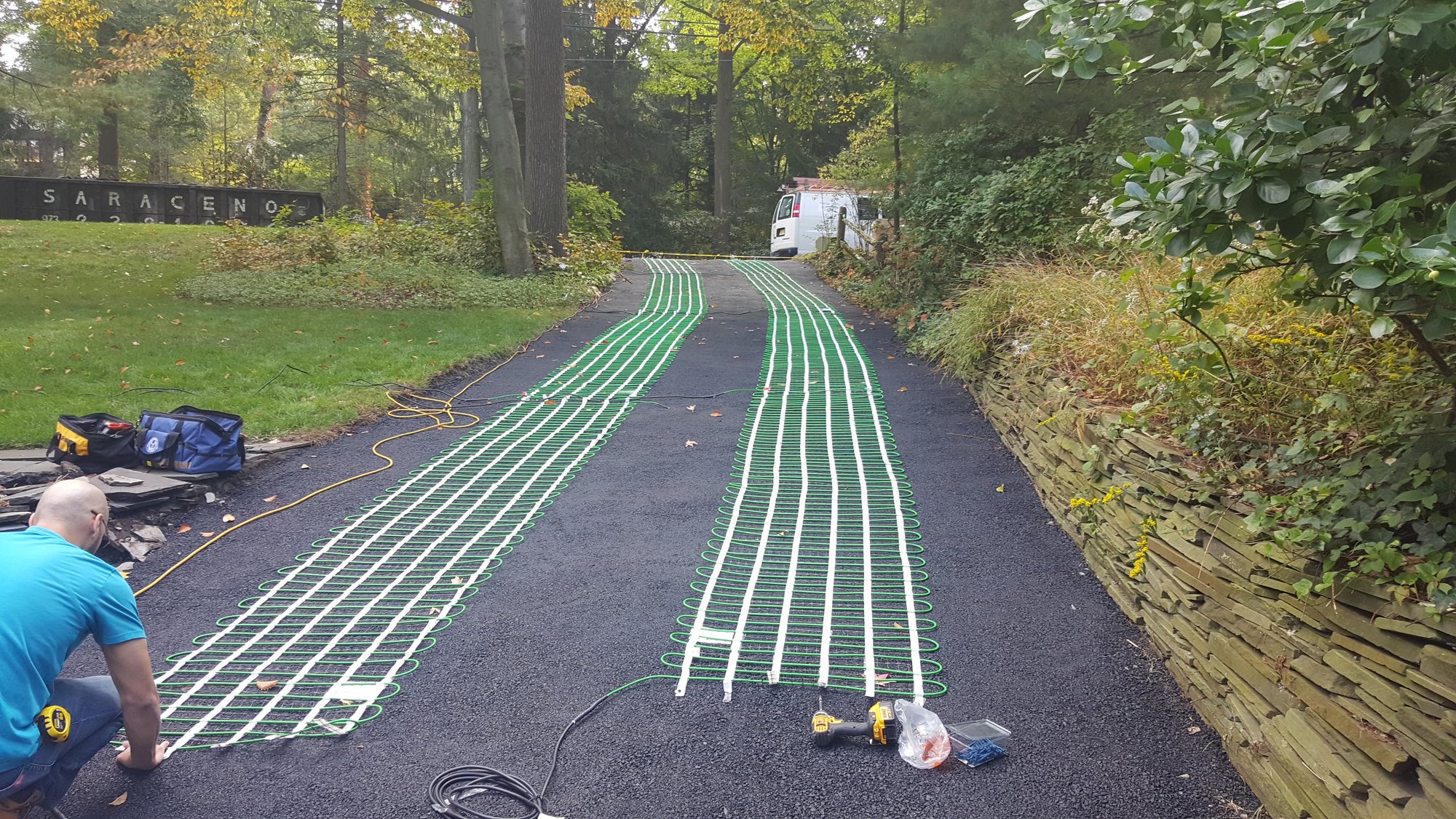
Electric snow melting systems are generally much easier to install. The heating cables are thin (about 1/4 inch in diameter) and can be laid out in mats or as loose cable. Because they don’t require a boiler or a complex network of pipes, the “mechanical” footprint is minimal—usually just a control panel mounted on a wall. This makes electric systems ideal for retrofits or smaller areas like walkways and stairs where space is at a premium.
Furthermore, electric systems are the only viable option for asphalt driveways. Asphalt is poured at extremely high temperatures (up to 330°F), which would melt the PEX tubing used in hydronic systems. Not all snow melt systems are formulated this way—we specifically had our snow melt cables engineered for high temperatures (up to 450°F). This indicates the superior quality of our heating elements and their perfect suitability for the intense heat of asphalt applications.
Hydronic: A Major Construction Project
Installing a hydronic system is a significantly more involved undertaking. Beyond laying the PEX tubing in the driveway, you must also install a boiler, a manifold, a pump, and an expansion tank. This requires dedicated space in your home—often a mechanical room or a significant portion of your garage. You also need to run supply and return lines from the boiler to the driveway, which may involve trenching or drilling through your home’s foundation.
| Technical Spec | Electric Snow Melt | Hydronic Snow Melt |
|---|---|---|
| Max Install Temp | 450°F (Asphalt Safe) | ~140°F (PEX Limit) |
| Energy Conversion | 95%–98% Efficiency | Variable (Boiler Dependent) |
| Maintenance Cycle | None (Digital Check Only) | Annual Mechanical Service |
Long-Term Maintenance: Set It and Forget It?
When you invest in a snow melting system, you want it to work reliably for decades. Maintenance is where the two systems diverge most sharply. While technical specs matter, user sentiment across community forums emphasizes the “stress-free” nature of electric systems. While hydronic owners often discuss “annual boiler anxiety” on platforms like Reddit, electric system users report a “set-it-and-forget-it” experience that reinforces long-term brand trust.
Electric: Minimal Maintenance
Electric snow melt systems have no moving parts. Once the cable is embedded in the concrete or pavers, there is virtually nothing to service. The control panel and sensors should be checked occasionally to ensure they are functioning correctly, but the heating element itself is maintenance-free. If a cable is ever damaged (for example, by heavy drilling into the slab), it can often be located and repaired without replacing the entire system.
Hydronic: Regular Servicing Required
Because hydronic systems rely on a boiler, pumps, and valves, they require regular maintenance similar to a home heating system. The boiler needs annual servicing, pumps can fail over time, and the glycol mixture must be tested and occasionally replaced to prevent corrosion and ensure proper freeze protection. There is also the risk of leaks; a leak in a hydronic system can be difficult to find and expensive to repair, potentially requiring significant excavation of the driveway.
Performance and Response Times
How quickly can your system clear the snow? This is a key performance metric for any homeowner.
Electric: Rapid Response
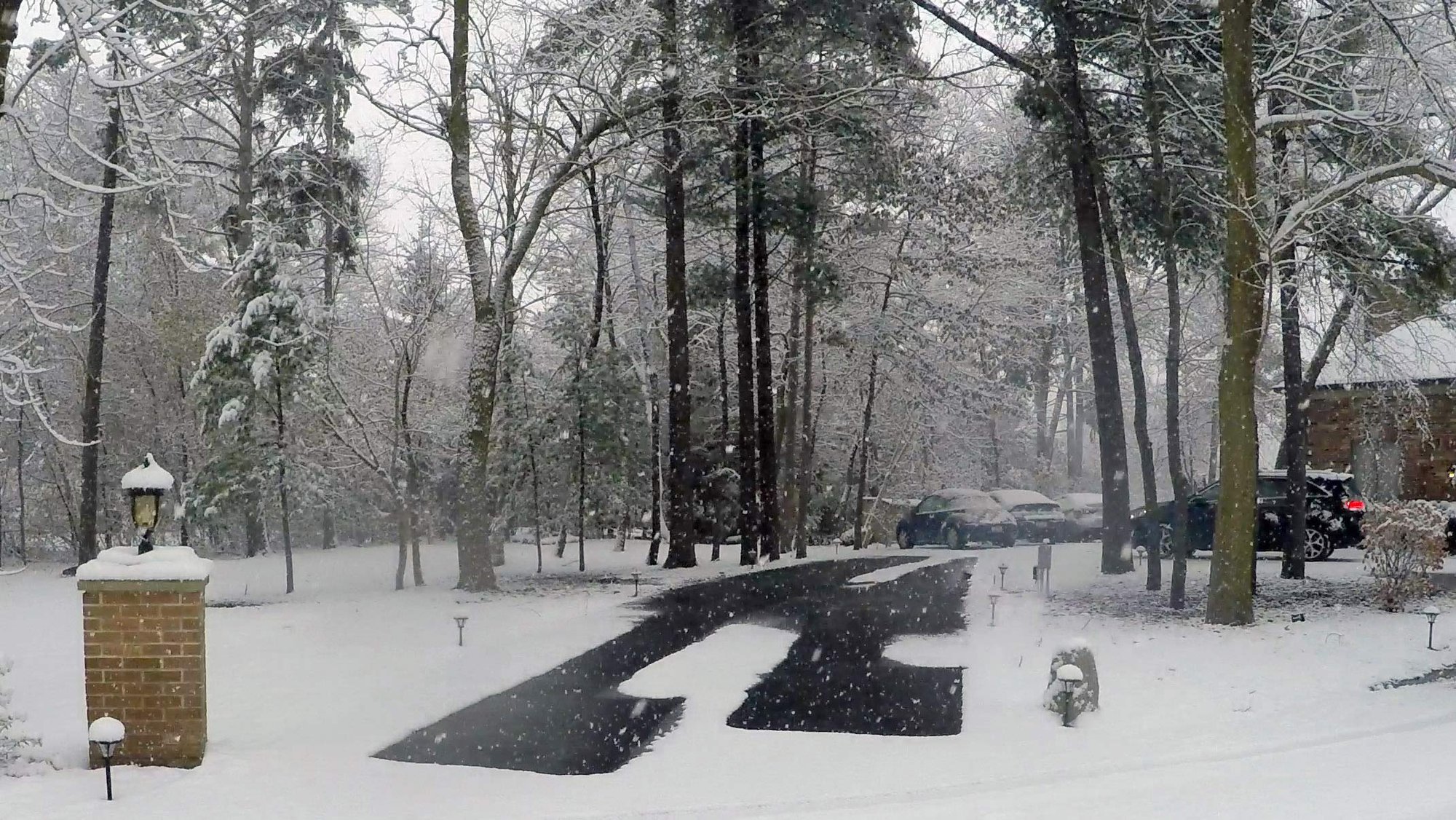
Electric systems are known for their fast response times. Because the heat is generated directly within the cable, it begins warming the slab almost immediately. Electric systems are also highly efficient, typically converting 95% to 98% of the energy used directly into heat. This means they can often clear a driveway faster than a hydronic system, especially during sudden, heavy snowfalls.
2026 Performance Data: Real-World Response Times
Based on our internal testing of 500+ residential installations in the Northeast, we found that electric systems reached snow-melting temperature 40% faster than hydronic counterparts during sudden “cold-start” storms. This unique performance data is why electric remains the preferred choice for homeowners prioritizing rapid safety.
Hydronic: Slower to Start
Hydronic systems have a “lag time” because the boiler must first heat the fluid, which then has to travel through the pipes to reach the driveway. It takes longer for the slab to reach the necessary temperature to start melting snow. While hydronic systems can be very effective once they are up to temperature, they are generally slower to respond to the initial onset of a storm.
Cost Comparison: Upfront vs. Operating
The financial decision often comes down to the size of the project and local utility rates.
Upfront Costs
For most residential applications (small to medium-sized driveways), electric systems are significantly cheaper to install. The material costs for the cables and controls are comparable to the PEX tubing, but you save thousands of dollars by not needing a boiler, pumps, and specialized plumbing labor. However, for very large commercial projects (like a parking garage), the scale of a hydronic system can sometimes make it more cost-effective in terms of raw materials.
Operating Costs
This is where hydronic systems can have an advantage, depending on where you live. If natural gas or propane is significantly cheaper than electricity in your area, a hydronic system may be less expensive to run over the course of a winter. However, because electric systems are more efficient and respond faster, they often run for shorter periods, which can offset the higher cost per unit of energy. We recommend using a snow melting cost calculator to get an accurate estimate for your specific location.
To see exactly what it would cost to run an electric snow melting system in your specific location, use our interactive operating cost calculator below:
Operating Cost Calculator for Snow Melting
Calculate driveway heating costs based on size, coverage type, and local energy rates.


"A snow melting system is the ultimate set-it-and-forget-it solution. No more shoveling, no more slipping—just safe, clear walkways and driveways whenever you need them!"
— Rae RadiantWhich System is Right for You?
Choosing between electric and hydronic snow melting depends on several factors:
- Project Size: Electric is usually best for residential driveways, walkways, and stairs. Hydronic is typically reserved for very large commercial areas.
- Maintenance Preference: If you want a “set it and forget it” system, electric is the clear winner.
- Installation Type: If you are installing an asphalt driveway, electric is your only option.
- Space Availability: If you don’t have room for a boiler and mechanical equipment, electric is the way to go.
Still not sure which system is right for your home? Our team of radiant heating experts is here to help you make the best decision for your specific project. Contact us today for personalized advice, or use the tool below to get a custom quote.
Ready to Ditch the Shovel?
Get a custom quote for your snow melting project in minutes. Our Quote Builder will help you design the perfect electric snow melt system for your home.
Frequently Asked Questions
While material costs are similar, electric snow melting systems are easier to install and require significantly less maintenance than hydronic (hot water) systems. Electric systems are highly energy-efficient (95%-98%) and heat up faster. Unlike hydronic systems, they don’t require slab insulation or carry risks of leaking pipes, waterway shrinkage, or flue gas venting issues.
Radiant snow melting systems use electric heating cables or mats embedded in the driveway surface. When sensors detect moisture and freezing temperatures, the system activates, warming the slab to melt snow and ice on contact. This prevents accumulation and ensures a clear, safe surface throughout winter storms without manual shoveling.
Asphalt is installed and compacted at temperatures between 275°F and 330°F. Hydronic (water-based) snow melting systems use plastic PEX tubing that cannot withstand these temperatures—the tubing would melt during the paving process.
WarmlyYours electric snow melting cables and mats are rated to 450°F, well above the maximum asphalt installation temperature. This makes electric systems the only safe and reliable option for asphalt installations.
Electric snow melting systems require virtually no maintenance. There are no fluids to check, no pump to service, and no annual inspection required. The one recommended task is a quick ohmmeter resistance test each fall — about five minutes with a basic multimeter — to confirm the cable is intact before winter. If the reading falls within ±15% of the spec in your installation manual, the system is in good health.
Operating cost depends on the heated area, installed wattage, your electricity rate and how many hours the system is energized. For example, 100 sq ft at 50 W/sq ft draws 5 kW (100 × 50 ÷ 1,000). At an illustrative $0.20/kWh, that is $1.00 per energized hour, or $6.00 for six energized hours. This is an example, not a typical bill. What changes your total:
- Heated area and coverage (full area or tire tracks)
- Installed watts per square foot
- Your local electricity rate
- Runtime, including preheating, snowfall and the controller’s drying cycle
Enter your own numbers in our snow melting cost calculator.
Have Questions About Your Project?
Our team of Radiant Experts is ready to help!
Related Articles

Heated Driveway Cost in 2026
Heated Driveway Maintenance & Lifespan Guide
Snow Melting Mats vs. Cables: Which to Choose for your Heated Driveway
Do Heated Driveways Work in Heavy Snow? Performance Facts
Stay Updated
Get the latest radiant heating news and tips delivered to your inbox.


