
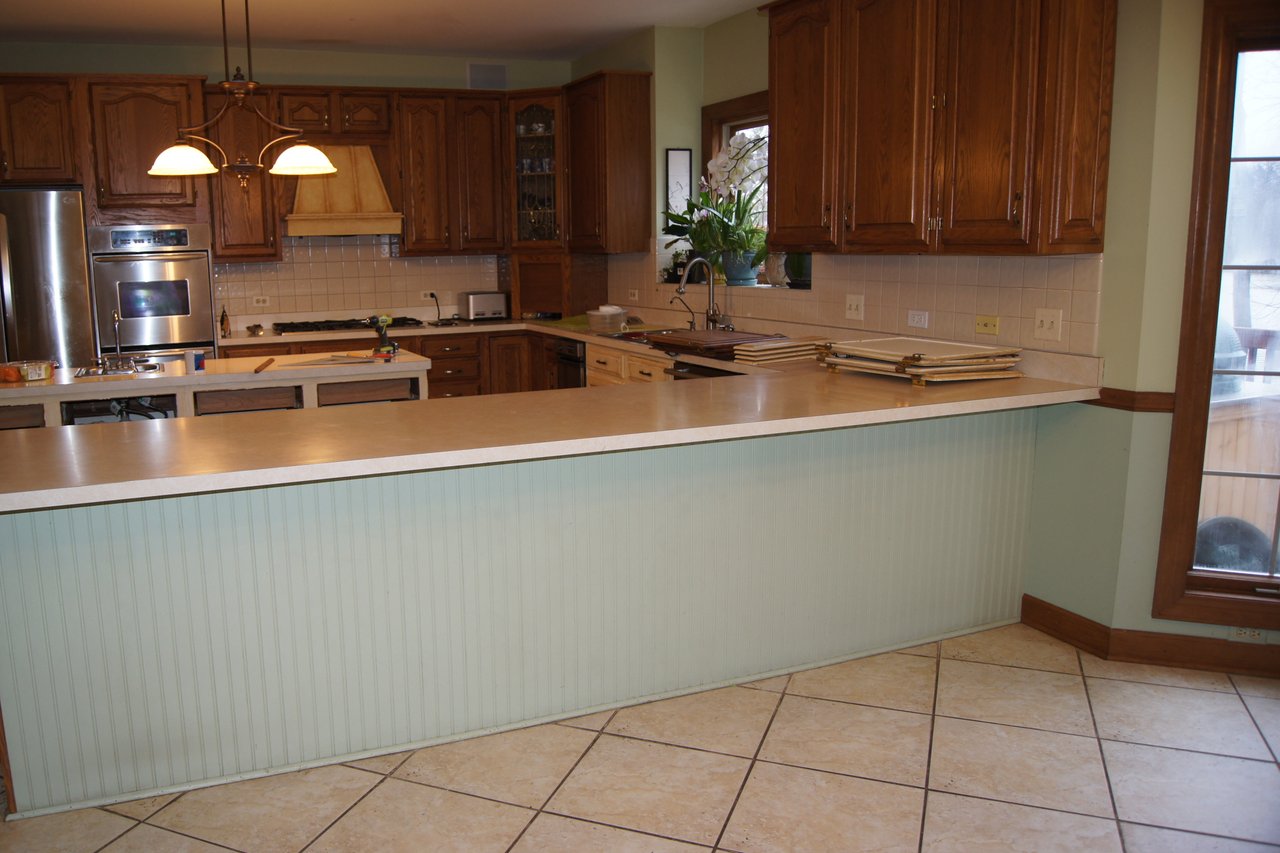
The Billen family’s open-concept kitchen remodel promised a spacious, unified hub for cooking and gathering, but removing an old peninsula threatened to leave a literal cold spot right in the center of the room. Because natural stone and tile act as major heat sinks, this newly exposed walkway would have been uncomfortably chilly compared to the rest of the heated space. WarmlyYours solved this design challenge by retrofitting a ultra-thin radiant heating system directly into the gap, achieving seamless, edge-to-edge warmth without altering the floor's profile.
Project Details
| Specification | Detail |
| Location | Kildeer, IL |
| Space Type | Kitchen / Open Concept Eating Area |
| Flooring / Surface | Tile, Marble, or Stone |
| System Type | Radiant Floor Heating (Tile Floor Radiant Heating) |
| Total Square Footage | 495 sq. ft. total project area (402 sq. ft. heated coverage) |
| Technical Specs | 240V / 6,033W / 25A |
| Wattage per Sq. Ft. | 15 W/sq. ft. |
| Cable Spacing | 3 inches on center (OC) |
| Products Used | TempZone™ Flex Rolls (240V), nSpire Touch Programmable Thermostat, nJoin 2.0 Power Module, Circuit Check |
| Operating Cost | $0.72 per hour |
| Professional Installer | WarmlyYours Project Team |
Bridging the Thermal Gap in Kitchen Design
The Billen family’s kitchen was already a favorite social hub, but the original layout was physically divided by a peninsula counter that restricted movement between the cooking and dining areas. To create an expansive, modern environment, the homeowners decided to remove the peninsula and integrate that counter space into an enlarged central island. However, this architectural improvement created an immediate technical dilemma: removing the old cabinetry exposed a strip of subfloor that had never been heated.
This layout change threatened to leave a literal thermal gap right in the middle of a high-traffic walkway. Because stone and tile floors are naturally cold to the touch, this newly opened space would have remained an uncomfortable distraction in an otherwise cozy room. To fix this without tearing up the entire kitchen floor, the team executed a highly focused retrofit. They installed a flexible electric heating matdirectly into the newly exposed gap, bridging the temperature difference perfectly.
The ultra-low profile of the heating elements allowed the new tile to be laid perfectly flush with the existing floor. Now, the transition between the old layout and the new open space is entirely invisible to both the eye and the feet. The entire room enjoys uniform, radiant warmth, proving that structural renovations don't have to compromise home comfort.
Featured Products
- TempZone™ Flex Rolls: Selected for their adaptive "cut-and-turn" mesh design, these rolls allowed installers to navigate the exact footprint of the old peninsula cabinetry. They provided localized, high-performance floor warming to eliminate the room's sole remaining cold spot.
- nSpire Touch Thermostat: This touchscreen controller manages the kitchen's heating schedule, ensuring the floor is warm during peak family hours while lowering energy usage late at night.
- nJoin 2.0 Power Module: Because the kitchen features a large 402 sq. ft. heated area, this power module was utilized to safely extend the capacity of a single thermostat, allowing unified control over the entire floor.
- Circuit Check: Used during the tile installation process, this digital monitor tracked the electrical integrity of the heating cables in real time, ensuring a zero-defect installation before the mortar cured.


