
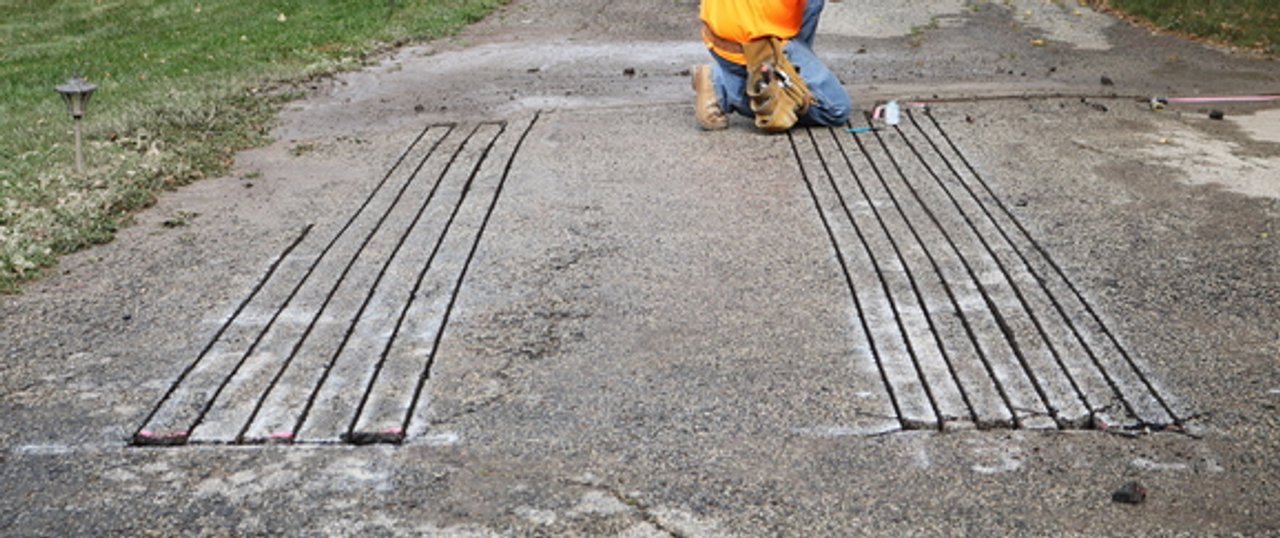
Winter maintenance in the Snow Belt is often seen as an unavoidable chore of back-breaking labor or expensive plowing. For this homeowner in Kildeer, Illinois, the goal was to eliminate the physical strain of shoveling and the corrosive damage of salt without the massive expense of tearing up a perfectly functional driveway. WarmlyYours delivered a targeted asphalt retrofit solution that focuses heat exactly where traction is needed most, providing a clear, automated path to the garage for pennies an hour.
Project Details
- Location: Kildeer, IL (Snow-Belt Region)
- Heated Space Type: Residential Driveway
- Surface Type: Asphalt (Retrofit/Existing)
- Coverage Type: Tire Track Coverage
- Total Heated Square Footage: 54 sq. ft.
- System Type: Electric Snow Melting
- Voltage: 240V
- Wattage: 2500W
- Amps: 10.42A
- Operating Cost:
- Per Hour: ~$0.40
- Per 6-Hour Storm: ~$2.40
- Basis: Based on US National Average ($0.16/kWh)
- WarmlyYours Products Used: Snow Melt Heating Cable
Upgrading Safety Without the Demolition
Many homeowners tolerate the "winter tax"—the hours spent clearing snow or the anxiety of a car sliding on a slick driveway—simply because they believe a heated driveway requires a total renovation. They wait years for their asphalt to fail before even considering a snow melting system. However, this project in Kildeer proves that you don't have to live with a dangerous driveway just because your current surface is still in good shape. By utilizing a retrofit approach, this system was integrated into the existing asphalt with surgical precision.
Snow Melt CablesThe installation avoided the waste and cost of a full "rip-and-replace." Instead, installers saw-cut narrow, 1.5-inch deep grooves directly into the asphalt in two parallel tracks. By targeting only the "tire tracks," the system provides maximum safety and vehicle traction while minimizing energy consumption. Once the Snow Melt Cables were laid, the channels were sealed with a hot asphaltic sealer, leaving the driveway structurally sound but technologically transformed. Now, when lake-effect snow hits, the system activates automatically, preserving the homeowner’s time and the driveway’s integrity.
Featured Products
Snow Melt Heating Cable (240V) Designed specifically for the rigors of outdoor burial, these twin-conductor cables are the workhorse of the system. In a retrofit application, they provide the flexibility to follow saw-cut grooves while maintaining the heavy-duty durability required to withstand vehicle weight and freezing cycles. They eliminate the need for chemical de-icers, which can prematurely age asphalt and harm local landscaping.

