
Floor Heating Thermostats
Choose from WarmlyYours' complete line of radiant floor heating thermostats—from the WiFi nJoy with Alexa & Google support to the programmable nSpire Touch and the simple non-programmable nTrust. Every thermostat includes built-in GFCI protection, a precision floor sensor, and 24/7 technical support.
Every WarmlyYours Thermostat Includes
3‑Year Warranty
Confidence built in—every thermostat is backed by 3 years of protection.
24/7 Installation Support
Real humans, real help, around the clock—whenever you need us.
cULus Listed
Every WarmlyYours thermostat is independently safety-certified by UL—code-compliant for residential and light-commercial use in the U.S. and Canada.
Class A GFCI Listed
Built-in Class A GFCI protection meets UL 943 and NEC requirements for electric floor heating—no separate GFCI breaker needed.
Floor Heating Thermostat Reviews
We take pride in providing both exceptional service and great products. But don't just take our word for it, check out what some of our customers have had to say.


Floor Heating Thermostats Comparison
Compare features across all available thermostat options to find the perfect control for your radiant floor heating system.
Features
WiFi-Enabled
Remote Troubleshooting/Updates
Voice Assistant Compatible
Programmable
Schedules
Floor Sensor Included
Display
Max Load
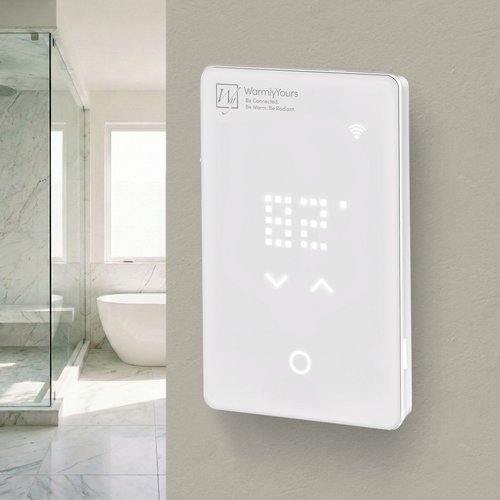
Best for users who want app-based control of their floor heating system, with the thermostat primarily used for basic temperature adjustments.
Up to 10 schedules
LED touch
15A @ 120/240V
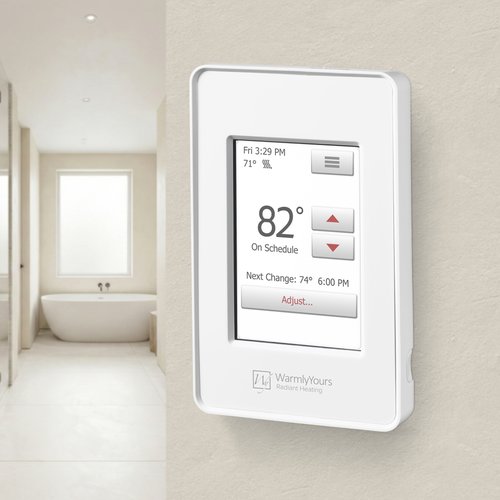
Best for users who prefer full control and setup directly on the thermostat via an intuitive touchscreen display.
Up to 6 per day
3.5" color touchscreen
15A @ 120/240V
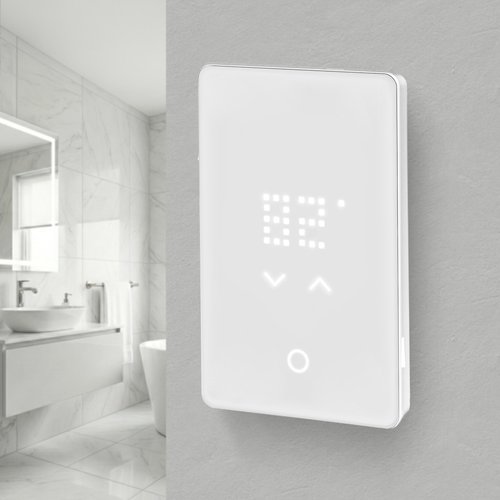
Best for users who want to maintain consistent temperature and adjust it when needed from the thermostat.
Set-and-hold
LED touch
15A @ 120/240V
Not Sure Which Thermostat Is Right for You?
Our radiant experts have helped over 100,000 customers find the right floor heating thermostat. Get personalized advice—free, typically within one business day.

Typically respond within 1 business day
Already have a thermostat?
Visit thermostat support →
Thermostat Accessories
Complete your installation with the right accessories—power module for high-load zones, a replacement floor sensor, and electrical rough-in kits that meet local code requirements.
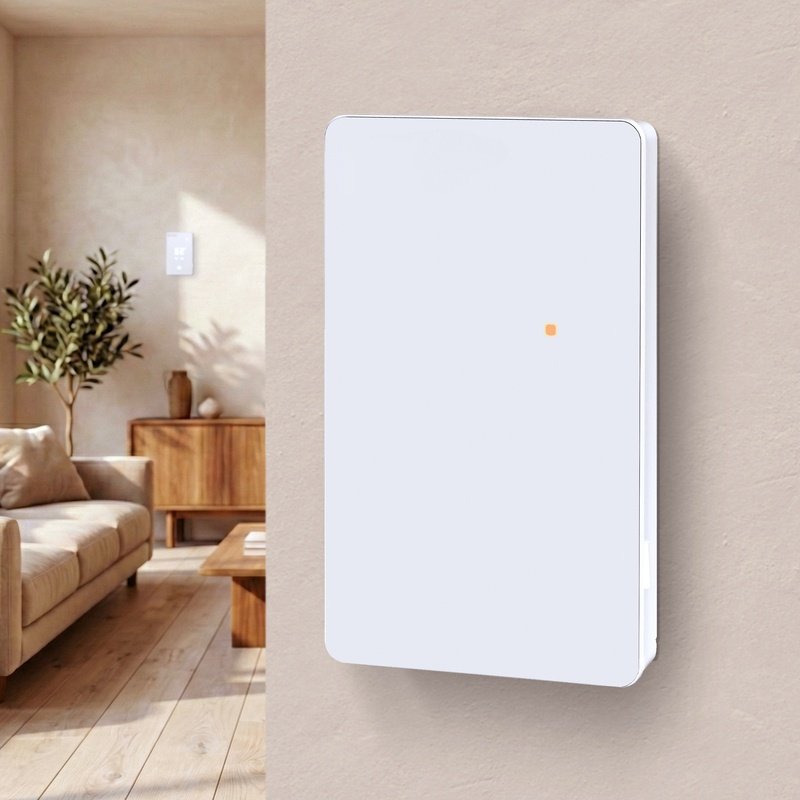
USG5-4000
Used with thermostat to increase electrical output in 15 amp increments for heating larger areas.
-
Great for Large Projects: This device helps your main radiant heating thermostat handle larger projects
-
Sleek and Modern Design: This updated power module represents the fusion of form and function
-
Extensive Compatibility: Works with current (nJoy and nTrust 2.0) and previous (nSpire Touch WiFi, nSpire Touch, nTrust and nHance) thermostats
-
Two Connectors with Screw Terminals: These help make final connections in the field easier and safer
-
Safety Assured: cULus listed with a built-in GFCI for peace of mind
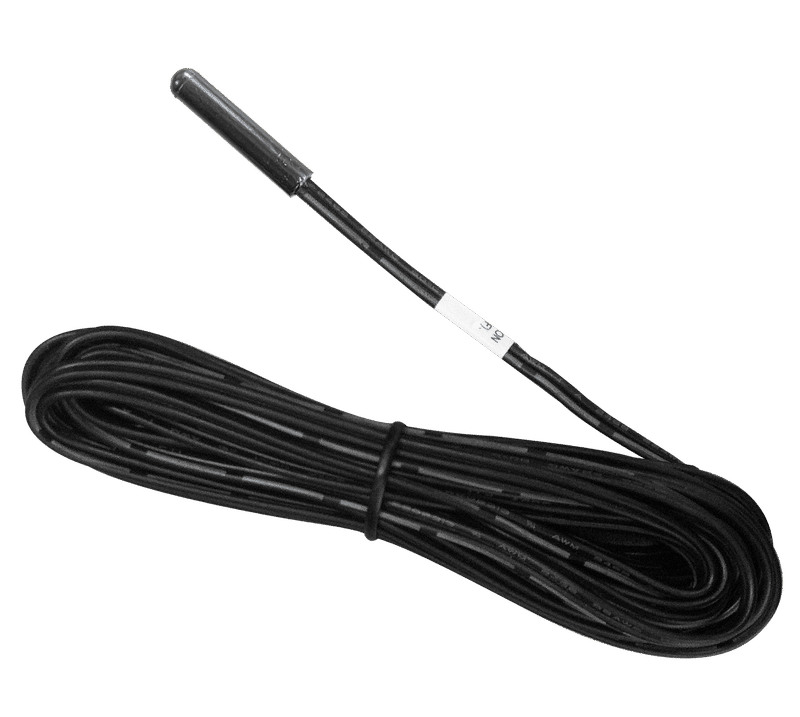
FH-BACKUP-SENSOR
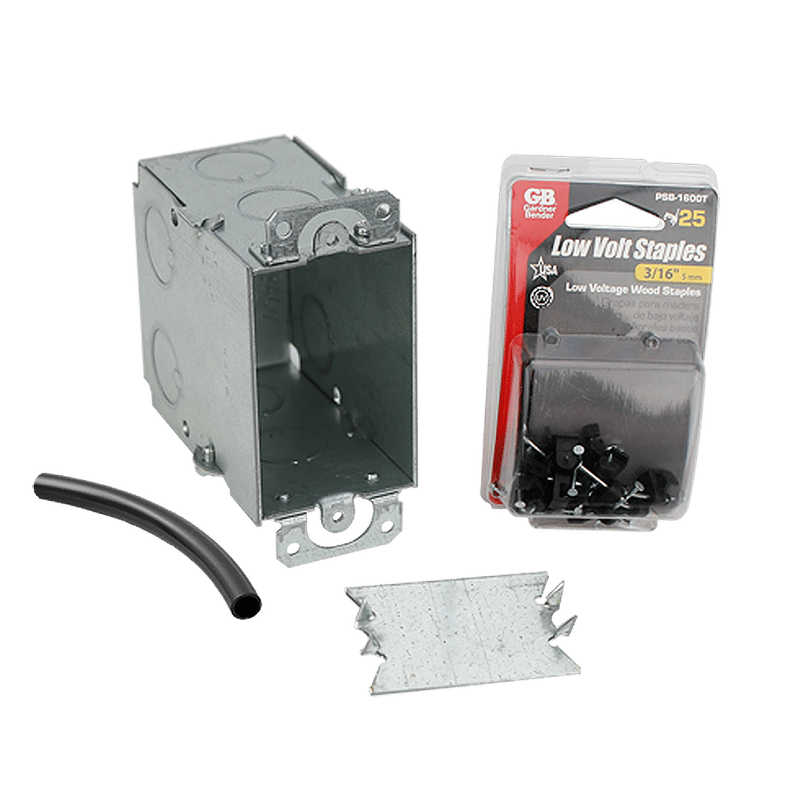
FHE-ROUGH-IN-KIT-S1
-
Comprehensive kit for easy installation
-
Perfect for DIY and professional use
-
Ensures safe thermostat setup
-
Ideal for floor heating systems
-
Includes all necessary components

FHE-ROUGH-IN-KIT-S2
-
Comprehensive kit for easy installation
-
Perfect for DIY and professional use
-
Ensures safe thermostat setup
-
Ideal for floor heating systems
-
Includes all necessary components
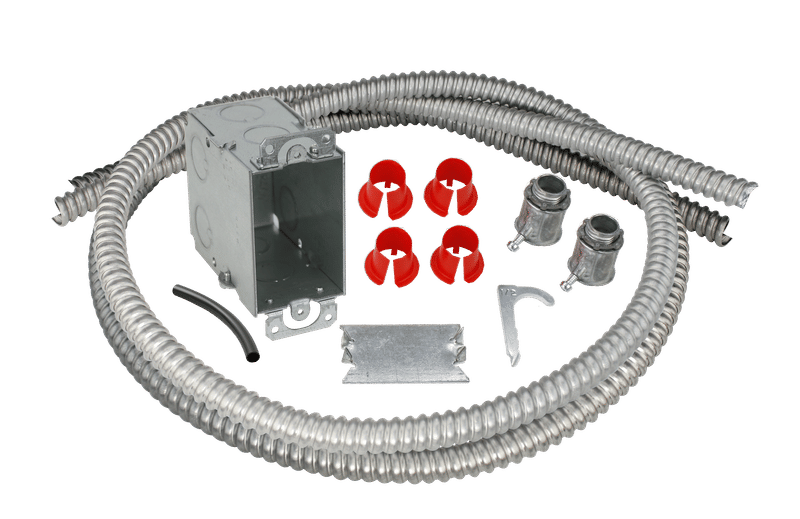
FHE-ROUGH-IN-KIT-S3
This is a great option for areas where the local code requires a separate conduit for low-voltage wires.
-
Comprehensive kit for easy installation
-
Perfect for DIY and professional use
-
Ensures safe thermostat setup
-
Ideal for floor heating systems
-
Includes all necessary components
Which Floor Heating Thermostat Is Right for You?
The right radiant floor heating thermostat depends on how you live and what level of convenience you want.
WiFi Smart Control
Ideal for tech-forward homeowners who want to schedule, monitor, and adjust floor temperatures remotely via smartphone, Alexa, or Google Home. The nJoy WiFi thermostat is our top pick for new builds and smart-home integrations.
Programmable Touchscreen
Set daily and weekly schedules so warm floors are ready when you wake up—without paying to heat an empty room. The nSpire Touch programmable thermostat gives you intuitive control with a large backlit display.
Simple Non-Programmable
For vacation homes, rental units, or anyone who just wants reliable on/off control. The nTrust non-programmable thermostat is the most straightforward choice—GFCI protected, easy to install, and built to last.
All WarmlyYours thermostats include a precision floor temperature sensor, built-in Class A GFCI protection, and support both 120V and 240V heating systems. Not sure which to choose? Our thermostat support page and free installation guides can help.
Radiant Heating Thermostat Compatibility
Every thermostat on this page works with the full WarmlyYours electric floor heating range.
Thermostat Videos
Radiant Floor Heating Posts



Frequently Asked Questions
Showing 10 of 16 questions
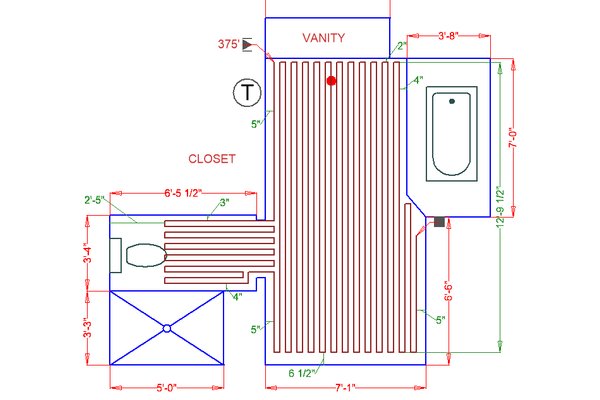
One thermostat can control multiple heating mats/cables as long as all the heating elements are using less than 15 amps:
TempZone™ will cover aprx. 120 sq. ft. for 120V systems and 240 sq. ft. for 240V systems on one thermostat.
Environ™ will cover aprx. 150 sq. ft. for 120V systems and 300 sq. ft. for 240V systems on one thermostat.
Slab Heat will cover aprx. 90 sq. ft. for 120V systems and 180 sq. ft. for 240V systems on one thermostat.
Bathrooms designed with shower and floor heating will include only one thermostat by default. But it is possible to design with a thermostat for each zone if desired. Installing a separate thermostat for the shower area can help reduce cost and energy usage. This also allows you to heat the bathroom floor alone for everyday use and only heat the shower area when needed.
In theory, it is possible, if no other options are available. We do not recommend it, but If the thermostat is controlling the floor temperature with a floor sensor, then it can go on an exterior wall. It is important that the floor sensor gets located in an area of the floor not hit by sunshine.
If the thermostat will be controlling the air temperature with the built-in ambient sensor, then it should go on an interior wall.
The shower floor heating kits can be tied into floor heating for the rest of the bathroom - allowing for one thermostat to control both areas as long as both areas are using less than 15 amps. When designing installation plans, we design with only one thermostat by default. If you prefer two separate thermostats, it might be a good idea, since the shower floor application is usually thicker and takes longer to heat. Be sure to let us know when discussing your quote with our team.
WarmlyYours's floor heating thermostats are typically universal and can be used with the majority of electric floor heating systems as a new or replacement controller. Please review the electrical specs of both the thermostat and the heating system to ensure a proper match for the heating system, sensor, etc. You can also give us a call at (1-800-875-5285) and we can help answer any remaining questions.
We usually recommend that you have an individual thermostat for each room. However, if it's an open floor plan and your local electrical code allows you to have one controller for the whole area, then it's definitely possible to have it all controlled from one thermostat.
Most low voltage HVAC thermostats are OK to use with tile floors. If you are heating wood, vinyl, carpet, or any other flooring products that have a "maximum temperature" limit, then low voltage HVAC thermostats are not recommended UNLESS they have an input for a floor sensor. Check with the low voltage HVAC thermostat manufacturer about floor sensor inputs first, before buying a third-party integration kit for these types of flooring products.
Yes — the nJoy WiFi (UWG5-4999) thermostat supports all three major smart home platforms:
- Amazon Alexa — use voice commands to set temperature or turn the system on and off.
- Google Home / Google Assistant — integrates with Google Home routines and Nest displays.
- Apple HomeKit — manage your floor heating from the Apple Home app and Siri.
The nJoy also works with the dedicated nJoy app (iOS and Android), which gives you full remote control including scheduling, temperature adjustments, and energy usage history from anywhere.
The nHance (UDG4-4999) and nTrust (UTN5-4999) thermostats are not WiFi-enabled and do not integrate with smart home platforms. They must be controlled locally at the wall unit.
In most cases, yes — a dedicated circuit is strongly recommended and often required by local electrical codes. Here is why:
- Electric floor heating draws a continuous load (typically 80% of the circuit's rated amperage for NEC compliance). Adding other devices to the same circuit risks overloading it.
- Most WarmlyYours thermostats are rated for 15A at 120V or 15A at 240V. A dedicated 15A or 20A circuit — matched to the system voltage — provides safe headroom.
- GFCI protection is required by the NEC for all electric floor heating systems. WarmlyYours thermostats include built-in Class A GFCI, so an external GFCI outlet or breaker is not needed when using these models.
Always consult a licensed electrician and verify your local code requirements before installation. Our free design service includes circuit and load calculations for your specific system.
Use a floor sensor (included with most WarmlyYours kits) to prevent overheating, especially with temperature-sensitive floors like hardwood, laminate, and LVT. If using the nJoy WiFi or nHance thermostat, you can use the built-in air sensor or a combination of floor and air sensors. The nTrust thermostat only supports a floor sensor. Always use a floor sensor with hardwood, laminate, or LVT to respect the floor's maximum temperature limit (usually 80–85°F / 27–29°C).
WarmlyYours offers three current thermostat lines for electric floor heating, each suited to different budgets and feature needs:
- nJoy WiFi (UWG5-4999) — The flagship smart thermostat. Connects to your home WiFi and is controlled via the nJoy app (iOS / Android), Amazon Alexa, Google Home, and Apple HomeKit. Features a full-colour touchscreen, 7-day programmable schedule, floor and air sensor support, and built-in GFCI protection. Best for homeowners who want remote access and smart home integration.
- nHance (UDG4-4999) — A premium non-WiFi programmable thermostat with a large colour touchscreen. Supports a 7-day schedule, floor and air sensor, and GFCI protection. Best for those who want a high-quality display and programmable scheduling without a WiFi requirement.
- nTrust (UTN5-4999) — A straightforward non-programmable thermostat for simple manual control. Compact form factor, supports a floor sensor, and includes GFCI protection. Best for secondary rooms, rental units, or anyone who prefers simple set-and-forget control.
All three thermostats are compatible with every WarmlyYours electric floor heating system (TempZone, Environ, and Slab Heat products). If you need help choosing, our radiant experts can recommend the right model for your project at no charge.
The early start (also called adaptive start) feature allows a programmable floor heating thermostat to automatically begin heating before your scheduled "comfort on" time, so the floor reaches your desired temperature precisely when you need it — not after a warm-up delay.
For example, if you schedule your floor to be warm at 7:00 AM and the system typically takes 45 minutes to reach temperature, the thermostat with early start will automatically begin heating at 6:15 AM.
Over time, the thermostat learns the thermal characteristics of your floor (the flooring material, the thickness of the installation, and the starting temperature) and continuously refines the lead time for increasingly accurate scheduling.
The nJoy WiFi (UWG5-4999) and nHance (UDG4-4999) thermostats support early start as part of their 7-day programmable schedule. The nTrust (UTN5-4999) is a non-programmable thermostat and does not have this feature.
WarmlyYours controllers incorporate built-in Class A GFCI protection for all new floor heating systems. Class A GFCI provides personnel protection and trips when ground fault current exceeds 5 mA (milliamps). Class B GFCI protection is pretty much obsolete, but older systems may still require it. WarmlyYours controllers with built-in Class B GFCI provide equipment and circuit protection and operates when a fault to ground exceeds 15 mA.