The Complete Guide to Infrared Heating Panels for Supplemental Heating
last updated february 9, 2015


In This Article
Infrared heating panels deliver targeted, energy-efficient supplemental heat exactly where you need it—perfect for cold spots, chilly bathrooms, basements, home offices, and rooms that never quite warm up. Unlike traditional forced-air systems that circulate dust and allergens, infrared heating panels use infrared technology to warm people and objects directly, creating comfortable warmth without noise or air movement.
Key Facts About Infrared Heating Panels
- Energy Efficiency: Infrared technology warms objects directly, reducing energy waste by up to 30% compared to forced-air heating
- Installation: Wall-mounted; hardwired or plug-in models available
- Operating Cost: Typically $0.07–$0.16 per hour for residential panels (varies by wattage and local electricity rates)
- Coverage: 86–114 sq.ft. per panel depending on wattage
- Lifespan: 20+ years with minimal maintenance required
What Are Infrared Heating Panels?
Infrared heating panels are electric heating devices that use infrared technology to provide supplemental warmth in targeted areas.
Unlike conventional heating systems that warm the air, infrared heating panels emit infrared waves that directly heat people, furniture, and surfaces in the room. This creates a more comfortable, consistent warmth similar to the feeling of sunlight on your skin—without the drafts, noise, or dust circulation of forced-air systems.
Infrared heating panels are ideal for:
- Cold spots: Rooms that never quite reach comfortable temperatures
- Bathrooms: Quick warmth for morning routines without heating the entire house
- Basements: Supplemental heat for finished lower levels
- Home offices: Targeted comfort in workspaces
- Additions: Efficient heating for sunrooms, converted garages, or new construction
- Allergy sufferers: No air circulation means less dust and allergen movement
How Do Infrared Heating Panels Work?
Infrared heating panels use infrared technology to deliver warmth efficiently and comfortably.
The heating element inside the panel emits infrared radiation—the same type of heat you feel from the sun. These infrared waves travel through the air without warming it, instead transferring heat directly to solid objects and people in the room. Once these surfaces absorb the infrared energy, they gradually release warmth back into the space, creating a comfortable ambient temperature.
This direct heating method offers several advantages:
- Faster warmth: You feel the heat almost immediately, rather than waiting for air to circulate
- Energy efficiency: No energy is wasted heating air that rises to the ceiling or escapes through drafts
- Consistent comfort: Eliminates cold spots and temperature fluctuations common with forced-air systems
- Silent operation: No fans, blowers, or moving parts to create noise
- Healthier air: No air circulation means less dust, allergens, and dryness
Ember Infrared Heating Panel Options
WarmlyYours Ember infrared heating panels are wall-mounted heating solutions that combine sleek design with efficient infrared technology, perfect for supplemental heating in any room.
Ember Glass Infrared Heating Panels
Ember Glass panels feature a contemporary glass surface available in two sophisticated finishes. These wall-mounted panels deliver powerful infrared heat while serving as a minimalist design element in your space.

Available Models:
- Ember Glass 600W (35” × 24”): Ideal for bathrooms, home offices, and smaller rooms up to 86 sq.ft.
- Ember Glass 800W (47” × 24”): Perfect for living rooms, basements, and larger spaces up to 114 sq.ft.
- Finish Options: Black Glass or White Glass
- Installation: Wall-mounted only (plug-in or hardwired)
- Orientation: Can be installed vertically or horizontally to suit your space.
Ember Mirror Infrared Heating Panels
Ember Mirror panels offer dual functionality—a fully reflective mirror surface that doubles as a radiant heater. These wall-mounted units are ideal for bathrooms, entryways, and bedrooms where space efficiency and multi-purpose design are priorities.

Available Models:
- Ember Mirror 600W (35” × 24”): Compact mirror heater for powder rooms and small bathrooms up to 86 sq.ft.
- Ember Mirror 800W (47” × 24”): Full-size mirror heater for primary bathrooms and dressing areas up to 114 sq.ft.
- Finish: Mirror (reflective surface)
- Installation: Wall-mounted only (plug-in or hardwired)
Optional Towel Warmer Bar Accessory
Enhance your Ember infrared heating panel with an optional 24” towel holder bar, available in Brushed, Black, or White finishes to match your panel and bathroom décor. This accessory mounts directly to the panel, adding convenient towel warming functionality without requiring additional wall space or electrical connections.
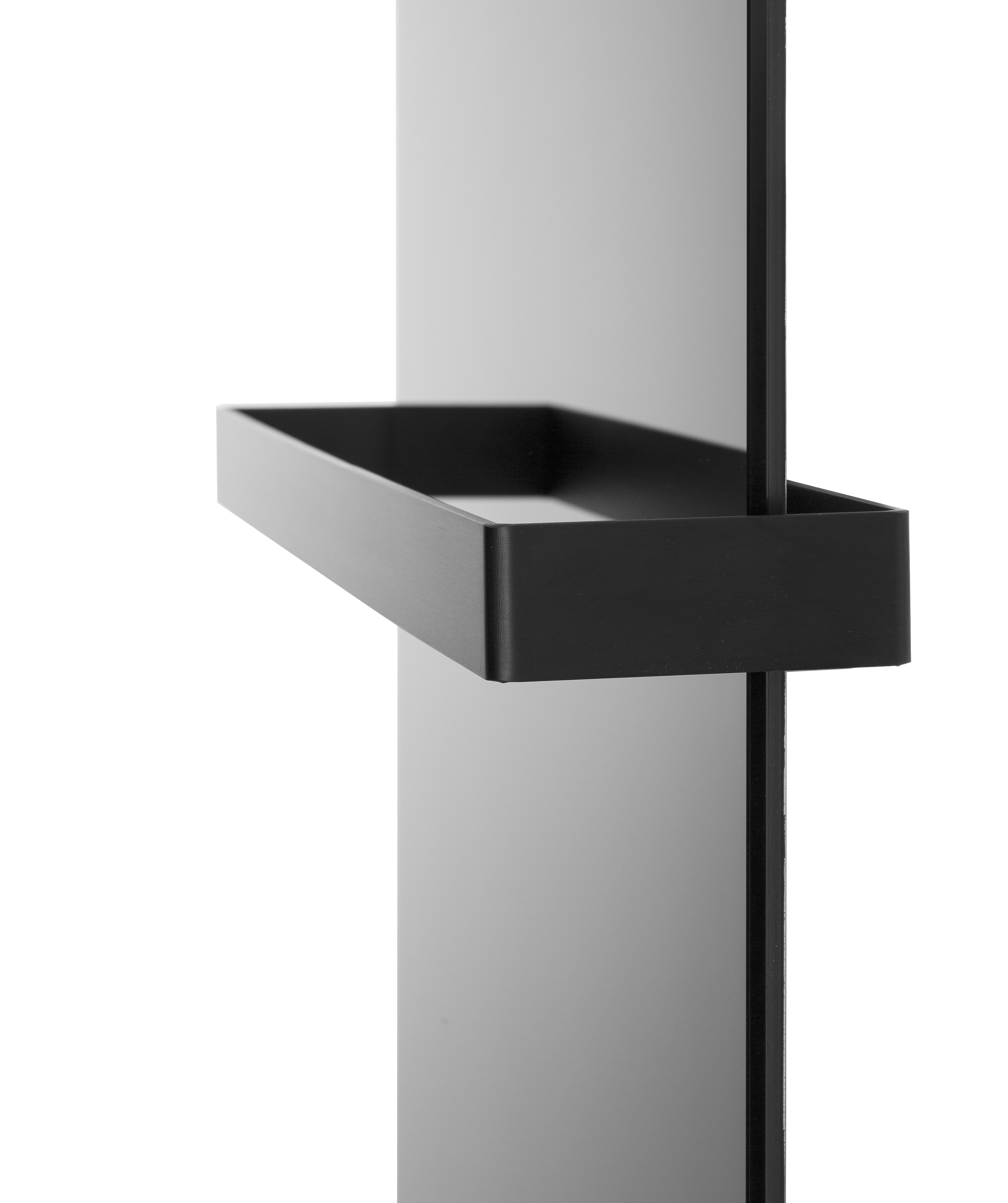
- Brushed Towel Holder Bar: $69 (IP-EM-ACC-BAR)
- Black Towel Holder Bar: $79 (IP-EM-ACC-BAR-BLK)
- White Towel Holder Bar: $79 (IP-EM-ACC-BAR-WHT)
Performance Specifications
Ember infrared heating panels deliver consistent, reliable heating performance with specifications designed for efficient supplemental warmth in residential spaces.
Ember 600W (35” × 24”) Performance
| Specification | Value |
|---|---|
| Average Surface Temperature | 194°F |
| BTU Per Hour | 2,047 Btu |
| Heating Coverage | 85 ft² |
| Surface Safety Limit | 248°F |
The 600W model is ideal for smaller rooms, bathrooms, powder rooms, and compact home offices. Its 2047 BTU output provides efficient supplemental warmth while maintaining a safe surface temperature well below the 248°F safety limit.
Ember 800W (47” × 24”) Performance
| Specification | Value |
|---|---|
| Average Surface Temperature | 194°F |
| BTU Per Hour | 2,730 Btu |
| Heating Coverage | 114 ft² |
| Surface Safety Limit | 248°F |
The 800W model delivers enhanced heating capacity with 2,730 BTU per hour, making it suitable for larger rooms, primary bathrooms, living spaces, and finished basements. Both models maintain the same safe surface temperature, ensuring consistent safety across the Ember product line.
Key Performance Insights
Both Ember models maintain an average surface temperature of 194°F, providing comfortable infrared warmth without excessive heat buildup. The 248°F surface safety limit ensures safe operation even during extended use, with automatic safety features preventing dangerous temperature escalation. The difference in BTU output (2,047 vs. 2,730) directly correlates to coverage area—the 800W model delivers approximately 33% more heating capacity, making it suitable for spaces up to 114 ft² compared to the 600W’s 85 ft² coverage.
Infrared Heating Panels vs. Traditional Forced-Air Heating
Understanding how infrared heating panels compare to conventional heating systems helps you make an informed decision for your home’s comfort needs.
Infrared heating panels use infrared technology to deliver direct warmth, while forced-air systems circulate heated air throughout your space. The differences in heating method create significant variations in efficiency, comfort, air quality, and maintenance requirements. The table below highlights the key distinctions between these two heating approaches.
As the comparison shows, infrared heating panels offer substantial advantages in energy efficiency, air quality, and ease of installation—making them an ideal choice for supplemental heating in targeted areas of your home.
Infrared Heating Panel vs. Traditional Heating: Quick Comparison
| Feature | Infrared Heating Panels | Forced-Air Heating |
|---|---|---|
| Heat Distribution | Direct infrared radiation to objects and people | Circulates warm air throughout the room |
| Energy Efficiency | Up to 30% more efficient; no heat loss through ducts | 10–30% energy loss through ductwork and air leakage |
| Warmth Speed | Immediate warmth felt within minutes | 10–20 minutes to warm the air in the room |
| Noise Level | Silent operation (no moving parts) | Fan and blower noise during operation |
| Air Quality | No air circulation; minimal dust and allergen movement | Circulates dust, allergens, and dry air |
| Installation | Simple wall mount; no ductwork needed | Requires ductwork, vents, and professional HVAC installation |
| Maintenance | Minimal; occasional dusting of panel surface | Regular filter changes, duct cleaning, system servicing |
Installation Options and Requirements
Installing infrared heating panels is straightforward, but proper planning ensures optimal performance and safety.
Electrical Requirements
Ember infrared heating panels operate on standard 120V circuits, making them compatible with most residential electrical systems. Both the 600W and 800W models can be plugged into a standard outlet (plug-in models) or hardwired directly into your electrical system. Always verify your home’s electrical capacity and consult a licensed electrician to ensure your circuit can handle the additional load.
Placement Considerations
For optimal performance, install infrared heating panels:
- On exterior walls: To counteract cold surfaces and drafts
- Away from obstructions: Furniture, curtains, or decor should not block the panel’s infrared radiation
- At appropriate heights: Wall panels typically mount 6–7 feet high for optimal heat distribution
- Near seating areas: Position panels where people spend the most time for maximum comfort
Hardwired vs. Plug-In Models
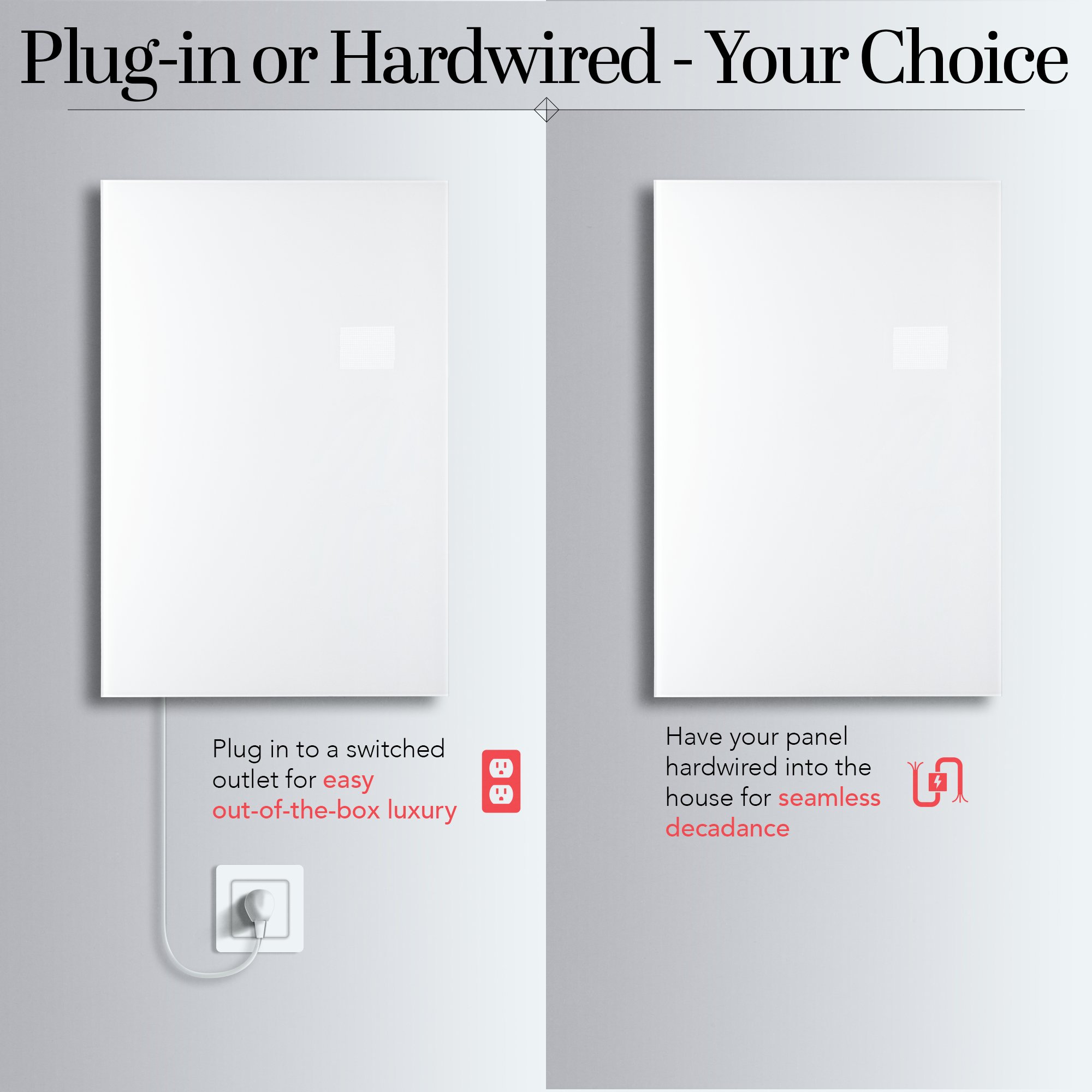
Forget choosing between two different models—our innovative panels feature dual-connect technology. This means every panel is ready to go right out of the box; you can plug it into a standard 120 VAC wall outlet for quick setup and portability. Alternatively, if you desire a permanent, seamless look, the unit is designed so a licensed electrician can easily modify it for a hardwired 120 VAC connection. It’s the ultimate solution, giving you the power to choose your preferred installation method.
Orientation Flexibility
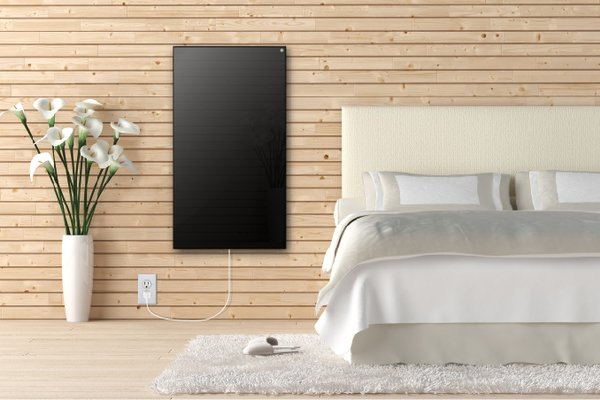
Ember infrared heating panels can be installed either vertically or horizontally, giving you design flexibility to match your room layout and aesthetic preferences. Horizontal installation (47” wide × 24” tall) creates a sleek, modern look, while vertical installation (24” wide × 47” tall) works well in narrow spaces or alongside doorways and windows.
Professional Installation
While some plug-in models can be DIY-installed, hardwired panels require a licensed electrician to ensure code compliance and safety. Professional installation typically takes 2–4 hours per panel and includes:
- Electrical circuit verification and upgrades if needed
- Secure mounting to wall studs
- Proper wiring and connection to electrical system
- Thermostat installation and programming
- Safety testing and operational verification
Operating Costs and Energy Consumption
Understanding the operating costs of infrared heating panels helps you budget and maximize efficiency.
Infrared heating panels consume electricity based on their wattage rating. Ember panels are available in 600W and 800W models, making them economical to operate for supplemental heating. To calculate your operating cost:
Operating Cost per Hour = (Wattage ÷ 1,000) × Electricity Rate
For example, an 800-watt Ember panel in an area with $0.15/kWh electricity costs:
(800 ÷ 1,000) × $0.15 = $0.12 per hour
Estimated Operating Costs for Ember Infrared Heating Panels
| Model | Wattage | Coverage Area | Cost per Hour ($0.12/kWh) | Cost per Hour ($0.15/kWh) | Cost per Hour ($0.20/kWh) |
|---|---|---|---|---|---|
| Ember Glass/Mirror 600W | 600W | Up to 86 sq.ft. | $0.07 | $0.09 | $0.12 |
| Ember Glass/Mirror 800W | 800W | Up to 114 sq.ft. | $0.10 | $0.12 | $0.16 |
Note: Actual costs vary based on insulation, ceiling height, outdoor temperature, and usage patterns. Panels controlled by thermostats or timers cycle on/off, reducing actual runtime and costs.
Cost-Saving Tips
- Use programmable thermostats or timers: Set panels to lower temperatures when rooms are unoccupied, or schedule operation only during peak usage times
- Zone your heating: Only heat rooms you’re actively using
- Improve insulation: Better insulation reduces runtime and energy consumption
- Lower your central heat: Use infrared heating panels for supplemental warmth and reduce whole-home heating costs
- Take advantage of off-peak rates: If your utility offers time-of-use pricing, run panels during cheaper rate periods
Choosing the Right Infrared Heating Panel
Selecting the appropriate infrared heating panel ensures optimal comfort and efficiency for your space.
Calculate Your Heating Needs
Start by determining your room’s square footage and insulation quality. As a general rule:
- Well-insulated rooms: 5–7 watts per square foot
- Average insulation: 7–10 watts per square foot
- Poor insulation: 10–12 watts per square foot
For example, a 100 sq.ft. room with average insulation needs approximately 700–1,000 watts of heating power. The Ember 800W panel is ideal for rooms up to 114 sq.ft., making it suitable for most residential supplemental heating applications.
Wattage and Coverage
Match the panel wattage to your room size and heating needs. It’s better to slightly oversize than undersize—a larger panel running at lower intensity is more efficient and comfortable than a smaller panel running constantly at maximum output.
Control Options
Choose between separate wall-mounted thermostats, timers, or smart thermostats that integrate with home automation systems. Programmable thermostats and timers offer the best energy savings by automatically adjusting temperatures based on occupancy and time of day.
Infrared Heating Panel Specifications
Understanding key specifications helps you compare models and make informed decisions.
Ember Infrared Heating Panel Specifications
| Specification | Ember Models | Notes |
|---|---|---|
| Wattage | 600W or 800W | Ember Glass and Mirror models |
| Voltage | 120V | Standard residential voltage for all Ember models |
| Coverage Area | 86–114 sq.ft. | 600W covers up to 86 sq.ft., 800W covers up to 114 sq.ft. |
| Dimensions | 35” × 24” (600W) or 47” × 24” (800W) | Ember Glass and Mirror models |
| Weight | 10–30 lbs | Requires secure mounting to studs |
| Lifespan | 20+ years | Minimal maintenance required |
| Warranty | 5 years | Ember Glass and Mirror models |
Maintenance and Safety
Infrared heating panels require minimal maintenance but following safety guidelines ensures long-term performance.
Routine Maintenance
- Dust regularly: Wipe the panel surface with a soft, dry cloth every few months
- Check mounting: Annually verify that mounting brackets remain secure
- Inspect wiring: Look for any signs of wear or damage to electrical connections
- Test controls: Ensure thermostats and timers function properly
Safety Guidelines
- Maintain clearances: Keep furniture, curtains, and flammable materials at least 12 inches away from panels
- Never cover panels: Blocking airflow can cause overheating
- Install GFCI protection: Use ground-fault circuit interrupters in bathrooms and other wet locations
- Professional installation: Always hire a licensed electrician for hardwired installations
- Child safety: Consider panel guards or higher mounting in homes with young children
Frequently Asked Questions About Infrared Heating Panels
Here are answers to the most common questions about infrared heating panel heating systems.
Are infrared heating panels energy efficient?
Yes, infrared heating panels are highly energy efficient, using up to 30% less energy than forced-air heating systems. They heat objects and people directly rather than warming air, eliminating energy waste from duct losses and air circulation. Additionally, you can zone your heating to warm only occupied rooms, further reducing energy consumption.
How much does it cost to run a infrared heating panel?
Operating costs typically range from $0.07 to $0.16 per hour, depending on the panel’s wattage and your local electricity rates. The 600W Ember panel costs approximately $0.07–$0.12 per hour to operate, while the 800W Ember panel costs $0.10–$0.16 per hour to operate. Panels with a room thermostat or timer cycle on and off, reducing actual runtime and lowering costs compared to continuous operation.Can infrared heating panels be used as primary heating?
Infrared heating panels are designed primarily for supplemental heating in specific rooms or zones. While they can technically serve as primary heat in small, well-insulated spaces, most homes benefit from using them alongside a central heating system. This approach provides targeted comfort in frequently used areas while maintaining baseline warmth throughout the home.
Are infrared heating panels safe?
Yes, infrared heating panels are safe when properly installed and used according to manufacturer guidelines. They have no open flames, produce no combustion byproducts, and most models include automatic shut-off features. However, panel surfaces do get warm during operation, so maintain proper clearances from flammable materials and consider panel guards or higher mounting in homes with young children.
Do infrared heating panels dry out the air?
No, infrared heating panels do not dry out the air. Unlike forced-air systems that circulate heated air (which can feel dry), infrared heating panels warm objects and surfaces directly without affecting humidity levels. This makes them more comfortable and healthier, especially for people with respiratory sensitivities or dry skin concerns.
How long do infrared heating panels last?
Infrared heating panels typically last 20+ years with minimal maintenance. They have no moving parts to wear out, no filters to replace, and simple, durable construction. Most manufacturers offer warranties ranging from 2 to 10 years, and many panels continue operating well beyond their warranty period.
Can I install a infrared heating panel myself?
Plug-in infrared heating panels can be DIY-installed if you’re comfortable with basic mounting. However, hardwired panels require professional installation by a licensed electrician to ensure code compliance and safety. Improper electrical work can create fire hazards and void warranties, so professional installation is strongly recommended for permanent installations.
Do infrared heating panels work in cold climates?
Yes, infrared heating panels work effectively in cold climates as supplemental heating. They’re particularly useful for warming specific areas like bathrooms, home offices, and basements without increasing whole-home heating costs. However, in extremely cold climates, they should complement—not replace—a primary heating system.
What’s the difference between infrared heating panels and baseboard heaters?
Infrared heating panels use infrared technology to heat objects and people directly, while baseboard heaters warm air through convection. Infrared heating panels are more energy-efficient, provide faster warmth, operate silently, and don’t circulate dust. Baseboard heaters are typically less expensive upfront but cost more to operate and take longer to heat a room.
Can infrared heating panels be used in bathrooms?
Yes, infrared heating panels are excellent for bathrooms, providing quick, comfortable warmth for morning routines. Choose models rated for damp or wet locations, and ensure they’re installed with GFCI protection as required by electrical code. Wall-mounted panels work well in bathrooms, positioned away from direct water spray.
Get Started with Infrared Heating Panel Heating
Infrared heating panels offer an efficient, comfortable solution for supplemental heating in any room. Whether you’re warming a chilly bathroom, adding comfort to a home office, or heating a finished basement, infrared heating panels deliver targeted warmth without the noise, dust, or energy waste of traditional heating systems.
Experience the WarmlyYours Difference
With 26 years of radiant heating expertise and over 300,000 installations, WarmlyYours can help you select the perfect infrared heating panel for your space. Our in-house technical support team is available 24/7 to answer questions, provide installation guidance, and ensure your heating project succeeds.
📚 Explore More Resources
- 200+ Video Library: Installation guides, product demonstrations, and customer testimonials
- 4,000+ Customer Reviews: See why homeowners trust WarmlyYours for radiant heating solutions
- 24/7 Technical Support: Expert guidance whenever you need it
Ready to experience the comfort of infrared heating panel heating? Start your project today with WarmlyYours—America’s trusted radiant heating experts since 1999.
Have Questions About Your Project?
Our team of Radiant Experts is ready to help!

Related Articles

Stay Updated
Get the latest radiant heating news and tips delivered to your inbox.
Comments