Cold Climate House Design: 5 Essential Features for Warmth
last updated april 12, 2026

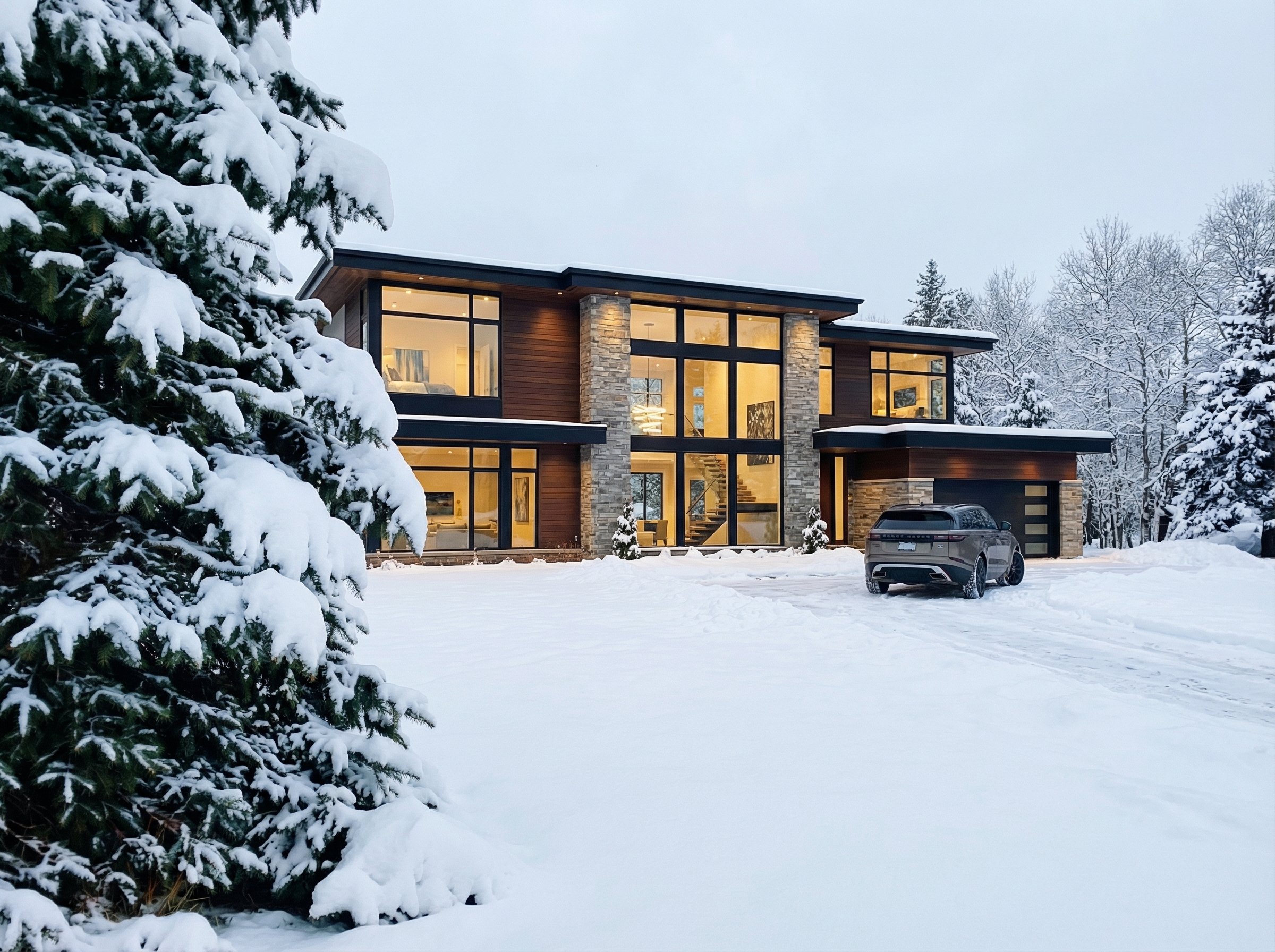
What are the best features for a cold climate house design? The most effective cold climate house design incorporates strategic features like radiant floor heating, heated driveways, towel warmers, airtight windows, and proper insulation. These upgrades not only combat freezing temperatures but also enhance energy efficiency and daily comfort.
Building a home that acts as a sanctuary for the homeowner from the elements requires thought, precision, creativity — and awareness of the climate. You can't build a mountain home on a beach and expect it perform the same way. For that reason, architects and contractors have developed key elements to include when building in each type of climate. Using these time-tested tips ensures that your home will perform at the highest level and offer the greatest amount of protection and comfort. If you're in a cold climate or experience harsh winters, you'll want to be sure your house has these five key features:
5 Essential Features for Cold Climate Houses
To ensure maximum warmth and energy efficiency, a cold climate house design must include these 5 essential features:
- A Simple Gable Roof: Sheds heavy snow easily and prevents dangerous accumulation.
- Covered Entrances: Blocks freezing winds and traps heat when entering or exiting the home.
- Wide, Flat Walkways: Pairs perfectly with snow melting systems to eliminate ice buildup.
- Airtight Windows: Uses triple-pane glass to prevent massive heat loss and drafts.
- Radiant Heat: Provides consistent, energy-efficient indoor warmth without forced-air heat loss.
1. Install a Simple Gable Roof for Snow Management
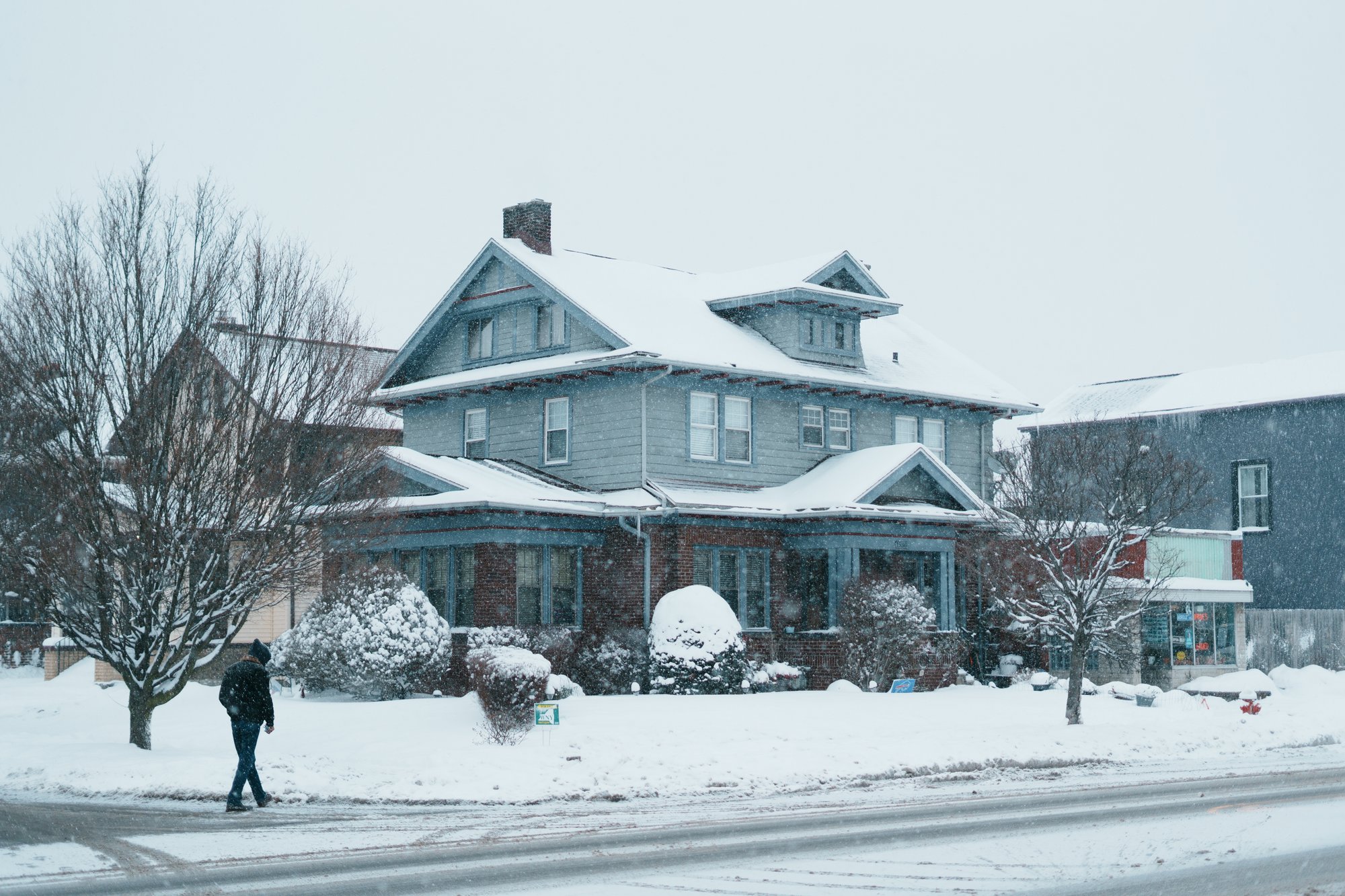
Snow can pile up on your roof, adding a dangerous amount of weight. Home builders should account for this by designing a roof that can handle the load. Additionally, the best way to protect your home is to avoid accumulation altogether. A gable is a roof design that features two sloping sides, forming a “triangle” of sorts. The steep roof allows gravity to drag snow to the ground. Do not add other features to this roof — such as dormers — as snow and ice can get stuck in the nooks. Furthermore, if you have a fireplace, the chimney should sit at the peak of the roof.
You can also aid your roof by installing roof and gutter deicing cable systems on the roof. These systems detect and melt snow and ice before they have a chance to form ice dams, which can cause significant water damage to your home. Instead, these deicing systems create a pathway for water to drain properly.
2. Design Covered Entrances to Block Winter Winds
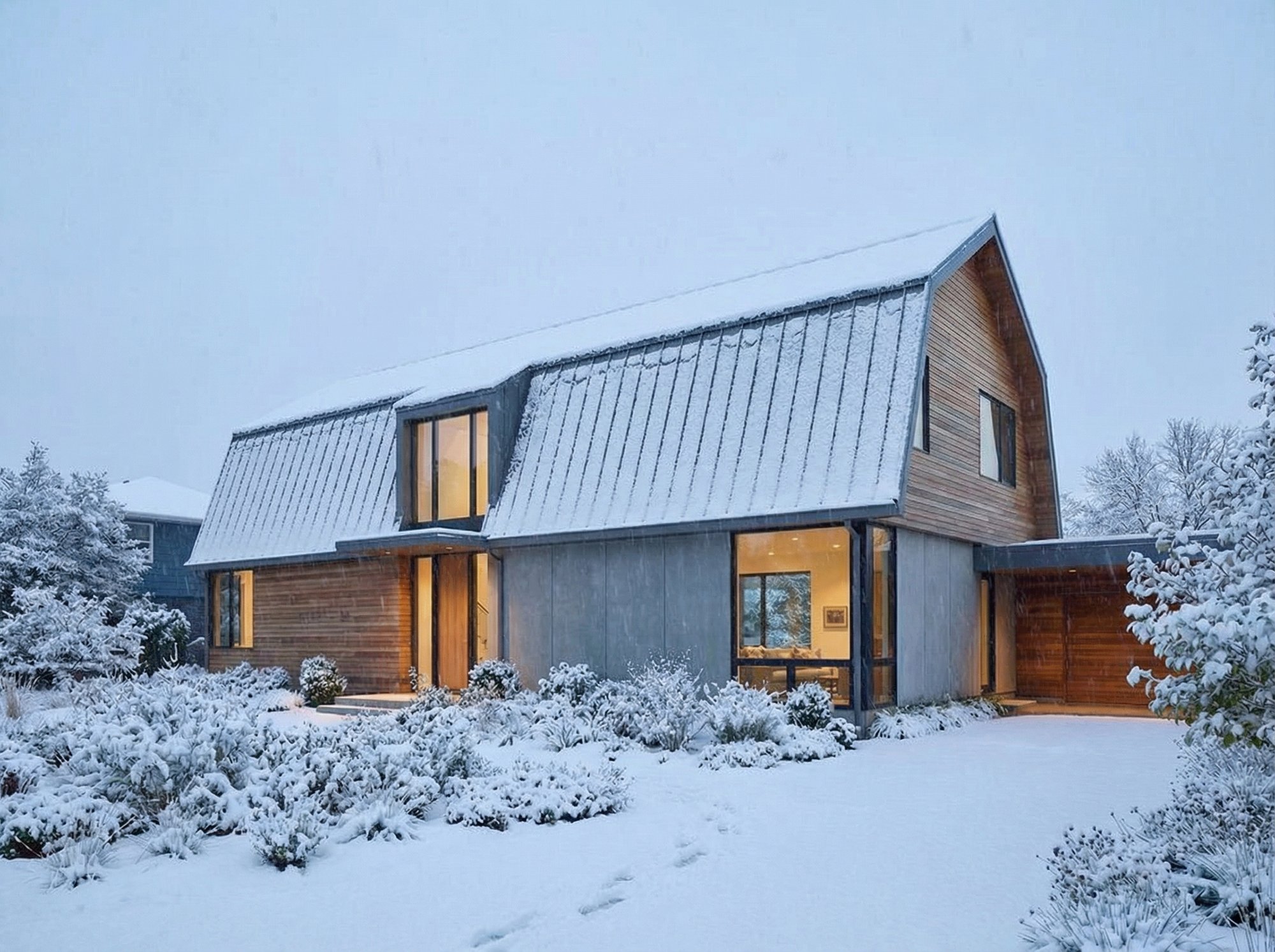
Whether you are undergoing a home remodeling project or building a new house, be sure the design includes covered entrances. The last thing you want to be doing in a blizzard is standing outside digging for your keys as snow pelts against you. A covered entrance can act as a haven in cold climates, especially for guests waiting to be let inside. Be sure to also install a light fixture near the doors so that you and any visitors can see. These fixtures should include two bulbs so that you maintain illumination if one burns out. Once inside, keeping your foyer warm is just as important to prevent cold drafts from penetrating the rest of the house.
3. Build Wide Walkways with Radiant Snow Melting
Walkways to and from your home should be wide enough to easily shovel a path and made with a flat, even material that can be easily shoveled, advises Emma Sturgis in “The Best Home Design Features for Cold Climates.”
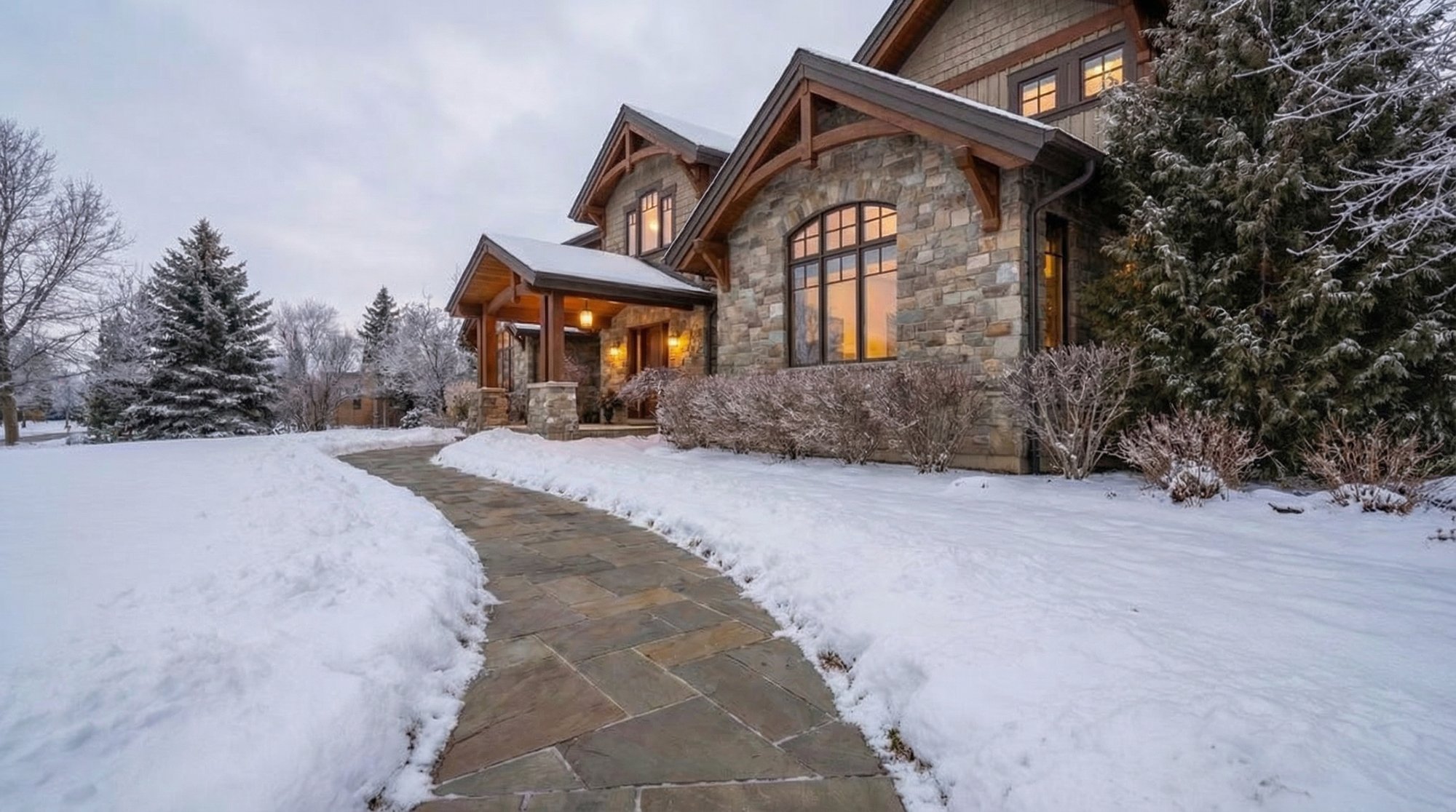
“Consider getting rid of the snow shovel altogether — deicing and snow-melting systems that heat paths and driveways are well worth the investment, especially if you live in an area where snow falls regularly and accumulates easily,” Sturgis adds. This technology can greatly reduce the time and money homeowners can spend shoveling and plowing paths and driveways, according to the Forbes article, “Are You Making These Smart Cold Climate Design Choices?”
“It’s not cheap, but it may be worth it if you spend a great deal of money and effort on snow removal each winter,” advises author and Houzz contributor Laura Gaskill.
If steps line the walkway, or there is a stairway up to a porch, installing rails will help prevent falls and injury.
4. Prevent Heat Loss with Airtight Triple-Pane Windows
Avoid having a drafty home in a cold climate by installing airtight windows. According to the Department of Energy (DoE), windows account for 10 to 25% of your heating bill by letting heat out. Start your window shopping by assessing the glass. Avoid heat loss by purchasing models that are at least doubled paned. If you are in an extremely cold climate, triple pane is even better. Upgrading your windows is one of the most effective ways to better insulate your home.
Weather stripping is another important element as it will seal the window, preventing cold air from coming inside the house. Look at the National Fenestration Rating Council (NFRC) sticker on a window before you buy. It will give you all the information you need to assess the product, such as U-value, which is resistance to heat loss. Look for whole-unit U-factors, rather than center-of-glass (COG) U-factors, the DoE advises. “Whole-unit numbers more accurately reflect the energy performance of the entire product,” the DoE explains.
5. Install Radiant Heating for Consistent Indoor Warmth
The radiant heating offered by WarmlyYours Radiant Heating typically costs between $8.00 and $12.00 per square foot for the heating elements, and it can go a long way to combating the frigid temperatures in a cold climate. This type of heating uses electricity to provide warmth via radiation and can be installed beneath flooring or even hung on the wall as a panel to provide heating. While other options such as forced air can result in overheating, which results in heat loss (of air you paid to heat!), radiant heat keeps areas warm longer and more consistently, saving energy and enhancing comfort. With the non-stop, heavy heating requirements in cold climates, radiant heating’s benefits are accentuated. In fact, you can rely on radiant heat in extreme temperatures to maintain a comfortable indoor environment regardless of the weather outside.

There are many ways to capitalize on radiant heat’s benefits in your home. Start by creating a heated driveway and walkways so that the snow leading up to the home melts. Then, bring the comfort indoors with cozy heated floors (use our Floor Heating Project Planning Guide Form to get started), radiant panels, heated shower benches and more. You can even use electric heated towel warmers so that you can step out of your shower or bath to a warm towel. Collectively, radiant heat products provide a whole arsenal you can use to arm your home against the freezing temperatures in cold climates.
Passive Home Principles for Extreme Cold
When considering cold climate house design, integrating Passive Home principles can significantly improve energy efficiency. Passive homes utilize superinsulation, airtight envelopes, and high-performance windows to maintain comfortable indoor temperatures with minimal active heating. Combining these principles with radiant heating ensures maximum warmth and minimal energy waste during extreme cold.
Standard vs. Cold-Climate Optimized Features
| Standard Home Features | Cold-Climate Optimized Features |
|---|---|
| Complex rooflines with dormers | Simple gable roof to shed snow |
| Exposed entryways | Covered entrances to protect from blizzards |
| Standard concrete walkways | Wide, flat walkways with snow melting systems |
| Double-pane windows | Airtight, triple-pane windows |
| Forced air heating | Radiant floor heating and radiant panels |
Ready to Winter-Proof Your Home?
WarmlyYours is proud to offer radiant solutions designed to improve everyday living for everyone. Take the first step toward building a true sanctuary from the cold:
- Plan Your Heat: Get a free, custom plan with our Floor Heating Project Planning Guide.
- Get Inspired: Explore 6 Clever Ways to Warm Up a Cold Home or 5 Ways to Make Your Bathroom Comfortable.
- Defend Your Roof: Protect against ice dams with a Roof & Gutter Deicing System.
Frequently Asked Questions
What are the best home features for cold climates?
The best home features for cold climates include a simple gable roof to shed snow, covered entrances for protection, airtight triple-pane windows to prevent heat loss, and radiant heating systems. These features work together to maintain interior warmth, reduce energy bills by up to 25%, and ensure structural safety during harsh winters.
Does a heated driveway add value to your home?
A heated driveway can add meaningful resale value, particularly in snow-belt markets where buyers understand and appreciate the benefit. While there is no universal appraisal standard for heated driveways, real estate professionals in high-snowfall regions commonly report a 2–5% premium for homes with snow melting systems — especially when the system covers the full driveway and includes automatic controls.
Beyond the dollar value, a heated driveway is a strong differentiator in a competitive market. Buyers who have experienced the convenience firsthand — or who dread the prospect of shoveling — will often prioritize a home with a heated driveway over a comparable home without one.
The value impact is strongest in markets with 20+ annual snow events, where the system provides clear, recurring benefit every winter.
How do you keep a house warm in a cold climate?
To keep a house warm in a cold climate, ensure proper insulation and airtight windows to prevent heat loss. Utilize radiant floor heating and radiant panels for consistent, energy-efficient warmth. Additionally, maintain your heating systems regularly and consider adding a programmable thermostat to optimize temperature control throughout the day.
How can I winterize a bedroom with heated laminate floors?
To winterize a bedroom with heated laminate floors, ensure your windows are properly sealed to prevent drafts. Set your radiant floor heating thermostat to a consistent, comfortable temperature rather than turning it on and off, which maximizes energy efficiency. Additionally, use an insulating underlayment beneath the laminate to direct heat upward into the room and prevent heat loss to the subfloor.
What maintenance is required for a roof and gutter deicing system?
Roof and gutter deicing systems require minimal maintenance. Before winter begins, inspect the heating cables for any physical damage or debris accumulation in the gutters. Ensure the control unit and sensors are functioning correctly. Clear any leaves or branches from the gutters to allow melted snow to flow freely, preventing ice dams from forming.
What are the best insulation types for cold climate homes?
The best insulation types for cold climate homes include spray foam, fiberglass batts, and rigid foam boards. Spray foam provides an excellent air barrier and high R-value, making it ideal for sealing gaps. Rigid foam boards are great for exterior walls and basements, while fiberglass is a cost-effective option for attics and interior walls. Proper insulation is crucial for maintaining warmth and reducing heating costs.
How does proper insulation improve radiant floor heating efficiency?
Proper insulation significantly improves radiant floor heating efficiency by preventing heat loss to the subfloor or exterior environment. Using an insulating underlayment, such as cork or synthetic thermal sheets, directs the radiant heat upward into the room. This allows the heating system to warm the space faster and maintain the desired temperature with less energy consumption.
Sources:
www.homeadvisorhomesource.com
http://energy.gov
www.nfrc.org
www.forbes.com
*This blog post was revised in 2025.
Have Questions About Your Project?
Our team of Radiant Experts is ready to help!
Related Articles
6 Keys to Warm Up a Cold Basement

Room Above Garage Cold? Tips to Warm It Up
Understanding and Resolving Cold Basement Issues with Radiant Floor Heating
Cold Floors, Be Gone!
Stay Updated
Get the latest radiant heating news and tips delivered to your inbox.