Snow Melting Systems for Steep Driveways: What Homeowners Need to Know
last updated march 24, 2026

In This Article
A steep driveway covered in snow and ice isn’t just an inconvenience — it’s a genuine safety hazard. Ice on a slope is exponentially more dangerous than ice on a flat surface: vehicles slide, footing disappears, and the risk of a serious fall or accident rises sharply. Salt and chemical deicers help at the margins, but they’re reactive, labor-intensive, and accelerate the deterioration of asphalt and concrete — especially on grades where meltwater runoff concentrates and refreezes at the bottom.
An electric snow melt system solves the problem at the source. Instead of reacting to ice after it forms, an electric snow melting system activates automatically when precipitation falls and temperatures drop — before ice ever has a chance to bond to the surface. For homeowners with a steep driveway, that difference isn’t just convenient. It can be life-changing.
Quick Facts: Snow Melting on Steep Driveways
- Full coverage strongly recommended: On a slope ≥5%, the areas between tire tracks become the primary slip hazard — full coverage eliminates this risk entirely.
- Works on all common surfaces: Asphalt, concrete, and pavers — cables withstand high pour temperatures for new asphalt installs.
- Automatic activation is critical: Aerial and pavement sensors trigger the system before ice bonds — response time is everything on a steep grade.
- Free SmartPlan included: WarmlyYours provides a custom cable layout, electrical diagram, and load calculation with every quote — especially important for full-coverage jobs.
- Best install timing: During a new pour or repave — the incremental cost is minimal compared to a retrofit.
- Operating cost: Typically $0.72–$3.60 per 6-hour storm — far less than a single plow visit.
Why Steep Driveways Are a Different Problem
On a flat driveway, a thin layer of ice is an annoyance. On a slope, it’s a trap. The physics are straightforward: gravity pulls vehicles and pedestrians downhill, and ice eliminates the friction that keeps them in place. Even a modest grade of 5–8% can make a snow-covered driveway impassable for a standard vehicle and treacherous on foot.
Chemical deicers are a common first response, but they come with real drawbacks on sloped surfaces. Runoff carries salt and chemicals downhill, concentrating at the base of the driveway and into landscaping, storm drains, and the street. Repeated freeze-thaw cycles — accelerated by the application and refreezing of deicers — cause surface spalling and cracking faster on grades than on flat surfaces, because water pools in low spots and expands as it freezes.
Manual snow removal on a steep driveway is also physically demanding and carries its own injury risk. A snow blower on a steep grade requires careful handling, and shoveling while standing on a slope is a common cause of winter slips and falls. A heated driveway system eliminates all of these problems — the surface stays clear automatically, with no chemicals, no manual labor, and no reactive scrambling after a storm.
Driveway Grade: How Steep Is Too Steep for Tire Tracks?
Not all driveways need the same level of coverage. The table below shows how grade affects risk and what coverage WarmlyYours recommends at each level.
| Driveway Grade | Risk Level | Recommended Coverage | Why |
|---|---|---|---|
| 0–4% | 🟢 Low | Tire tracks OK | Unheated areas between tracks are a minor inconvenience on a near-flat surface. |
| 5–8% | 🟡 Moderate | Full coverage strongly recommended | Pedestrians stepping out of vehicles onto unheated areas face significant slip risk. |
| 8%+ | 🔴 High | Full coverage essential | Gravity dramatically increases vehicle slide and pedestrian fall risk on any unheated surface. |
How to Measure Your Driveway Grade
Grade is calculated as rise ÷ run × 100. A driveway that rises 8 feet over a 100-foot horizontal run has an 8% grade. Most smartphone apps (like Measure on iOS) can give you a quick reading. If you’re unsure, your contractor or a WarmlyYours SmartPlan specialist can help you assess your slope before you order.
Full Coverage vs. Tire Tracks: Why Steep Driveways Are Different
For flat driveways, tire-track heating is a popular and cost-effective option. By heating only the two strips where your vehicle’s tires travel, you can reduce material costs by roughly 35% while still getting your car in and out safely. On a flat surface, the unheated areas between the tracks are a minor inconvenience at worst.
On a steep driveway, that calculus changes completely. The unheated areas between tire tracks — and the walking path from your car to your door — become the primary slip hazard. A vehicle that makes it up a heated tire track can still slide sideways if the surrounding surface is icy. A person stepping out of the car onto an unheated section of a sloped driveway faces exactly the kind of fall risk you installed the system to prevent.
For driveways with a grade of 5% or more, WarmlyYours recommends full coverage for the electric snow melt system. The additional material cost is meaningful, but it’s the only option that truly eliminates the hazard rather than just managing it.
For a detailed cost comparison between full coverage and tire-track systems, see our complete heated driveway cost guide.
See It in Action: Full Coverage Installation
Watch how a full-coverage snow melting system is installed in an asphalt driveway — from cable layout to final pour.
Automatic Controls: The Most Important Upgrade for a Steep Driveway
On a steep driveway, the timing of activation matters more than almost anywhere else. Ice that has had time to bond to a sloped surface is far harder to melt than ice that is prevented from forming in the first place.
That’s why automatic sensor-based snow melting controls are especially valuable on steep grades. Two types are available:
- Aerial sensors detect air temperature and precipitation, activating the system as soon as conditions are right — before the first flake hits the surface.
- Pavement sensors are embedded in the driveway surface and detect both temperature and moisture directly at the slab, providing the most precise activation possible.
Either option ensures your system is not only reliable but also extremely responsive. For a steep driveway, that speed is the difference between a clear surface and a bonded ice sheet that takes hours to melt through.
Pro Tip: Prioritize Automatic Controls on Steep Grades
On a slope, speed of activation matters. An aerial or pavement sensor triggers your system the moment precipitation falls and temperatures drop — before ice bonds to the surface. Manual or timer-based controls may react too slowly on a steep grade, leaving a window where ice can form and create a hazard.
Surface Material Considerations for Sloped Driveways
Electric snow melting cables are compatible with all three common driveway surfaces. Each has specific considerations for sloped installations.
Asphalt
Asphalt is the most common driveway surface and an excellent candidate for snow melting. WarmlyYours cables are rated to withstand freshly poured asphalt temperatures of up to 450°F, making new-pour installation straightforward. For existing asphalt driveways, a retrofit is possible by cutting grooves into the surface, laying the cables, and sealing with new asphalt — a process that works particularly well on steep driveways already due for resurfacing. See our full asphalt heated driveway installation guide for design specifications.
Concrete
Concrete driveways benefit from snow melting in two ways: the surface stays clear, and the elimination of freeze-thaw cycling extends the life of the slab. Grades accelerate freeze-thaw damage because water flows downhill and pools at the base, where it refreezes and expands. A snow melting system prevents this cycle entirely. Cables are embedded in the concrete pour, typically alongside rebar or wire mesh for structural support.
Pavers
Paver driveways are an excellent match for snow melting systems because the joints between pavers provide natural drainage — especially valuable on a slope where water management is a concern. Cables are laid in the sand bed beneath the pavers before they are set. One important specification: paver thickness must not exceed 2.5 inches to ensure adequate heat transfer to the surface. For more detail, visit our heated pavers and stone guide.
The WarmlyYours SmartPlan™: Your Custom Installation Blueprint
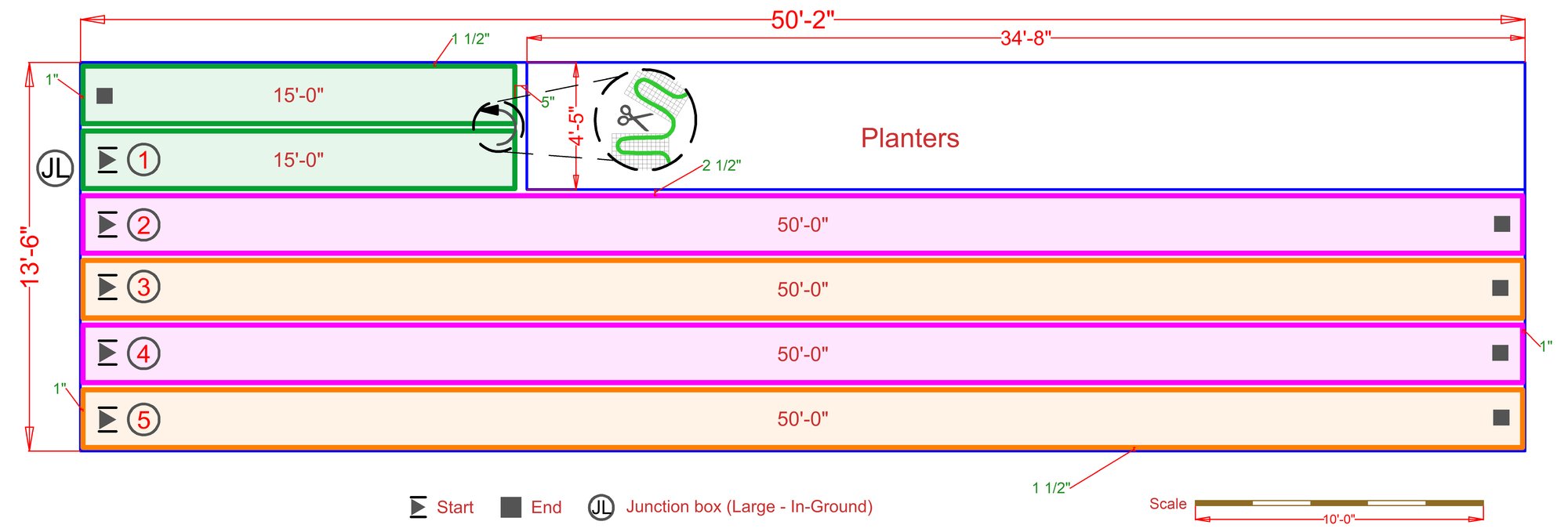
Every WarmlyYours snow melting quote comes with a free Snow Melting SmartPlan™ — a professional-grade installation document prepared by our in-house engineering team. For a steep driveway with full coverage, this plan is not just helpful — it’s essential. Full-coverage systems draw significant electrical load, and an undersized panel or incorrect circuit sizing can mean a system that trips breakers instead of melting snow.
Here’s exactly what you get with every SmartPlan™, at no cost and with no obligation:
| SmartPlan™ Deliverable | What It Includes | Why It Matters for Steep Driveways |
|---|---|---|
| Installation layout diagram | Cable routing, zone layout, and spacing optimized for your exact driveway dimensions | Ensures full coverage with no cold spots — critical on a slope where any unheated patch creates a hazard |
| Coverage zone options | Full-surface, tire-lane, or spot heating illustrated side by side with your driveway shape | Makes the full coverage vs. tire-track decision visual and concrete for your contractor |
| Electrical wiring diagram | Circuit sizing, breaker count, contactor panel recommendations, and sensor placement | Steep driveways with full coverage often require 240V, dedicated circuits, and contactor panels — your electrician needs this before quoting |
| Itemized product quote | Transparent pricing for cables or mats, sensors, controls, and accessories | No surprises — you know exactly what the system costs before committing to a surface pour |
| Material specifications | Installation depth requirements, drainage considerations, and surface compatibility notes | Steep grades have specific drainage needs — the plan accounts for these in the cable layout |
Plans are typically delivered within one business day. Revisions are free — if your driveway dimensions change or you want to compare full coverage vs. tire tracks side by side, your WarmlyYours representative can update the plan at no charge.
Request Your Free SmartPlan™
Sketch your driveway dimensions (a phone photo of a rough sketch is fine), note your surface material and whether it’s a new pour or retrofit, and submit at warmlyyours.com/snow-melting/smartplan. You’ll have a custom layout, electrical diagram, and itemized quote in your inbox within one business day — free, with no obligation.
Real-World Project: Snow-Free & Safe in Idyllwild-Pine Cove, CA
Idyllwild-Pine Cove is a mountain community in the San Jacinto Mountains of Southern California — sitting at over 5,400 feet elevation, it receives significant snowfall every winter despite its Southern California address. For one homeowner there, a steep concrete driveway had become a genuine seasonal hazard: icy, difficult to clear manually, and dangerous for both vehicles and anyone on foot.
The solution was a full-coverage WarmlyYours radiant snow melting system embedded in the concrete driveway, paired with automatic sensor controls. Here’s how the installation came together, step by step.
Project Snapshot: Idyllwild-Pine Cove, CA
- Location: Idyllwild-Pine Cove, CA — San Jacinto Mountains, elevation ~5,400 ft.
- Surface: Concrete driveway with steep grade
- System type: Full-coverage radiant snow melting cables embedded in concrete
- Controls: Automatic sensor-based activation
- Challenge solved: Steep grade made manual snow removal dangerous and ineffective
- Outcome: Driveway stays clear all winter — no shoveling, no salt, no ice
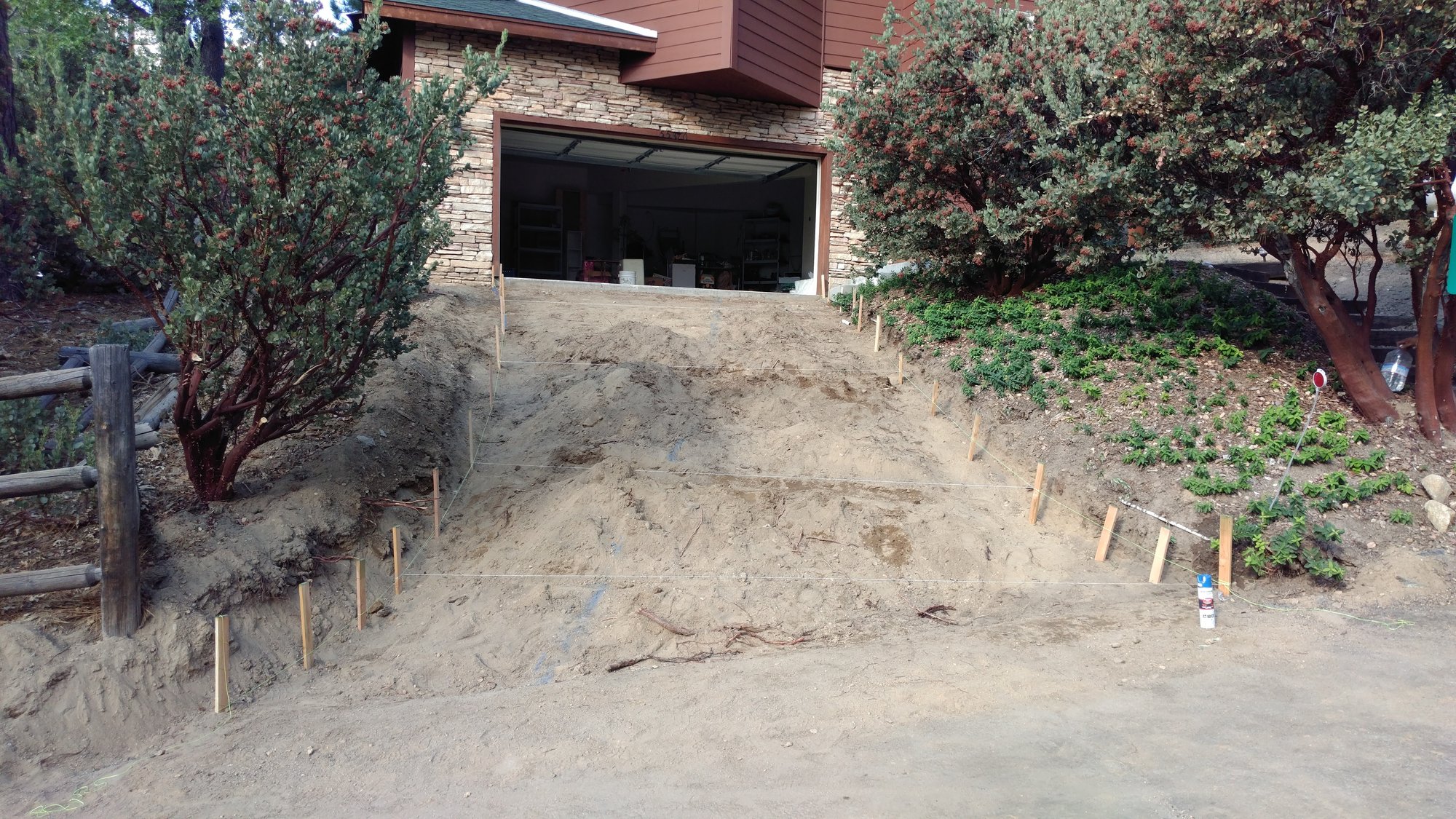
Step 1: Site Preparation — Grading the Base
Every concrete driveway installation begins with proper site prep. The sub-base is graded and compacted to ensure a stable, level foundation for the concrete pour. On a steep driveway, this step is especially important — a well-prepared base prevents settling and cracking that would compromise both the surface and the heating cables embedded within it.
Step 2: Rebar Framework
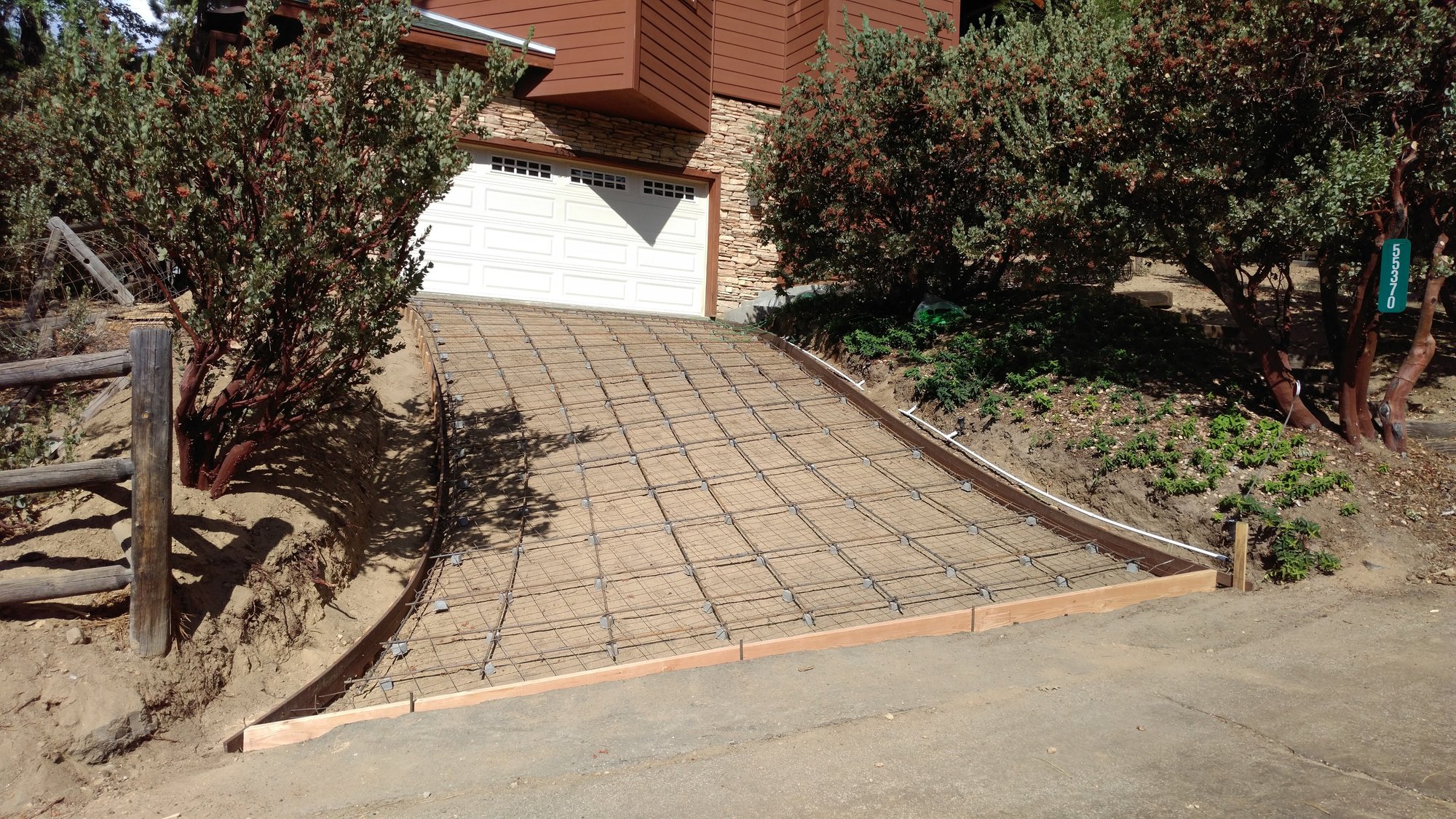
With the base prepared, a steel rebar grid is laid to reinforce the concrete slab. The rebar provides structural strength and — critically — serves as the anchor for the snow melting cables in the next step. Cables are secured to the rebar at consistent spacing to ensure even heat distribution across the full driveway surface. Uniform spacing means no cold spots, no uneven melting, and no surface stress from localized heat.
Step 3: Cable Layout
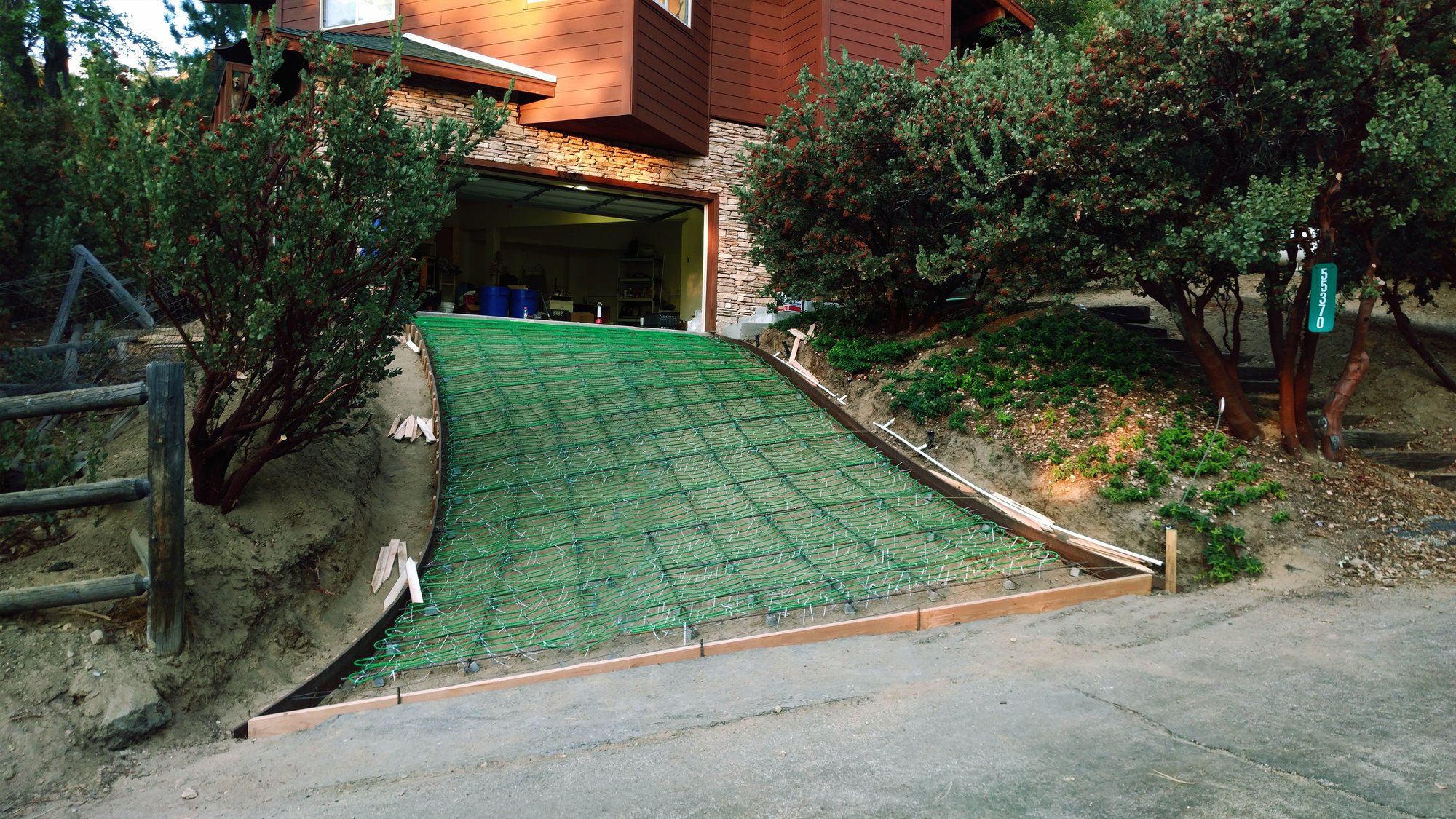
The WarmlyYours snow melting cables are laid across the full driveway surface in a serpentine pattern, secured to the rebar at the spacing specified in the custom SmartPlan™. For this steep-grade installation, full coverage was essential — every square foot of the driveway surface is heated, leaving no icy patches between tire tracks for pedestrians to step onto. The cold leads (non-heating sections) are routed to the electrical connection point at the edge of the slab.
Step 4: Controls & Electrical Connection
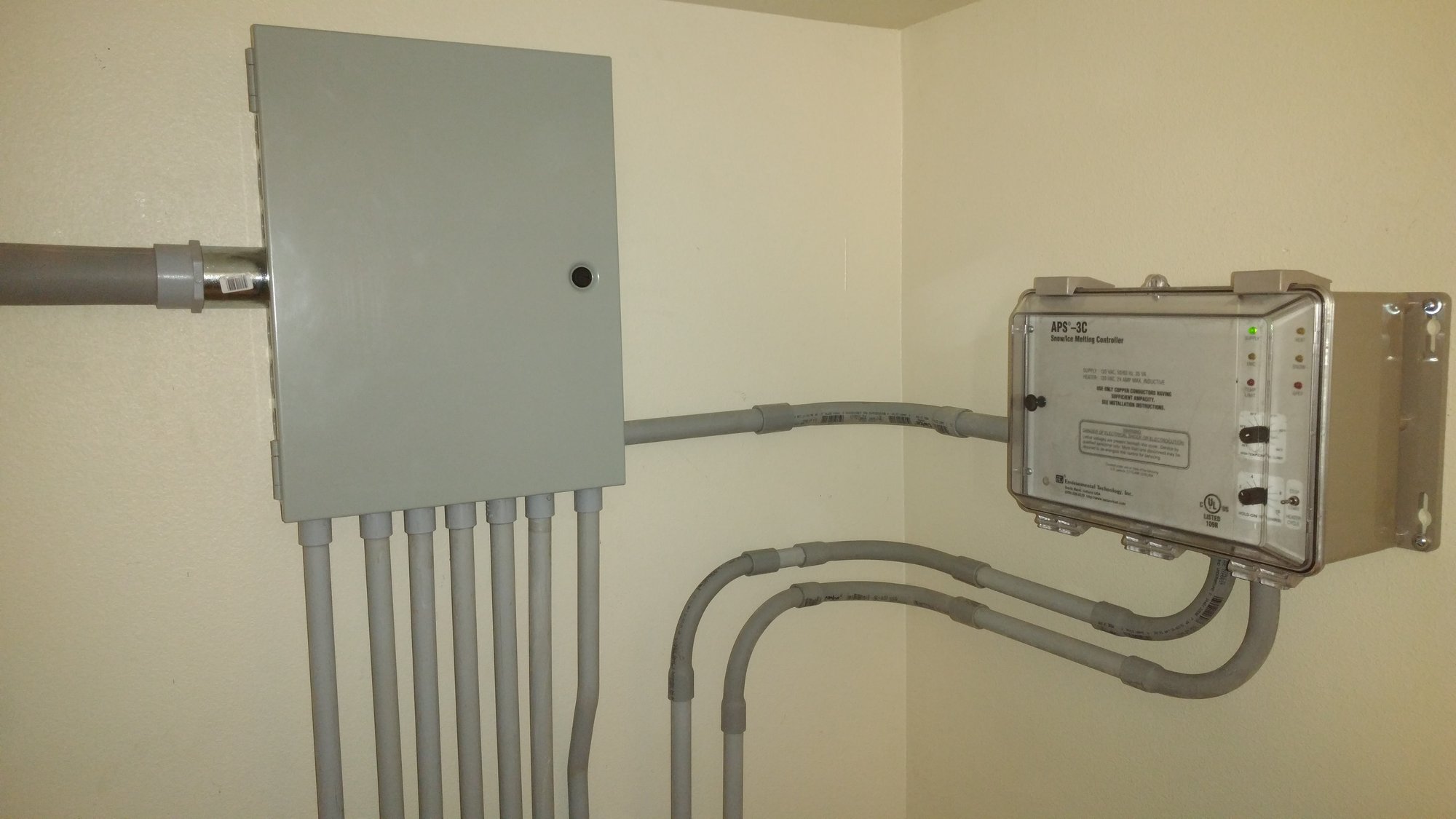
Before the concrete is poured, the cable leads are connected to the control system. For this installation, an automatic sensor-based controller was specified — the right choice for any steep-grade driveway. The controller and sensor are mounted in a weatherproof enclosure, with the sensor positioned to detect both air temperature and precipitation. When conditions are right, the system activates automatically — no manual intervention required.
Step 5: The Finished Driveway — Winter-Ready
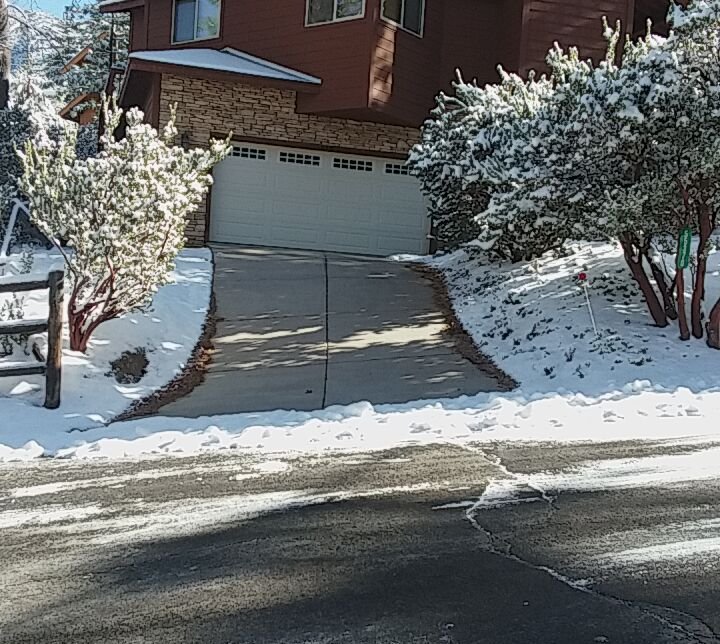
With the cables embedded and the concrete cured, the driveway is complete. The system is invisible from the surface — there’s no indication that anything is different about this driveway until the first storm of the season, when the surrounding neighborhood is buried and this driveway stays clear. For a homeowner in a mountain community at 5,400 feet, that’s not a luxury — it’s a necessity.
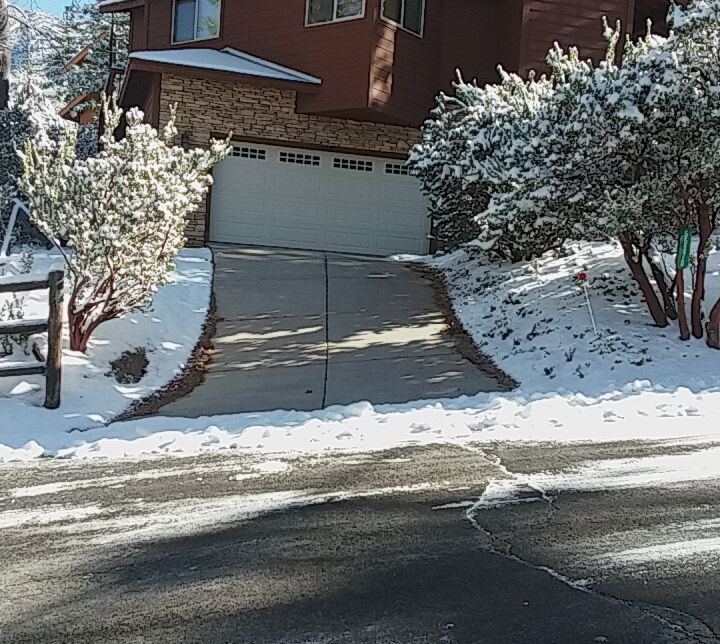
This project is a textbook example of why full coverage matters on a steep grade. A tire-track system would have left the surrounding concrete icy — exactly the surface a person steps onto when getting out of a car. Full coverage means the entire driveway surface is safe, not just the path the vehicle takes.
More Heated Driveway Projects from Across North America
The Idyllwild project is one of dozens of real-world snow melting installations documented in the WarmlyYours showcase library — concrete, asphalt, and pavers, from mountain communities to Midwest suburbs to the East Coast. Here are a few more worth exploring:
| Project | Location | Surface | Highlight |
|---|---|---|---|
| Snow-Free & Safe: Idyllwild-Pine Cove, CA | San Jacinto Mountains, CA | Concrete | Steep mountain driveway, full coverage, automatic sensor controls |
| Never Shovel Again: Elverson, PA | Elverson, Pennsylvania | Asphalt | Long driveway conquering harsh Pennsylvania winters |
| A Shovel-Free Season: Mahwah, NJ | Mahwah, New Jersey | Asphalt | 1,230 sq. ft. automated system — one of our largest residential installs |
| Never Shovel Again: Louisville, KY | Louisville, Kentucky | Concrete | Proves snow melting makes sense even in moderate-snow climates |
| Effortless Winter Safety: Buffalo Grove, IL | Buffalo Grove, Illinois | Pavers | Full driveway and walkway system — shows how pavers and snow melting work together |
Browse the full heated driveway showcase library →
Installation Timing and Cost
The best time to install a snow melt system in any driveway is during a new pour or repave. At that point, the cables are simply laid on the prepared base before the surface material is applied — the incremental cost is small relative to the total project, and there’s no disruption to an existing surface.
For homeowners with an existing steep driveway, a retrofit is still possible. Asphalt driveways can be grooved and re-sealed. Paver driveways can be lifted, cabled, and re-set in as little as three to five days. If your steep driveway is already showing wear from freeze-thaw damage or years of salt use, a repave with integrated snow melting is often the most cost-effective long-term solution.
| Cost Component | Typical Range | Notes |
|---|---|---|
| Heating elements (cables or mats) | $7–$25 per sq. ft. | Full coverage recommended for grades ≥5% |
| Controls & sensors | $629–$3,799 | Automatic sensors strongly recommended for steep grades |
| Full-coverage 20’×20’ system | Starting ~$4,750 | Heating elements only; installation labor varies |
| Operating cost per storm | $0.72–$3.60 | Based on a 6-hour storm at $0.12–$0.60/hr |
| Plow service (comparison) | $50–$150 per visit | Heated driveway typically pays back in 3–5 years |
For a complete breakdown, see our detailed heated driveway cost guide.
Estimate Your Operating Cost
Use the calculator below to see what your electric snow melt system would cost to operate based on your local electricity rate.
Operating Cost Calculator for Snow Melting
Calculate driveway heating costs based on size, coverage type, and local energy rates.


"A snow melting system is the ultimate set-it-and-forget-it solution. No more shoveling, no more slipping—just safe, clear walkways and driveways whenever you need them!"
— Rae RadiantFrequently Asked Questions: Snow Melting for Steep Driveways
Radiant snow melting systems use electric heating cables or mats embedded in the driveway surface. When sensors detect moisture and freezing temperatures, the system activates, warming the slab to melt snow and ice on contact. This prevents accumulation and ensures a clear, safe surface throughout winter storms without manual shoveling.
For driveways with a grade of 5% or steeper, we strongly recommend full-width coverage. While tire-track heating works for flatter surfaces, steep slopes require the entire width to be clear to ensure traction and prevent sliding. Full coverage provides maximum safety for both vehicles and pedestrians on significant inclines.
That depends on a number of variables (like the temperature outside) but generally speaking these snow melting systems are designed to melt 1" - 3" of snow per hour. Anything above 3" per hour is typically considered blizzard conditions.
No. Electric heated driveways involve installing heating cable below the pavement. As long as the driveway is being replaced or installed for the first time, installing a heated driveway system shouldn't significantly complicate the installation.
You cannot install heating cables directly into an existing finished driveway. To add a system, the old surface must be removed. You then install the heating elements before pouring new concrete, laying new asphalt, or placing pavers. This is the perfect time to upgrade your driveway's safety and longevity.
A WarmlyYours SmartPlan™ is a comprehensive installation blueprint for your specific project. It includes a detailed 2D layout showing cable placement, electrical requirements, sensor locations, and a complete component list. This custom plan ensures an efficient installation and serves as a vital reference for your electrician and contractor.
Installation costs typically range from $8 to $25 per square foot, depending on the surface material and system type. For a standard 20'x20' driveway, heating components usually start around $4,750. Total costs vary based on local labor rates for electrical work and the masonry or paving contractor's fees.
Have Questions About Your Project?
Our team of Radiant Experts is ready to help!
Related Articles

Heated Driveway Cost in 2026
Heated Driveway Repair: ShortStop vs. Trouble Shooting Kit Rental
Snow Melting Mats vs. Cables: Which to Choose for your Heated Driveway
Share Your Story: Zoning Gives Customized Control for Heated Driveway
Stay Updated
Get the latest radiant heating news and tips delivered to your inbox.