9 Pros and Cons of Radiant Floor Heating (Honest Review)
last updated march 9, 2026


In This Article
What Are the Pros and Cons of Radiant Floor Heating?
Curious whether radiant floor heating is right for your home? This guide covers the top benefits — like even warmth and energy savings — and the real considerations, such as upfront cost and electrical needs. Read on to discover if electric floor heating systems align with your budget, lifestyle, and renovation goals.
Radiant Floor Heating at a Glance
- Energy Savings: 25–30% more efficient than forced-air heating.
- Even Heat: No cold spots — warmth rises uniformly from the floor up.
- Silent Operation: No fan noise, no air circulation, no dust.
- Home Value: Homes with radiant heating sell 6–8% faster.
- Lifespan: 25+ year system life with a 25-year WarmlyYours warranty.
- Upfront Cost: $15–$30 CAD per sq ft installed — higher than forced air.
- Best For: Bathrooms, kitchens, entryways, and comfort-focused spaces.
What is Floor Heating? Watch and Discover for Yourself
See a TempZone™ electric floor heating system in action — how it adapts to irregular layouts, integrates with different flooring types, and delivers real-world warmth.
Electric Floor Heating: Pros and Cons
Here’s what 300,000+ real installations have taught us about the genuine advantages and drawbacks of electric radiant floor heating.
The Pros
Consistent, Comfortable Heat
Ever notice how some rooms have cold spots while others are stuffy? That’s forced-air heating. Radiant heating is completely different — heat rises evenly from the entire floor surface, eliminating cold spots and operating in complete silence with no dust circulation.
Energy Efficiency
Electric radiant floor heating uses 25–30% less energy than forced-air systems when properly installed and programmed. Smart thermostats with scheduling reduce operating costs further by heating only when and where needed.
Increased Home Value
Homes with radiant floor heating sell 6–8% faster and command premium prices — especially in luxury bathrooms and kitchens. Buyers recognize quality and comfort when they feel it.
See the Data
Download our Radiant Heating Resale Value Fact Sheet to see how floor heating impacts home value in today’s market.
Long Lifespan & Warranty
WarmlyYours TempZone systems carry a 25-year warranty and are designed to last the life of the floor. Once installed, there are no moving parts, no filters, and no maintenance required.
Improved Air Quality
Unlike forced-air systems, radiant heating doesn’t circulate air — which means no dust, allergens, or dry air being pushed around the room. A significant benefit for allergy sufferers.
The Cons
Higher Upfront Installation Cost
Radiant heating costs more upfront than basic forced-air. Here’s the realistic breakdown:
| Cost Component | Typical Range |
|---|---|
| Materials | $11–$20 CAD per sq ft |
| Professional installation | $4–$9 CAD per sq ft |
| Total project cost | $15–$30 CAD per sq ft |
The investment is higher upfront, but long-term energy savings and increased home value typically justify the cost — especially in bathrooms and kitchens where the comfort benefit is highest.
Professional Installation Recommended
While many homeowners successfully complete DIY installations, complex layouts, electrical modifications, and high-end flooring projects benefit from professional installation to protect the 25-year warranty and ensure code compliance.
Electricity Dependency
Electric systems rely on electrical power — there’s no backup during outages, and operating costs vary by local electricity rates. Smart thermostats help optimize efficiency and reduce monthly costs.
Best Installed During Renovation
Retrofitting radiant heating into an existing finished floor is possible but more disruptive than installing during a renovation. Planning ahead during a remodel is the most cost-effective approach.
Electric vs. Hydronic Radiant Floor Heating: Which Is Right for You?
There are two types of radiant floor heating: electric (resistance cables) and hydronic (hot water tubing). For most residential remodels and room-by-room installations, electric is the clear winner. Here’s why:
|
|
Electric Radiant | Hydronic Radiant |
|---|---|---|
| Upfront cost | $15–$30 CAD/sq ft | $20–$45 CAD/sq ft |
| Installation complexity | Low — DIY-friendly | High — boiler, pump, plumbing required |
| Best for | Remodels, single rooms, retrofits | Whole-home new construction |
| Operating cost | Higher per sq ft, lower total for small areas | Lower per sq ft for large areas |
| Response time | Fast — warms in 30–60 minutes | Slow — hours to reach temperature |
| Maintenance | None — no moving parts | Annual boiler servicing required |
| System lifespan | 25+ years | 15–20 years (boiler) |
| Warranty | 25 years (WarmlyYours) | Varies by manufacturer |
Want the Full Comparison?
Read our in-depth guide: Electric vs. Hydronic Floor Heating: Compare Cost, Efficiency & Installation →
What Does Electric Floor Heating Actually Cost to Operate?
After analyzing data from 300,000+ installations over 26 years, here’s what homeowners actually pay to run their radiant heating systems. Electric floor heating typically costs $0.09–$0.48 CAD per hour to operate, with actual monthly expenses varying by room size, usage patterns, and local electricity rates.
| Room Size | Power Consumption | Monthly Cost (at $0.18 CAD/kWh) |
|---|---|---|
| Small Bathroom (50 sq ft) | 450–750 watts | $22–$38 CAD |
| Medium Bathroom (100 sq ft) | 900–1,500 watts | $45–$75 CAD |
| Large Master Bath (150 sq ft) | 1,350–2,250 watts | $68–$112 CAD |
Reduce Your Operating Costs by 15–20%
Smart thermostat programming and proper insulation can significantly cut your monthly bill. Well-insulated spaces benefit from running continuously at low levels (15–20% more efficient). Poorly insulated areas benefit from scheduled operation. Calculate your exact operating cost →
Calculate Your Floor Heating Cost
Use our interactive calculator to get a personalized operating cost estimate based on your room size, local electricity rate, and usage schedule.
Operating Cost Calculator for Floor Heating
Estimate your daily and monthly energy costs based on room size and local rates.
"Most homeowners are surprised how affordable radiant floor heating is to operate—often just pennies a day for a bathroom. It's the kind of everyday luxury that pays for itself in comfort!"
— Rae RadiantUnderstanding Radiant Floor Heating Technology
Unlike traditional heating systems that push warm air through vents, radiant floor heating delivers warmth directly from the ground up — creating a more efficient and comfortable heating experience.
| How It Works | Key Technical Advantages |
|---|---|
| Thin heating cables (1/8″ thick) install beneath flooring | Heat radiates upward for even warmth distribution |
| Embedded in tile, hardwood, vinyl, or carpet | Eliminates cold spots common in forced-air systems |
| Operates at 9–15 watts per square foot | Silent operation with no air movement |
| Precise thermostat controls maintain optimal temperature | Improved indoor air quality — no dust circulation |
What Flooring Types Work with Radiant Heat?
One of the biggest advantages of electric radiant floor heating is its compatibility with virtually every flooring type. The right system depends on your floor — here’s a quick reference:
| Flooring Type | Compatible System | Installation Method | Notes |
|---|---|---|---|
| Tile & Stone | TempZone™ Cable or Flex Roll | Embedded in thinset mortar | Most popular — excellent heat transfer |
| Hardwood (engineered) | Environ™ Flex Roll | Dry install under floating floor | Max floor temp 80°F — check manufacturer specs |
| Laminate & LVT/LVP | Environ™ Flex Roll | Dry install under floating floor | Verify flooring is radiant-heat rated |
| Carpet | Environ™ Flex Roll | Dry install under padding | Low-tog padding required |
| Concrete Slab | TempZone™ Cable | Embedded in concrete pour | Ideal for basements and new construction |
| Mud-set / Mortar Bed | TempZone™ Cable | Embedded in mortar bed | Common in custom tile showers and wet rooms |
Best Electric Floor Heating Systems for 2026
After testing, supporting, and installing hundreds of thousands of systems over 26 years, here are our top recommendations:
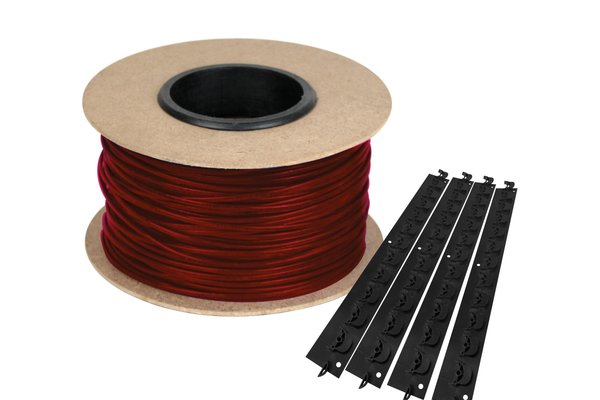
TempZone™ Cable Systems
Best for: Custom layouts and irregular spaces.
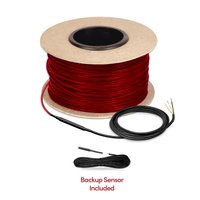
- 9–15 watts per square foot
- Sizes from 7.5 to 360 square feet
- Superior ETFE insulation
- Flexible spacing at 3″, 4″ & 5″
- Install with Grip Strips or Prodeso Installation Membrane
- 25-year warranty
TempZone™ Mat Systems
Best for: Rectangular rooms and quick installation.
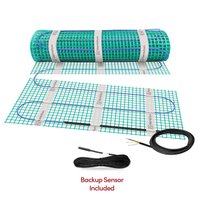
- Pre-spaced heating cables on mesh backing
- 15 watts per square foot
- Sizes from 6 to 210 square feet
- Easy installation process
- Ideal for tile and stone floors
- 25-year warranty
Environ™ Foil Mat System
Best for: Floating floors and dry installations.
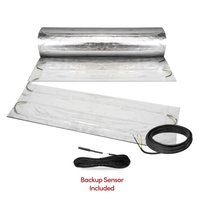
- 12 watts per square foot power output
- Ideal for floating laminate, engineered wood, or carpet
- Dry installation — no mortar or adhesives
- 10-year warranty (laminate/hardwood), 5-year warranty (carpet)
Thermostats: The Key to Comfort and Savings
Every radiant floor heating system needs a thermostat — and the right one can reduce your operating costs by 15–20% through smart scheduling. WarmlyYours offers two flagship options:
nSpire Touch — Premium Touchscreen Control
Best for: Homeowners who want a full-color touchscreen with precise programmable control.
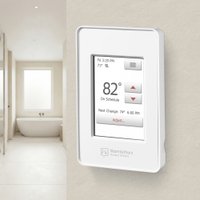
- 3.5″ full-color touchscreen display
- 6 programmable events per day, 7 days a week
- Dual voltage 120V/240V — works with any WarmlyYours system
- 3-year warranty + lifetime 24/7 technical support
nJoy WiFi — Next-Generation Smart Thermostat
Best for: Homeowners who want WiFi control, remote diagnostics, and a sleek minimalist design.
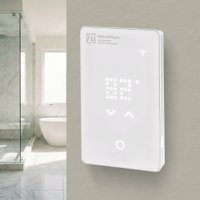
- Slim minimalist LED display — less than 1/2″ installed depth
- WiFi + voice control (Google Assistant & Amazon Alexa)
- Up to 10 programmable schedules + vacation mode
- Remote diagnostics — support team can troubleshoot without a site visit
- Over-the-air firmware updates
- 3-year warranty + lifetime 24/7 technical support
Not Sure Which System Fits Your Project?
Our engineers will recommend the perfect solution and design your exact layout — for free. No guesswork, no oversizing.
Real Customer Results
Don’t just take our word for it — here’s what real customers say about their radiant heating experience:
Customer Testimonials
- Bathroom Installation: “WarmlyYours has perfected the process of designing and installing a radiant floor heating system. My brother-in-law has been a general contractor for 35+ years and he recommended purchasing a radiant flooring system.” — J. Klempa
- Kitchen Project: “I wanted underfloor heating in my kitchen for a long time. When I discovered the WarmlyYours system, my reservations were resolved. The mat is only 1/8th of an inch thick!” — C. Springer
- Finished Basement: “This has been a wonderful addition to our finished basement. This is the only source of heat in the room and it feels amazing.” — L. Silverman
See all 4,000+ customer reviews →
Professional Installation vs. DIY: Making the Right Choice
Quick Decision Guide
Choose professional installation for complex layouts, electrical modifications, and warranty protection. Choose DIY for simple rectangular rooms under 150 sq ft with existing electrical capacity.
| Professional Installation | DIY-Friendly Scenarios |
|---|---|
| Complex room layouts | Simple rectangular rooms |
| Electrical system modifications | Existing electrical capacity |
| Protecting 25-year warranty | Basic flooring experience |
| High-end flooring installations | Using TempZone™ Mat systems |
| Commercial project requirements | Access to 24/7 technical support |
DIY Resources
- Download TempZone Mat Checklist
- Download TempZone Cable Checklist
- Watch 200+ installation videos
- Join webinars and live events
DIY Installation? We’re Here 24/7
Our technical support team is available around the clock during your project. Call 1-800-875-5285 for real-time guidance at any stage of installation.
Is Electric Radiant Floor Heating Worth It in 2026?
Based on 26 years of experience and 300,000+ installations, electric radiant floor heating is worth it for most homes — particularly in bathrooms, kitchens, and comfort-focused spaces with moderate electricity rates.
| Worth It When... | Think Twice When... |
|---|---|
| Installing during a renovation | Retrofitting a finished floor |
| Heating bathrooms, kitchens, entryways | Heating very large areas as primary source |
| Electricity rates under $0.30 CAD/kWh | Electricity rates over $0.30 CAD/kWh |
| Comfort and home value are priorities | Lowest possible upfront cost is the priority |
Electric Radiant Floor Heating: Frequently Asked Questions
Is Electric Radiant Floor Heating Cost-Effective?
Yes, for most homes. Average energy savings of 25–30% compared to traditional heating, with typical monthly operating costs of $22–$112 CAD depending on room size and local electricity rates. The system pays for itself over time through energy savings and increased home value.
How Long Does Radiant Floor Heating Last?
WarmlyYours systems carry a 25-year warranty and are designed to last the life of the floor. There are no moving parts, no filters, and no maintenance required once installed.
Can I Install Radiant Floor Heating Myself?
Yes — most homeowners successfully complete DIY installations, particularly bathroom mats under 100 sq ft with existing electrical capacity. The final thermostat wiring must be completed by a licensed electrician in most jurisdictions. WarmlyYours provides free SmartPlan layouts, 200+ installation videos, and 24/7 technical support throughout your project.
What Flooring Types Work with Radiant Heat?
Electric radiant floor heating works with virtually every flooring type — tile & stone, hardwood, laminate, luxury vinyl (LVT/LVP), and carpet. The system and installation method vary by flooring type.
Does Radiant Floor Heating Increase Home Value?
Yes. Homes with radiant floor heating sell 6–8% faster and command premium prices, particularly in luxury bathrooms and kitchens. Download our Resale Value Fact Sheet for the full data.
Ready to Get Started?
Get a free instant quote or request a custom SmartPlan layout from our engineers — no obligation, no guesswork.
Get a Free Quote → Request a Free SmartPlan →
Looking for information specifically about electric floor heating or maybe heated tile floors?
Have Questions About Your Project?
Our team of Radiant Experts is ready to help!
Related Articles
4 Key Benefits of TempZone™ Electric Floor Heating Cable

Electric vs. Hydronic Radiant Floor Heating: Which is Right for You?
What is Radiant Floor Heating?

Comparing Floor Heating Energy Use to Common Appliances
Stay Updated
Get the latest radiant heating news and tips delivered to your inbox.
Comments