Radiant Heat Panels
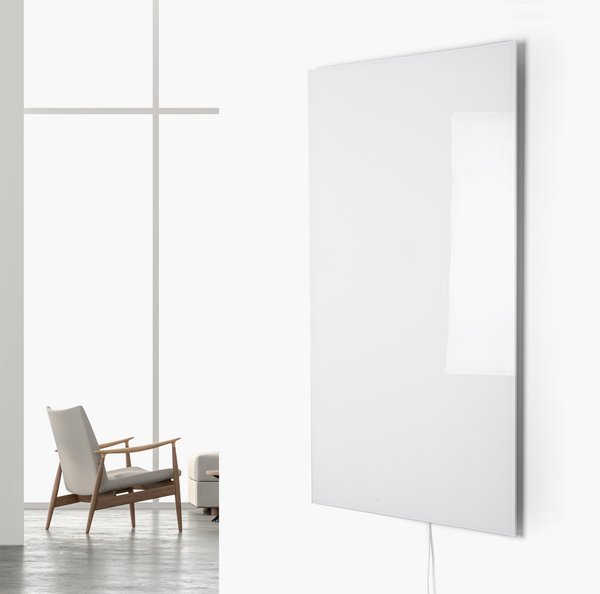
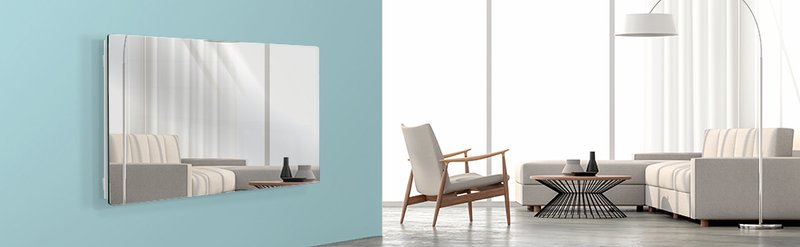
Infrared electric wall heaters are an excellent way to add supplemental heat to any room. Radiant heater panels work by using infrared heat to radiate warmth directly from the panel to the solid objects in the room. Not only are these wall-mounted radiant heat panels functional, but they are also a much more elegant and safe way to add supplemental infrared heating to an area than traditional space heaters. An infrared heating system is a great way to experience the comfort and luxury of radiant heating.
Radiant Panel Heater Features
Easy to Install
All of our wall heaters can be easily mounted to a wall horizontally or vertically.
Fastest Heat Up Time
According to the U.S. Department of Energy, radiant heat panels have the "quickest response time of any heating technology."
5 Year Warranty
Our radiant heat panels our backed by our 5-year manufacturer warranty, that guarantees our radiant heat panels to be free from defects in materials and workmanship.
Saves Energy
Electric wall heaters have one of the highest efficiency rates that reduces heating costs.
Fast Shipping & Simple Returns
With same day shipping nationwide, we're committed to getting your order to you on time. Plus, we don't charge restocking fees for unused products.
Clean Heat
Our vent-free heaters won't disturb dust, pollen, or other allergens like forced-air systems.
Safe
cTUVus certified
24/7 Installation Support
We're here to answer your questions every day – year round – round the clock.
How do Radiant Heat Panel Heaters Work?
Have you ever felt warm standing outside in the cold winter sun? The sun's infrared rays heat you directly instead of heating the air around you. Wall-mounted electric heaters work the same way - they heat the walls, ceiling, and objects in a room. Those surfaces then release the warmth slowly and evenly.
Wall-mounted electric heaters provide a few advantages over gas or propane wall heaters:
- They are safer since there is no open flame or fumes.
- The heat output is more consistent.
- They can help reduce energy bills compared to heating the whole house.
- With no circulating air, there is less spread of dust and allergens.
WarmlyYours makes modern, stylish electric wall heaters to match any home's decor. Our infrared radiant panels provide all the benefits of zone heating for comfort and energy savings.
Learn more about how infrared radiant panels workWhat Square Footage can a Wall Mounted Heater Warm Up?
A wall heater will typically be used to provide supplemental infrared heating for a room. You can kind of think of your infrared heating system as a wall mounted space heater. Use the table below to identify the typical room size* that an electric wall heater can help warm up.
| Radiant Panel Wattage* | Warming coverage |
| 300W Ember | 43 sq. ft. |
| 500W Ember | 71 sq. ft. |
| 600W Ember (Glass Only) | 86 sq. ft. |
| 700W Ember | 100 sq. ft. |
| 800W Ember (Glass Only) | 114 sq. ft. |
*This estimation is based on installing a radiant vent-free heater in a typical/average room. Actual results may vary based on a room's degree of heat loss, which can be impacted by a number of factors including ceiling height, number of windows, and insulation level. For a free Heat Loss Calculation based on your room, go here.
Radiant Panel Models
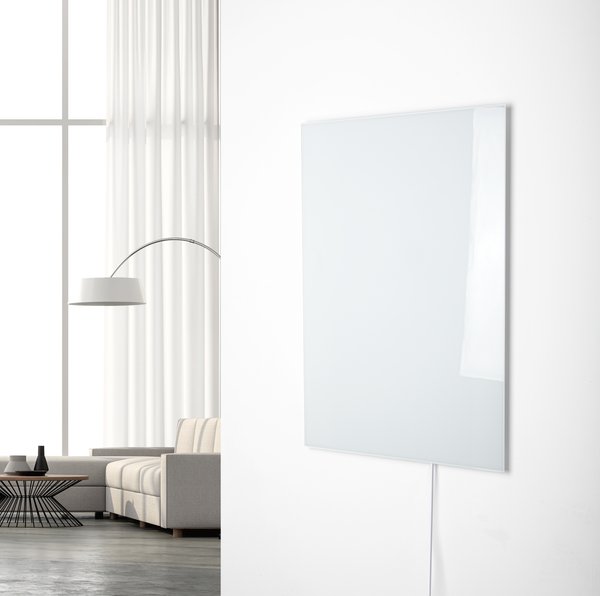
Stylish warmth without stirring up allergens
-
Dual connection, each unit can be plug-in or hardwired
-
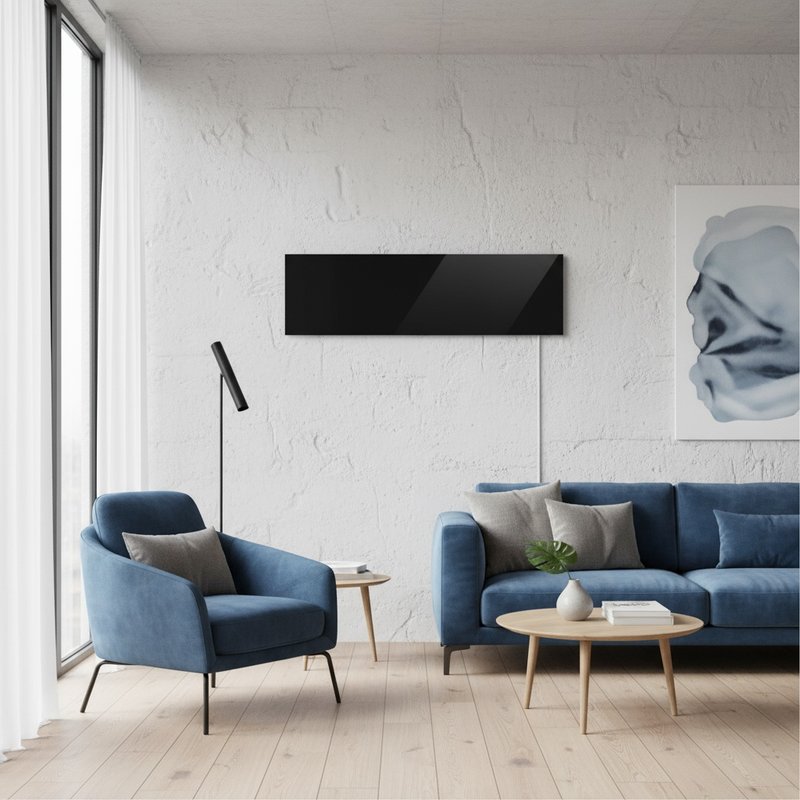
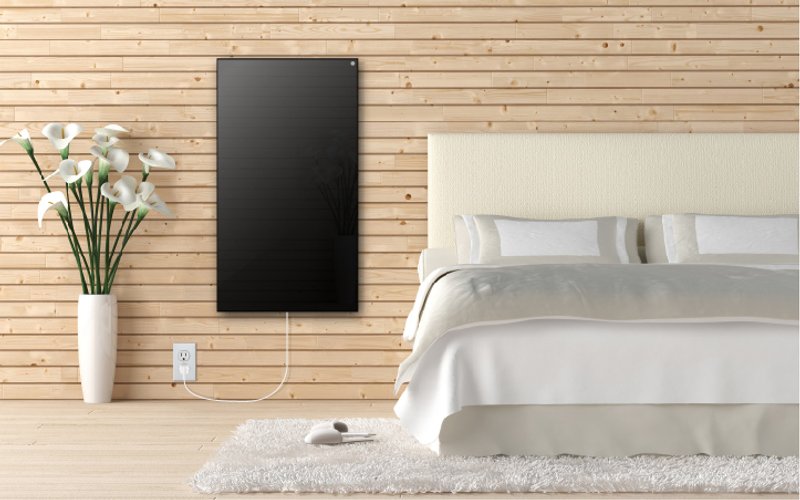
Wall-mounted, can be installed vertically or horizontally
-
Available in 2 different sizes: 35” x 24” and 47” x 24”
-
Available in Black & White finishes
-
Backed by a 5-year manufacturer warranty
-
Towel Bar Attachment Starting from C$89
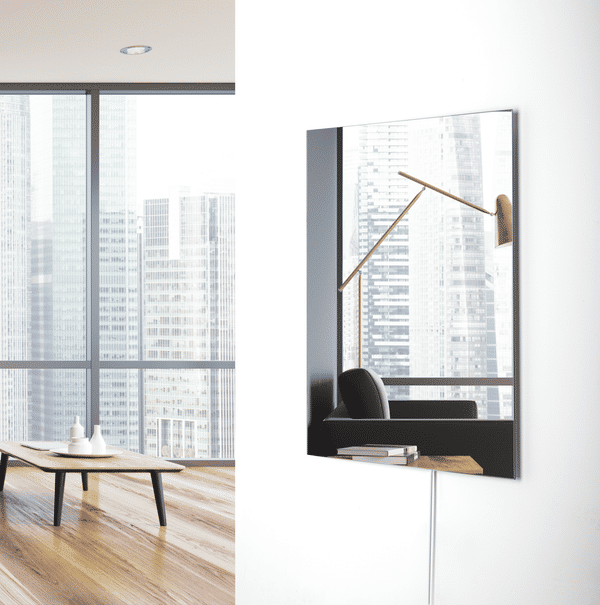
Stylish warmth with a fog-free view
-
Dual connection, each unit can be plug-in or hardwired
-
Wall-mounted, can be installed vertically or horizontally
-
Available in 2 different sizes: 35” x 24” and 47” x 24”
-
Can be used as a 3-in-1 option: infrared heater, fogless mirror, and towel warmer (with accessories)
-
Backed by a 5-year manufacturer warranty
-
Towel Bar Attachment Starting from C$89
30% Off!
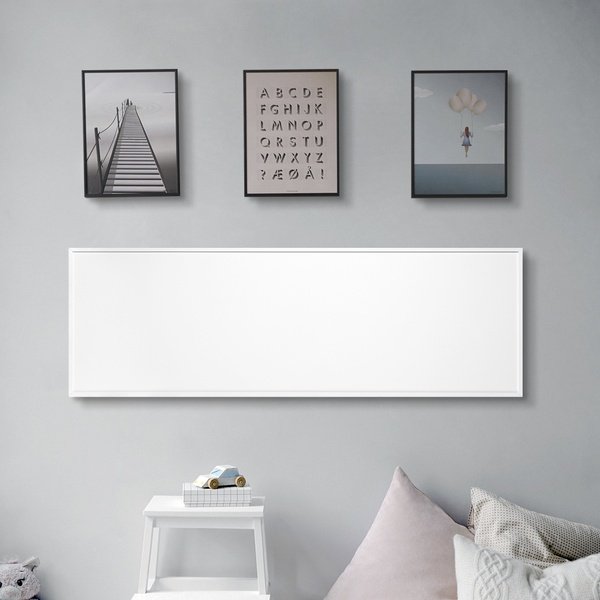
Effortless warmth with modern elegance
-
Dual connection, each unit can be plug-in or hardwired
-
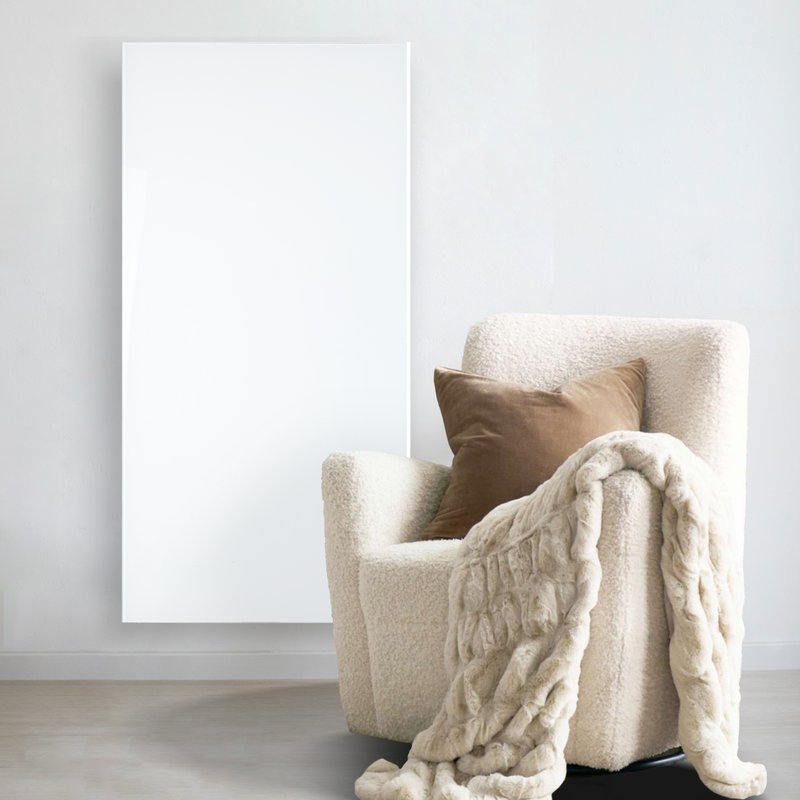
Wall-mounted, ceiling mounted, or stand accessory compatible
-
White finish with integrated frame
-
Available in 3 sizes: 35" x 12", 35" x 24", and 47" x 24"
-
Backed by a 5-year manufacturer warranty
-
Stand Attachment Starting from C$59
-
Towel Bar Attachment Starting from C$89
Accessories
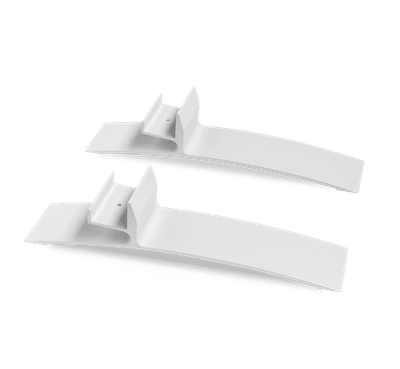
IP-EM-ACC-STND
Use these 2 stand attachments with a plug-in Ember Flex radiant panel (horizontal orientation only). (IP-EM-ACC-STND)
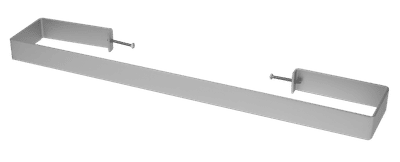
IP-EM-ACC-BAR
Towel bar accessory for most Ember radiant panels, anodized aluminum with a brushed finish (IP-EM-ACC-BAR)
-
Helps turn an Ember infrared heating panel into a towel warmer too
-
Comes with an attractive brushed finish
-
Compatible with all portrait-oriented Ember radiant panels except the 35” x 12” Ember Flex Panel
-
Up to two towel bars can be installed per Ember radiant panel
-
Made of durable and rustproof aluminum
The Technology Behind Radiant Panel Heaters
Copper and Nano Silver Bar
Conductive polymer treatment on the copper connection as well as a special design of the nano silver bar, prevent hot spots and sparks as well as guaranteeing safety even in abnormal conditions or at very high surface temperatures.
Epoxy Ceramic Resin
Adapting high quality epoxy resin as the cover and bottom layer, our radiant panel heaters have a very good level of durability and no burning danger. Because the edges are perfectly sealed, there is no water leakage or electricity leakage risk. Being very thin, our panels can be installed in nearly any location.
Carbon Copper Polyimide Panel
Our patented carbon copper polyimide heating element enables outstanding safety, durability, and efficiency - making our infrared panels leaders in the industry. Compared to carbon fiber, our graphite mixture has superior heat resistance, low expansion coefficient, and thermal conductivity. Through precise formulation, we optimize ratios of carbon and graphite to achieve maximum heating efficiency for any power rating. This tailored combination of next-generation materials sets our infrared panels apart.
Featured Radiant Panel Projects
-
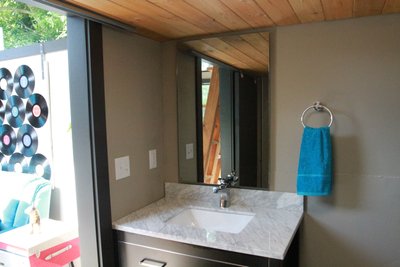 Bathroom Kansas City, MO
Dual-Purpose Comfort: The Ember Mirror in Kansas City
$0.09/hr operating cost -
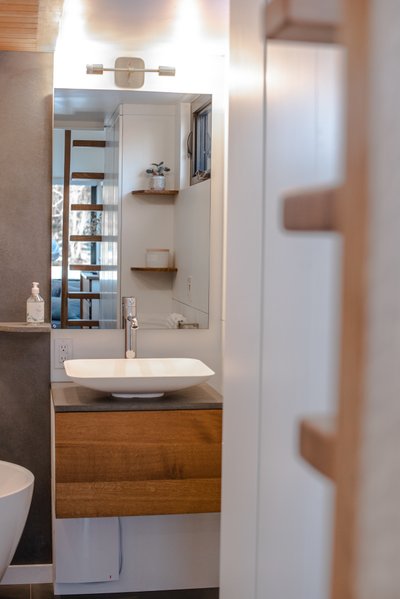 Bathroom Spruce Grove, AB
Elegant Comfort and Warmth for a Freezing Alberta Master Bath
$0.05/hr operating cost -
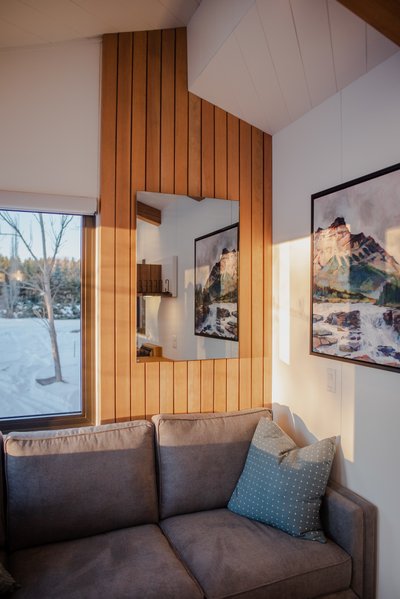 Living Room Spruce Grove, AB
Luxury Warmth and Space-Saving Design for a Tiny Home Living Room in Spruce Grove, AB
$0.06/hr operating cost
Radiant Panel Heater Catalogs & Articles
Electric Wall Heaters Questions & Answers
Showing 6 of 10 questions
Yes, radiant heat panels are significantly better than space heaters for safety, energy efficiency, design, and comfort.Safety comparison:
- Radiant panels: Wall-mounted (no tipping), low surface temp (no burns), no fire risk, UL/cUL certified
- Space heaters: Tipping hazard, hot surfaces, fire risk (cause 1,700+ home fires annually), cord hazards
Energy efficiency:
- Radiant panels: 100% efficient (all electricity converts to heat), $0.05–$0.15/hr operating cost
- Space heaters: 80–95% efficient (heat loss through convection), $0.15–$0.30/hr operating cost
Comfort & health:
- Radiant panels: No air circulation (allergy-friendly), even warmth, silent operation
- Space heaters: Circulate dust/allergens, uneven heat, noisy fans
Design & convenience:
- Radiant panels: Sleek, elegant, permanent installation, no floor space required
- Space heaters: Bulky, unsightly, take up floor space, require storage
Lifespan:
- Radiant panels: 15–20+ years (no moving parts)
- Space heaters: 3–5 years (fans, heating elements wear out)
Bottom line: Radiant panels cost more upfront ($314–$999 vs. $50–$300) but offer superior safety, lower operating costs, and longer lifespan. Read our detailed comparison.
Yes, radiant heat panels are extremely safe. They're UL/cUL certified, have no moving parts, no hot surfaces, and no fire risk, making them far safer than space heaters or traditional heating methods.Safety features:
- Wall-mounted: No tipping hazard (unlike space heaters)
- Low surface temperature: Panel surface stays cool to touch (no burn risk)
- No open flames: Electric heating (no gas, no combustion)
- No cords on floor: Hardwired or plug-in with wall outlet (no tripping hazard)
- Overheat protection: Built-in safety shutoff
- UL/cUL certified: Meets North American safety standards
Safe for families:
- Children: No hot surfaces or sharp edges
- Pets: No risk of burns or tipping
- Allergy sufferers: No dust or allergen circulation
- Elderly: No fire risk, no maintenance required
Comparison to space heaters:
- Space heaters cause 1,700+ home fires annually (NFPA data)
- Radiant panels have zero reported fire incidents in 26 years of WarmlyYours installations
Installation safety:
- Professional installation recommended for hardwired models (code compliance)
- Plug-in models: DIY-friendly, no electrician needed
- Proper mounting: Follow manufacturer guidelines for secure installation
26 years of proven safety: WarmlyYours radiant panels have been installed in thousands of homes with zero safety incidents when properly installed.
Yes, radiant heat panels are absolutely worth it for supplemental heating. They cost $314–$999 upfront and operate for just $0.05–$0.15 per hour, delivering instant warmth, energy savings, and allergy-friendly comfort without the safety risks of space heaters.ROI breakdown:
- Lower operating costs: Up to 50% less than forced-air heating
- Instant warmth: No waiting for air to heat up
- Long lifespan: 15–20+ years of reliable performance
- Energy efficiency: 100% of electricity converts to heat
- No maintenance: No filters, fans, or moving parts
Beyond cost savings:
- Safety: No fire risk, hot surfaces, or tipping hazards (unlike space heaters)
- Allergy-friendly: No dust or allergen circulation
- Elegant design: Sleek glass, mirror, or white finishes match any decor
- Dual function: Mirror models include fog-free feature + optional towel bar
Bottom line: One winter season of energy savings can offset the purchase price. Request a quote to calculate your specific ROI.
Radiant heat panels are designed for supplemental heating, not as a primary heat source. They work best to boost warmth in specific rooms or offset cold spots, but most homes require a central heating system for whole-home comfort.Why panels are supplemental:
- Coverage area: Each panel heats 50–150 sq.ft. (one room or zone)
- Wattage limits: 300–800W per panel (not enough for whole-home heating)
- Installation: Requires multiple panels for multiple rooms (costly for whole-home coverage)
Best use cases for supplemental heating:
- Cold rooms: Basements, sunrooms, garages, workshops
- Spot heating: Home offices, bathrooms, bedrooms
- Zone heating: Heat only occupied rooms (save energy)
- Seasonal use: Three-season rooms, vacation homes
- Supplement existing heat: Boost warmth without cranking up thermostat
When panels CAN be primary heat:
- Tiny homes: 200–400 sq.ft. spaces (1–2 panels sufficient)
- Well-insulated spaces: Modern, energy-efficient construction
- Mild climates: Regions with minimal heating needs
- Single-room dwellings: Studio apartments, ADUs
Sizing guidance:
Use our Heat Loss Calculator to determine if radiant panels can meet your heating needs or if they're best used as supplemental heat.
Yes, radiant heat panels are highly effective at providing supplemental heating. They use infrared technology to heat objects and people directly (like the sun), rather than heating the air, delivering instant warmth that feels natural and comfortable.How they work:
- Infrared radiation: Panels emit infrared waves that warm solid objects, walls, and people
- Direct heat transfer: Heat radiates directly to you, not through air circulation
- Even warmth: Objects release heat slowly, maintaining consistent room temperature
- No allergen circulation: No fans or air movement (ideal for allergy sufferers)
Proven effectiveness:
- 26 years of WarmlyYours installations
- 100% energy efficiency (all electricity converts to heat)
- Reduces heating costs by up to 50% compared to traditional forced-air systems
- Works on all surfaces (wall, ceiling, or stand-mounted)
Real-world results: Homeowners report immediate warmth and lower energy bills after installation. Operating costs are just $0.05–$0.09 per hour. View customer showcases to see proven results.
Radiant heat panels work by emitting infrared radiation that heats objects and people directly, rather than heating the air. This mimics the warmth of the sun—you feel warm even though the air temperature hasn't changed.How it works step-by-step:
- Power activation: Panel receives electricity (plug-in or hardwired)
- Infrared emission: Heating element generates infrared radiation (invisible light waves)
- Direct heat transfer: Infrared waves travel through air and warm solid objects (walls, furniture, people)
- Object heat release: Warmed objects release heat slowly, maintaining consistent room temperature
- No air circulation: No fans, no dust, no allergen movement
Why infrared is effective:
- Instant warmth: You feel heat immediately (no waiting for air to warm up)
- Even distribution: Objects release heat gradually, eliminating cold spots
- Energy efficient: 100% of electricity converts to heat (no heat loss through ducts)
- Comfortable: Feels natural and gentle (like sunlight)
Comparison to traditional heating:
- Forced-air heating: Heats air, which rises to ceiling (inefficient, uneven)
- Space heaters: Heat air via convection (slow, circulates dust)
- Radiant panels: Heat objects directly (instant, efficient, allergy-friendly)
Radiant heat panels last 15–20+ years with minimal maintenance, making them a long-term investment in home comfort.Lifespan factors:
- No moving parts: No fans, motors, or mechanical components to wear out
- Solid-state heating: Heating element has no consumable parts
- Quality construction: WarmlyYours uses premium materials and UL/cUL certified components
- Low maintenance: No filters, no cleaning, no servicing required
Comparison to other heating:
- Radiant panels: 15–20+ years
- Space heaters: 3–5 years (fans and heating elements wear out)
- Forced-air systems: 15–20 years (require annual maintenance, filter changes)
How to maximize lifespan:
- Professional installation (ensures proper electrical connections for hardwired models)
- Use with thermostat (prevents unnecessary runtime and extends heating element life)
- Keep panels clean (dust surface annually with soft cloth)
- Avoid physical damage (glass models are durable but can crack if struck)
Warranty coverage:
- WarmlyYours offers 5-year manufacturer warranty on all Ember radiant panels
- Register your warranty for full coverage
Radiant heat panels cost $314–$999, depending on model, size, and features.Pricing by model:
- Ember Flex (White): $314–$449 (plug-in or hardwired, wall/ceiling/stand mounting)
- Ember Glass (Black/White): $799–$999 (sleek glass finish, vertical/horizontal mounting)
- Ember Mirror: $999+ (fog-free mirror + heating, optional towel bar)
Pricing by wattage/coverage:
- 300W (up to 50 sq.ft.): $314–$449
- 500W (up to 75 sq.ft.): $449–$699
- 600W (up to 100 sq.ft.): $799–$899
- 700W (up to 125 sq.ft.): $699–$899
- 800W (up to 150 sq.ft.): $899–$999
Installation costs:
- Plug-in models: $0 (DIY-friendly, no electrician needed)
- Hardwired models: $200–$600 (electrician labor for permanent installation)
Accessories:
- Stand attachment: $49 (converts wall panel to freestanding)
- Towel bar: $69 (adds towel warming function)
Cost comparison: Radiant panels cost $314–$999 vs. space heaters ($50–$300) but offer superior safety, energy efficiency, and elegant design. Shop all models.
Operating costs are minimal: Radiant heat panels typically cost $0.05–$0.15 per hour to run, or $10–$50 per month for supplemental heating.Cost breakdown by wattage:
- 300W panel: $0.04–$0.06 per hour ($10–$20/month for 8 hrs/day)
- 500W panel: $0.06–$0.10 per hour ($15–$30/month for 8 hrs/day)
- 600W panel: $0.07–$0.12 per hour ($20–$35/month for 8 hrs/day)
- 700W panel: $0.08–$0.14 per hour ($25–$40/month for 8 hrs/day)
- 800W panel: $0.10–$0.16 per hour ($30–$50/month for 8 hrs/day)
What affects operating cost:
- Wattage (higher wattage = higher cost)
- Local electricity rates (varies by region, typically $0.12–$0.20/kWh)
- Runtime (how many hours per day you use it)
- Room insulation (well-insulated rooms require less runtime)
- Thermostat control (smart controls optimize runtime and reduce costs)
Cost comparison:
- Radiant panels: $0.05–$0.15/hr (100% efficient, no heat loss)
- Space heaters: $0.15–$0.30/hr (less efficient, safety risks)
- Forced-air heating: $0.20–$0.50/hr (heats entire home, not just one room)
Energy-saving tip: Use programmable thermostats to run panels only when needed, reducing costs by 30–50%. Shop controls.
Install radiant heat panels on interior walls at least 6 inches from the floor and ceiling, positioned to face the area you want to heat. For best results, mount panels opposite cold sources (windows, exterior walls) and away from obstructions (furniture, curtains).Optimal placement by room:Bathrooms:
- Ember Mirror: Above vanity (dual-function heating + fog-free mirror)
- Ember Glass/Flex: On wall opposite shower/tub (warms entire room)
- Height: 4–6 feet from floor (eye level for mirrors, chest level for panels)
Bedrooms:
- Position: On wall opposite bed (heat radiates toward sleeping area)
- Avoid: Directly above bed (too much direct heat)
- Height: 3–5 feet from floor (optimal heat distribution)
Living rooms:
- Position: On interior wall facing seating area
- Avoid: Behind furniture or near windows (heat loss)
- Multiple panels: Space evenly for balanced coverage
Home offices:
- Position: On wall behind or beside desk (direct warmth to work area)
- Height: 3–4 feet from floor (warms seated person)
Basements/garages:
- Position: On interior walls or ceiling-mounted (heat rises from below)
- Multiple panels: May be needed for larger spaces
Installation guidelines:
- Clearances: 6 inches from floor, 6 inches from ceiling, 12 inches from corners
- Avoid: Behind curtains, furniture, or doors (blocks heat radiation)
- Orientation: Vertical or horizontal (both work equally well)
- Mounting options: Wall, ceiling, or stand (Ember Flex only)
Ceiling mounting:
- Best for: Rooms with limited wall space or high ceilings
- Heat direction: Radiates downward (warms floor and objects below)
- Clearance: 12 inches from ceiling edges
Stand mounting (Ember Flex only):
- Best for: Renters or temporary heating needs
- Placement: Position 3–4 feet from seating area
- Safety: Ensure stable surface, away from high-traffic areas
Pro tip: Use multiple smaller panels instead of one large panel for more even heat distribution and flexible zone heating. Request a free consultation for placement recommendations specific to your space.