
The 5 Golden Rules of Snow Melting
Avoid costly mistakes with these snow melting installation rules
Are you planning a snow melting installation but worried about making permanent, costly mistakes before the concrete cures?
In this video, we walk you through the five golden rules of snow melting installation. Following these proven steps on every job protects your reputation, preserves your warranty, and secures your profit margins. You will learn how to handle cable lengths, protect critical connections, and avoid the most common pitfalls that lead to system failure.
Watch the video to master these essential rules for a flawless radiant heating setup:
- ⚡ Never cut the heating cable; always absorb excess length into your layout spacing.
- 🔌 Fully embed the factory splice in concrete or mortar to prevent overheating.
- 🚧 Isolate cables at expansion joints to prevent structural shifting from shearing them.
- 🌡️ Perform the three-stage test protocol with a megger and digital ohmmeter.
- 💡 Install a dedicated 30-milliamp GFEP breaker to avoid constant nuisance tripping.
By implementing these expert techniques and using our printable three-stage test log from the WarmlyYours Pro Field Guide, you can guarantee a reliable, long-lasting snow melting system. If you ever need assistance, our 24/7 ProTech Support team is always ready to help you succeed.
Chapters
Transcript
There's an old saying in this trade: five minutes on the phone beats a weekend with a jackhammer. Nothing proves that more than a snow melting installation, because once that concrete cures, your mistakes are locked in permanently. Today, I'm walking you through the five golden rules of snow melting. Follow all five on every job, no exceptions, and you'll protect your reputation, your warranty, and your profit margin. Let's get into it.
Rule number one, and this is the big one: never cut the cable. Snow melting heating cable is a fixed-length element. You cannot shorten it. Cut it, and you've destroyed it. There's no cutting a few feet off the end.
What do you do when you have extra cable in the field? You absorb it into the layout. You can tighten up your spacing, drop down to tight three-inch loops, or install the excess in a designated buffer zone like a path or a border. The cable in these areas must be installed in the same manner and at the same spacing. The takeaway: plan your layout to consume the full length of the cable before you energize anything.
Measure your area, confirm the coverage, and let the layout do the work. The cable length is fixed. Your spacing is your flexibility. Rule number two: Embed the factory splice. Every cable has a connection point where the heating element meets the cold lead.
That factory splice must be 100% buried in concrete or mortar—fully embedded every time. Here's the mistake that I see: installers leave that splice sitting inside a conduit or a junction box because it feels safer or easier to access. Don't do that. The splice is engineered to dissipate its heat into the surrounding slab. Leaving it in open air or inside a conduit can cause it to overheat and fail.
Before you pour, confirm the splice is positioned where the concrete or mortar will completely surround it. Buried, not boxed. Rule number three: Isolate at expansion joints. Concrete moves. It expands, contracts, and shifts with the seasons, and expansion joints are exactly where that movement is designed to happen.
If your heating element crosses one of those joints, that structural shifting will eventually shear the cable in two. The rule is simple: heating elements must never cross an existing or planned expansion joint. Walk the slab before you lay anything. Identify every point, existing and planned, and route every element clear of them. That's a five-second check on paper that saves you a destroyed system down the road.
Rule number four, and this one protects your profit margin: the three-stage test protocol. You test the cable with a digital ohmmeter and a megger—that's an insulation resistance tester—at three separate points. Stage 1: on delivery, before you install anything, confirm the cable arrived healthy. Stage 2: before the pour, after the layout, and before any concrete. This is your last chance to catch shipping or installation damage while it's still fixable.
Stage 3: immediately after the pour, confirm the cable survived the concrete. At every stage, compare your readings to the label's resistance specifications. If any reading is out of spec, stop. Don't pour over it, and don't energize it.
Call ProTech Support first and log every reading in your test file. That log is your proof, your warranty protection, and your defense if anything is ever questioned. Rule number five: GFEP 30-milliamp protection. Here's the callback nobody wants: standard residential GFCIs—the 5-milliamp ones in your bathroom—will trip constantly on a snow melting system.
You'll get nuisance trips all winter and an angry customer. The correct protection is a dedicated 30-milliamp GFEP breaker—Ground Fault Equipment Protection—installed directly at the main panel. This is a requirement of the National Electrical Code, so coordinate with your electrician early.
Make sure they're supplying 30-milliamp GFEP, not standard GFCI. Confirm it at the panel before you call the job done. There you have it—the five golden rules: never cut the cable, always embed the splice, isolate at expansion joints, run the three-stage test, and protect with 30-milliamp GFEP. And here's the best part:
You don't have to memorize any of it. We've put all five rules plus a printable three-stage test log into the WarmlyYours Pro Field Guide. Take it to the job, check off every box, record your meter readings, and sign off. It's your roadmap to a flawless install. Download it for free.
Remember, our 24/7 ProTech Support is standing by at 800-875-5285 or techteam@warmlyyours.com, because five minutes on the phone always beats a weekend with a jackhammer. I'll see you on the next one.
Il y a un vieux dicton dans ce métier : cinq minutes au téléphone valent mieux qu'une fin de semaine avec un marteau-piqueur. Rien ne le prouve mieux qu'une installation de fonte de neige, parce qu'une fois que le béton a durci, vos erreurs sont figées pour toujours. Aujourd'hui, je vous présente les cinq règles d'or de la fonte de neige. Respectez-les toutes les cinq sur chaque chantier, sans exception, et vous protégerez votre réputation, votre garantie et votre marge bénéficiaire. Allons-y.
Règle numéro un, et c'est la plus importante : ne jamais couper le câble. Le câble chauffant pour la fonte de neige est un élément de longueur fixe. Vous ne pouvez pas le raccourcir. Coupez-le, et vous l'avez détruit. Il n'est pas question de couper quelques pieds à l'extrémité.
Que faire lorsqu'il vous reste du câble en surplus sur le chantier? Vous l'intégrez dans la disposition. Vous pouvez resserrer l'espacement, descendre à des boucles serrées de trois pouces, ou installer l'excédent dans une zone tampon désignée comme un sentier ou une bordure. Le câble dans ces zones doit être installé de la même façon et au même espacement. À retenir : planifiez votre disposition pour utiliser la longueur totale du câble avant de mettre quoi que ce soit sous tension.
Mesurez votre surface, confirmez la couverture, et laissez la disposition faire le travail. La longueur du câble est fixe. L'espacement est votre marge de manœuvre. Règle numéro deux : encastrez le raccord d'usine. Chaque câble possède un point de connexion où l'élément chauffant rejoint le fil froid.
Ce raccord d'usine doit être encastré à 100 % dans le béton ou le mortier — complètement enrobé à chaque fois. Voici l'erreur que je vois souvent : les installateurs laissent ce raccord à l'intérieur d'un conduit ou d'une boîte de jonction parce que ça semble plus sécuritaire ou plus facile d'accès. Ne faites pas ça. Le raccord est conçu pour dissiper sa chaleur dans la dalle environnante. Le laisser à l'air libre ou à l'intérieur d'un conduit peut provoquer une surchauffe et une défaillance.
Avant de couler, confirmez que le raccord est positionné là où le béton ou le mortier l'entourera complètement. Encastré, pas encoffré. Règle numéro trois : isolez aux joints de dilatation. Le béton bouge. Il se dilate, se contracte et se déplace selon les saisons, et les joints de dilatation sont précisément là où ce mouvement est prévu.
Si votre élément chauffant traverse l'un de ces joints, ce déplacement structurel finira par cisailler le câble en deux. La règle est simple : les éléments chauffants ne doivent jamais traverser un joint de dilatation existant ou prévu. Inspectez la dalle avant de poser quoi que ce soit. Repérez chaque joint, existant et prévu, et faites passer chaque élément loin d'eux. C'est une vérification de cinq secondes sur papier qui vous évite un système détruit par la suite.
Règle numéro quatre, et celle-ci protège votre marge bénéficiaire : le protocole de test en trois étapes. Vous testez le câble avec un ohmmètre numérique et un mégohmmètre — c'est un testeur de résistance d'isolation — à trois moments distincts. Étape 1 : à la livraison, avant d'installer quoi que ce soit, confirmez que le câble est arrivé en bon état. Étape 2 : avant la coulée, après la disposition, et avant tout béton. C'est votre dernière chance de détecter des dommages de transport ou d'installation pendant qu'il est encore possible d'y remédier.
Étape 3 : immédiatement après la coulée, confirmez que le câble a survécu au béton. À chaque étape, comparez vos lectures aux spécifications de résistance indiquées sur l'étiquette. Si une lecture est hors spécification, arrêtez. Ne coulez pas par-dessus, et ne mettez pas sous tension.
Appelez d'abord le soutien ProTech et consignez chaque lecture dans votre dossier de test. Ce journal est votre preuve, votre protection de garantie et votre défense si quoi que ce soit est un jour remis en question. Règle numéro cinq : protection GFEP de 30 milliampères. Voici le rappel que personne ne veut : les disjoncteurs différentiels résidentiels standard — ceux de 5 milliampères dans votre salle de bain — vont déclencher constamment sur un système de fonte de neige.
Vous aurez des déclenchements intempestifs tout l'hiver et un client mécontent. La protection adéquate est un disjoncteur GFEP dédié de 30 milliampères — protection contre les défauts de mise à la terre des équipements — installé directement au panneau principal. C'est une exigence du Code national de l'électricité, alors coordonnez-vous tôt avec votre électricien.
Assurez-vous qu'il fournit un GFEP de 30 milliampères, et non un GFCI standard. Confirmez-le au panneau avant de déclarer le travail terminé. Voilà — les cinq règles d'or : ne jamais couper le câble, toujours encastrer le raccord, isoler aux joints de dilatation, effectuer le test en trois étapes, et protéger avec un GFEP de 30 milliampères. Et voici la meilleure partie :
Vous n'avez pas à tout mémoriser. Nous avons regroupé les cinq règles ainsi qu'un journal de test en trois étapes imprimable dans le Guide de terrain Pro WarmlyYours. Apportez-le sur le chantier, cochez chaque case, consignez vos lectures de compteur et signez. C'est votre feuille de route pour une installation impeccable. Téléchargez-le gratuitement.
N'oubliez pas que notre soutien ProTech disponible 24 h/24, 7 j/7 est joignable au 800-875-5285 ou à techteam@warmlyyours.com, parce que cinq minutes au téléphone valent toujours mieux qu'une fin de semaine avec un marteau-piqueur. À la prochaine.
Hay un viejo dicho en este oficio: cinco minutos por teléfono valen más que un fin de semana con un martillo neumático. Nada lo demuestra mejor que una instalación de fusión de nieve, porque una vez que el concreto fragua, los errores quedan sellados permanentemente. Hoy les voy a explicar las cinco reglas de oro de la fusión de nieve. Sigan las cinco en cada trabajo, sin excepciones, y protegerán su reputación, su garantía y su margen de ganancia. Comencemos.
Regla número uno, y esta es la más importante: nunca corten el cable. El cable calefactor para fusión de nieve es un elemento de longitud fija. No se puede acortar. Si lo cortan, lo destruyen. No hay manera de recortar unos cuantos centímetros del extremo.
¿Qué hacen cuando les sobra cable en la obra? Lo absorben en el diseño del tendido. Pueden reducir el espaciado, bajar a lazos ajustados de tres pulgadas, o instalar el excedente en una zona de amortiguamiento designada, como un camino o un borde. El cable en estas áreas debe instalarse de la misma manera y con el mismo espaciado. La conclusión: planifiquen el tendido para consumir la longitud total del cable antes de energizar cualquier cosa.
Midan el área, confirmen la cobertura y dejen que el tendido haga el trabajo. La longitud del cable es fija. El espaciado es su flexibilidad. Regla número dos: embeben el empalme de fábrica. Cada cable tiene un punto de conexión donde el elemento calefactor se une al conductor frío.
Ese empalme de fábrica debe quedar 100% enterrado en concreto o mortero, completamente embebido en todo momento. Este es el error que veo con frecuencia: los instaladores dejan ese empalme dentro de un conduit o una caja de conexiones porque se siente más seguro o más fácil de acceder. No lo hagan. El empalme está diseñado para disipar su calor hacia la losa circundante. Dejarlo al aire libre o dentro de un conduit puede provocar un sobrecalentamiento y una falla.
Antes de vaciar, confirmen que el empalme esté posicionado donde el concreto o el mortero lo rodee completamente. Enterrado, no encajonado. Regla número tres: aíslen en las juntas de expansión. El concreto se mueve. Se expande, se contrae y se desplaza con las estaciones, y las juntas de expansión son exactamente donde ese movimiento está diseñado para ocurrir.
Si el elemento calefactor cruza una de esas juntas, el desplazamiento estructural eventualmente cortará el cable en dos. La regla es simple: los elementos calefactores nunca deben cruzar una junta de expansión existente o planificada. Recorran la losa antes de instalar cualquier cosa. Identifiquen cada junta, existente y planificada, y tracen cada elemento alejado de ellas. Es una verificación de cinco segundos en papel que les ahorra un sistema destruido en el futuro.
Regla número cuatro, y esta protege su margen de ganancia: el protocolo de prueba de tres etapas. Prueban el cable con un ohmímetro digital y un megóhmetro —que es un probador de resistencia de aislamiento— en tres puntos separados. Etapa 1: al recibir el pedido, antes de instalar cualquier cosa, confirmen que el cable llegó en buen estado. Etapa 2: antes del vaciado, después del tendido y antes de cualquier concreto. Esta es su última oportunidad para detectar daños de envío o instalación mientras aún es posible corregirlos.
Etapa 3: inmediatamente después del vaciado, confirmen que el cable sobrevivió al concreto. En cada etapa, comparen sus lecturas con las especificaciones de resistencia de la etiqueta. Si alguna lectura está fuera de especificación, deténganse. No vacíen encima, y no lo energicen.
Llamen primero a ProTech Support y registren cada lectura en su archivo de pruebas. Ese registro es su prueba, su protección de garantía y su defensa si algo llega a cuestionarse. Regla número cinco: protección GFEP de 30 miliamperios. Esta es la llamada de regreso que nadie quiere: los GFCI residenciales estándar —los de 5 miliamperios que tienen en el baño— van a dispararse constantemente en un sistema de fusión de nieve.
Tendrán disparos molestos durante todo el invierno y un cliente enojado. La protección correcta es un interruptor GFEP dedicado de 30 miliamperios —Protección de Equipos contra Fallas a Tierra— instalado directamente en el tablero principal. Esto es un requisito del Código Eléctrico Nacional, así que coordínense con su electricista con anticipación.
Asegúrense de que esté suministrando GFEP de 30 miliamperios, no GFCI estándar. Confírmenlo en el tablero antes de dar el trabajo por terminado. Ahí lo tienen: las cinco reglas de oro: nunca corten el cable, siempre embeben el empalme, aíslen en las juntas de expansión, realicen la prueba de tres etapas y protejan con GFEP de 30 miliamperios. Y aquí está la mejor parte:
No tienen que memorizar nada de esto. Hemos incluido las cinco reglas más un registro de prueba de tres etapas imprimible en la Guía de Campo Pro de WarmlyYours. Llévensela al trabajo, marquen cada casilla, registren las lecturas del medidor y firmen. Es su hoja de ruta para una instalación impecable. Descárguenla gratis.
Recuerden que nuestro ProTech Support disponible las 24 horas, los 7 días de la semana, está en espera al 800-875-5285 o en techteam@warmlyyours.com, porque cinco minutos por teléfono siempre valen más que un fin de semana con un martillo neumático. Los veo en el próximo.
W tej branży mówi się: pięć minut przez telefon jest więcej warte niż weekend z młotem pneumatycznym. Nic nie potwierdza tego lepiej niż instalacja systemu topnienia śniegu, bo gdy beton stwardnieje, błędy zostają w nim uwięzione na zawsze. Dziś przeprowadzę cię przez pięć złotych zasad topnienia śniegu. Stosuj wszystkie pięć przy każdej pracy, bez wyjątków, a ochronisz swoją reputację, gwarancję i marżę zysku. Zaczynajmy.
Zasada numer jeden, i to ta najważniejsza: nigdy nie przecinaj kabla. Grzejny kabel do topnienia śniegu to element o stałej długości. Nie można go skracać. Przecięcie go oznacza jego zniszczenie. Nie ma możliwości odcięcia kilku centymetrów od końca.
Co zrobić, gdy na miejscu zostaje nadmiar kabla? Wchłaniasz go do układu. Możesz zmniejszyć odstępy, przejść na ciasne pętle co osiem centymetrów lub zainstalować nadmiar w wyznaczonej strefie buforowej, takiej jak ścieżka lub obrzeże. Kabel w tych obszarach musi być zainstalowany w ten sam sposób i w tych samych odstępach. Wniosek: zaplanuj układ tak, aby zużyć pełną długość kabla przed uruchomieniem czegokolwiek.
Zmierz swój obszar, potwierdź pokrycie i pozwól, aby układ wykonał pracę. Długość kabla jest stała. Odstępy to twoja elastyczność. Zasada numer dwa: wbuduj fabrycznie wykonane złącze. Każdy kabel ma punkt połączenia, w którym element grzejny łączy się z zimnym przewodem.
To fabryczne złącze musi być w 100% zatopione w betonie lub zaprawie – całkowicie wbudowane za każdym razem. Oto błąd, który widuję: instalatorzy pozostawiają to złącze wewnątrz rury osłonowej lub puszki rozgałęźnej, bo wydaje się to bezpieczniejsze lub łatwiejsze w dostępie. Nie rób tego. Złącze jest zaprojektowane tak, aby odprowadzać ciepło do otaczającej płyty. Pozostawienie go na wolnym powietrzu lub wewnątrz rury może spowodować jego przegrzanie i uszkodzenie.
Przed wylaniem betonu upewnij się, że złącze jest umieszczone w miejscu, gdzie beton lub zaprawa całkowicie je otoczy. Zatopione, nie zamknięte w skrzynce. Zasada numer trzy: izolacja przy dylatacjach. Beton się porusza. Rozszerza się, kurczy i przesuwa wraz z porami roku, a dylatacje to właśnie miejsca, gdzie ten ruch jest zaprojektowany.
Jeśli element grzejny przecina jedną z tych dylatacji, to strukturalne przemieszczanie się w końcu przetnie kabel na dwie części. Zasada jest prosta: elementy grzejne nigdy nie mogą przecinać istniejących ani planowanych dylatacji. Przejdź przez płytę przed ułożeniem czegokolwiek. Zidentyfikuj każdy punkt, istniejący i planowany, i poprowadź każdy element z dala od nich. To pięciosekundowa kontrola na papierze, która uchroni cię przed zniszczonym systemem w przyszłości.
Zasada numer cztery, i ta chroni twoją marżę zysku: trzyetapowy protokół testowania. Testujesz kabel cyfrowym omomierzem i meggerem – czyli testerem rezystancji izolacji – w trzech oddzielnych punktach. Etap 1: przy dostawie, przed zainstalowaniem czegokolwiek, potwierdź, że kabel dotarł w dobrym stanie. Etap 2: przed wylaniem betonu, po ułożeniu kabla i przed jakimkolwiek betonem. To twoja ostatnia szansa na wykrycie uszkodzeń transportowych lub instalacyjnych, gdy można je jeszcze naprawić.
Etap 3: bezpośrednio po wylaniu betonu, potwierdź, że kabel przeżył betonowanie. Na każdym etapie porównuj odczyty ze specyfikacjami rezystancji podanymi na etykiecie. Jeśli jakikolwiek odczyt jest poza specyfikacją, zatrzymaj się. Nie wylewaj betonu i nie uruchamiaj systemu.
Najpierw zadzwoń do ProTech Support i zapisz każdy odczyt w swoim pliku testowym. Ten dziennik to twój dowód, ochrona gwarancyjna i obrona, jeśli cokolwiek zostanie kiedykolwiek zakwestionowane. Zasada numer pięć: zabezpieczenie GFEP 30 miliamperów. Oto awaria, której nikt nie chce: standardowe domowe wyłączniki GFCI – te 5-miliamperowe w twojej łazience – będą się stale wyzwalać w systemie topnienia śniegu.
Przez całą zimę będziesz mieć fałszywe wyzwolenia i niezadowolonego klienta. Właściwym zabezpieczeniem jest dedykowany wyłącznik GFEP 30 miliamperów – Ground Fault Equipment Protection – zainstalowany bezpośrednio w głównej rozdzielnicy. Jest to wymóg Krajowego Kodeksu Elektrycznego, więc skoordynuj to z elektrykiem odpowiednio wcześnie.
Upewnij się, że zapewniają GFEP 30 miliamperów, a nie standardowy GFCI. Potwierdź to przy rozdzielnicy przed uznaniem pracy za zakończoną. Oto one – pięć złotych zasad: nigdy nie przecinaj kabla, zawsze wbudowuj złącze, izoluj przy dylatacjach, przeprowadzaj trzyetapowy test i chroń wyłącznikiem GFEP 30 miliamperów. A najlepsza część jest taka:
Nie musisz niczego zapamiętywać. Zebraliśmy wszystkie pięć zasad oraz drukowalny dziennik trzyetapowego testu w Przewodniku Terenowym WarmlyYours Pro. Zabierz go na budowę, zaznacz każde pole, zapisz odczyty miernika i podpisz. To twoja mapa drogowa do bezbłędnej instalacji. Pobierz go bezpłatnie.
Pamiętaj, że nasz całodobowy ProTech Support jest dostępny pod numerem 800-875-5285 lub pod adresem techteam@warmlyyours.com, bo pięć minut przez telefon zawsze jest więcej warte niż weekend z młotem pneumatycznym. Do zobaczenia przy następnym odcinku.
Related Resources
-

PDF · WARMLYYOURS-PRO-RESOURCE-THE-5-GOLDEN-RULES-OF-SNOW-MELTING-A
WarmlyYours PRO-Resource The 5 Golden Rules of Snow Melting (English)
-

PDF · SNOW-MELTING-SYSTEMS-THE-COMPLETE-PRO-INSTALLATION-GUIDE-FOR-WALKWAYS-PATIOS-THE-HYBRID-APPROACH-A
Snow Melting Systems: The Complete PRO Installation Guide for Walkways, Patios & the Hybrid Approach (English)
-
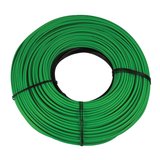
Product · WHCA-120-0043
Snow Melt Cable 120V, 4.17A, 43 ft.
WarmlyYours snow melting cable installs in asphalt, concrete or mortar under pavers. This 120 V twin conductor heating cable is perfect for open areas, as well as odd-shaped are...
-
Product · WHCA-240-0086
Snow Melt Cable 240V, 4.17A, 85.5 ft.
Melt away snow and ice, quickly and easily with WarmlyYours’ 240 V twin conductor heating cable. For use in either residential or commercial applications, this 85.5 ft. cable pr...
-
Video
The Turn Radius Mistake (One Cable Damage = System Failure)
Learn how to avoid costly radiant heating cable damage during installation. Master proper turn radius techniques and use SmartPlan to prevent system failures.

Related Questions
Showing all 3 questions
If a cable is damaged during installation, recheck the system for continuity and confirm the integrity of the insulation with a megohmmeter, or "megger" tester, referring to the installation and testing instructions. If the cable fails any of these tests, take the following actions: clear a 3 foot square working area around the damaged section of cable, and record the cable part number from the UL tag and the location where you purchased the product. Call WarmlyYours with the above information. WarmlyYours will provide further assistance and supply a splice kit suitable for repairing the particular cable.
Get a Free Snow Melting Quote
Our Radiant Experts are ready to help. Start with a free, no-obligation quote for your project.


