
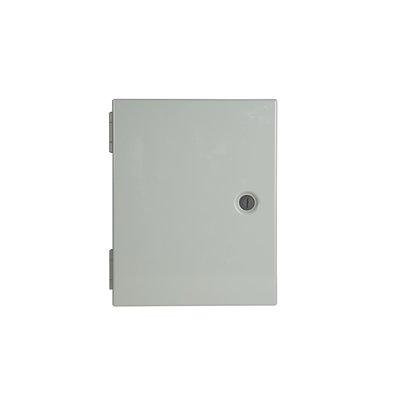
Small Relay Panel, (2x) 2-Pole (RLY-4PL-CC)
Part Number: RLY-4PL-CC
This support page provides publications, manuals, specifications, videos, support articles, and common support questions
This support page provides publications, manuals, specifications, videos, support articles, and common support questions
Jump to
Support Questions
Showing 10 of 14 questions
GFEP is the National Electric Code (NEC) required protection for fixed outdoor deicing and snow-melting equipment, which may be accomplished by using circuit breakers equipped with ground-fault equipment protection (GFEP) of 30 mA. It is important to understand that this required equipment protection is NOT the same as a 5 mA GFCI used for personal protection.
The most common spacing for snow melting systems is 3“ from wire to wire. However, we can design snow melting systems based on your local climate and weather expectations that might have different cable spacings to ensure the most efficient system possible. We also offer snow melting mats with 3" and 4" spacing.
A GFCI/GFEP (Ground Fault Circuit Interrupter / Ground Fault Equipment Protection) works differently than a circuit breaker by specifically detecting a small imbalance in electrical current between the hot and neutral wires, which indicates a potential ground fault (like a person touching a live wire), and instantly shutting off the power to prevent shock, while a circuit breaker only trips when there's a significant overload in current flow on the circuit, like a short circuit or too many appliances plugged in.
The electrician must route the cold lead(s) through rigid metal conduit(s) or other approved means, to get back to an accessible weatherproof junction box(s). Care must be taken by the electrician so that none of the heated section of Cable enters the conduit(s).
Relays can fail due to excessive current or voltage. When a relay is exposed to too much current, the contacts can burn out. High voltage can also damage the coil. Other reasons include mechanical wear and tear, dust or dirt buildup, and moisture. These factors can cause the relay to malfunction or stop working entirely. Regular maintenance and using the relay within its specified limits can help prevent failures.
A 2 pole single-phase 240V circuit works by continuously monitoring the current flowing through both hot wires of the circuit. If it detects even a slight imbalance between the current on each hot wire (indicating a ground fault), it will quickly trip, cutting off power to the circuit. Essentially, it compares each leg of the 240V circuit and trips if they are not precisely equal.
This feature prevents the snow melting system from running, by default, in temperatures below 17°F (–8.33°C), or as set by the user. At temperatures this low, it becomes difficult for the system to effectively melt the snow. It is, however, possible to turn off this feature should the system be required to keep running during these low temperatures.
No, a circuit breaker will NOT protect against a power surge; a circuit breakers primary function is to protect against excessive current flow (overload), while a surge protector is specifically designed to handle voltage spikes, which are what power surges are considered to be.
The best home features for cold climates include a simple gable roof to shed snow, covered entrances for protection, airtight triple-pane windows to prevent heat loss, and radiant heating systems. These features work together to maintain interior warmth, reduce energy bills by up to 25%, and ensure structural safety during harsh winters.
Documents
Wiring Diagrams
- Relay Panels Sizing Guide (English)
- Relay Panels Wiring Diagram (English)
- Relay Panels Wiring Diagram with 208V Snow Melt Products (English)
- Relay Panels Wiring Diagram with 277V Snow Melt Products (English)
- Wiring Diagram for 120V & 240V Floor Heating Products with Relay with Thermostat (English)
Technical Information
Installation
- Retrofit Snow Melting System Application Guide (English)
- Snow Melting Application Cross Sections (English)
Legacy Documents
Project Planners
Specifications
Electrical
| Applicable Voltages | 120 V, 208 V, 240 V, 277 V |
| Connection Method | Hardwired |
| Maximum Current | 30 A |
| Numbers of Poles | 4 |
Product Dimensions
| Depth | 4″ |
| Height | 10½″ |
| Weight | 7.4 lbs |
| Width | 8″ |
Identifiers
| SKU | RLY-4PL-CC |
| UPC (GTIN-12) | 881308065379 |
Videos
Articles
Similar Items
Do you need support or specifications for a specific model? Identify your model below.