
PRO-Tect: Pipe Freeze Protection Economy Control with GFEP



Features
-
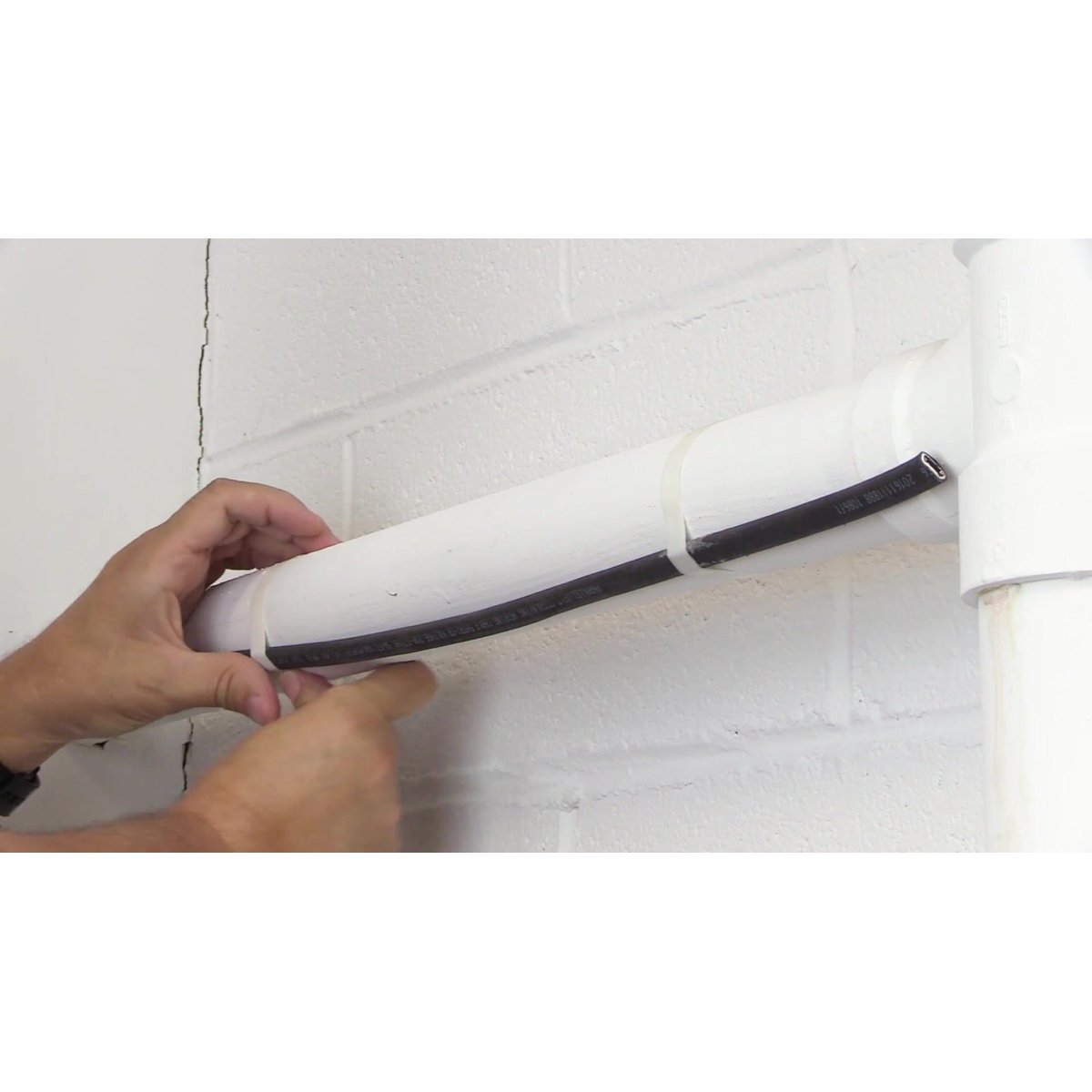
Available max power outputs: 5W per linear ft., 8W per linear ft., and 10W per linear ft
-
Options for 120, 208, 240, and 277 voltages
-
Automatically varies wattage for optimal energy savings
-
Can be overlapped or criss-crossed
-
Safe: cUlus Listed and cCsaus Listed
Description
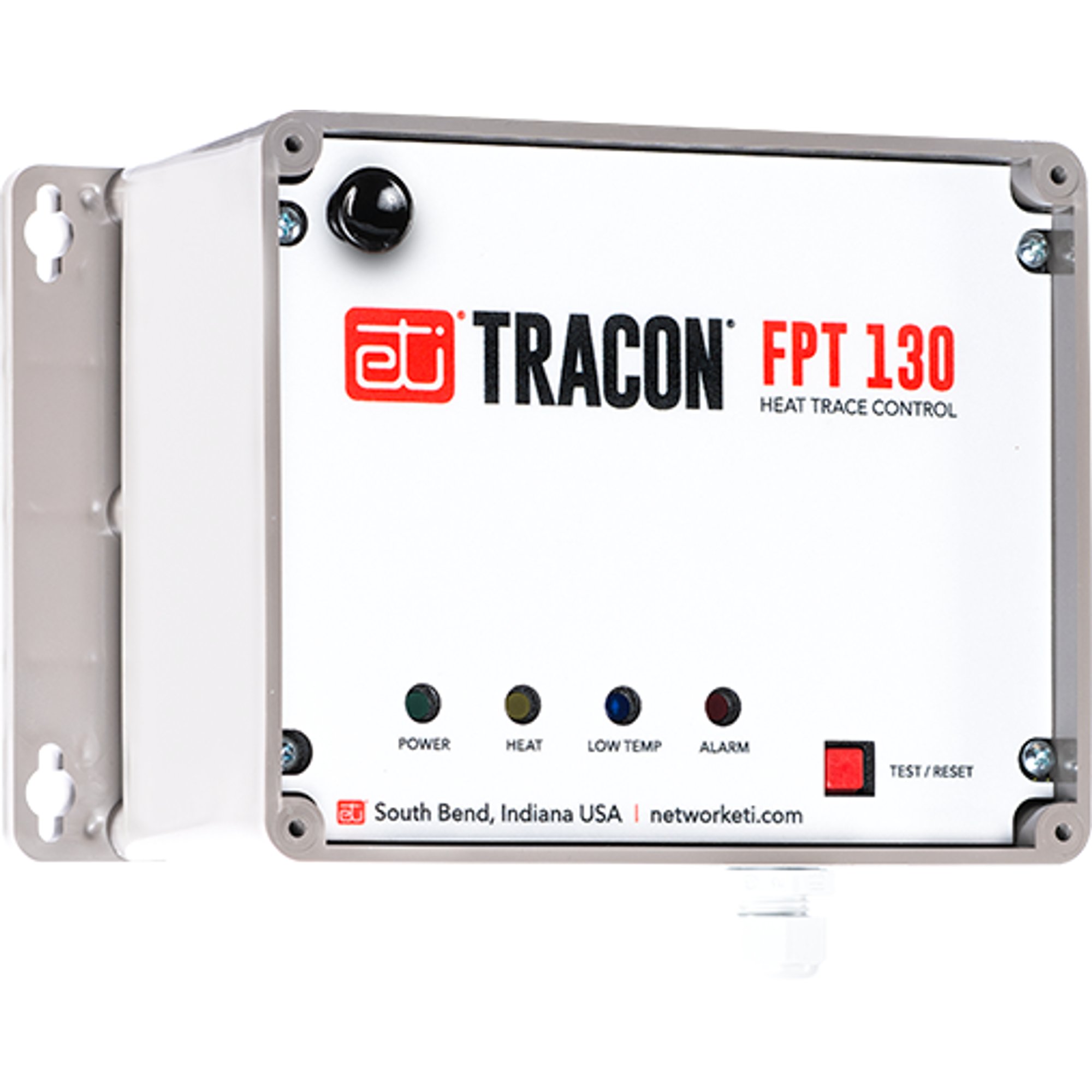
The PT-ECONOMY is a relatively affordable pipe freeze protection control for most commercial applications and residential applications. It comes with four manually adjustable temperature set points: 30, 38, 45, and 50 degrees Fahrenheit. It comes with a built-in relay (capable of handling up to 30 amps), a 20-ft. sensor, and Ground Fault Equipment Protection (GFEP). This control can be installed outdoors (NEMA 4X rated waterproofing). Works with voltages ranging from 100-277 VAC.
Specifications
Electrical
| Activation Temperature | 30 °F, 38 °F, 45 °F, 50 °F |
| Connection Method | Hardwired |
| Ground Fault Equipment Protection (GFEP) | Self-test GFEP 30mA |
| Maximum Load (Resistive Only) | 30 A |
| Voltage | 100 - 277 VAC |
Warranty / Certifications
| Approvals | UL and CSA listed |
| Area of Use | Non-hazardous locations |
| Ingress Protection (IPxx) Rating | IP66 |
| Warranty | 2 years |
| Waterproofing | NEMA 4X |
Product Dimensions
| Depth | 4⅜″ |
| Height | 5½″ |
| Installed Depth | 0.75″ |
| Weight | 3 lbs |
| Width | 8⅛″ |
Identifiers
| SKU | PT-ECONOMY |
| UPC (GTIN-12) | 881308057169 |
Documents
Installation
- Self-Regulating Pipe Freeze Protection PT-DUAL Installation Sheet A (English)
- Self-Regulating Pipe Freeze Protection PT-ECONOMY Installation Sheet (English)
Operation Manuals
- Self-Regulating Pipe Freeze Protection PT-DUAL Manual (English)
- Self-Regulating Pipe Freeze Protection PT-ECONOMY Manual (English)
- Self-Regulating Pipe Freeze Protection PT-SINGLE Manual (English)
Technical Information
Sell Sheets
- Self-Regulating Pipe Freeze Protection Dual-Zone Control PT-DUAL Sell Sheet (English)
- Self-Regulating Pipe Freeze Protection Economy Control PT-ECONOMY Sell Sheet (English)
- Self-Regulating Pipe Freeze Protection Single-Zone Control PT-SINGLE Sell Sheet (English)
Catalogs
Frequently Asked Questions
Showing all 5 questions
No, the FPT 130 provides a summary alarm via a dry contact relay. This relay is energized whenever the unit is powered. So, with power off the NC contact is closed, and the NO contact is open. When the unit is powered these are in the opposite state. A fault will de-energize the alarm relay and close the NC contact. This allows for a default, power loss alarm without power.
- Hold down the red TEST/RESET pushbutton for approximately ten seconds.
- After the first five seconds the unit will go into Manual Mode, energizing the heater cable if it is not all ready energized.
– After the second five seconds the unit will enter the LOW TEMP blue LED edit mode. This is indicated by the blue LED flashing rapidly. Release the button at this point. (The unit will exit Manual Mode.).
Note: The blue LED may flash for a couple of seconds after releasing the red TEST/RESET pushbutton.
- The blue LED will indicate whether the LOW TEMP Alarm is currently disabled or not.
– If the blue LED remains on the LOW TEMP Alarm is currently enabled.
– If the blue LED goes off the LOW TEMP Alarm is currently disabled.
– To keep the setting as it is wait five seconds and the unit will resume normal operation.
– To change this setting press the red TEST/RESET pushbutton within five seconds. The new status of this setting will show for three seconds before the unit resumes normal operation.
Note: The blue LED will flash rapidly before exiting the LOW TEMP blue LED editing mode and resuming normal operation.
- POWER indicator – This green LED lit solid indicates that the FPT 130 (PT Economy) is receiving power.
– Blinking indicates a calibration error.
- HEAT indicator – This yellow LED lit solid indicates when the heater is energized.
– Blinking asymmetric (1/2 sec off × 1–1/2 sec on) : Low Current Alarm, heater relay closed.
– Blinking asymmetric (1/2 sec on × 1–1/2 sec off) : Low Current Alarm, heater relay open.
– Blinking fast : Stuck relay.
- LOW TEMP indicator – This blue LED lit solid indicates when the temperature falls to 32 °F (0 °C) for all set-points except the 30 °F (-1.1 °C) set-point. For the 30 °F (-1.1 °C) set-point the LOW TEMP alarm will indicate when the temperature drops to 28 °F (-2.2 °C).
– Blinking indicates sensor fault.
– Blinking fast indicates High Temperature alarm.
- ALARM indicator – This red LED lit solid indicates when there is a high ground fault current.
– Blinking indicates a GFEP circuit failure (this light will also blink while system is performing a self–test).


