
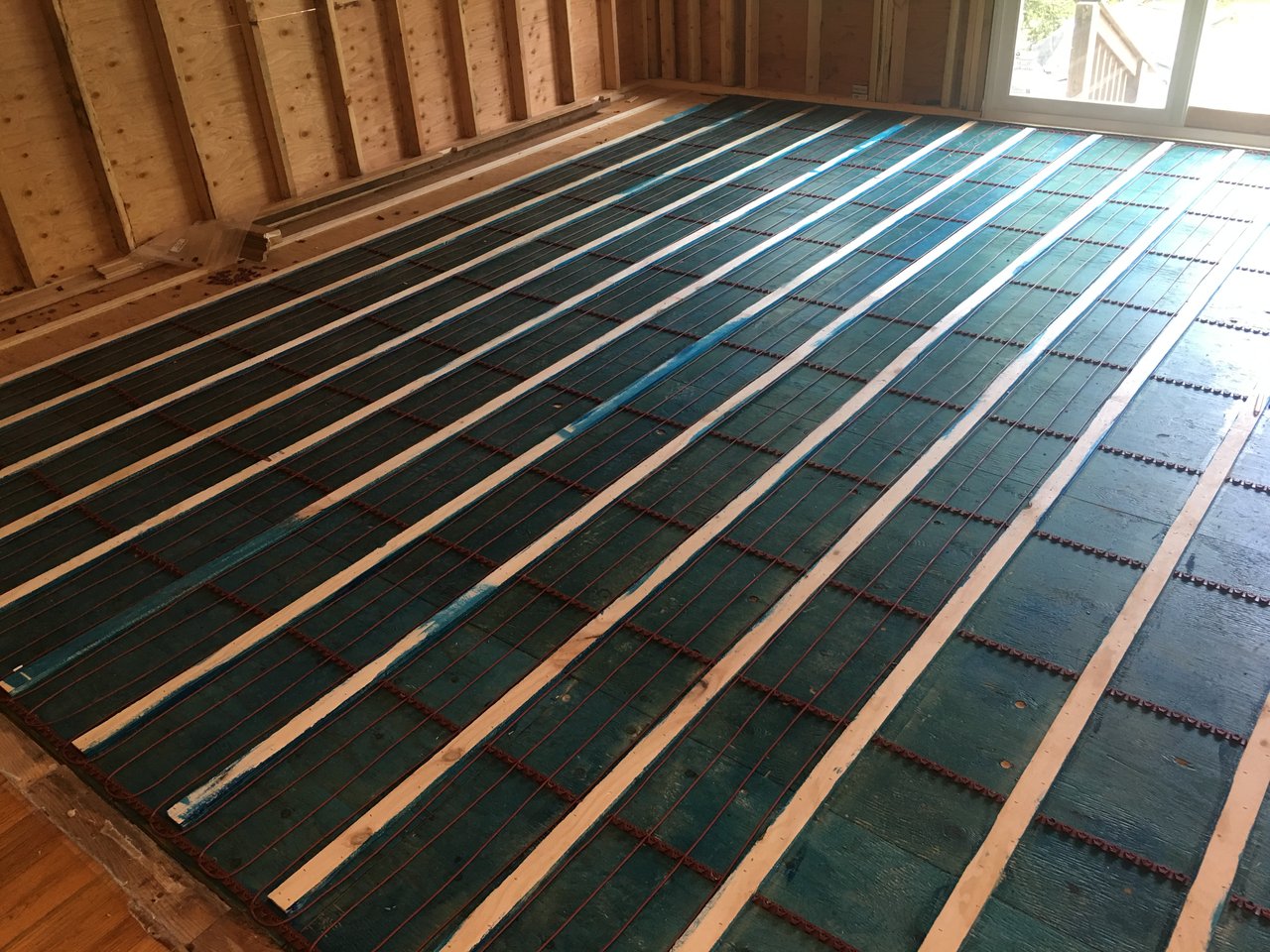
Large living areas with hardwood floors are notoriously difficult to keep warm, often leaving families dealing with persistent drafts and icy floors during harsh New York winters. To transform this wide-open gathering space into a cozy sanctuary, CZ Construction integrated an invisible radiant floor heating solution. By layering advanced warming cables safely beneath the hardwood, they created an energy-efficient environment that elevates daily comfort, indoor air quality, and long-term home value.
Project Details
| Specification | Detail |
| Location | Babylon, New York |
| Space Type | Living Room |
| Surface / Flooring | Hardwood (Nailed) |
| System Type | Electric Floor Heating |
| Total Square Footage | 323 sq. ft. |
| Technical Specs | 240V / 4,476W / 19A |
| Wattage per Sq. Ft. | 15 W/sq. ft. (at 3" spacing) |
| Cable Spacing | 3 inches OC (On Center) |
| Products Used | TempZone™ Floor Heating Cable, nSpire Touch Programmable Thermostat, nJoin™ Power Module |
| Professional Installer | CZ Construction |
Installing Electric Radiant Floor Heating Under Nailed Hardwood
The Problem
Large living rooms with expansive hardwood flooring frequently suffer from uneven heating and uncomfortable drafts. Traditional forced-air systems push hot air directly to the ceiling, leaving the floor level cold while continuously circulating dust and allergens. For this Babylon home, the main family gathering space felt uninviting and chilly for a significant portion of the year, failing to match the aesthetic elegance of the room's renovation.
The Solution
To resolve this, CZ Construction utilized a specialized "sleeper" installation method to securely lay the radiant floor heating system beneath the nailed hardwood planks. Wooden strips (sleepers) were fastened to the subfloor to provide a secure nailing surface for the hardwood. The TempZone™ Floor Heating Cables were then meticulously routed in the channels between these sleepers at a tight 3-inch spacing interval to ensure a uniform thermal mass across the room without interfering with mechanical fasteners.
The Outcome
The result is an incredibly efficient, draft-free living space where heat radiates uniformly from the ground up, warming people and objects directly. The homeowners now enjoy absolute peace of mind, true barefoot comfort, and precise climate control that quietly transforms their large living room into the most welcoming area in the house.
Featured Products
- TempZone™ Floor Heating Cable: Selected to navigate the large, irregular footprint of the living room, this flexible cable layout ensures full, edge-to-edge coverage while safely nesting within the sleeper floor system to eliminate cold spots.
- nSpire Touch Thermostat (UDG4-4999): Installed to give the homeowners effortless control over their indoor climate, featuring an intuitive color touchscreen interface and programmable scheduling to optimize energy efficiency.
- nJoin™ Power Module (USG-4000): Chosen to safely manage the high-amperage demands of this expansive 19-amp radiant system, ensuring consistent power distribution across the entire living room floor from a single thermostat interface.


