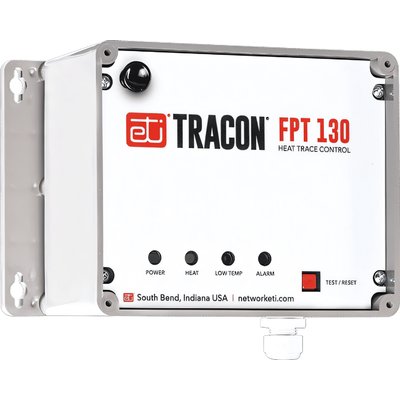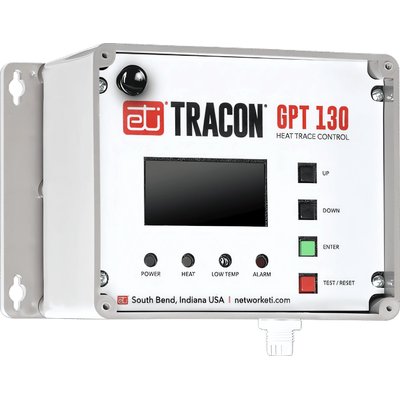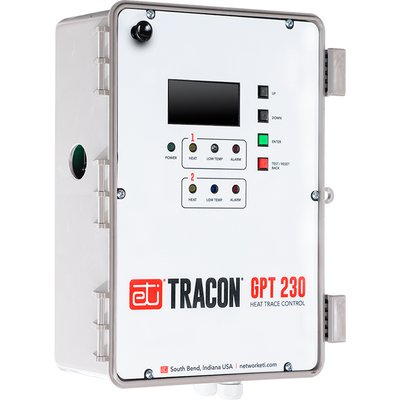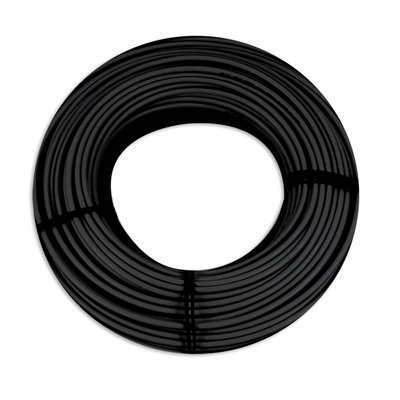
Self-reg cable 208-240-277 VAC 4-5-6 watts per ft, jacketed UL
This product is discontinued.
This support page provides publications, manuals, specifications, videos, and common support questions
Support Questions
Showing all 8 questions
Heat tape is electrical equipment: improper installation, damaged cable, or misuse can cause fire or electric shock. Select cable approved for your pipe and location, follow its layout and insulation requirements, provide the specified electrical protection, and inspect it before each cold season. Do not use damaged equipment or overlap cable unless the exact product instructions permit it.
Yes, it can be used for both application types to prevent pipes from freezing and bursting during cold weather.
Heat trace, heat tape, or heating cable for pipes is typically an electric heating cable that can be attached to the pipe which helps keep non-flowing water pipes in poorly insulated perimeter walls flowing despite harsh winter temperatures.
Pipe heat tape is intended for freeze prevention, not as a guaranteed way to thaw an already frozen pipe. A frozen pipe may be damaged. Have the plumbing assessed and thawed safely by a qualified professional; never use an open flame. Before future cold weather, verify cable selection, thermostat placement, insulation, and electrical protection.
Cable temperature depends on the product, surrounding conditions, installation, and controls. Do not assume a universal surface-temperature range. Follow the exact cable and pipe manufacturers’ limits, particularly for plastic pipe, and use the specified insulation and thermostat placement.
Pipe heat tape electricity use depends on cable length, power output, run time, and controls. For a fixed-output cable, watts = length in feet × W/ft. A 30-foot, 7 W/ft kit draws 210 watts while energized; eight energized hours uses 1.68 kWh. Multiply by your local rate for cost. Thermostat duty cycle and self-regulating output change actual consumption.
WarmlyYours does not recommend using an extension cord for permanent installations. Pipe heat should always be plugged directly into a receptacle or hardwired to the circuit that is powering it.
No. It is not listed for this application, and it is not warrantied for use in direct burial or wet applications.
Documents
Installation
- Constant Wattage Pipe Freeze Protection System Installation Manual (English)
- SR-PLUG-KIT Plug-in Conversion Kit with Ground Fault Equipment Protection (GFEP) Installation Manual (English)
- Self-Regulating Pipe Freeze Protection PT-DUAL Installation Sheet A (English)
Sell Sheets
- PRO-Tect Plug-In Heat Tape for Pipes (Constant Wattage) Sell Sheet USA (English)
- Self-Regulating Pipe Freeze Protection Dual-Zone Control PT-DUAL Sell Sheet (English)
- Self-Regulating Pipe Freeze Protection Single-Zone Control PT-SINGLE Sell Sheet (English)
Operation Manuals
- Self-Regulating Pipe Freeze Protection PT-DUAL Manual (English)
- Self-Regulating Pipe Freeze Protection PT-SINGLE Manual (English)
Project Planners
Specifications
Electrical
| Amps | 0.02 A |
| Voltage | 240 V |
| Watts | 5 W |
Product Dimensions
| Length | 1′ |
| Weight | 0.08 lbs |
| Width | 0.5″ |
Identifiers
| SKU | LT25-JT |
| UPC (GTIN-12) | 881308060480 |
Videos
Related Items
Do you need support or specifications for a specific model? Identify your model below.