
Restoring Community Safety: The Union Mills Project Overview
For individuals with limited mobility, a snow-covered or icy ramp isn't just an inconvenience—it is an impassable barrier and a severe safety hazard. When the Union Mills Conservation Club in Northwest Indiana realized their community center’s accessible entrance ramp became dangerously slick during harsh Midwestern winters, they needed a reliable, long-term solution.
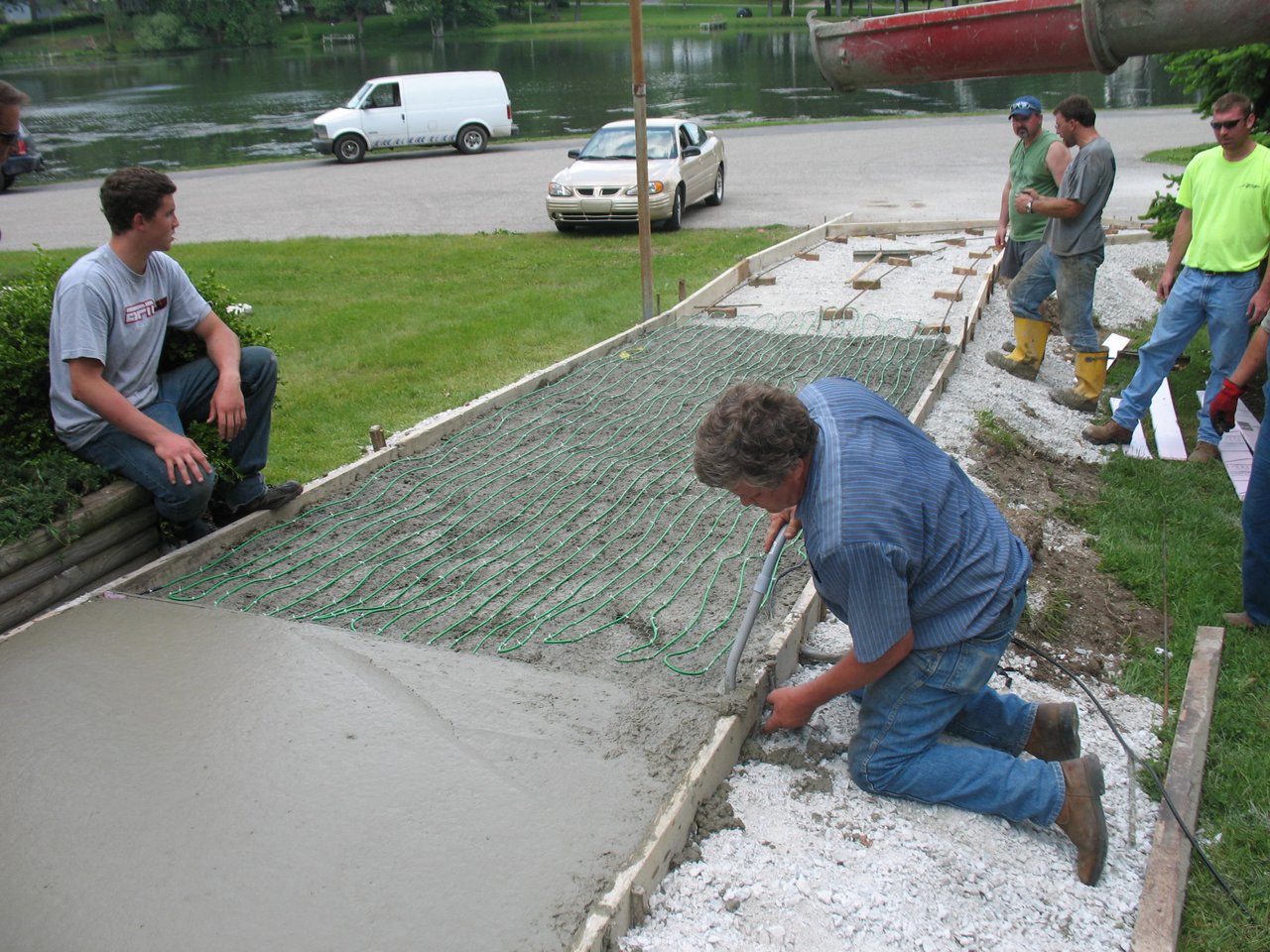
Through the WarmlyYours Community Outreach Program, Union Mills native and WarmlyYours Technical Manager Scott Rosenbaum stepped up to design and oversee the installation of an electric snow melting system. By embedding heavy-duty radiant heating cables directly into the concrete ramp, the club drastically reduced the need for manual snow shoveling and harsh chemical deicers, while significantly mitigating the risk of winter slip-and-fall accidents.
Project Details
| Specification | Detail |
| Location | Union Mills, Indiana |
| Space Type | Accessible Entrance Ramp / Walkway |
| Flooring / Surface | Poured Concrete |
| System Type | Snow Melting System |
| Total Square Footage | 437 sq. ft. |
| Technical Specs | 240V / 20,527W / 86A |
Cable Spacing | 3" OC (On Center) |
| Wattage per Sq. Ft. | Approx. 47W/sq. ft. |
| Products Used | |
| Operating Cost | ~$0.25 to $0.30 per hour (Estimated based on average commercial utility rates) |
| Professional Installer | Scott Rosenbaum (Technical Manager, WarmlyYours) |
The Problem
- Severe Safety Risk: The community center's sloped accessibility ramp became dangerously slick during harsh Indiana winters.
- Inneffective Maintenance: Shoveling an incline is notoriously difficult and physically taxing.
- Property Damage: Traditional rock salt was rapidly degrading and pitting the concrete surface.
The Solution
To permanently secure the 437-square-foot ramp, WarmlyYours Technical Manager Scott Rosenbaum designed an automated system using:
- Heavy-Duty Cables: 240V snow melting cables embedded directly into the concrete pour.
- Smart Automation: An SCE-120 economy controller paired with an embedded slab sensor (SLAB-SS) that triggers the heat when conditions for snow or ice accumulation are present.
Expert Tip: “If loose cable is being used for a concrete pour, skip flimsy chicken wire and use at least steel fencing or wire mesh for reinforcement and cable attachment,” says Scott Rosenbaum, Technical Manager at WarmlyYours. “We had to tie the cables down every 10 to 12 inches to keep them secure and perfectly spaced.”
The Outcome
Today, the Union Mills Conservation Club boasts an entrance that remains clear, dry, and safe through Indiana blizzards. This upgrade provides absolute peace of mind for club members, ensuring that accessibility never takes a backseat to the weather.
Featured Products
- WarmlyYours Snow Melt Heating Cables (WHCA): Engineered specifically for heavy-duty outdoor installations, these durable, twin-conductor cables deliver uniform heat directly through concrete to melt snow at a rate of 1–2 inches per hour.
- SCE-120 Snow and Ice Melt Control: This economy controller acts as the brain of the system, turning the heating cables on only when winter weather strikes to minimize energy consumption.
- SLAB-SS Snow Melting Slab Sensor: Embedded directly into the concrete ramp, this sensor measures both ground temperature and moisture to activate the heating elements when needed.


