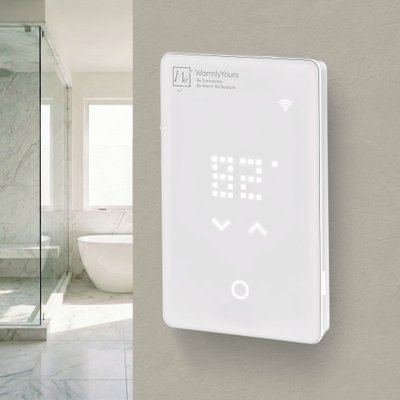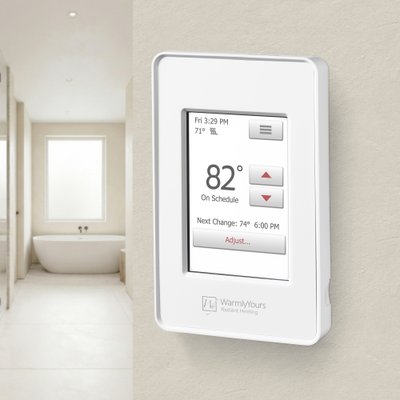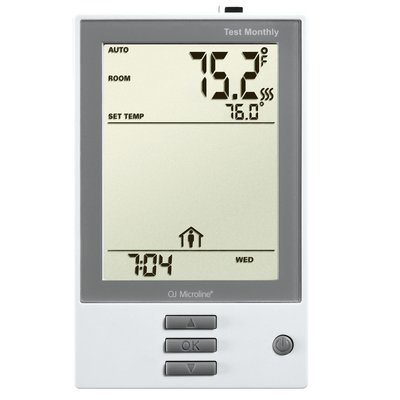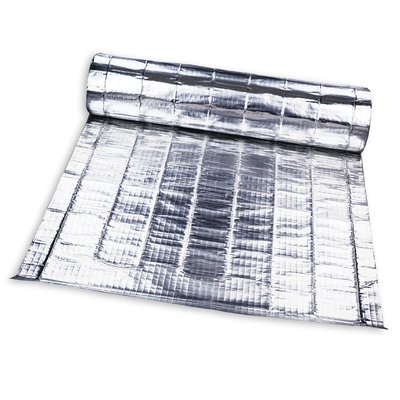
Environ 240V 2ft x 8ft panel - Round Cold Lead (28-10-240)
Part Number: 28-10-240Past Model
This support page provides publications, manuals, specifications, videos, support articles, and common support questions
This support page provides publications, manuals, specifications, videos, support articles, and common support questions
Jump to
Support Questions
Showing 10 of 43 questions
The breaker and wire sizes are selected based on the total amperage of the WarmlyYours heating system connected to a single thermostat. This information is on the WarmlyYours heating system's installation plan, electrical plan, or UL label. Based on guidelines from the National Electrical Code: loads up to 16 Amps may utilize 12 gauge wire with a 20-Amp breaker, and loads up to 12 Amps - 14 gauge wire with a 15-Amp breaker. Local code and/or other factors may change these guidelines.
WarmlyYours has recently begun including floor sensors with our heating elements to help ensure customers will have everything they need for optimal operation of their radiant heating systems.
The sensor included with your floor heating element can be installed with the heating system (the sensor is equally spaced between runs of the heating wire--see your install manual for more info). Installing this sensor with your floor heating control will enable energy efficient operation of the floor warming system based on the floor temperature instead of the ambient room temperature.
We generally recommend that you install a second, unconnected backup floor sensor alongside the primary one. In the very unlikely event that your first floor sensor is damaged, this install method will save you from having to pry up flooring to replace a floor sensor. You simply disconnect the damaged sensor from the thermostat and connect the backup sensor.
In addition to the floor sensor that was included with your heating element, our nSpiration Series thermostats also come with a floor sensor. If you purchase both a heating element and an nSpiration Series thermostat from WarmlyYours, you'll have a primary and a backup floor sensor for your system.
Make sure any cracks or raised edges are sanded down before installation. Seal and patch cracks where possible. If needed, pour a layer of self-leveling cement to make sure surface is level and flat. Then proceed with instructions to install desired floor heating system and flooring.
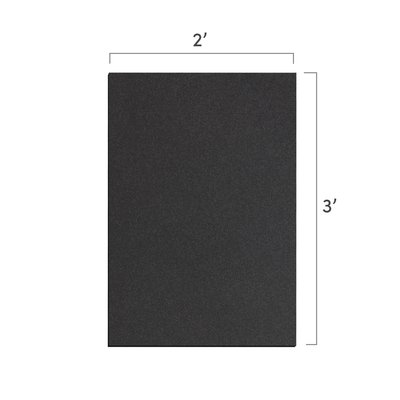
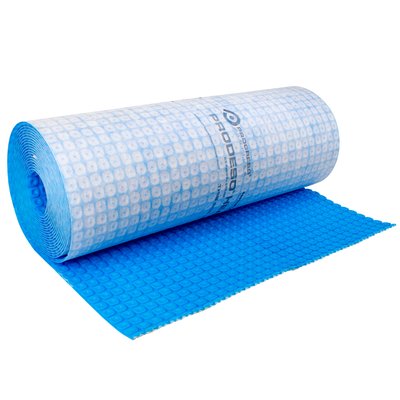
It is strongly recommended that an insulating underlayment be installed between the slab and heating element to prevent heat loss.
Check the flooring r-value before installing. As long as the flooring product has an r-value of 1 or less, it should work well with electric floor heating. Underlayment must be placed on the subfloor and be placed under the heating layer. For ease of installation, we strongly recommend the underlayment be at least 1/4" thick, and the heating element should be placed between the underlayment and the flooring. Do not place any underlayment between the element and the flooring.
Reflective insulation is not effective with conductive heating, which is how embedded floor heating and snow-melting systems transfer heat. To be effective, the reflective insulation surface needs to face an air space (air gap), which allows the reflected heat to be redirected.
An effective solution considers the insulating material's R-Value. This is the rating of a material's insulating properties. The "R" stands for "resistance" and refers to the material's resistance to heat flow, or temperature conduction.
Yes, many homeowners successfully install bathroom floor heating systems themselves. WarmlyYours provides detailed installation manuals, 24/7 technical support, and custom installation plans to guide you through the process. However, a licensed electrician is required to perform the final electrical connections and thermostat wiring to ensure safety and warranty compliance.
No. Most vinyl flooring requires a solid flat surface to maintain its shape and many recommend that their flooring is kept at least ½“ away from the heating element. The best solution for vinyl floor covering is our TempZone™ floor heating cable or mats embedded in self leveling cement. Always check with the flooring product's manufacturer regarding limitations, warranties, and installation requirements.
Yes. The floor never free-runs — the thermostat’s floor sensor governs output, and you set a maximum floor temperature limit in the thermostat itself. Most heated tile bathroom floors are set between 80°F and 85°F. Set that limit during commissioning and record it on the handoff sheet so the homeowner does not raise it past the flooring manufacturer’s rated maximum.
Yes, electric radiant floor heating can maintain a cozy 70°F even when outside temperatures drop well below zero. By heating the objects and people in a room directly, a properly sized and insulated system provides reliable, consistent warmth that outperforms traditional forced-air systems during extreme Midwestern winters.
Yes, but the tear-out is the real risk. Scan the floor with thermal imaging before demo to map the existing hydronic tubing, and never fasten or drill into it. Keep the two systems on fully independent controls so they cannot fight each other, and do not place the electric floor sensor directly above a hydronic loop — the false-high reading will short-cycle the electric system. Call PRO technical support at 800-875-5285 to review the assembly before ordering.
No. Electric floor heating cable is listed for installation under floor coverings only, and NEC 424.38(A) does not permit heating cable to be installed in walls. Running it vertically voids both the UL listing and the warranty. For warm towels and a little extra room heat, specify a heated towel rack, which is designed and listed for wall mounting.
Yes, radiant floor heating can be a primary heat source if its heat output exceeds the room's heat loss. For best results, we recommend using a 15-watt system, covering at least 80% of the floor, and ensuring the space is well-insulated. Use our Heat Loss Calculator to verify your specific needs.
Yes, radiant floor heating is an excellent primary heat source for tiny houses in mild to moderate climates. Because tiny houses have small footprints, the 15-watt output of TempZone™ can easily maintain comfort while saving valuable wall space. Ensure the structure is well-insulated and use our Heat Loss Calculator to confirm.
Yes, bedroom floor heating can be a DIY project. Systems like TempZone Easy Mats or Environ Flex Rolls are designed for straightforward installation under various flooring types. While you can lay the heating elements and flooring yourself, you must hire a certified electrician to connect the system to power and install the thermostat.
Yes, we strongly recommend installing insulation like ThermalSheet™ over concrete slabs. Concrete acts as a "heat sink," absorbing warmth that should go to your floor. Insulation directs the heat upward, significantly improving efficiency, reducing warm-up times, and allowing the system to function effectively as a primary heat source.
Underlayment is recommended for floating floors (laminate, LVP, wood) and installations over cold subfloors like concrete. It provides thermal insulation to prevent heat loss and improves system efficiency. For tile and stone, the system is typically embedded in thinset, so a separate underlayment is often unnecessary.
No separate GFCI breaker is required — every WarmlyYours thermostat has a built-in Class A (5mA) GFCI. Stacking a GFCI breaker on top of it is one of the most common causes of nuisance tripping. Run a dedicated breaker sized to the load at 80% continuous duty: a 15A circuit carries up to 1,440W at 120V, a 20A circuit up to 1,920W. Loads beyond the thermostat’s 15A rating need a power module or relay.
Single Conductor vs. Twin Conductor Identification
- A single conductor floor heating system is a loop of one core wire, it starts at the thermostat and ends at the thermostat - this is the original method of manufacturing heating cable. Most single conductor floor heating systems have the same color cold lead wire connected to both load terminals/pigtails of the thermostat. Some early single conductor floor heating systems were produced with a white and a yellow cold lead wire.
- A twin conductor floor heating system terminates two core wires at the end, both wires start at the thermostat - this is the current method of manufacturing heating cable. Most twin conductor floor heating systems will have two different colored cold lead wires, and one of these is black. The other wire in a WarmlyYours floor heating system is either yellow (120V system) or red (240V system). A few early Environ systems had two black cold lead wires.
Note:
- Not all heating cables are wired directly to the thermostat. It may have been necessary during installation to terminate the heating cable in a junction box, and then run a separate (contractor-supplied) wire from the junction box to the thermostat.
- WarmlyYours single conductor cold leads were produced with a 13‘ length at the start of the loop, and a 26‘ length at the end. The 120V floor heating systems had a yellow and a white label attached to the cold leads, and the 240V floor heating systems had a red and a white label attached.
- If you have a single conductor floor heating system and notice that one cold lead is thicker or feels hotter than the other, please contact technical support at +1 (800) 875-5285
To prepare a basement for radiant heating, ensure the concrete subfloor is level, clean, and free of debris. It is highly recommended to install a thermal break, like WarmlyYours CeraZorb, over the slab to prevent heat loss into the ground. Finally, verify that your electrical panel has sufficient capacity for the system's requirements.
Because radiant systems have a thermal lag, you should increase your thermostat set point 12-24 hours before an extreme cold snap arrives. This proactive adjustment, combined with ensuring your home is well-insulated, helps your system maintain a steady, comfortable temperature without struggling to catch up.
Most Laminates with an attached cork, foam, or rubber backing are not good Environ™ heated flooring candidates. There are exceptions of course, check the manufacturer's warranty information and compatibility of the flooring product with electrically heated floors. If the laminate has a pre-attached pad, verify that the laminate has an R-Value of 1 or less.
Yes, electric radiant floor heating is ideal for basements because it warms the cold concrete slab and provides consistent heat from the ground up. In well-insulated finished basements, it can serve as the primary heat source, turning a typically chilly space into a comfortable, year-round living area.
Radiant floor heating can heat a sunroom if the space has high-quality insulation and double-pane glass. Since sunrooms have high heat loss, a 15-watt system is essential. In extremely cold climates or poorly insulated sunrooms, it is best used as a supplemental source to keep the floor comfortable.
Radiant heating is often more efficient because it eliminates the "blast and fade" cycles and noisy ductwork of forced-air furnaces. By providing steady, low-level heat that doesn't escape to the ceiling, it creates a more consistent "barefoot sanctuary" while potentially reducing your overall energy consumption.
Yes, radiant heating is highly efficient in cold weather. Unlike forced-air systems that lose heat through ductwork and rising air, radiant heat warms objects directly via far-infrared energy. This method is up to 45% more energy-efficient, providing consistent comfort while significantly lowering monthly heating costs in frigid environments.
For the same wattage and operating time, 120V and 240V electric floor heating use the same amount of energy and produce the same heat. A 240V system draws less current for the same wattage, which can accommodate a larger heated area on a suitable circuit. Choose the heating product and control voltage to match the supply, and have an electrician verify circuit capacity, wiring, and applicable code.
The best home features for cold climates include a simple gable roof to shed snow, covered entrances for protection, airtight triple-pane windows to prevent heat loss, and radiant heating systems. These features work together to maintain interior warmth, reduce energy bills by up to 25%, and ensure structural safety during harsh winters.
For maximum barefoot comfort, most systems are designed to reach a floor surface temperature of 80°F to 85°F. This "sweet spot" ensures your room stays warm through efficient radiation while keeping the floor perfectly comfortable to walk on, even during the coldest months of the year.
Installing floor heating under carpet involves placing Environ heating mats over a pad and then covering them with the carpet. The process typically includes:
- Installing a specific radiant-compatible carpet pad.
- Laying out the Environ mats according to your plan.
- Securing the mats with tape.
- Having a professional installer lay the carpet over the mats.
A heat loss calculation is essential to ensure your radiant system produces more BTUs than your room loses to the outside environment. This professional assessment guarantees your system has the necessary power to serve as your primary heat source, providing peace of mind during record-breaking cold.
Bedroom floor heating is popular because it provides consistent, draft-free warmth that enhances comfort in a space where people often walk barefoot. It eliminates cold spots, operates silently, and is highly energy-efficient. Additionally, radiant heat doesn't circulate dust or allergens, contributing to a healthier sleeping environment compared to forced-air systems.
A floor sensor measures floor temperature so a compatible thermostat can regulate comfort and enforce the flooring manufacturer’s temperature limit. Some thermostats, including nTrust 2.0, offer a regulator mode without a sensor, but that mode does not measure floor temperature. Use sensor-based temperature control whenever required by the flooring or heating-system instructions.
Documents
Installation
Technical Support
- Environ™ Ohm Reading Guide (English)
- Cross Section Environ™ Mat under Carpet over Concrete (English)
- Cross Section Environ™ Mat under Carpet over Plywood Subfloor (English)
- Cross Section Environ™ Mat under Floating Laminate or Engineered Wood over Concrete (English)
- Cross Section Environ™ Mat under Floating Laminate or Engineered Wood over Insulated Concrete (English)
- Cross Section Environ™ Mat under Floating Laminate or Engineered Wood over Plywood Subfloor (English)
- Environ™ Ohm Reading Guide (French)
- Environ™ Ohm Reading Guide (Spanish)
Project Planners
- Floor Heating Request for Quotation Form (English)
- Calculating Project Dimensions (English)
- Environ Checklist Materials And Tools Checklist (English)
- Floor Heating Project Planning Guide Form (English)
- Heated Tile Substrate Compatibility & Risk Map (English)
Technical Information
- Environ Master Specifications
- PRO Field Checklist: Electric Floor Heating Diagnostics & Troubleshooting (English)
Warranties
Publications
Specifications
Electrical
| Amps | 0.86 A |
| Floor Load | 0.21 kW |
| Ohms | 279.07 |
| Thermal Power | 0.21 kW |
| Voltage | 240 V |
| Watts | 207.3 W |
| Watts Per Sq. Ft. | 12 Watts Per Sq. Ft. |
Warranty / Certifications
| Approvals | cULus listed |
| Warranty | 10 Year Warranty under Laminate & Floating Hardwood, 5 Year under Carpet (US Only) |
Performance
| BTU Per Hour | 707 Btu |
Product Dimensions
| Cold Lead Length | 30′ |
| Coverage | 16 ft² |
| Heating Element Thickness | 1/16″ |
| Length | 8′ |
| Size | 2′ x 8′ |
| Weight | 3.9 lbs |
| Width | 2′ |
Appearance
| Color | Silver |
Installation
| Floor Types | Commonly installed beneath carpet (US Only) and laminate |
Identifiers
| SKU | 28-10-240 |
| UPC (GTIN-12) | 881308010492 |
Logistics
| UNSPSC Code | 40101830 |
Videos
Articles
Related Items
Do you need support or specifications for a specific model? Identify your model below.