Contact Us After Hours

Loading...

Loading contact options...

Sign In

Loading...

Loading...


No More Chilly Mornings: Transforming Cold Duluth Kitchen Tiles with Electric Floor Heating

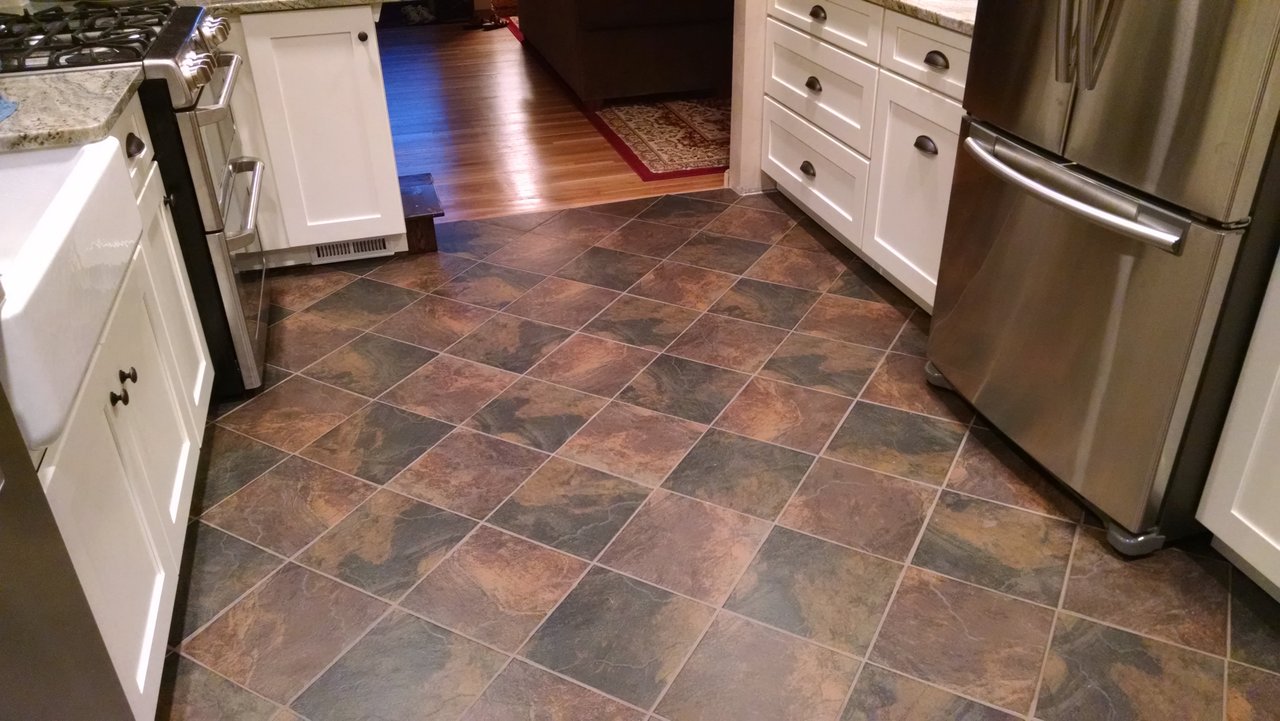
This heated tile floor in Duluth, Minnesota uses a WarmlyYours electric floor heating system to eliminate icy shocks in the heart of the home.

DULUTH, MN
No More Chilly Mornings: Transforming Cold Duluth Kitchen Tiles with Electric Floor Heating
Size: 94 sq.ft. Voltage: 120V Wattage: 1,328 W Amps: 11 A Flooring: Tile, Marble or Stone Cost/hr *: $0.20

For northern homeowners, a winter kitchen renovation often brings a beautiful but freezing reality: gorgeous tile that is simply too cold to stand on comfortably. When Steve Opseth upgraded his Duluth kitchen, he bypassed the shock of freezing morning floors entirely by integrating a hidden layer of radiant warmth. By installing an electric floor heating system directly beneath the new tile, the space was transformed from a cold zone into a cozy, high-efficiency environment.

Project Details

SpecificationDetail
LocationDuluth, Minnesota
Space TypeKitchen
Flooring / Surface TypeTile, Marble, or Stone
System TypeRadiant Floor Heating
Total Square Footage94 sq. ft. (89 sq. ft. heated area)
Technical Specs120V / 1,328W / 11A
Wattage per Sq. Ft.15 Watts per sq. ft.
Cable Spacing3 inches on center (mesh-secured)
Products UsedTempZone™ Flex Rolls, SmartStat™ Programmable Thermostat, Circuit Check™
Operating Cost~$0.20 per hour
Professional Installer NameDIY / Homeowner Installed

Conquering the Cold in a Duluth Kitchen

The Problem

In Duluth, Minnesota, winter temperatures regularly plummet far below freezing, making home comfort a top priority. When homeowner Steve Opseth chose to renovate his 94-square-foot kitchen, he faced a classic northern dilemma. Stone and ceramic tiles are excellent, durable surfaces for high-traffic cooking zones, but they possess high thermal conductivity—meaning they pull heat away from bare feet instantly. Walking into the kitchen for morning coffee shouldn't require wearing heavy boots just to escape the freezing bite of the floor.

The Solution

To permanently fix the problem, an 89-square-foot radiant floor heating layout was specified using WarmlyYours TempZone™ Flex Rolls. Designed with ultra-thin heating cable pre-spaced onto a flexible mesh backing, these rolls allow for rapid layout across a wood subfloor. The system was embedded in a layer of modified thin-set mortar right before the new tile was set. To control the system efficiently, a SmartStat™ programmable thermostat was connected, allowing the homeowner to automatically ramp up the heat right before breakfast and scale it back down during sleeping hours.

The Outcome

The final result is a complete lifestyle upgrade. Instead of relying purely on noisy forced-air vents that blow dry air around the room, this in-floor heating system uses gentle, uniform radiant energy. It warms the tile, the solid objects, and the occupants from the ground up. The kitchen has reclaimed its title as the true heart of the home—offering predictable warmth, absolute safety, and luxurious comfort even during the height of a Minnesota blizzard.

Featured Products

  • TempZone™ Flex Rolls: Our premiere solution for floor warming under tile, stone, and luxury vinyl. The pre-spaced mesh configuration guarantees optimal heat distribution across the surface, speeding up installation times while ensuring zero cold spots.
  • SmartStat™ Programmable Thermostat (TH115-AF-GA-08): A highly precise controller featuring a dedicated floor sensor. It maximizes energy efficiency by adapting heat cycles to your family's daily routine, keeping utility costs low.
  • Circuit Check™ Continuity Alarm: A critical safeguard during installation. This device monitors the internal heating element in real-time, sounding an immediate alarm if the cable is accidentally nicked by a trowel before the final flooring is laid.

* This advanced electric floor heating system operates at approximately $0.20 per hour. Running on a practical 8-hour daily programmable schedule, it costs less than $1.60 a day—far less than the price of a single morning coffee—while delivering an unmatched level of comfort and safety to the busiest room in the house.

Frequently Asked Questions

Showing all 4 questions

Answer: Operating this 89 sq. ft. kitchen system costs approximately $0.20 per hour of continuous runtime based on regional electric rates.Explain: The math relies on a simple formula: $\text{Wattage} \times \text{Hours} \div 1000 \times \text{Local Electric Rate per kWh}$. Because radiant systems heat solid mass rather than air, the thermal retention of the tile means the system cycles on and off rather than drawing power non-stop.Example: For this Duluth project, running the floor on an automated 8-hour daily schedule totals roughly $1.60 per day, keeping monthly operation under $50 during peak winter months.
Answer: Yes, in many modern, well-insulated homes, high-output systems like TempZone™ can act as the primary heat source. Explain: Operating at 15 Watts per square foot, the electric heating elements generate significant BTU output directly into the living space. If the home’s heat loss profile is lower than the heat generated by the floor, standard forced-air systems can be completely supplemented. Example: In this 94 sq. ft. kitchen space, the 1,328-Watt output provides robust localized warmth that reduces dependency on the home's main furnace.
Answer: It is completely safe and represents the industry standard for premium kitchen remodels. Explain: The heavy-duty outer jackets of the heating cables are engineered to withstand the alkaline environments found inside modified thinsets and self-leveling compounds. They meet rigorous National Electrical Code (NEC) standards and include ground-fault protection (GFCI) to prevent hazards near water sources. Example: This Duluth installation safely seals the heating element underneath the stone mortar bed, protecting it permanently from foot traffic and everyday kitchen spills.
Answer: Most tile floors reach their target operating temperature within 30 to 60 minutes from a cold start. Explain: The precise warm-up speed is governed by the thermal conductivity of the floor covering and the insulation beneath the subfloor. Because ceramic and stone conduct heat quickly, they react faster than thick wood materials. Example: Using the SmartStat™ programmable thermostat, the homeowner in this project avoids wait times entirely by scheduling the system to activate 45 minutes before waking up.

Featured Resources

Featured Products

Project Quote

Products used in this project, ready to add to your cart.

Tell Us About Your Project

Our team of Radiant Experts is ready to help.

Typically respond within 1 business day

Disclaimer: Images reflect individual client installations; however, strict compliance with the NEC and specific manufacturer installation manuals is required for all systems. For specific guidance on your layout, please contact our engineering support team.