
Cold Tile Out, Barefoot Comfort In: A Researched DIY Floor Heating Install Under Wood-Look Plank Tile
Michael and his wife wanted to heat the kitchen and dining room floors in their Rogers, Arkansas home. As a careful DIYer, he wanted the right product and the right install process before he started. He installed a 144 sq. ft. WarmlyYours TempZone Flex Roll over CeraZorb insulating underlayment, laid wood-look ceramic plank tile on top, and added a SmartStat programmable thermostat. They now enjoy warm floors throughout the space.
Project Details
| Specification | Detail |
|---|---|
| Location | Rogers, Arkansas |
| Space Type | Kitchen and Dining Room (Indoor) |
| Flooring / Surface Type | Wood-look ceramic plank tile (3.5″ × 24″ and 5.5″ × 24″) |
| System Type | Radiant Floor Heating |
| Total Square Footage | 144 sq. ft. heated |
| Technical Specs | 240V / 2,160W / 9.0A |
| Watt Density | 15 W/sq. ft. |
| Cable / Mat Spacing | Factory-spaced TempZone Flex Roll, laid out to a WarmlyYours custom installation plan |
| Products Used | TempZone Flex Roll 240V 3′ × 48′, CeraZorb synthetic cork underlayment, SmartStat programmable thermostat with floor sensor, Circuit Check, repair/splice kit |
| Operating Cost | ~$0.30 / hour at full output (Arkansas average rate of 14.12¢/kWh) |
| Installer / Contractor | DIY installation (homeowner, with family help) |
The Problem: Plenty of Advice, but Few Real Answers
floor warming mat Michael's first stops were a couple of big box stores and a local electrical supply house. In his words, the sales associates "seemed to know just a little more than I did." His father had a fair concern: wouldn't a lot of the heat from a floor warming mat be lost downward into the subfloor? No company Michael spoke to had an answer, and he wasn't ready to tile over a system he didn't fully understand.
The Solution: A Thermal Break, a Custom Plan and a Confident DIY Install
CeraZorbThings changed when Michael called WarmlyYours and spoke with Jennifer West. She was the first person to suggest a thermal break, which answered his father's concern about heat loss. She offered two options, cork or CeraZorb, and Michael chose CeraZorb. Jennifer also pointed him to the WarmlyYours floor planning team, who laid out a single 240V TempZone Flex Roll across the kitchen and dining area, and to videos of earlier installations. The WarmlyYours warranty sealed the decision.
Michael put the system in with two helpers, his father and a brother-in-law, both of whom have construction experience. He found the heating roll easy to install, and he shared one practical tip from the job:
Homeowner Tip: "When you start, the mat has the wires facing down and when you make a turn the wires will be facing up. Make sure you secure the wires with either tape or hot glue. This will make things a lot easier."
He is also open about two lessons the crew learned. First, they did not make sure every area was level before starting. Second, the narrow wood-look planks were harder to set flat, and some pieces were bowed. His advice to other homeowners: watch the videos, ask every question you have, use the WarmlyYours layout team, and prepare your area well.
The Outcome: Warm Floors They Love, with a Bathroom Next
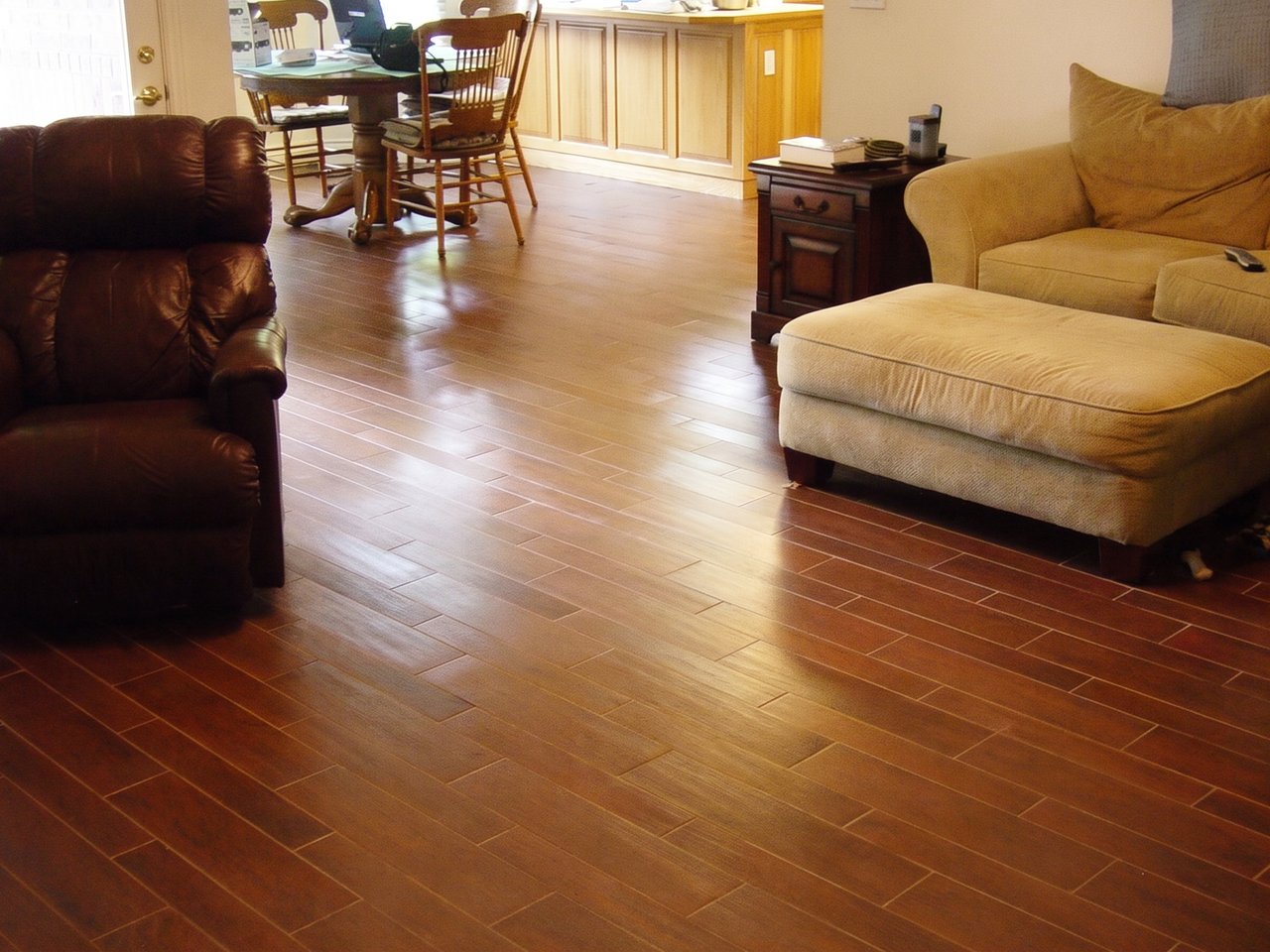
The finished floor runs from the galley kitchen past the island and into the dining area, a single stretch of rich, wood-look tile that is now warm underfoot. "Both Cynthia and I love the warm floors and theSmart Stat thermostat is great," Michael says. They plan to put the same system in their master bathroom next.
What Does It Cost to Run?
Operating at approximately $0.30/hour, this system costs roughly $27/month, less than a daily cup of coffee, while keeping the kitchen and dining room warm underfoot all winter.
That estimate assumes the full 2,160-watt output for three hours a day, at the Arkansas average residential rate of 14.12¢/kWh (ElectricChoice, October 2026). Actual cost is usually lower, because the SmartStat cycles the heat to hold the set temperature on a schedule. For an estimate based on your own rate and schedule, use the WarmlyYours floor heating cost calculator.
Featured Products
- TempZone Flex Roll 240V, 3′ × 48′ (144 sq. ft., 9.0A): A single pre-spaced roll heated the kitchen and dining area on one 240V circuit. It was laid out to a custom plan and turned to follow the room shape, which the homeowner found easy to install.
- CeraZorb synthetic cork underlayment: This is the thermal break under the heating roll. It answered the family's main concern, heat lost downward into the subfloor, before the tile went down.
- SmartStat programmable thermostat with floor sensor: It reads the floor temperature and runs the heat on a schedule. The homeowners call it "great."
- Circuit Check and repair/splice kit: The Circuit Check monitors the heating cable during tiling, and the splice kit is there in case of an accidental nick.


