
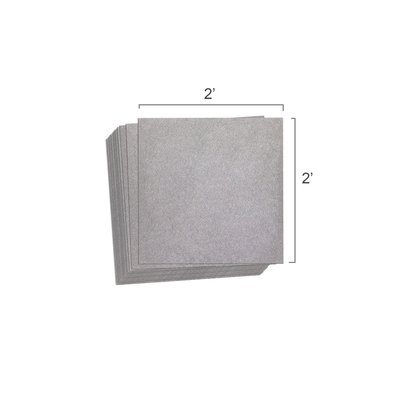
CeraZorb® Insulating Synthetic Cork Underlayment (2′ x 2′) - 48 sq.ft. - Pack of 12 Sheets
This support page provides publications, manuals, specifications, videos, support articles, and common support questions
Support Questions
Showing all 10 questions
When installing electric floor heating over a concrete slab, an insulating underlayment like ThermalSheet is highly recommended to ensure efficient operation, faster heating times and warmer floor temperatures.
When WarmlyYours electric floor heating systems are being installed on a concrete slab, we strongly recommend adding a layer of insulation over the slab prior to installing the system. While our electric floor heating provides up to 25% more heating power per square foot than many of our competitors, the slab will always act as a "heat sink." Some of the heat that would otherwise be transferred to the flooring surface will remain in the slab, causing the floor’s surface temperature to be considerably lower. This is true with any electric radiant floor heating system.
When installed on top of a concrete slab without insulation, it is generally accepted that electric floor heating will take the chill away from the floor and provide a small amount of warmth. Adding insulation on top of the slab and beneath any electric radiant floor heating system will allow a greater percentage of the heat generated to transfer to the flooring surface. This results in greater efficiency and therefore faster warm up times, higher expected surface temperatures and lower energy usage. The floor will have the capacity to warm to a comfortable temperature, and in some cases can be employed as the primary heat source for that room.
The recommended types of insulation are natural cork, insulated tile backer boards and insulated underlayment, such as ThermalSheet™ synthetic cork.
WarmlyYours has recently begun including floor sensors with our heating elements to help ensure customers will have everything they need for optimal operation of their radiant heating systems.
The sensor included with your floor heating element can be installed with the heating system (the sensor is equally spaced between runs of the heating wire--see your install manual for more info). Installing this sensor with your floor heating control will enable energy efficient operation of the floor warming system based on the floor temperature instead of the ambient room temperature.
We generally recommend that you install a second, unconnected backup floor sensor alongside the primary one. In the very unlikely event that your first floor sensor is damaged, this install method will save you from having to pry up flooring to replace a floor sensor. You simply disconnect the damaged sensor from the thermostat and connect the backup sensor.
In addition to the floor sensor that was included with your heating element, our nSpiration Series thermostats also come with a floor sensor. If you purchase both a heating element and an nSpiration Series thermostat from WarmlyYours, you'll have a primary and a backup floor sensor for your system.
Yes, but the tear-out is the real risk. Scan the floor with thermal imaging before demo to map the existing hydronic tubing, and never fasten or drill into it. Keep the two systems on fully independent controls so they cannot fight each other, and do not place the electric floor sensor directly above a hydronic loop — the false-high reading will short-cycle the electric system. Call PRO technical support at 800-875-5285 to review the assembly before ordering.
No. Electric floor heating cable is listed for installation under floor coverings only, and NEC 424.38(A) does not permit heating cable to be installed in walls. Running it vertically voids both the UL listing and the warranty. For warm towels and a little extra room heat, specify a heated towel rack, which is designed and listed for wall mounting.
Yes — insulating underlayment is strongly recommended when installing electric radiant floor heating over a concrete basement slab. Without it, a significant portion of the heat will conduct downward into the cold concrete rather than upward through the floor surface where you want it.
WarmlyYours recommends ThermalSheet® insulating underlayment for basement slab installations. It improves system efficiency, reduces operating costs, and helps the floor reach target temperature faster.
Skipping underlayment on a basement slab is one of the most common — and most costly — installation mistakes.
Yes, we strongly recommend installing insulation like ThermalSheet™ over concrete slabs. Concrete acts as a "heat sink," absorbing warmth that should go to your floor. Insulation directs the heat upward, significantly improving efficiency, reducing warm-up times, and allowing the system to function effectively as a primary heat source.
The best home features for cold climates include a simple gable roof to shed snow, covered entrances for protection, airtight triple-pane windows to prevent heat loss, and radiant heating systems. These features work together to maintain interior warmth, reduce energy bills by up to 25%, and ensure structural safety during harsh winters.
Documents
Technical Specifications
Sell Sheets
Warranties
Technical Information
Specifications
Insulation Specification (CZRG-SH6MM-48X48)
| Acoustic testing on 6" slab, no ceiling | IIC 52 wood construction. FIIC 59 - 7.5″ concrete slab. ΔIIC 20 - 6″ concrete slab |
| Compressive Strength | 34 psi @ 10% Deformation |
| Material | Hemi-crystalline Thermoplastic |
| Thermal Insulation | 1.5 R-Value |
Product Dimensions (CZRG-SH6MM-48X48)
| Coverage | 16 ft² |
| Depth | 0.24″ |
| Length | 24″ |
| Weight | 0.8 lbs |
| Width | 24″ |
Identifiers (CZRG-SH6MM-48X48)
| SKU | CZRG-SH6MM-48X48 |
| UPC (GTIN-12) | 881308069971 |
Warranty / Certifications (CZRG-SH6MM-48X48)
| TCNA Robinson test | Light Commercial |
| Warranty | 5 years |
Videos
Articles
- Choosing wood flooring for electric radiant heating
- Electric radiant heat under LVT, vinyl and resilient flooring
- Extending floor-heater cold leads and sensor wiring
- Finding LVT products compatible with electric floor heating
- Floor heating and implanted pacemakers: checking compatibility
- FLOR carpet tiles over radiant floor heating
- How to reduce winter gaps in wood flooring
- Installing ThermalSheet on a concrete slab
Similar Items
Do you need support or specifications for a specific model? Identify your model below.
