
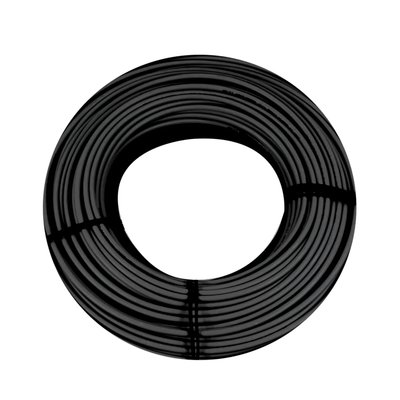
ICE Shield Self-Regulating Heat Tape for Roofs & Gutters — 50 ft, 5 W/ft, 120V
Part Number: ET-SR-120-05-0050
This support page provides publications, manuals, specifications, videos, support articles, and common support questions
This support page provides publications, manuals, specifications, videos, support articles, and common support questions
Jump to
Support Questions
Showing 10 of 20 questions
GFEP is the National Electric Code (NEC) required protection for fixed outdoor deicing and snow-melting equipment, which may be accomplished by using circuit breakers equipped with ground-fault equipment protection (GFEP) of 30 mA. It is important to understand that this required equipment protection is NOT the same as a 5 mA GFCI used for personal protection.
WarmlyYours does not recommend installing de-icing cable to remove existing ice dams or heavy snow accumulation. These systems are designed for prevention—maintaining open drainage pathways for meltwater before freezing occurs. Installing heating cables over pre-existing ice blocks is dangerous, inefficient, and will not clear the roof effectively. For best results, install your de-icing system in early fall before freezing weather begins.
NEVER use an extension cord with roof and gutter de-icing cables.
A 2 pole single-phase 240V circuit works by continuously monitoring the current flowing through both hot wires of the circuit. If it detects even a slight imbalance between the current on each hot wire (indicating a ground fault), it will quickly trip, cutting off power to the circuit. Essentially, it compares each leg of the 240V circuit and trips if they are not precisely equal.
ICE Shield self-regulating roof cable carries a 10-year warranty; plug-in roof heat tape kits carry a 3-year warranty. Service life depends on installation, exposure, and maintenance. Inspect the cable, attachments, and protection devices before each heating season and stop using damaged equipment. Warranty duration is not a guaranteed operating life.
WarmlyYours self-regulating cable is suitable for use on standard asphalt or wood shingles, angled cedar, tile or terra cotta, slate, flat membrane-type (rubber or EPDM) roofing, and metal roofing. For attaching, the same clips are used for both slate and cedar roofing. Always check local codes for approved methods of heating roofs and gutters.
WarmlyYours does not recommend installing de-icing systems on ribbed metal roofs. Ribbed and corrugated panel designs typically lack the flat surface area required to properly adhere standard mounting pads and clips. Without a flush mounting surface, heating cables cannot be safely secured to the roof structure. Always evaluate your roof profile and material compatibility before purchasing your de-icing cable.
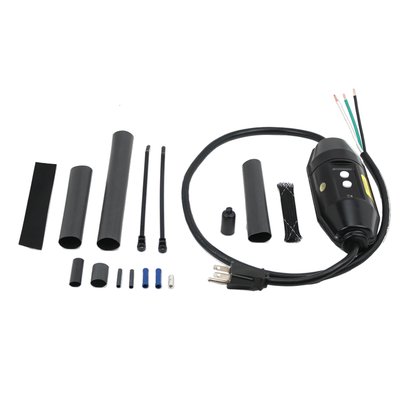
WarmlyYours offers a conversion kit (SR-PLUG-KIT) to enable a plug-in requirement. This kit includes ground fault equipment protection (GFEP). The receptacle must be 120V, grounded, and approved for wet locations if located outside. The self regulating cable must not exceed 140‘ in length.
No. Aluminum 3-prong clips can cause rapid galvanic corrosion if they come in direct contact with copper. WarmlyYours recommends using our Self-Regulating roof & gutter cable fastened with 3-prong Copper clips (ET-CL-CU-P25) and double-sided adhesive pads (ET-VHB-PAD-P25) for this application.
WarmlyYours self-regulating cable can rest in the bottom of the drain. Some people put them on the AIR-STAT to control operation.
Yes, WarmlyYours self-regulating deicing cable may be used in a drain opening or in a trench. It cannot go inside a pipe.
- Overlapping WarmlyYours self-regulating cable is possible because self-regulating cable regulates heat output to prevent overheating and damaging the cable.
- Overlapping WarmlyYours constant wattage cable is not possible because it is on all the time and cannot come in contact with itself or any other constant wattage heating cable, as it will overheat and fail.
- Self-regulating cable requires the use of a control and/or a sensor to operate. WarmlyYours offers a variety of controls ranging from a basic manual control to our premium option that provides the ultimate in convenience and hands-off operation.
- Constant wattage cable does not require a thermostat/controller and can be connected to an outlet throughout an entire winter, during a single snow event, or whenever deicing is needed. An optional plug-in thermostat can be used if desired.
- Self-regulating cable is designed to be cut to length at the jobsite by an installer where it can then be end-capped with accessories (sold separately).
- Constant wattage cable cannot be shortened or altered in any way.
As the names imply, constant wattage cable uses fixed wattage output per linear foot and does not automatically adjust in response to temperature changes. Self-regulating cable is manufactured with a resistance matrix placed between its 2 buss wires that varies the ohms resistance per linear foot to automatically adjust in response to temperature changes. Learn more about this in our blog Self-Regulating vs. Constant Wattage Heating Cables.
Two good reasons for this:
- Constant Wattage cables maintain a consistent heat output regardless of the surrounding temperature. Metal roofs, being highly conductive, can cause rapid temperature fluctuations which can lead to overheating and potential damage to the cable's insulation, potentially causing a fire hazard.
- The UL approved installation method requires self-regulating cable for metal roofs. If not installed per UL guidelines, there is no listing and thus no warranty.
Documents
Installation
- Pro Tect Pipe Freeze Protection Self Regulating Heating Cable Install Manual (English)
- Roof And Gutter Cable Installation Manual (English)
- ET-End-Kit End Seal Kit Installation Manual (English)
- Gutter Ice Sensor Installation (English)
- Roof And Gutter Cable Installation Manual (French)
- Roof And Gutter Cable Installation Manual (Spanish)
- SR-PLUG-KIT Plug-in Conversion Kit with Ground Fault Equipment Protection (GFEP) Installation Manual (English)
- SR-PWR-Kit Power Connection Kit Installation Manual (English)
- Self-Regulating Pipe Freeze Protection PT-DUAL Installation Sheet A (English)
Publications
Sell Sheets
- ICE Shield Self-Regulating Heat Tape for Roofs & Gutters Sell Sheet USA (English)
- PRO-Tect Self-Regulating Heat Tape for Pipes Sell Sheet USA (English)
- Self-Regulating Pipe Freeze Protection Dual-Zone Control PT-DUAL Sell Sheet (English)
- Self-Regulating Pipe Freeze Protection Single-Zone Control PT-SINGLE Sell Sheet (English)
Technical Specifications
- PRO-Tect Pipe Freeze Protection Self Regulating Heating Cable End Seal Termination Kit Spec Sheet (English)
- PRO-Tect Self-Regulating Heat Tape for Pipes In-Line Splice Kit Spec Sheet (English)
- PRO-Tect Self-Regulating Heat Tape for Pipes T-Splice Kit Spec Sheet (English)
Technical Information
- PRO-Tect Pipe Freeze Protection Self Regulating Heating Cable Power Connection Kit Spec Sheet (English)
- Roof & Gutter Deicing Master Specifications (English)
Project Planners
- Roof & Gutter Deicing Quotation Form (English)
- Self-Regulating Pipe Freeze Protection Quote Request Form (English)
- Snow Melting Roof Deicing Infographic (English)
Operation Manuals
Specifications
Electrical (PT-SR-120-05-0050)
| Amps | 2.08 A |
| Benefits | Can be cut-to-length & overlapped |
| Cable Type | Self Regulating |
| Connection Method | Hardwired |
| Power | 5 W/ft. - 120 V |
| Voltage | 120 V |
| Watts | 250 W |
| Watts Per Ft. at 50°F/10°C | 5 W |
Warranty / Certifications (PT-SR-120-05-0050)
| Approvals | cULus & cCSAus Listed |
| Warranty | 10 years |
Construction (PT-SR-120-05-0050)
| Cable Cross Section | 0.42″ x 0.23″ / 10.7mm x 5.84mm |
| Cable Jacket | Waterproof thermoplastic |
Product Dimensions (PT-SR-120-05-0050)
| Length | 50′ |
| Weight | 3.8 lbs |
Installation (PT-SR-120-05-0050)
| Maximum Intermittent Exposure Temperature, 1000 Hours (Power On or Off) | 185°F / 85°C |
| Maximum Maintain or Continuous Exposure Temperature (Power On) | 149°F / 65°C |
| Minimum Bend Radius | 1.125″ / 28.6mm |
| Minimum Installation Temperature | 0°F / -18°C |
Identifiers (PT-SR-120-05-0050)
| SKU | PT-SR-120-05-0050 |
| UPC (GTIN-12) | 881308067830 |
Videos
Articles
- Deicing a ribbed or corrugated metal roof
- Dimensions shown on the legacy copper roof-clip strap drawing
- Extending the OJ ETF outdoor temperature-sensor cable
- Roof and gutter deicing near solar panels
- Roof deicing cable does not remove roof snow loads
- Roof-deicing cable triangle spacing
- Roof-deicing clip adhesion and installation temperature
- Self-regulating heat-trace cable: historical UL certificate E325721
- Why does self-regulating heating cable draw more current at startup?
Related Items
Do you need support or specifications for a specific model? Identify your model below.


Similar Items
Do you need support or specifications for a specific model? Identify your model below.
