

nJoin Power Module (USG-4000)
This support page provides publications, manuals, videos, support articles, and common support questions for the nJoin Power Module product line.
Main Products
Do you need support or specifications for a specific model? Identify your model below.
Support Questions
Showing all 9 questions
A GFCI/GFEP (Ground Fault Circuit Interrupter / Ground Fault Equipment Protection) works differently than a circuit breaker by specifically detecting a small imbalance in electrical current between the hot and neutral wires, which indicates a potential ground fault (like a person touching a live wire), and instantly shutting off the power to prevent shock, while a circuit breaker only trips when there's a significant overload in current flow on the circuit, like a short circuit or too many appliances plugged in.
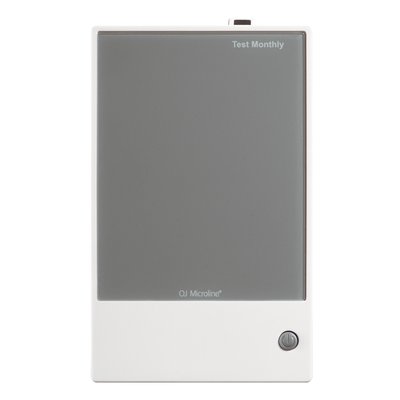
Pressing and holding (2-3 sec) physical power/reset button will turn the unit completely OFF. Same process turns the unit back on.
(nHance and nJoin units will have the button on the front faceplate, nSpire Touch WiFi, nSpire Touch and nTrust will have the button on the right side of the faceplate.)
Relays can fail due to excessive current or voltage. When a relay is exposed to too much current, the contacts can burn out. High voltage can also damage the coil. Other reasons include mechanical wear and tear, dust or dirt buildup, and moisture. These factors can cause the relay to malfunction or stop working entirely. Regular maintenance and using the relay within its specified limits can help prevent failures.
Check the connections between the thermostat and power module. If the power module is connected incorrectly to the thermostat, the power module won't switch off.

Yes, but the tear-out is the real risk. Scan the floor with thermal imaging before demo to map the existing hydronic tubing, and never fasten or drill into it. Keep the two systems on fully independent controls so they cannot fight each other, and do not place the electric floor sensor directly above a hydronic loop — the false-high reading will short-cycle the electric system. Call PRO technical support at 800-875-5285 to review the assembly before ordering.
No. The nJoin power module is not compatible with a Honeywell system.
This indicates a fault, current to ground. The thermostat has cut off the power for your safety. Please contact your local electrician or WarmlyYours Technical Support.
GFCI can fail for various reasons, such as wear and tear, moisture, corrosion, power surges, faulty wiring, or improper installation. Some of these causes can be prevented by regular inspection and maintenance, while others may require professional assistance. It is important to note that GFCI devices (ex. thermostat, breakers, outlets) should be tested regularly as these do wear out over time.
Documents
Installation
Operation Manuals
Technical Information
Wiring Diagrams
- nJoin (USG-4000), nJoin 2.0 (USG5-4000) Power Module Wiring Diagram (English)
- Wiring Diagram for 120V & 240V Floor Heating Products with Relay with Thermostat (English)
Technical Specifications
Videos
Articles
- Companies that allow EFH under LVT
- Different types of wood and Electric Floor Heating
- EMF, Floor Heat and Pacemakers
- ETI Floor Heating Control FWT-3 Thermostat
- FLOR Carpet Squares and EFH
- Heating LVT, Vinyl, and VCT
- How far apart can the OJ Power Module be from the thermostat?
- How many nJoin power modules can one thermostat control?
- How to Extend Leads For Floor Heating Products
- How To Prevent Wood Floor Gaps
- Only Some Floor-Heating Zones Heat After Replacing a Thermostat with nJoin Power Modules
