

Slab Heating Mat 120V, 3′ x 25′, 75 sq.ft., 12.5A
This support page provides publications, manuals, specifications, videos, support articles, and common support questions
Notices
Quebec Repairability Notice
Avis important pour les consommateurs du Québec:
WarmlyYours n’offre pas de services de réparation pour ce produit. Les seules pièces de rechange disponibles sont les kits de raccordement (splice kits) ; l’élément chauffant lui-même n’est pas offert comme pièce de rechange. Si votre système de chauffage par le sol intérieur tombe en panne pendant la période de garantie, nous remplacerons l’unité complète conformément à notre politique de garantie. Notre équipe d’assistance technique est disponible 24h/24 et 7j/7 par téléphone pour toute aide à l’installation ou au dépannage. Pour plus de détails, consultez notre politique de retour. Cet avis est fourni conformément à la Loi sur la protection du consommateur du Québec, article 39 (telle qu’amendée en 2025).
Important Notice for Québec Consumers:
WarmlyYours does not provide repair services for this product. The only replacement parts available are splice kits; the heating element itself is not available as a replacement part. If your indoor floor heating system fails within the warranty period, we will replace the entire unit according to our warranty policy. Our technical support team is available 24/7 by phone for installation and troubleshooting assistance. For full details, see our Return Policy. This notice is provided in accordance with Québec’s Consumer Protection Act, section 39 (as amended in 2025).
Support Questions
Showing 10 of 29 questions
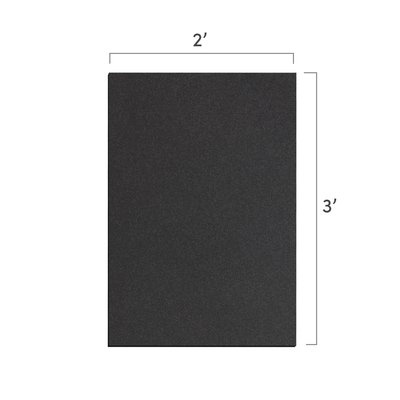
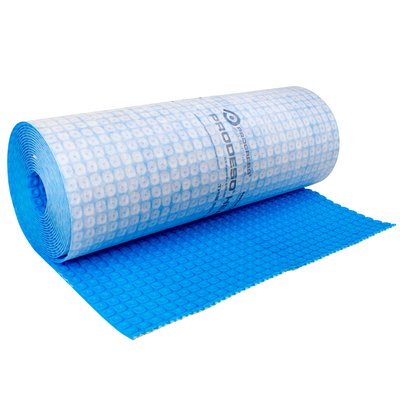
When installing electric floor heating over a concrete slab, an insulating underlayment like ThermalSheet is highly recommended to ensure efficient operation, faster heating times and warmer floor temperatures.
The amount of amperage draw depends upon how large the area is that you are heating. For coverage of areas less than 30 square feet, a 120V Slab Heat system will draw less than 6 amps. If you have a larger area over 180 square feet of heated space, then you will need a larger breaker plus additional controls. No matter what the size of the area you choose to heat, we recommend a dedicated circuit for your electric radiant floor heating system.
The breaker and wire sizes are selected based on the total amperage of the WarmlyYours heating system connected to a single thermostat. This information is on the WarmlyYours heating system's installation plan, electrical plan, or UL label. Based on guidelines from the National Electrical Code: loads up to 16 Amps may utilize 12 gauge wire with a 20-Amp breaker, and loads up to 12 Amps - 14 gauge wire with a 15-Amp breaker. Local code and/or other factors may change these guidelines.
One thermostat can control multiple heating mats/cables as long as all the heating elements are using less than 15 amps:
TempZone™ will cover aprx. 120 sq. ft. for 120V systems and 240 sq. ft. for 240V systems on one thermostat.
Environ™ will cover aprx. 150 sq. ft. for 120V systems and 300 sq. ft. for 240V systems on one thermostat.
Slab Heat will cover aprx. 90 sq. ft. for 120V systems and 180 sq. ft. for 240V systems on one thermostat.
WarmlyYours has recently begun including floor sensors with our heating elements to help ensure customers will have everything they need for optimal operation of their radiant heating systems.
The sensor included with your floor heating element can be installed with the heating system (the sensor is equally spaced between runs of the heating wire--see your install manual for more info). Installing this sensor with your floor heating control will enable energy efficient operation of the floor warming system based on the floor temperature instead of the ambient room temperature.
We generally recommend that you install a second, unconnected backup floor sensor alongside the primary one. In the very unlikely event that your first floor sensor is damaged, this install method will save you from having to pry up flooring to replace a floor sensor. You simply disconnect the damaged sensor from the thermostat and connect the backup sensor.
In addition to the floor sensor that was included with your heating element, our nSpiration Series thermostats also come with a floor sensor. If you purchase both a heating element and an nSpiration Series thermostat from WarmlyYours, you'll have a primary and a backup floor sensor for your system.
The requirements are determined as follows: plan on 20 watts per square foot (at 3" spacing) without a floor covering; or 15 watts per square foot (at 5" spacing, cable only) with a floor covering. To calculate approximate power requirements, multiply the square feet by either 20 or 15 (per the above), and then divide by the voltage (120V or 240V) to arrive at Amps.
You can control your slab heating system with any WarmlyYours nSpiration Series thermostat. Depending on the size of your project, you may also need to add a relay or nJoin power module.
Never cut, shorten or splice the heating cable itself; cutting it damages the system. Only the non-heating cold lead can be shortened, as your product’s manual allows. Order the size your SmartPlan™ specifies, because unused cable can’t be cut off.
Some mats let you cut the mesh, never the cable, to turn or reposition them: TempZone™ and Environ™ Flex Rolls and Slab Heat mats. TempZone™ Easy Mats and Custom Mats are made to size and must not be shortened or cut. TempZone™ Cable has no mesh: lay all of it at the spacing on your SmartPlan™.
Turn the power (circuit breaker typically) to the thermostat off for 5 minutes and then back on to reset the thermostat.
If there is power to the thermostat and it still doesn't appear to work, then the next step toward a solution is to take Ohm measurements of the floor heating system.
This is done with a digital multi-meter that can select a low 200 Ohm (Ω) scale. To conduct this test, turn off the circuit breaker. Remove the thermostat completely from the wall and disconnect the wires connected to the LOAD connections at the back of the thermostat. Disconnect the ground wires from the house ground, and do the test shown on the links below. If you are uncomfortable doing this test, contact a qualified electrician.
Please follow one of these guides based on the type of heating system installed:
For a quick overview of the testing process:
Here is a video showing how the test is done
Here is a video showing how to locate and identify the floor heating wires
If the system still does not function, contact +1 (800) 875-5285 WarmlyYours Technical Support and provide the Ohm measurements for further assistance.
Single Conductor vs. Twin Conductor Identification
- A single conductor floor heating system is a loop of one core wire, it starts at the thermostat and ends at the thermostat - this is the original method of manufacturing heating cable. Most single conductor floor heating systems have the same color cold lead wire connected to both load terminals/pigtails of the thermostat. Some early single conductor floor heating systems were produced with a white and a yellow cold lead wire.
- A twin conductor floor heating system terminates two core wires at the end, both wires start at the thermostat - this is the current method of manufacturing heating cable. Most twin conductor floor heating systems will have two different colored cold lead wires, and one of these is black. The other wire in a WarmlyYours floor heating system is either yellow (120V system) or red (240V system). A few early Environ systems had two black cold lead wires.
Note:
- Not all heating cables are wired directly to the thermostat. It may have been necessary during installation to terminate the heating cable in a junction box, and then run a separate (contractor-supplied) wire from the junction box to the thermostat.
- WarmlyYours single conductor cold leads were produced with a 13‘ length at the start of the loop, and a 26‘ length at the end. The 120V floor heating systems had a yellow and a white label attached to the cold leads, and the 240V floor heating systems had a red and a white label attached.
- If you have a single conductor floor heating system and notice that one cold lead is thicker or feels hotter than the other, please contact technical support at +1 (800) 875-5285
For the same wattage and operating time, 120V and 240V electric floor heating use the same amount of energy and produce the same heat. A 240V system draws less current for the same wattage, which can accommodate a larger heated area on a suitable circuit. Choose the heating product and control voltage to match the supply, and have an electrician verify circuit capacity, wiring, and applicable code.
The layers for the full installation are as follows:
- Bottom: 8-12” of compressed crushed rock aggregate (may already exist)
- 2” polystyrene insulation
- 2-3” layer of concrete
- Rebar and/or reinforcing mesh and attach the cable or mat
- Top: Pour a 2-3” layer of concrete as the final flooring surface
Call tech support at +1 (800) 875-5285 to customize this to your unique application.
Temperature affects core resistance - lower temperatures decrease resistance and higher temperatures increase resistance. Another consideration is the test equipment, sometimes switching test units, adjusting the calibration, or allowing for the verified differential may be necessary.
A floor sensor measures floor temperature so a compatible thermostat can regulate comfort and enforce the flooring manufacturer’s temperature limit. Some thermostats, including nTrust 2.0, offer a regulator mode without a sensor, but that mode does not measure floor temperature. Use sensor-based temperature control whenever required by the flooring or heating-system instructions.
Documents
Technical Support
- Floor Fault Location Thermal Camera Troubleshooting Kit Instruction (English)
- Floor Fault Location Thermal Camera Troubleshooting Kit Instruction (Spanish)
- Floor Fault Location Thermal Camera Troubleshooting Kit Instruction (French)
- Snow Melt and Slab Heat Endcap Repair Instructions (English)
- Snow Melt and Slab Heat Endcap Repair Instructions (French)
- Snow Melt and Slab Heat Repair Kit Instructions (English)
- Snow Melt and Slab Heat Repair Kit Instructions (French)
Installation
- Slab Heating Installation Manual (English)
- Installing Floor Heating Under Concrete Slabs Step by Step (English)
- Snow Melting & Slab Heating Application Cross Sections (Spanish)
- Snow Melting & Slab Heating Application Cross Sections (French)
Project Planners
- Floor Heating Request for Quotation Form (English)
- Calculating Project Dimensions (English)
- Floor Heating Project Planning Guide Form (English)
Publications
- Design Floor Plan Grid Wayfair (English)
- Floor Heating Products by Flooring Type and Subfloor (English)
Technical Information
- PRO Field Checklist: Electric Floor Heating Diagnostics & Troubleshooting (English)
- Slab Heating Master Specifications
Wiring Diagrams
- Slab Heat Wiring Diagram for TH115, TH114 and a Relay (English)
- Slab Heat Wiring Diagram for TH115, TH114, Power Module (English)
Sell Sheets
Warranties
Specifications
Electrical
| Amps | 12.5 A |
| Floor Load | 1.5 kW |
| Ohms | 9.6 Ω |
| Thermal Power | 1.5 kW |
| Voltage | 120 V |
| Watts | 1500 W |
| Watts Per Sq. Ft. | 20 Watts Per Sq. Ft. |
Warranty / Certifications
| Approvals | cCSAus Listed |
| Warranty | 10 Year Warranty |
Performance
| BTU Per Hour | 5118 Btu |
Product Dimensions
| Cold Lead Length | 20′ |
| Coverage | 75 ft² |
| Heating Element Thickness | ¼″ |
| Length | 25′ |
| Size | 3′ x 25′ |
| Weight | 14.7 lbs |
| Width | 3′ |
Installation
| Floor Types | Installs in concrete |
Identifiers
| SKU | WSHM-120-03025 |
| UPC (GTIN-12) | 881308020811 |
Logistics
| UNSPSC Code | 40101830 |
Cabling Specs
| Wire | Energy efficient twin-conductor |
Videos
Articles
- Choosing wood flooring for electric radiant heating
- Electric radiant heat under LVT, vinyl and resilient flooring
- Extending floor-heater cold leads and sensor wiring
- Finding LVT products compatible with electric floor heating
- Floor heating and implanted pacemakers: checking compatibility
- FLOR carpet tiles over radiant floor heating
- How to reduce winter gaps in wood flooring
- Selecting watt density for indoor slab heating
Related Items
Do you need support or specifications for a specific model? Identify your model below.
Similar Items
Do you need support or specifications for a specific model? Identify your model below.


