
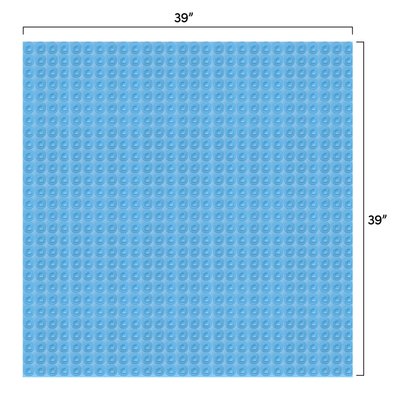
Prodeso Membrane Sheet 10.8 Sq. Ft. (3′ 3.4″ x 3′ 3.4″)
Part Number: TC-MEM-BL-SH39X39
This support page provides publications, manuals, specifications, videos, and common support questions
This support page provides publications, manuals, specifications, videos, and common support questions
Jump to
Support Questions
Showing 10 of 21 questions
Yes, Luxury Vinyl Tile (LVT) is typically installed over the embedded heating element using self-leveling cement (SLC). Many people choose to use SLC when installing tile over floor heating.
We do not suggest using thinset to encase the heating wires with LVT, as it is very difficult to get thinset completely flat.
Waterproofing is recommended under and around tubs/showers. It’s also recommended wherever the tile could possibly be exposed to considerable amounts of water. Prodeso is naturally waterproof, but the corners and seams need to be treated with waterproofing tape and thin-set. (Use Pro WP Waterproofing Band 5“ - Soft polyethylene tape – to seal seams.)
There are heating systems designed for floating floors, such as our Environ system. However, the flooring must be rigid enough so it does not mold itself to the heating cables over time.
Check the flooring manufacturer's floor heating recommendations. In most cases, the heating system will need to be embedded beneath the flooring. Check for all "flatness" requirements for the flooring you choose. The flattest floors utilize self-leveling cement when installed correctly.
A decoupling membrane protects the installation from differential expansion/contraction between the substrate and the flooring, relieving almost all shear stresses. Crack isolation protects the installation by isolating the flooring from minor in-plane substrate cracking.
Yes. The floor never free-runs — the thermostat’s floor sensor governs output, and you set a maximum floor temperature limit in the thermostat itself. Most heated tile bathroom floors are set between 80°F and 85°F. Set that limit during commissioning and record it on the handoff sheet so the homeowner does not raise it past the flooring manufacturer’s rated maximum.
Yes, but the tear-out is the real risk. Scan the floor with thermal imaging before demo to map the existing hydronic tubing, and never fasten or drill into it. Keep the two systems on fully independent controls so they cannot fight each other, and do not place the electric floor sensor directly above a hydronic loop — the false-high reading will short-cycle the electric system. Call PRO technical support at 800-875-5285 to review the assembly before ordering.
No. Electric floor heating cable is listed for installation under floor coverings only, and NEC 424.38(A) does not permit heating cable to be installed in walls. Running it vertically voids both the UL listing and the warranty. For warm towels and a little extra room heat, specify a heated towel rack, which is designed and listed for wall mounting.
No separate GFCI breaker is required — every WarmlyYours thermostat has a built-in Class A (5mA) GFCI. Stacking a GFCI breaker on top of it is one of the most common causes of nuisance tripping. Run a dedicated breaker sized to the load at 80% continuous duty: a 15A circuit carries up to 1,440W at 120V, a 20A circuit up to 1,920W. Loads beyond the thermostat’s 15A rating need a power module or relay.
An uncoupling membrane like Prodeso provides a flexible layer between your subfloor and tile, preventing cracks caused by natural floor movement. It also offers waterproofing and vapor management, making it ideal for bathrooms. Plus, the membrane’s studs make cable installation fast and consistent without the need for staples or glue.
The best home features for cold climates include a simple gable roof to shed snow, covered entrances for protection, airtight triple-pane windows to prevent heat loss, and radiant heating systems. These features work together to maintain interior warmth, reduce energy bills by up to 25%, and ensure structural safety during harsh winters.
Documents
Installation
- Installation Tips - Prodeso Cable Installation Membrane (English)
- Installation Tips - Prodeso Cable Installation Membrane (Spanish)
- Prodeso Membrane Installation Manual (English)
- Prodeso Shower Floor Cross Section (English)
- TempZone Cable Cross Section with Prodeso Cable Installation Membrane (English)
- TempZone Cable Cross Section with Prodeso Cable Installation Membrane (Spanish)
Technical Information
Sell Sheets
Specifications
Product Dimensions
| Coverage | 10.78 ft² |
| Length | 3′ 3.4″ |
| Stud Spacing | 1¼″ |
| Thickness | 7/32″ |
| Weight | 1.5 lbs |
| Width | 3′ 3.4″ |
Installation
| Minimum Tile Size | 2″ x 2″ |
| Recommended Cable Spacing | 3¾″, 5″ |
Identifiers
| SKU | TC-MEM-BL-SH39X39 |
| UPC (GTIN-12) | 881308063641 |
Appearance
| Type | Membrane |
Warranty / Certifications
| Warranty | 10 years |
Videos
Similar Items
Do you need support or specifications for a specific model? Identify your model below.
