
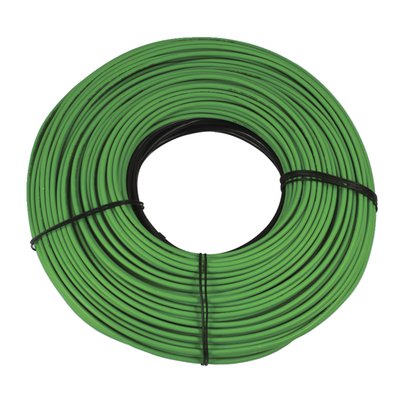
Snow Melt Cable 120V, 12.5A, 125.5 ft. (WHCA-120-0126)
Part Number: WHCA-120-0126
This support page provides publications, manuals, specifications, videos, support articles, and common support questions
This support page provides publications, manuals, specifications, videos, support articles, and common support questions
Jump to
Support Questions
Showing 10 of 46 questions
When installing outdoor WarmlyYours snow melting cables for your driveway, patio, walkway, terrace, stairs, ramp, etc. - NEVER cross, overlap, or allow the heating cables to touch each other. Doing so will quickly cause a circuit failure due to excessive heat build up. Always follow the installation instructions and/or design layout plan to ensure the cable is installed with the correct spacing required for proper operation.
Our systems can handle low temperatures, but many controls come equipped with a Low-Temperature Lockout Feature. This feature prevents the system from running in very low temperatures. At very low temperatures it can become difficult for the system to effectively melt the snow. It is however possible to turn off this feature should you need the system to keep running during such low temperatures.
To ensure optimal performance, snow melting heating elements should be installed so that they are consistently 2"-3" from the finished surface. For installations using pavers, the maximum thickness for pavers installed over heating elements is 2.5".
GFEP is the National Electric Code (NEC) required protection for fixed outdoor deicing and snow-melting equipment, which may be accomplished by using circuit breakers equipped with ground-fault equipment protection (GFEP) of 30 mA. It is important to understand that this required equipment protection is NOT the same as a 5 mA GFCI used for personal protection.
The electrician may shorten the cold lead wires during the installation. Any cold lead wire extensions/splices must be made in a junction box in accordance with the installation instructions, and must comply with all national and local electrical codes.
Never cut the heating cable.
All of our automatic controllers have a Hold-on time feature after the initial warming up of the snow melt system. This feature ensures that all the snow is melted from the surface, and also that the system continues to operate and evaporate the surface water without it refreezing.
Pavers can be removed and reinstalled for a retrofit application of our snow melt system. Tire tracks are not typically recommended for paver surfaces, so any retrofit application would most likely need to be full coverage. In this case, it should be treated like a brand new installation, just with existing pavers.
Yes, you can retrofit a snow melting system into a preexisting driveway made of concrete or asphalt. You can do this by using an appropriate tool to cut properly spaced lines (or trenches for tire tracks heating) in the surface. Then you can place the the heating elements in the lines (or trenches) before sealing them with either hot asphaltic sealer for asphalt retrofits, or backer rod and expansion joint sealer (SikaFlex or similar) for concrete retrofits. Of course, you'll want to make sure this step is done in accordance with the filler manufacturer’s recommended procedures. Check out our snow melting retrofit guide for more information about this process.
If a cable is damaged during installation, recheck the system for continuity and confirm the integrity of the insulation with a megohmmeter, or "megger" tester, referring to the installation and testing instructions. If the cable fails any of these tests, take the following actions: clear a 3 foot square working area around the damaged section of cable, and record the cable part number from the UL tag and the location where you purchased the product. Call WarmlyYours with the above information. WarmlyYours will provide further assistance and supply a splice kit suitable for repairing the particular cable.
The most common spacing for snow melting systems is 3“ from wire to wire. However, we can design snow melting systems based on your local climate and weather expectations that might have different cable spacings to ensure the most efficient system possible. We also offer snow melting mats with 3" and 4" spacing.
Yes, as long as the paver isn't resting on exposed cable. The cable has to be embedded according to the installation cross section drawing.
Cover to an uncompacted depth of 1.5” (38mm), leveled to grade. A compactor that's applicable to the thickness and application can be used to compact the sand. The paver installer(s) must take care not to walk on the hot-cold factory splice and to avoid damaging the Heating Cables with shovels or rakes. At no time shall the compactor directly contact the wire.
Yes, WarmlyYours Snow Melting Heating System can be installed with quartzite stones. Start with 4” to 8” (102mm to 203mm) of crushed rock aggregate base. Rebar or wire mesh should be staked on top of this base and then heating cables or mats will be tied to this mesh with plastic zip ties. Heating system needs to be covered with 1” to 1.5” (51mm to 76mm) of finished mortar or sand. Stone Pavers will be installed on top but must NOT be any thicker than 2.5” (63.5mm). See cross-section in the documents section and in the manual.
Always confirm the power requirements with the electrician. Large snow melting systems usually require a new electrical panel or electrical service. Contact WarmlyYours for a quotation, indicating the actual power capacity available, and to obtain recommendations for reducing the power consumption. For example, opting for tire track coverage rather than installing the snow melting system over the entire driveway can dramatically reduce power requirements.
The electrician must route the cold lead(s) through rigid metal conduit(s) or other approved means, to get back to an accessible weatherproof junction box(s). Care must be taken by the electrician so that none of the heated section of Cable enters the conduit(s).
A properly designed and installed system will handle most snow melting demands. Some snow events may have a very rapid snow fall rate, and some may not. No 2 events are ever exactly the same. Our system typically can melt 1" - 3“ of snow per hour, on average. However, it is important to understand that a system may not melt snow at very cold temperatures. This is simply because the system cannot generate enough BTUs to overcome the heat loss generated by very low temperatures.
In order to estimate cost of operation, the WarmlyYours Electric Snow Melting Operating Cost Calculator is a useful tool that can help illustrate what it would cost to operate the system.
Once you've decided what type of heating system (manual vs. automatic), you'll need to choose a control, which may or may not utilize a sensor. You may need a relay panel(s) depending on the size of the system, and a snow melt plaque which is required by the National Electric Code. Junction box(es) may be optional depending on the distance of heating cable from the indoor power location.
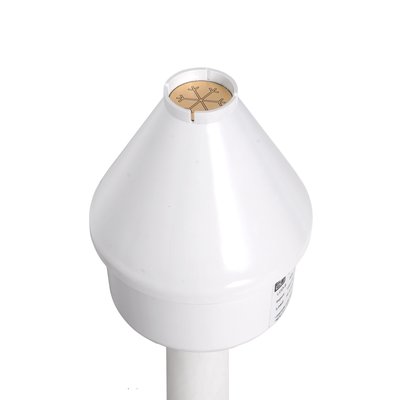
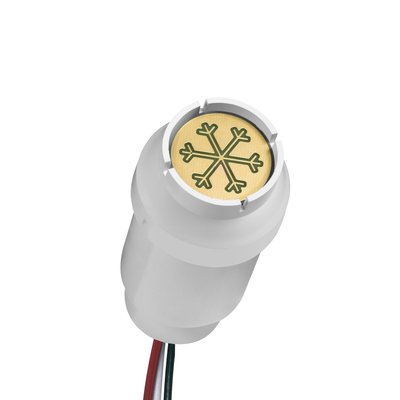
It depends on how the system is intended to operate. If the expectation is manual operation (ex. WiFi or Timer Control), then no sensors are required. If the expectation is automatic operation, then the system will require at least one snow sensor.
The US National Electrical Code does not permit radiant heating cables embedded in or below a deck within 20 feet of the inside wall of a permanently installed pool, spa or hot tub (NEC 680.27(C)(3); 680.42 and 680.43 apply it to spas and hot tubs). The NEC applies as adopted and amended by your jurisdiction, so check with your local Authority Having Jurisdiction.
No, chicken wire is too flimsy. A rigid framework without sharp edges, such as rebar or wire mesh, needs to be used to ensure that the embedded heating system is the proper distance from the finished surface. We recommend that the heating system is secured to the rigid framework with plastic zip-ties.
No, a sensor is not required with the snow melt system. However, certain automatic controllers require a temperature/moisture sensor to sense atmospheric conditions and may also require an in-slab, high temperature limit sensor to be installed (notably, asphalt installations).
When heating stairs, we recommend minimizing or eliminating overhangs/lips on stair surfaces. It is very difficult for the heat to reach these protrusions, as heat only transfers, at most, 2" to 3” laterally from the cable. This is why we recommend placing a run of the heating cable right at the front edge of the stair, which will help keep this area clear of snow or frost as much as possible. The riser of the stair is not heated--only one run of cable goes down the riser to reach from an upper stair to a lower stair.
Yes. The NEC requires 2“ minimum of non-combustible material below, and 1.5“ minimum of non-combustible material above the heating cable.
The drawback is whether or not the pervious concrete will fail under load, thereby damaging the heating cable and voiding warranty. The cable should be attached to rebar in this case to insure the strongest support.
One option is saw cutting the grooves into the existing concrete for cable placement and filling the remaining grooves with a sealant. This depends on the preferred finished surface, an alternative option may be to install the cable or mat over an existing surface, overlay in mortar and then have brick, stone or tile installed on top. When working over an existing concrete surface, ensure that the heating cable never crosses the existing expansion joints.
A 2 pole single-phase 240V circuit works by continuously monitoring the current flowing through both hot wires of the circuit. If it detects even a slight imbalance between the current on each hot wire (indicating a ground fault), it will quickly trip, cutting off power to the circuit. Essentially, it compares each leg of the 240V circuit and trips if they are not precisely equal.
The best time to install an asphalt driveway is generally from spring to fall. The contractor has more time to work with asphalt at warmer temperatures of 50°F / 10°C and above. The warmer the better. The contractor has less time to work with asphalt at colder temperatures and lesser depths. For example, at 40°F / 4°C, a contractor has only 25 minutes to work with a 2" thick asphalt installation.
Snow melting mats feature heating cables pre-spaced on a mesh backing for fast, consistent installation in large, straight areas like driveways. Loose cables offer maximum flexibility for custom shapes, stairs, or tight curves. Both provide the same heating output, but mats reduce labor time while cables handle complex layouts.
Operating cost depends on the heated area, installed wattage, your electricity rate and how many hours the system is energized. For example, 100 sq ft at 50 W/sq ft draws 5 kW (100 × 50 ÷ 1,000). At an illustrative $0.20/kWh, that is $1.00 per energized hour, or $6.00 for six energized hours. This is an example, not a typical bill. What changes your total:
- Heated area and coverage (full area or tire tracks)
- Installed watts per square foot
- Your local electricity rate
- Runtime, including preheating, snowfall and the controller’s drying cycle
Enter your own numbers in our snow melting cost calculator.
Documents
Technical Support
- Floor Fault Location Thermal Camera Troubleshooting Kit Instruction (English)
- Snow Melting Mega Ohm Reading Instructions (English)
- Floor Fault Location Thermal Camera Troubleshooting Kit Instruction (Spanish)
- Floor Fault Location Thermal Camera Troubleshooting Kit Instruction (French)
- Instrucciones de lectura del Mega Ohm de fusión de la nieve (Spanish)
- Snow Melt and Slab Heat Endcap Repair Instructions (English)
- Snow Melt and Slab Heat Repair Kit Instructions (English)
- Snow Melt and Slab Heat Repair Kit Instructions (French)
- Snow Melting Mega OHM Reading Instructions (English)
- Snow Melting OHM Reading Guide (English)
- Snow Melting OHM Reading Guide (Spanish)
- guide de lecture ohm de la fonte des neiges (French)
Installation
- Snow Melting Installation Manual (English)
- Manual de Instalación para Sistemas de Derretimiento de Nieve (Spanish)
- Retrofit Snow Melting System Application Guide (English)
- Snow Melting & Slab Heating Application Cross Sections (Spanish)
- Snow Melting Application Cross Sections (English)
- Snow Melting Installation Manual (French)
Sell Sheets
- 208V/277V Commercial Snow Melt Cables Sell Sheet (English)
- Snow Melting Cable Sell Sheet - USA (English)
Project Planners
- Asphalt Snow Melt Planning Worksheet (English)
- Snow Melting Project Planning Guide Form (English)
- Snow Melting Request Quotation Form (English)
- WarmlyYours Snow Melting Field Pocket Guide - Quick Field Troubleshooting Checklist (English)
Warranties
Technical Specifications
Technical Information
Specifications
Electrical
| Amps | 12.5 A |
| Ohms | 9.6 Ω |
| Voltage | 120 V |
| Watts | 1500 W |
| Watts Per Linear Ft. | 11.95 W |
| Watts Per Sq. Ft. at 3 Inch Spacing | Up to 50 |
| Watts Per Sq. Ft. at 4 Inch Spacing | Up to 38.5 |
| Watts Per Sq. Ft. at 5 Inch Spacing | Up to 31.5 |
Warranty / Certifications
| Approvals | cCSAus Listed |
| Warranty | 10 years |
Performance
| BTU Per Hour | 5118 Btu |
Product Dimensions
| Cold Lead Length | 20′ |
| Coverage at 3 Inch Spacing | 31.4 ft² |
| Coverage at 4 Inch Spacing | 41.8 ft² |
| Coverage at 5 Inch Spacing | 52.3 ft² |
| Depth | 125′ 6″ |
| Heating Element Thickness | ¼″ |
| Height | ¼″ |
| Length | 125′ 6″ |
| Weight | 7 lbs |
| Width | ¼″ |
Appearance
| Color | Green |
Identifiers
| SKU | WHCA-120-0126 |
| UPC (GTIN-12) | 881308011291 |
Installation
| Surface Types | Asphalt, concrete or in mortar under pavers |
Logistics
| UNSPSC Code | 40101842 |
Videos
Articles
Related Items
Do you need support or specifications for a specific model? Identify your model below.



Similar Items
Do you need support or specifications for a specific model? Identify your model below.


