

Infrared Heating Panels & Electric Wall Heaters
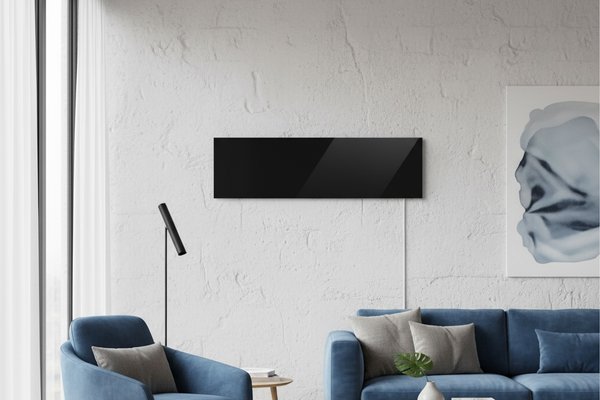
Infrared heating panels—also called infrared panel heaters or radiant panels—add clean, supplemental heat to any room. These wall-mounted electric heaters radiate warmth directly to people and objects, so you feel it instantly: elegant, silent, and far more efficient than a traditional space heater.
Why Choose an Infrared Heating Panel?
Unlike forced-air heaters, infrared heating panels warm you directly—like the sun on a cold day—for comfort that's immediate, clean, and efficient.
Immediate Warmth On Demand
Infrared energy warms you and the objects around you the instant the panel switches on—no waiting for air to heat up.
Clean, Allergen-Free Heat
No forced air means no circulating dust, pollen, or allergens. Ideal for anyone with respiratory sensitivities.
Energy Efficient Zone Heating
Heat only the rooms you use. Electric panels convert energy to warmth with no duct losses—among the most efficient options for supplemental heat.
Easy to Install
Mount horizontally or vertically on any wall—no ductwork, no gas lines, no contractor required.
5 Year Warranty
Every Ember infrared heating panel is backed by a 5-year manufacturer warranty, guaranteed free from defects.
cTUVus Certified
Independently tested and certified for safety—no open flame, no fumes, safer than gas or propane wall heaters.
24/7 Installation Support
Our US-based experts are available around the clock to help you every step of the way.
Whisper-Quiet Operation
No fans, no motors, no moving parts—Ember panels run in complete silence, perfect for bedrooms, offices, and anywhere noise matters.
Infrared Heating Panel Customer Reviews
We take pride in providing both exceptional service and great products. But don't just take our word for it, check out what some of our customers have had to say.


Featured Infrared Heating Panel Projects
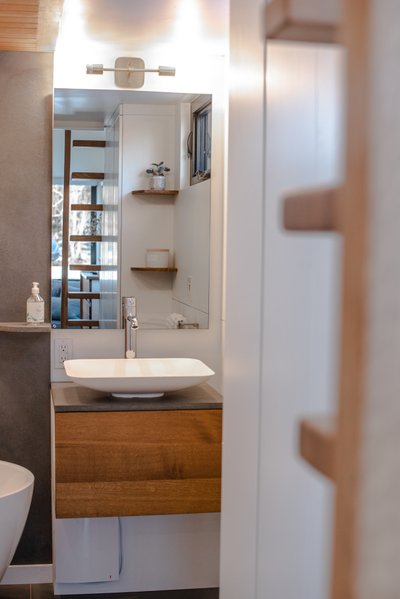
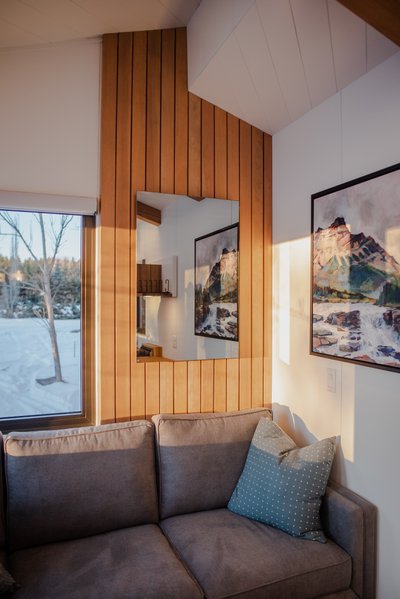
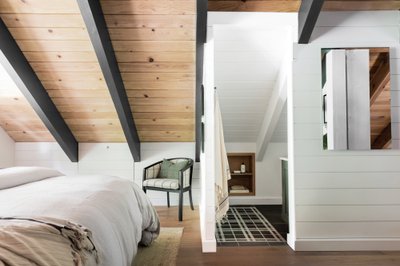
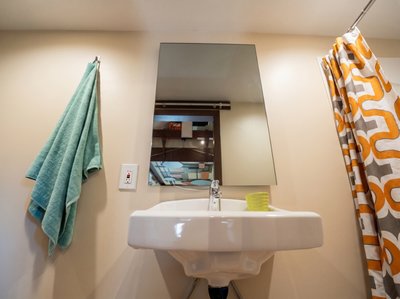
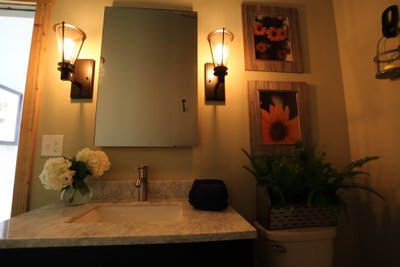

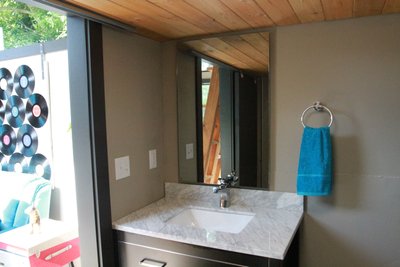
How Infrared Heating Panels Work
Have you ever felt warm standing outside in the cold winter sun? Infrared rays heat you directly instead of heating the air around you. Wall-mounted electric heaters work the same way — they warm the walls, ceiling, and objects in a room, which then release that warmth slowly and evenly.
Compared to gas or propane wall heaters, electric infrared heating panels offer clear advantages:
- Safer — no open flame, no fumes, no combustion risk
- More consistent heat output with no cold spots
- Lower energy bills by heating only the rooms you use
- Allergen-friendly — no forced air circulating dust or pollen
Which Panel Size Do You Need?
Match the wattage to your room size. Use the table below to find the right panel for your space.
| Wattage* | Best For | Coverage | BTU/hr |
| 300W | Small Bathroom / Powder Room | 43 sq. ft. | 1,024 |
| 500W | Bedroom / Home Office | 71 sq. ft. | 1,706 |
| 600W | Living Room / Large Bedroom | 86 sq. ft. | 2,047 |
| 700W | Open Kitchen / Studio | 100 sq. ft. | 2,388 |
| 800W | Large Room / Open Space | 114 sq. ft. | 2,730 |
*Based on a typical room with 8 ft. ceilings and average insulation. Actual coverage varies with ceiling height, windows, and insulation.
Shop Infrared Panel Heaters (300W–800W)
Showing 9 products
Ember Flex
Our most versatile panel. White flat finish with integrated frame, available in 300W, 500W, and 700W. Dual connection — start plug-in and convert to hardwired whenever you're ready. Mount on a wall, ceiling, or optional stand.

Small Bathroom / Powder Room · Up to 43 sq. ft. · 1,024 BTU
Plug-in & Hardwire
Wall · Ceiling · Stand
Horizontal & Vertical
Slim 35″ × 12″ white flat panel. Plug in or hardwire. Wall, ceiling, or floor standing with optional stand.
Features
- Attractive Design: This beautiful white panel, with an integrated frame, is 35″ by 12″
- Flexibility: Can be installed on your wall, attached to your ceiling, or used with a stand accessory
- High Heat Output: This panel delivers an heat output of 1,023 BTUs per hour
- Dual Connection: Can be used "as is" for a plug-in connection or the cord can be modified by a licensed electrician for a hardwired connection
- Compatible Accessories: stand attachments (IP-EM-ACC-STND)
$449
View Details

Bedroom / Home Office · Up to 71 sq. ft. · 1,706 BTU
Plug-in & Hardwire
Wall · Ceiling · Stand
Horizontal & Vertical
Towel Bar Ready
35″ × 24″ white flat panel. Plug in or hardwire. Wall, ceiling, or floor stand. Optional towel bar accessory.
Features
- Attractive Design: This beautiful white panel, with an integrated frame, is 35″ by 24″
- Flexibility: Can be installed on your wall, attached to your ceiling, or used with a stand accessory
- High Heat Output: This panel delivers an impressive heat output of 1,705 BTUs per hour
- Dual Connection: Can be used "as is" for a plug-in connection or the cord can be modified by a licensed electrician for a hardwired connection
- Compatible Accessories: towel bar (IP-EM-ACC-BAR) and stand attachments (IP-EM-ACC-STND)
$599
View Details
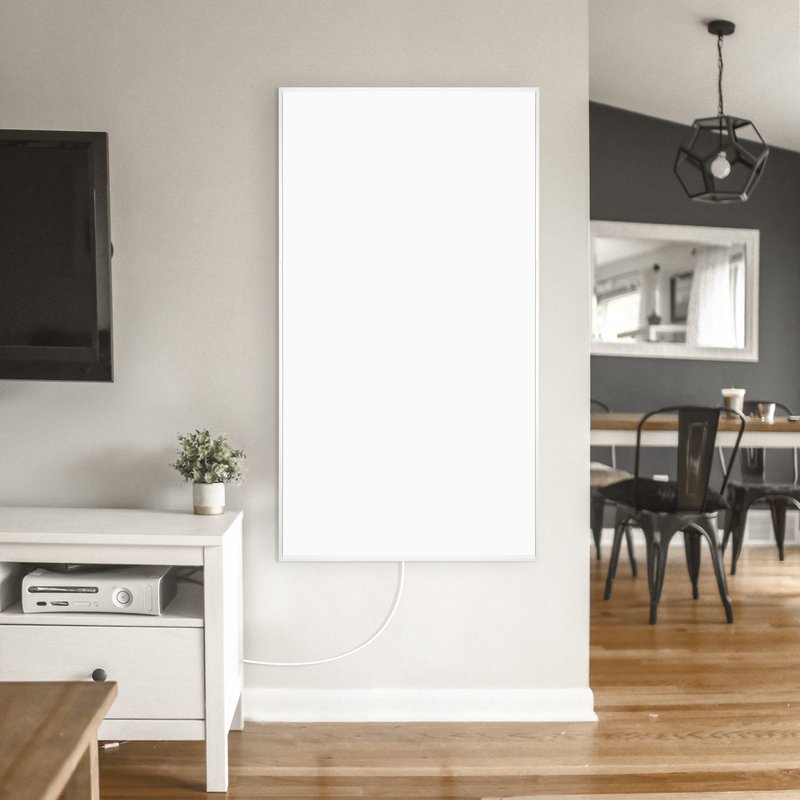
Open Kitchen / Studio · Up to 100 sq. ft. · 2,388 BTU
Plug-in & Hardwire
Wall · Ceiling · Stand
Horizontal & Vertical
Towel Bar Ready
47″ × 24″ white flat panel — our most powerful Flex. Plug in or hardwire. Wall, ceiling, stand, or towel bar.
Features
- Attractive Design: This beautiful white panel, with an integrated frame, is 47″ by 24″
- Flexibility: Can be installed on your wall, attached to your ceiling, or used with a stand accessory
- High Heat Output: This panel delivers an impressive heat output of 2,387 BTUs per hour
- Dual Connection: Can be used "as is" for a plug-in connection or the cord can be modified by a licensed electrician for a hardwired connection
- Compatible Accessories: towel bar (IP-EM-ACC-BAR) and stand attachments (IP-EM-ACC-STND)
$749
View Details
Ember Glass
Premium tempered glass surface in black or white. Available in 600W and 800W. Sleek frameless design that doubles as a modern wall accent. Hardwired installation.
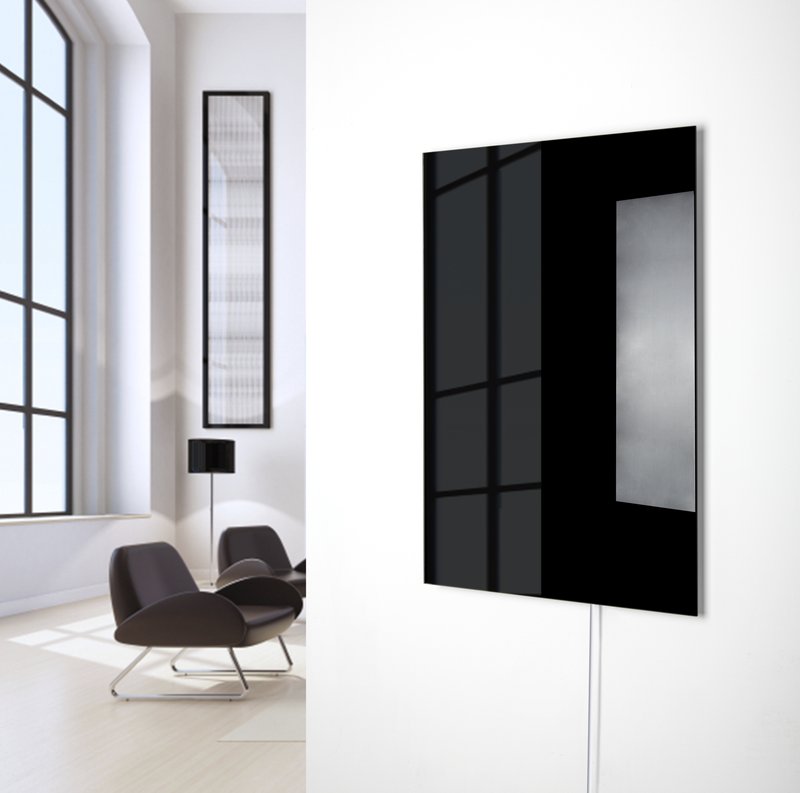
Living Room / Large Bedroom · Up to 86 sq. ft. · 2,047 BTU
Plug-in & Hardwire
Horizontal & Vertical
Towel Bar Ready
Frameless black tempered glass (35″ × 24″). Sleek modern wall accent. Wall mounted, hardwired.
Features
- Wall mounted: this 35″ x 24″ infrared heating panel can be installed vertically or horizontally on your wall
- High heat output: this panel heater delivers an impressive heat output of 2,046 Btus per hour
- Energy efficient: it only costs approximately 6 cents per hour on average to run this electric wall heater
- Dual connection: can be hardwired to a thermostat or plug-in a standard outlet (120 VAC)
- Covered by a 5-year limited warranty
$799
View Details
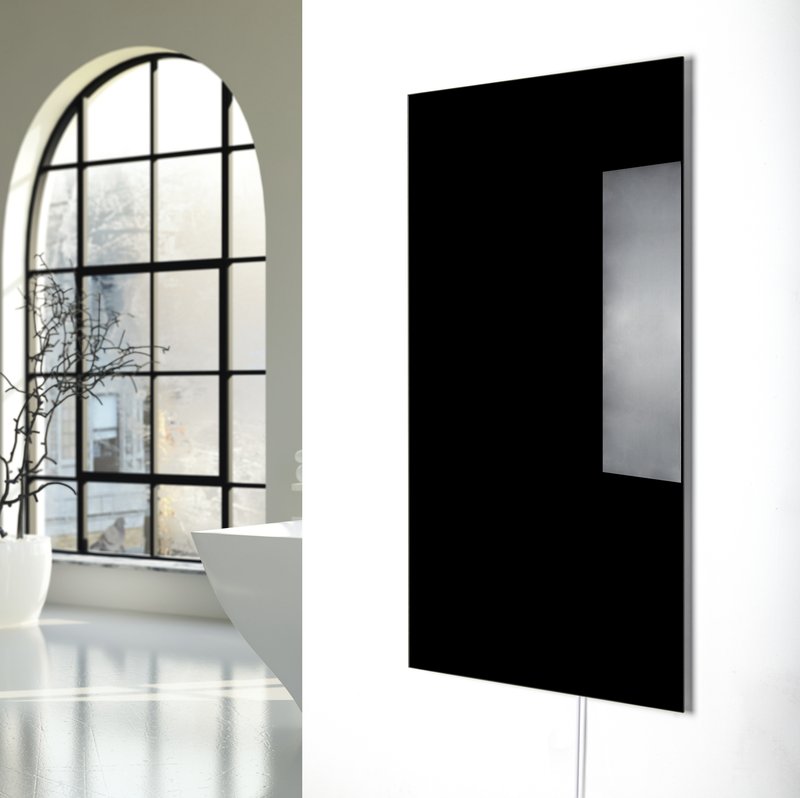
Large Room / Open Space · Up to 114 sq. ft. · 2,730 BTU
Plug-in & Hardwire
Horizontal & Vertical
Towel Bar Ready
Frameless black tempered glass (47″ × 24″). Bold design statement for large rooms. Wall mounted, hardwired.
Features
- Wall mounted: this 47″ x 24″ infrared heating panel can be installed vertically or horizontally on your wall
- High heat output: this panel heater delivers an impressive heat output of 2,728 BTUs per hour
- Energy efficient: it only costs approximately 8 cents per hour on average to run this electric wall heater
- Dual connection: can be hardwired to a thermostat or plug-in a standard outlet (120 VAC)
- Covered by a 5-year limited warranty
$999
View Details
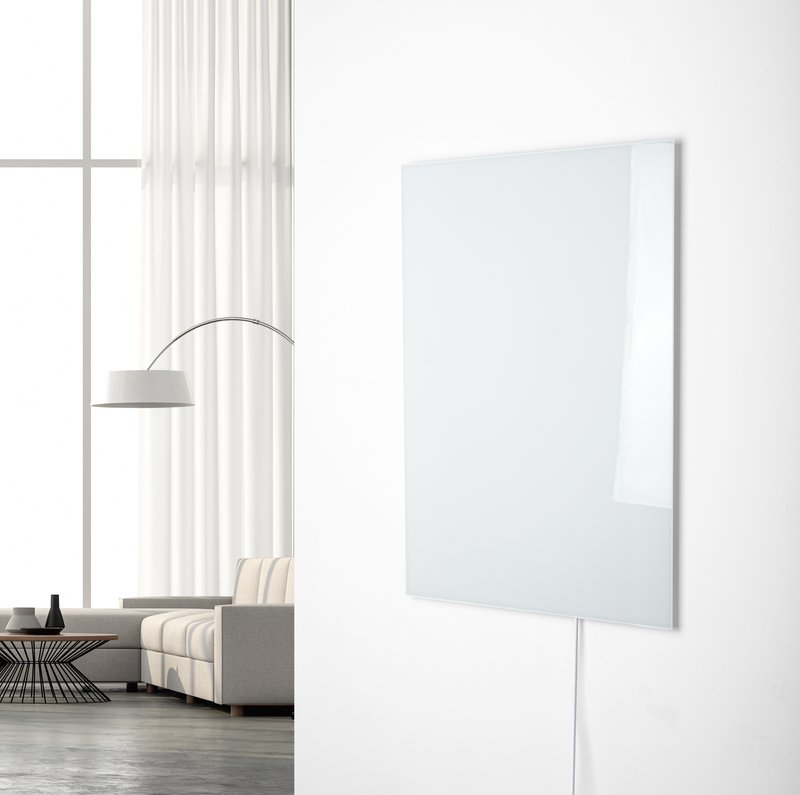
Living Room / Large Bedroom · Up to 86 sq. ft. · 2,047 BTU
Plug-in & Hardwire
Horizontal & Vertical
Towel Bar Ready
Frameless white tempered glass (35″ × 24″). Minimal design that blends into any wall. Wall mounted, hardwired.
Features
- Wall mounted: this 35″ x 24″ infrared heating panel can be installed vertically or horizontally on your wall
- High heat output: this panel heater delivers an impressive heat output of 2,046 BTUs per hour
- Energy efficient: it only costs approximately 6 cents per hour on average to run this electric wall heater
- Dual connection: can be hardwired to a thermostat or plug-in a standard outlet (120 VAC)
- Covered by a 5-year limited warranty
$849
View Details
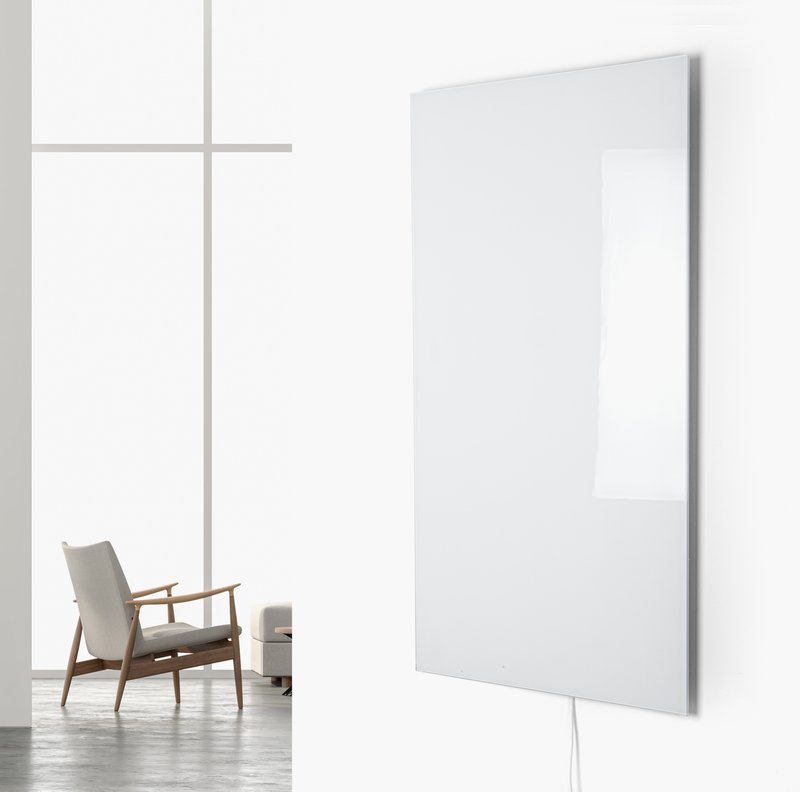
Large Room / Open Space · Up to 114 sq. ft. · 2,730 BTU
Plug-in & Hardwire
Horizontal & Vertical
Towel Bar Ready
Frameless white tempered glass (47″ × 24″). Clean, modern look for large living spaces. Wall mounted, hardwired.
Features
- Wall mounted: this 47″ x 24″ infrared heating panel can be installed vertically or horizontally on your wall
- High heat output: this panel heater delivers an impressive heat output of 2,728 BTUs per hour
- Energy efficient: it only costs approximately 8 cents per hour on average to run this electric wall heater
- Dual connection: can be hardwired to a thermostat or plug-in a standard outlet (120 VAC)
- Covered by a 5-year limited warranty
$999
View Details
Ember Mirror
A fully functional mirror that doubles as an infrared heater. Available in 600W and 800W. Ideal for bathrooms, hallways, and bedrooms where space and style matter. Hardwired installation.
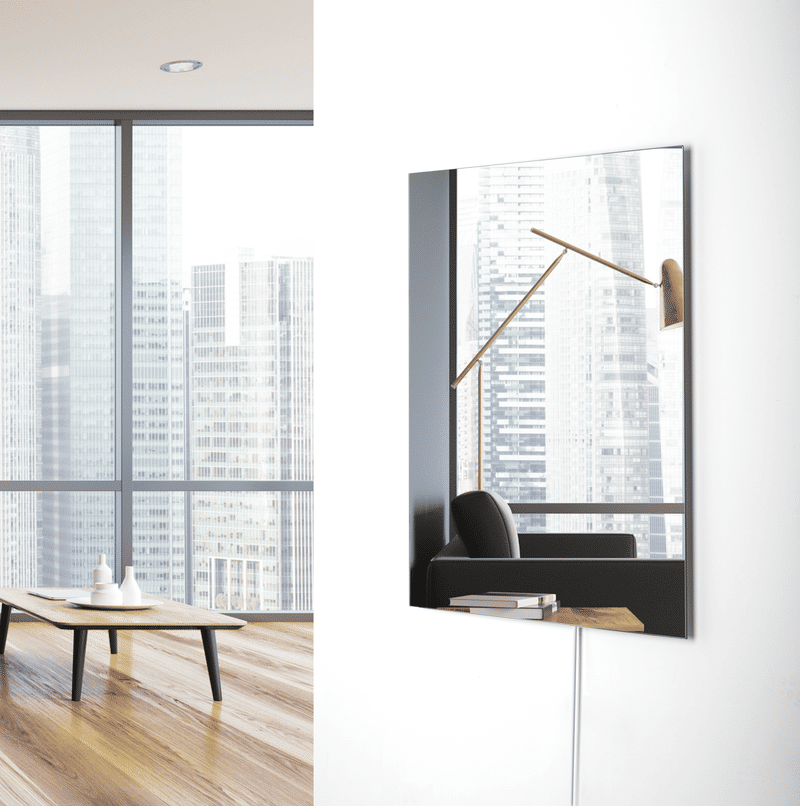
Living Room / Large Bedroom · Up to 86 sq. ft. · 2,047 BTU
Plug-in & Hardwire
Horizontal & Vertical
Towel Bar Ready
Auto-Defog
Real mirror + infrared heater in one (35″ × 24″). Auto-defogs in bathrooms. Wall mounted, hardwired.
Features
- Wall mounted: this 35″ x 24″ infrared heating panel can be installed vertically or horizontally on your wall
- High heat output: this panel heater delivers an impressive heat output of 2,046 BTUs per hour
- Energy efficient: it only costs approximately 7 cents per hour on average to run this electric wall heater
- Dual connection: can be hardwired to a thermostat or plug-in a standard outlet (120 VAC)
- Covered by a 5-year limited warranty
$999
View Details
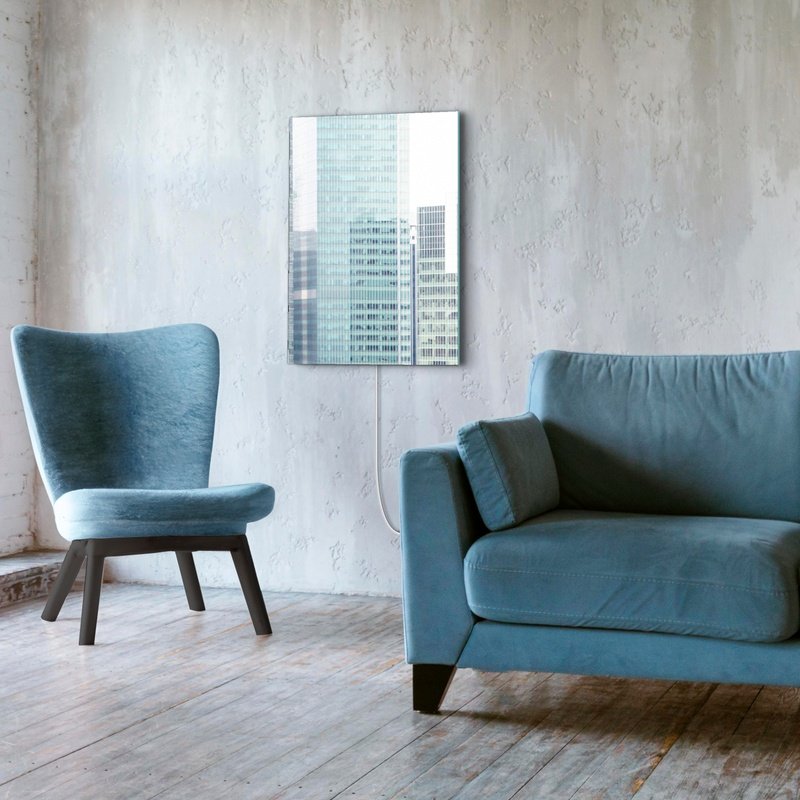
Large Room / Open Space · Up to 114 sq. ft. · 2,730 BTU
Plug-in & Hardwire
Horizontal & Vertical
Towel Bar Ready
Auto-Defog
Full-size wall mirror + infrared heater (47″ × 24″). Auto-defogs in bathrooms. Wall mounted, hardwired.
Features
- Wall mounted: this 47″ x 24″ infrared heating panel can be installed vertically or horizontally on your wall
- High heat output: this panel heater delivers an impressive heat output of 2,728 BTUs per hour
- Energy efficient: it only costs approximately 10 cents per hour on average to run this electric wall heater
- Dual connection: can be hardwired to a thermostat or plug-in a standard outlet (120 VAC)
- Covered by a 5-year limited warranty
$1,299
View Details
Infrared Heating Panel Control Options
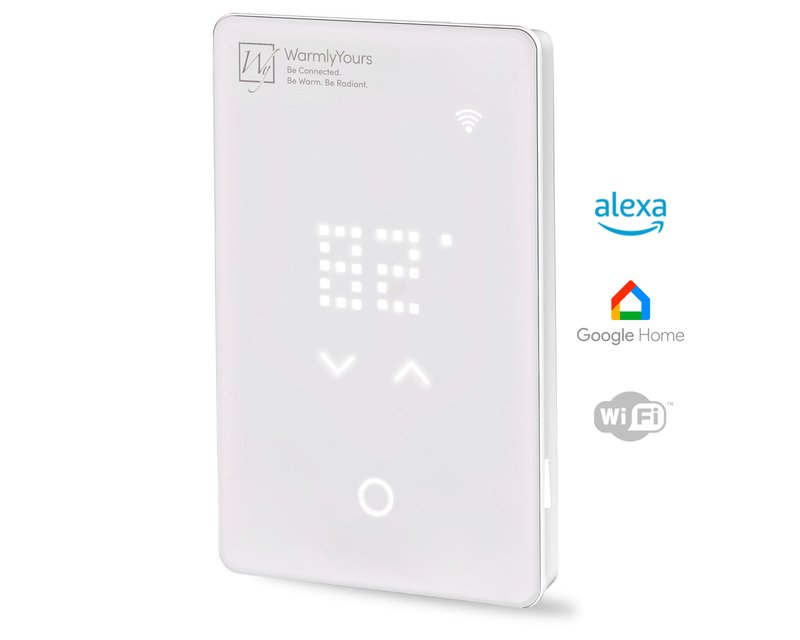
Every hardwired WarmlyYours Ember panel is sold without a control—giving you the flexibility to choose the right one for your lifestyle. Options range from a simple countdown timer to a programmable 7-day schedule or a full WiFi smart switch with Alexa, Google, and Apple HomeKit support. You can even use the nJoy WiFi thermostat for temperature-based control.
- Countdown timer — simple 30 min / 1 / 2 / 4 hr run durations
- Programmable timer — up to 50 on/off events, 7-day schedule
- WiFi smart switch — Alexa, Google, Apple HomeKit, SmartThings
- WiFi thermostat — temperature-based control
The Technology Inside Our Panels
Our patented heating element uses nano silver and nano copper materials to outperform standard electric heaters. A specialized reflector directs 100% of infrared rays outward, minimizing wasted heat and maximizing efficiency.
Copper & Nano Silver Bar
Conductive polymer treatment on the copper connection and a precision-engineered nano silver bar prevent hot spots and sparks — guaranteeing safe operation even at very high surface temperatures.
Epoxy Ceramic Resin
High-quality epoxy resin as the cover and base layer delivers exceptional durability with zero burning risk. Perfectly sealed edges eliminate water and electricity leakage — and at under 1″ thin, our panels fit nearly anywhere.
Carbon Copper Polyimide Panel
Our patented carbon copper polyimide heating element delivers superior heat resistance, low expansion, and high thermal conductivity. Precisely tuned carbon-to-graphite ratios maximize heating efficiency for every wattage rating.
Need Help Choosing the Right Infrared Heating Panel?
Our radiant heating experts have helped over 100,000 customers find the perfect solution. Get personalized sizing and installation advice — free, typically within one business day.
Typically respond within 1 business day
Electric Wall Heaters Videos
Infrared Heating Panel Articles




Infrared Heating Panel Questions & Answers
Showing 10 of 21 questions
Yes, infrared heating panels are exactly the same as radiant panels. Both terms refer to the same technology: heaters that use infrared radiation to directly warm people and objects in a room, rather than heating the air like traditional convection heaters. They are highly efficient and provide comfortable, sun-like warmth.
Yes — electric wall heaters convert 100% of electricity into heat, making them more efficient than gas or oil-fired units that lose energy through venting. But efficiency also depends on how the heater delivers that warmth:
- Radiant infrared panels are the most efficient type. They heat people and objects directly (like the sun) instead of heating air that rises to the ceiling. You feel warm at a lower thermostat setting, which reduces energy use by up to 50% compared to forced-air systems.
- Convection wall heaters heat air that rises and circulates. This works, but warm air stratifies near the ceiling while floors stay cold — wasting energy heating unused space.
- Fan-forced ceramic heaters add a fan to move warm air faster, but the fan consumes extra electricity and the heat dissipates quickly when the unit cycles off.
Infrared heating panels also let you practice zone heating — warming only the rooms you occupy rather than heating the entire house. A 500W Ember panel costs roughly $0.07 per hour to run (at $0.14/kWh), making it one of the most affordable supplemental heating options available.
Yes, infrared heating panels are significantly better than space heaters for safety, energy efficiency, design, and comfort.Safety comparison:
- Infrared heating panels: Wall-mounted (no tipping), low surface temp (no burns), no fire risk, UL/cUL certified
- Space heaters: Tipping hazard, hot surfaces, fire risk (cause 1,700+ home fires annually), cord hazards
Energy efficiency:
- Infrared heating panels: 100% efficient (all electricity converts to heat), $0.05–$0.15/hr operating cost
- Space heaters: 80–95% efficient (heat loss through convection), $0.15–$0.30/hr operating cost
Comfort & health:
- Infrared heating panels: No air circulation (allergy-friendly), even warmth, silent operation
- Space heaters: Circulate dust/allergens, uneven heat, noisy fans
Design & convenience:
- Infrared heating panels: Sleek, elegant, permanent installation, no floor space required
- Space heaters: Bulky, unsightly, take up floor space, require storage
Lifespan:
- Infrared heating panels: 15–20+ years (no moving parts)
- Space heaters: 3–5 years (fans, heating elements wear out)
Bottom line: Infrared heating panels cost more upfront ($314–$999 vs. $50–$300) but offer superior safety, lower operating costs, and longer lifespan. Read our detailed comparison.
Yes. An infrared heating panel converts virtually 100% of the electricity it draws into radiant heat, with no losses up a flue. Because it warms objects and people directly instead of heating the air, you can often feel comfortable at a lower thermostat setting, and panels zone easily so you only heat the rooms you are using. Real-world savings depend on your insulation, how the panel is sized, and how long it runs.
Yes, infrared heating panels are extremely safe. They’re UL/cUL certified, have no moving parts, no hot surfaces, and no fire risk, making them far safer than space heaters or traditional heating methods. Safety features:
- Wall-mounted: No tipping hazard (unlike space heaters)
- Low surface temperature: Panel surface stays cool to touch (no burn risk)
- No open flames: Electric heating (no gas, no combustion)
- No cords on floor: Hardwired or plug-in with wall outlet (no tripping hazard)
- Overheat protection: Built-in safety shutoff
- UL/cUL certified: Meets North American safety standards
Safe for families:
- Children: No hot surfaces or sharp edges
- Pets: No risk of burns or tipping
- Allergy sufferers: No dust or allergen circulation
- Elderly: No fire risk, no maintenance required
Comparison to space heaters:
- Space heaters cause 1,700+ home fires annually (NFPA data)
- Infrared heating panels have zero reported fire incidents in 26 years of WarmlyYours installations
Installation safety:
- Professional installation recommended for hardwired models (code compliance)
- Plug-in models: DIY-friendly, no electrician needed
- Proper mounting: Follow manufacturer guidelines for secure installation
26 years of proven safety: WarmlyYours infrared heating panels have been installed in thousands of homes with zero safety incidents when properly installed.
Yes, infrared heating panels are absolutely worth it for supplemental heating. They cost $314–$999 upfront and operate for just $0.05–$0.15 per hour, delivering instant warmth, energy savings, and allergy-friendly comfort without the safety risks of space heaters.ROI breakdown:
- Lower operating costs: Up to 50% less than forced-air heating
- Instant warmth: No waiting for air to heat up
- Long lifespan: 15–20+ years of reliable performance
- Energy efficiency: 100% of electricity converts to heat
- No maintenance: No filters, fans, or moving parts
Beyond cost savings:
- Safety: No fire risk, hot surfaces, or tipping hazards (unlike space heaters)
- Allergy-friendly: No dust or allergen circulation
- Elegant design: Sleek glass, mirror, or white finishes match any decor
- Dual function: Mirror models include fog-free feature + optional towel bar
Bottom line: One winter season of energy savings can offset the purchase price. Request a quote to calculate your specific ROI.
Infrared heating panels are designed for supplemental heating, not as a primary heat source. They work best to boost warmth in specific rooms or offset cold spots, but most homes require a central heating system for whole-home comfort.Why panels are supplemental:
- Coverage area: Each panel heats 50–150 sq.ft. (one room or zone)
- Wattage limits: 300–800W per panel (not enough for whole-home heating)
- Installation: Requires multiple panels for multiple rooms (costly for whole-home coverage)
Best use cases for supplemental heating:
- Cold rooms: Basements, sunrooms, garages, workshops
- Spot heating: Home offices, bathrooms, bedrooms
- Zone heating: Heat only occupied rooms (save energy)
- Seasonal use: Three-season rooms, vacation homes
- Supplement existing heat: Boost warmth without cranking up thermostat
When panels CAN be primary heat:
- Tiny homes: 200–400 sq.ft. spaces (1–2 panels sufficient)
- Well-insulated spaces: Modern, energy-efficient construction
- Mild climates: Regions with minimal heating needs
- Single-room dwellings: Studio apartments, ADUs
Sizing guidance:
Use our Heat Loss Calculator to determine if infrared heating panels can meet your heating needs or if they’re best used as supplemental heat.
No — painting the face of a panel changes its surface emissivity and can reduce heat output, and it may void the warranty. Choose a factory finish instead: WarmlyYours infrared heating panels come in glass, mirror and white finishes (including a mirror option that doubles as a full-length mirror) designed to radiate heat efficiently while complementing your décor.
Yes, infrared heating panels are highly effective at providing supplemental heating. They use infrared technology to heat objects and people directly (like the sun), rather than heating the air, delivering instant warmth that feels natural and comfortable.How they work:
- Infrared radiation: Panels emit infrared waves that warm solid objects, walls, and people
- Direct heat transfer: Heat radiates directly to you, not through air circulation
- Even warmth: Objects release heat slowly, maintaining consistent room temperature
- No allergen circulation: No fans or air movement (ideal for allergy sufferers)
Proven effectiveness:
- 26 years of WarmlyYours installations
- 100% energy efficiency (all electricity converts to heat)
- Reduces heating costs by up to 50% compared to traditional forced-air systems
- Works on all surfaces (wall, ceiling, or stand-mounted)
Real-world results: Homeowners report immediate warmth and lower energy bills after installation. Operating costs are just $0.05–$0.09 per hour. View customer showcases to see proven results.
Not always, but it depends on the wattage and what else is on the circuit.
WarmlyYours Ember panels draw between 2.5A (300W) and 6.7A (800W) on a standard 120V circuit. A typical 15A household circuit can safely supply 12A continuously (80% rule), so:
- One panel on a lightly loaded circuit — usually fine without a dedicated circuit. A 500W panel draws only 4.2A, leaving plenty of headroom.
- Multiple panels or a heavily loaded circuit — a dedicated circuit is recommended. Two 700W panels on the same circuit would draw 11.7A, close to the 12A limit.
- Bathrooms — most building codes require bathroom outlets on a dedicated 20A GFCI circuit, so adding a panel may require its own circuit depending on existing loads.
All WarmlyYours infrared heating panels must be hardwired by a licensed electrician (not plugged in). Your electrician can assess the circuit capacity during installation. For questions about electrical requirements, contact our radiant experts for free guidance.
Infrared heating panels mount flat against a wall or ceiling using a bracket kit. Plug-in models connect to a standard wall outlet, while hardwired models are wired to a switch or thermostat and are usually installed by an electrician. WarmlyYours Ember and LAVA panels are available in both plug-in and hardwired versions, with ceiling-mount and towel-bar accessories for added flexibility.
An infrared heating panel has an electric element behind its face that warms up and emits long-wave (far) infrared radiation. Rather than heating the air like a fan or convection heater, that radiation passes through the air and is absorbed by the surfaces it reaches — walls, floors, furniture and people — which then gently re-radiate the warmth back into the room. The result is the same comfortable warmth you feel from the sun on a cold day, and you notice it almost immediately.
Infrared heating panels last 15–20+ years with minimal maintenance, making them a long-term investment in home comfort.Lifespan factors:
- No moving parts: No fans, motors, or mechanical components to wear out
- Solid-state heating: Heating element has no consumable parts
- Quality construction: WarmlyYours uses premium materials and UL/cUL certified components
- Low maintenance: No filters, no cleaning, no servicing required
Comparison to other heating:
- Infrared heating panels: 15–20+ years
- Space heaters: 3–5 years (fans and heating elements wear out)
- Forced-air systems: 15–20 years (require annual maintenance, filter changes)
How to maximize lifespan:
- Professional installation (ensures proper electrical connections for hardwired models)
- Use with thermostat (prevents unnecessary runtime and extends heating element life)
- Keep panels clean (dust surface annually with soft cloth)
- Avoid physical damage (glass models are durable but can crack if struck)
Warranty coverage:
- WarmlyYours offers 5-year manufacturer warranty on all Ember infrared heating panels
- Register your warranty for full coverage
Infrared heating panels cost $314–$999, depending on model, size, and features.Pricing by model:
- Ember Flex (White): $314–$449 (plug-in or hardwired, wall/ceiling/stand mounting)
- Ember Glass (Black/White): $799–$999 (sleek glass finish, vertical/horizontal mounting)
- Ember Mirror: $999+ (fog-free mirror + heating, optional towel bar)
Pricing by wattage/coverage:
- 300W (up to 50 sq.ft.): $314–$449
- 500W (up to 75 sq.ft.): $449–$699
- 600W (up to 100 sq.ft.): $799–$899
- 700W (up to 125 sq.ft.): $699–$899
- 800W (up to 150 sq.ft.): $899–$999
Installation costs:
- Plug-in models: $0 (DIY-friendly, no electrician needed)
- Hardwired models: $200–$600 (electrician labor for permanent installation)
Accessories:
- Stand attachment: $49 (converts wall panel to freestanding)
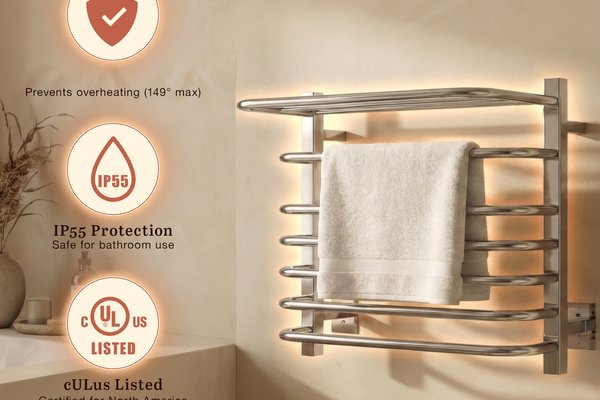
- Towel bar: $69 (adds towel warming function)
Cost comparison: Infrared heating panels cost $314–$999 vs. space heaters ($50–$300) but offer superior safety, energy efficiency, and elegant design. Shop all models.
Operating costs depend on the heater’s wattage and your local electricity rate. Here is what WarmlyYours Ember panels cost to run at the U.S. average of $0.14/kWh:
| Panel | Wattage | Cost per hour | 8 hrs/day monthly |
|---|---|---|---|
| Ember Flex 300W | 300W | $0.04 | ~$10 |
| Ember Flex 500W | 500W | $0.07 | ~$17 |
| Ember Glass 600W | 600W | $0.08 | ~$20 |
| Ember Flex 700W | 700W | $0.10 | ~$24 |
| Ember Glass 800W | 800W | $0.11 | ~$27 |
Compare this to a typical 1,500W portable space heater that costs $0.21 per hour (~$50/month) — infrared heating panels deliver the same perceived warmth at a fraction of the cost because they heat you directly rather than warming the entire air volume.
Adding a programmable timer or WiFi switch can further reduce costs by running the panel only when you need it.
Operating costs are minimal: Infrared heating panels typically cost $0.05–$0.15 per hour to run, or $10–$50 per month for supplemental heating.Cost breakdown by wattage:
- 300W panel: $0.04–$0.06 per hour ($10–$20/month for 8 hrs/day)
- 500W panel: $0.06–$0.10 per hour ($15–$30/month for 8 hrs/day)
- 600W panel: $0.07–$0.12 per hour ($20–$35/month for 8 hrs/day)
- 700W panel: $0.08–$0.14 per hour ($25–$40/month for 8 hrs/day)
- 800W panel: $0.10–$0.16 per hour ($30–$50/month for 8 hrs/day)
What affects operating cost:
- Wattage (higher wattage = higher cost)
- Local electricity rates (varies by region, typically $0.12–$0.20/kWh)
- Runtime (how many hours per day you use it)
- Room insulation (well-insulated rooms require less runtime)
- Thermostat control (smart controls optimize runtime and reduce costs)
Cost comparison:
- Infrared heating panels: $0.05–$0.15/hr (100% efficient, no heat loss)
- Space heaters: $0.15–$0.30/hr (less efficient, safety risks)
- Forced-air heating: $0.20–$0.50/hr (heats entire home, not just one room)
Energy-saving tip: Use programmable thermostats to run panels only when needed, reducing costs by 30–50%. Shop controls.
Infrared panels heat by line of sight, so a panel hidden behind large furniture warms a room less effectively, and a very draughty or poorly insulated room needs more wattage to stay comfortable. The upfront cost per panel is also higher than a basic plug-in convection heater. For most rooms those trade-offs are outweighed by fast, comfortable warmth, easy zoning control, and silent, maintenance-free operation with no fans, filters or moving parts.
The best electric wall heater depends on your priorities — but for safety, efficiency, and design, radiant infrared panels outperform every other type:
| Feature | Radiant Infrared Panel | Ceramic Wall Heater | Convection Wall Heater |
|---|---|---|---|
| Heating method | Infrared — heats objects directly | Fan-forced hot air | Natural air convection |
| Noise | Silent (no fan) | Fan noise | Silent or clicks |
| Surface temperature | Low — safe to touch | High — burn risk | Moderate |
| Air quality | No dust circulation | Circulates dust & allergens | Some dust circulation |
| Thickness | Under 1″ — flush to wall | 4–8″ deep | 3–6″ deep |
| Design | Sleek glass, mirror, or flat panel | Plastic housing | Metal grille |
WarmlyYours Ember infrared heating panels are available in 300W to 800W sizes covering rooms from 43 to 114 sq. ft. They install in under 30 minutes, mount flush to any wall, and come with a 5-year warranty. Choose from white flat, white glass, black glass, or mirror finishes.
Both are electric, but they differ in how they deliver heat and where they fit:
- Electric wall heaters (infrared heating panels) mount on the wall at eye level, emit infrared rays that warm people and objects directly, and are less than 1 inch thick. They heat a room in minutes and work silently.
- Baseboard heaters sit at floor level along the wall, heat air by convection (warm air rises from the fins), and require 3–8 feet of clear wall space. Furniture placed in front blocks their output.
Key differences:
| Factor | Wall-Mounted Infrared Heating Panel | Baseboard Heater |
|---|---|---|
| Wall space needed | 2–3 sq. ft. (mounted high) | 3–8 linear ft. (floor level) |
| Furniture placement | No restrictions | Must keep 12″ clearance |
| Heating speed | Instant warmth | Slow warm-up |
| Noise | Silent | Clicking/ticking as metal expands |
| Allergens | No air movement | Circulates dust from floor |
| Aesthetics | Sleek, modern panel | Visible metal fins at floor |
If you are replacing baseboard heaters, a wall-mounted infrared heating panel frees up floor space, eliminates allergen concerns, and delivers heat more evenly across the room.
As a rough guide, allow roughly 60–100 watts of panel per square metre (about 6–9 watts per square foot) for a well-insulated room, and more for rooms with high ceilings, large windows or poor insulation. A 600 W panel suits a typical bedroom or home office, while larger or open spaces are best served by two or more panels for even coverage. Our team can help you size a room — contact us for a recommendation.
Install infrared heating panels on interior walls at least 6 inches from the floor and ceiling, positioned to face the area you want to heat. For best results, mount panels opposite cold sources (windows, exterior walls) and away from obstructions (furniture, curtains).Optimal placement by room:Bathrooms:
- Ember Mirror: Above vanity (dual-function heating + fog-free mirror)
- Ember Glass/Flex: On wall opposite shower/tub (warms entire room)
- Height: 4–6 feet from floor (eye level for mirrors, chest level for panels)
Bedrooms:
- Position: On wall opposite bed (heat radiates toward sleeping area)
- Avoid: Directly above bed (too much direct heat)
- Height: 3–5 feet from floor (optimal heat distribution)
Living rooms:
- Position: On interior wall facing seating area
- Avoid: Behind furniture or near windows (heat loss)
- Multiple panels: Space evenly for balanced coverage
Home offices:
- Position: On wall behind or beside desk (direct warmth to work area)
- Height: 3–4 feet from floor (warms seated person)
Basements/garages:
- Position: On interior walls or ceiling-mounted (heat rises from below)
- Multiple panels: May be needed for larger spaces
Installation guidelines:
- Clearances: 6 inches from floor, 6 inches from ceiling, 12 inches from corners
- Avoid: Behind curtains, furniture, or doors (blocks heat radiation)
- Orientation: Vertical or horizontal (both work equally well)
- Mounting options: Wall, ceiling, or stand (Ember Flex only)
Ceiling mounting:
- Best for: Rooms with limited wall space or high ceilings
- Heat direction: Radiates downward (warms floor and objects below)
- Clearance: 12 inches from ceiling edges
Stand mounting (Ember Flex only):
- Best for: Renters or temporary heating needs
- Placement: Position 3–4 feet from seating area
- Safety: Ensure stable surface, away from high-traffic areas
Pro tip: Use multiple smaller panels instead of one large panel for more even heat distribution and flexible zone heating. Request a free consultation for placement recommendations specific to your space.