

nHance Programmable Thermostat (UDG)
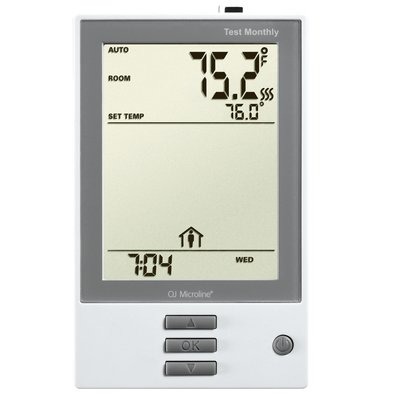
This support page provides publications, manuals, videos, support articles, and common support questions for the nHance Programmable Thermostat product line.
Main Products
Do you need support or specifications for a specific model? Identify your model below.
Support Questions
Showing 10 of 26 questions
The breaker and wire sizes are selected based on the total amperage of the WarmlyYours heating system connected to a single thermostat. This information is on the WarmlyYours heating system's installation plan, electrical plan, or UL label. Based on guidelines from the National Electrical Code: loads up to 16 Amps may utilize 12 gauge wire with a 20-Amp breaker, and loads up to 12 Amps - 14 gauge wire with a 15-Amp breaker. Local code and/or other factors may change these guidelines.
One thermostat can control multiple heating mats/cables as long as all the heating elements are using less than 15 amps:
TempZone™ will cover aprx. 120 sq. ft. for 120V systems and 240 sq. ft. for 240V systems on one thermostat.
Environ™ will cover aprx. 150 sq. ft. for 120V systems and 300 sq. ft. for 240V systems on one thermostat.
Slab Heat will cover aprx. 90 sq. ft. for 120V systems and 180 sq. ft. for 240V systems on one thermostat.
In theory, it is possible, if no other options are available. We do not recommend it, but If the thermostat is controlling the floor temperature with a floor sensor, then it can go on an exterior wall. It is important that the floor sensor gets located in an area of the floor not hit by sunshine.
If the thermostat will be controlling the air temperature with the built-in ambient sensor, then it should go on an interior wall.
A GFCI/GFEP (Ground Fault Circuit Interrupter / Ground Fault Equipment Protection) works differently than a circuit breaker by specifically detecting a small imbalance in electrical current between the hot and neutral wires, which indicates a potential ground fault (like a person touching a live wire), and instantly shutting off the power to prevent shock, while a circuit breaker only trips when there's a significant overload in current flow on the circuit, like a short circuit or too many appliances plugged in.
Pressing and holding (2-3 sec) physical power/reset button will turn the unit completely OFF. Same process turns the unit back on.
(nHance and nJoin units will have the button on the front faceplate, nSpire Touch WiFi, nSpire Touch and nTrust will have the button on the right side of the faceplate.)
The ground wire in the floor mat must be connected directly to the ground wire of the supply or to the house ground wire.
Relays can fail due to excessive current or voltage. When a relay is exposed to too much current, the contacts can burn out. High voltage can also damage the coil. Other reasons include mechanical wear and tear, dust or dirt buildup, and moisture. These factors can cause the relay to malfunction or stop working entirely. Regular maintenance and using the relay within its specified limits can help prevent failures.
- From the home screen
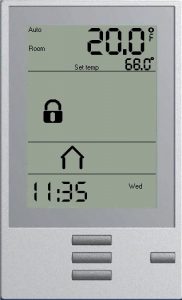
- Press "OK" button twice
- Press button UP and DOWN simultaneously for 3 sec.
- Unlock Child Lock
The key is to get MODE flashing (that's the second time hitting "OK"), and continue to hold (it may take 5 secs) the UP and DOWN buttons simultaneously until the lock disappears.
Yes, the sensor wires may be trimmed. Most local code requirements call for 6“-7“ of extra wire from the gang box.
Check the connections between the thermostat and power module. If the power module is connected incorrectly to the thermostat, the power module won't switch off.

82°F - 85°F is the most common comfortable warm temperature of the floor.
An OJ Microline UDG-4999 or ADG-4999. This thermostat can operate in REGULATOR mode.
Our thermostats are indoor rated. So long as they are kept within normal indoor humidity levels, they will continue to operate optimally. These thermostats are not rated to be installed in wet areas, steam rooms, or rooms with abnormal humidity levels or poor ventilation.
The flashing digits indicate that the actual (measured) floor temperature exceeds the thermostat temperature limit.
The temperature limit is set for either tile (104°F/40°C) or laminate (82°F/28°C) when the thermostat is first set up or re-configured.
For example: When the floor type (protection) is set to laminate, the limit defaults to 82°F/28°C. If the floor temperature goes above this - whether due to radiant floor heating or external heating sources, then the digits will flash and the heating is switched off.
Turning the temperature up or down will not affect the flashing digits. And leaving the thermostat alone with flashing digits does not harm the system.
Tip: To turn off the heated floor (ex. for months when it is not needed), on the outer edge of the thermostat, depress the lower right side button for 3-5 seconds. This will also turn it back on.
All thermostats are mandated at 42" height for handicap accessibility, most private residences are mounted at 52-60".
Please see this video on how to install a WarmlyYours nSpiration Series thermostat.
Yes, but the tear-out is the real risk. Scan the floor with thermal imaging before demo to map the existing hydronic tubing, and never fasten or drill into it. Keep the two systems on fully independent controls so they cannot fight each other, and do not place the electric floor sensor directly above a hydronic loop — the false-high reading will short-cycle the electric system. Call PRO technical support at 800-875-5285 to review the assembly before ordering.
Yes, the floor sensor wire can be extended up to 300 feet with 18 AWG wire.
Turn the power (circuit breaker typically) to the thermostat off for 5 minutes and then back on to reset the thermostat.
If there is power to the thermostat and it still doesn't appear to work, then the next step toward a solution is to take Ohm measurements of the floor heating system.
This is done with a digital multi-meter that can select a low 200 Ohm (Ω) scale. To conduct this test, turn off the circuit breaker. Remove the thermostat completely from the wall and disconnect the wires connected to the LOAD connections at the back of the thermostat. Disconnect the ground wires from the house ground, and do the test shown on the links below. If you are uncomfortable doing this test, contact a qualified electrician.
Please follow one of these guides based on the type of heating system installed:
For a quick overview of the testing process:
Here is a video showing how the test is done
Here is a video showing how to locate and identify the floor heating wires
If the system still does not function, contact +1 (800) 875-5285 WarmlyYours Technical Support and provide the Ohm measurements for further assistance.
This indicates a fault, current to ground. The thermostat has cut off the power for your safety. Please contact your local electrician or WarmlyYours Technical Support.
Error code “E2” means the floor sensor is defective, damaged or not connected. Check the connections, and replace the sensor if needed. Test the sensor with a digital multimeter on the 20k scale. Because the sensor is a thermistor, its resistance changes with temperature: it typically reads about 8kΩ–15kΩ at normal room temperature, lower when warm and higher when cold. A reading of 0 ohms or OL (open line) indicates a failed sensor. Only one floor sensor can be connected to a thermostat.
That is the sound the thermostat makes when the relay is either opened or closed to turn on or off the power to the floor heating elements. See this article for further information.
WarmlyYours controllers incorporate built-in Class A GFCI protection for all new floor heating systems. Class A GFCI provides personnel protection and trips when ground fault current exceeds 5 mA (milliamps). Class B GFCI protection is pretty much obsolete, but older systems may still require it. WarmlyYours controllers with built-in Class B GFCI provide equipment and circuit protection and operates when a fault to ground exceeds 15 mA.
For systems below 12 Amps, a 15 Amp, Non-GFI breaker is fine. For systems 12 to 16 Amps, a 20 Amp, non-GFI breaker is needed. Breaker sizes are noted on the installation plan that ships with many orders.
GFCI can fail for various reasons, such as wear and tear, moisture, corrosion, power surges, faulty wiring, or improper installation. Some of these causes can be prevented by regular inspection and maintenance, while others may require professional assistance. It is important to note that GFCI devices (ex. thermostat, breakers, outlets) should be tested regularly as these do wear out over time.
A floor sensor measures floor temperature so a compatible thermostat can regulate comfort and enforce the flooring manufacturer’s temperature limit. Some thermostats, including nTrust 2.0, offer a regulator mode without a sensor, but that mode does not measure floor temperature. Use sensor-based temperature control whenever required by the flooring or heating-system instructions.
Documents
Installation
- nHance (UDG-4999) Installation Instructions (English, French, Spanish)
- nSpiration Series Rough-in Kit-03 installation (2 conduits)
- nSpiration Electrical Rough-in Kit Installation (Single Gang Box with Single Conduit) (English)
- nSpiration Series Rough-in Kit-01 Installation (no conduit)
Operation Manuals
- nHance (UDG-4999) Quick Programming Guide (English, French, Spanish)
- nHance (UDG-4999) Quick Start Guide and Specifications (English, French, Spanish)
- nHance (UDG-4999) User Manual (English, French, Spanish)
Technical Information
Wiring Diagrams
- nSpiration Series Thermostat Environ Wiring Diagrams (English)
- nSpiration Series Thermostat Slab Heating Wiring Diagram (English)
- nSpiration Series Thermostat TempZone Single Custom Wiring Diagram (English)
- nSpiration Series Thermostat TempZone Twin Wiring Diagrams (English)
- nSpiration Series Thermostat Wiring Diagram (120V & 240V) (English)
- Wiring Diagram for 120V & 240V Floor Heating Products with Relay with Thermostat (English)
Videos
Articles
- Can old TH115 be switched out for nSpiration Series without any alterations to the system?
- Companies that allow EFH under LVT
- Different types of wood and Electric Floor Heating
- EMF, Floor Heat and Pacemakers
- ETI Floor Heating Control FWT-3 Thermostat
- FLOR Carpet Squares and EFH
- Heating LVT, Vinyl, and VCT
- How to Extend Leads For Floor Heating Products
- How To Prevent Wood Floor Gaps
- OJ GFI When Switching a Relay Panel