Electric Snow Melting Systems
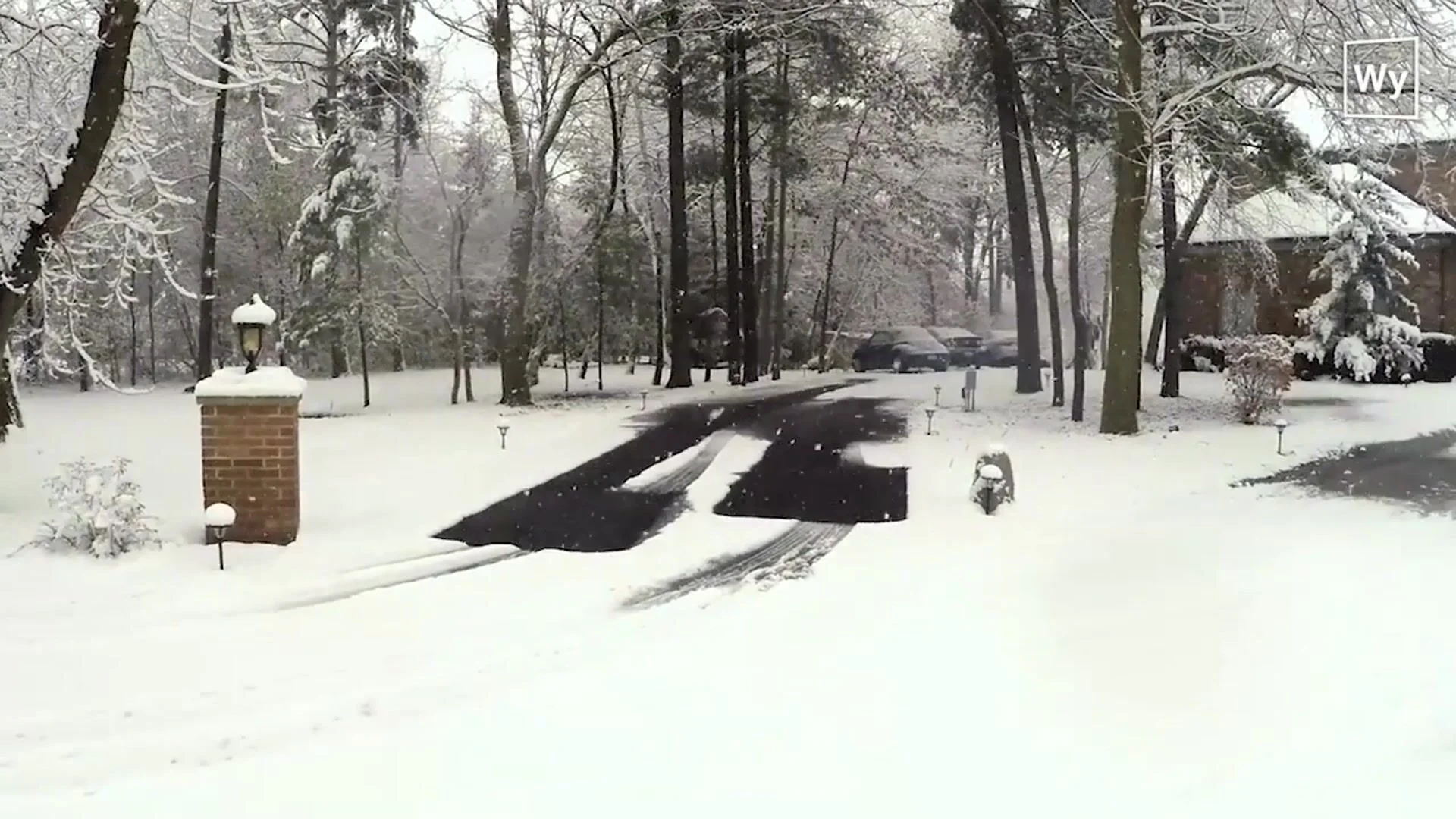
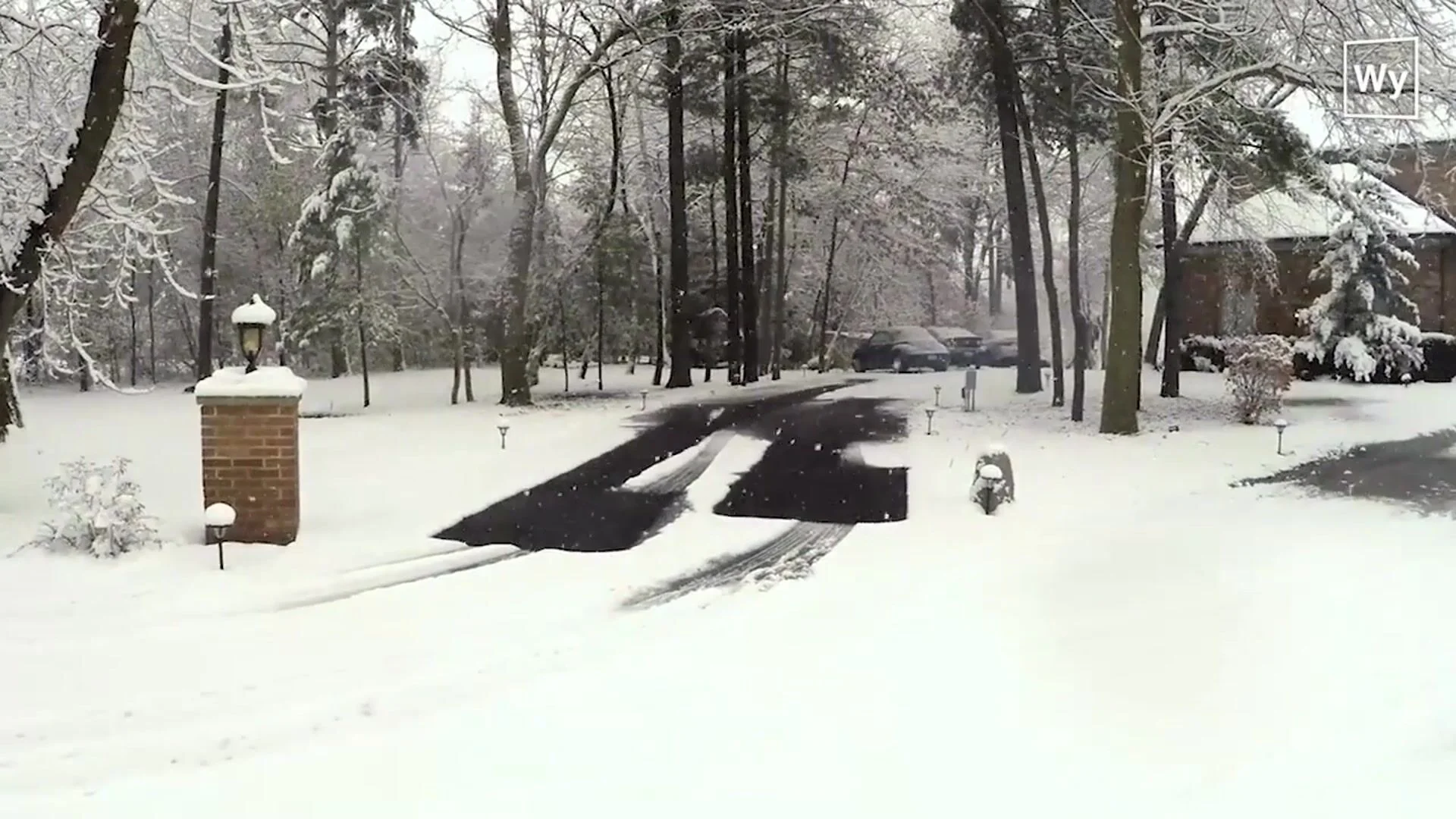
Electric snow melting systems use heating mats or cables embedded in concrete, asphalt, or beneath pavers to melt snow and ice on driveways, walkways, patios, and stairs. Choose full-area coverage or tire tracks, then match the system to your surface, electrical supply, and local winter conditions. Automatic controls use temperature and moisture sensors to activate heating when conditions call for it.
Get an Instant Quote
Answer a few quick questions and we'll match you with the best snow melting system.
Jump to
Why Install Snow Melting?
No More Shoveling
Finally put away the rock-salt and shovels and start enjoying winter again.
No Harmful Chemicals
Do away with chemical melting agents, which will be easier on your pets and your vehicles.
Peace of Mind
Melts the ice and snow, providing a safe passageway for you and your family, as well as guests to your home.
Easy to Install
No pipes, boilers, tubing, tanks or noisy pumps to install.
Affordable
Most systems are inexpensive to run and require no regular maintenance.
Safe
CSA certified for outdoor use in the US and Canada.
Snow Melting System Customer Reviews
We take pride in providing both exceptional service and great products. But don't just take our word for it, check out what some of our customers have had to say.


Featured Snow Melting Projects
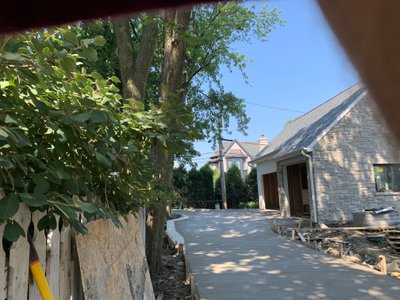
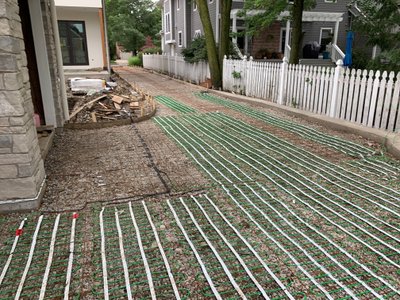
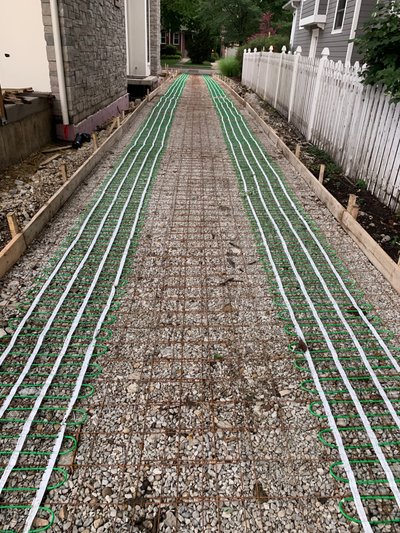
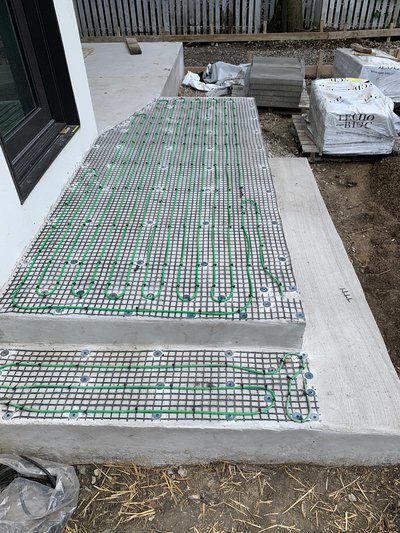
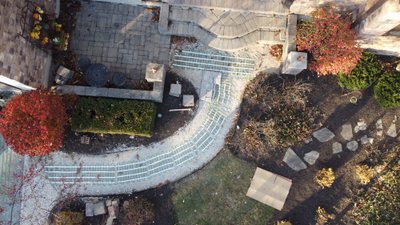
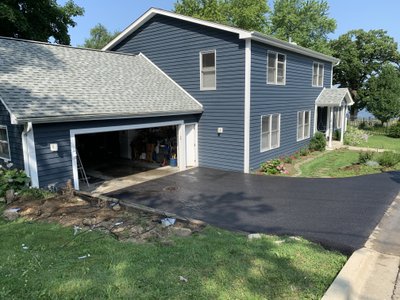
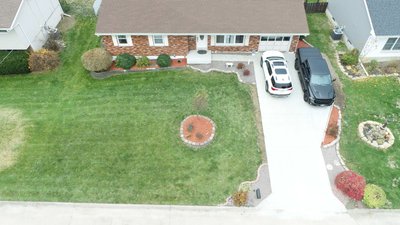
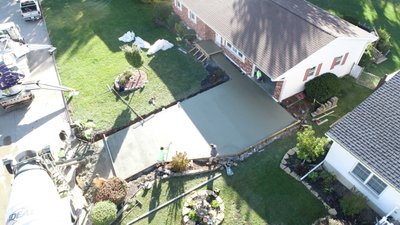
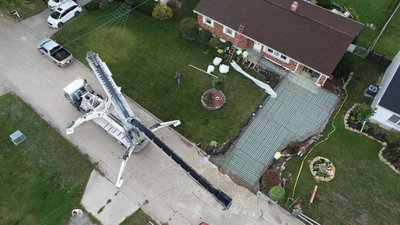
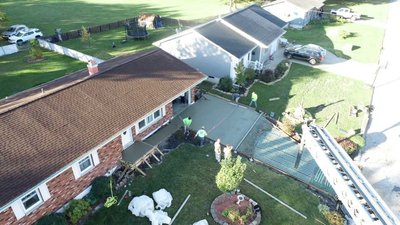
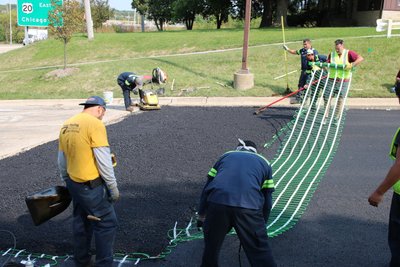
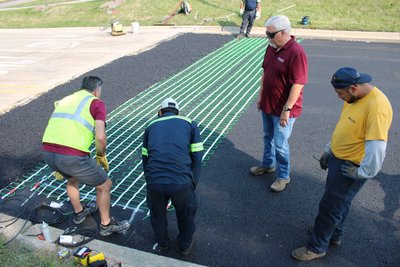
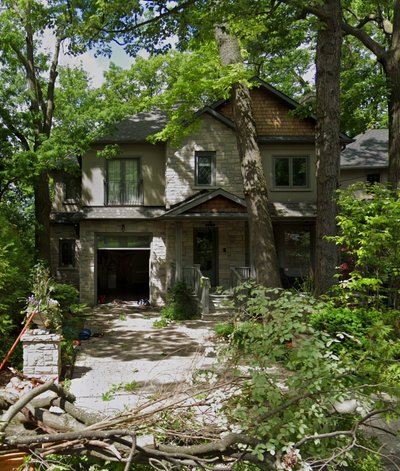
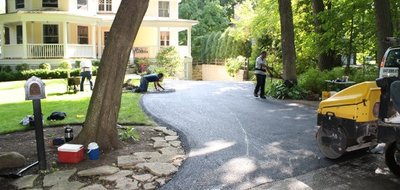
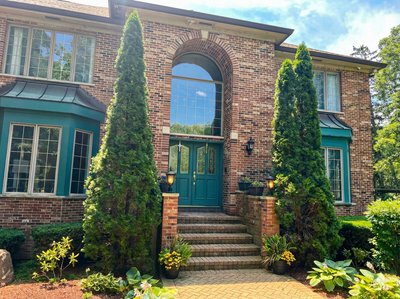
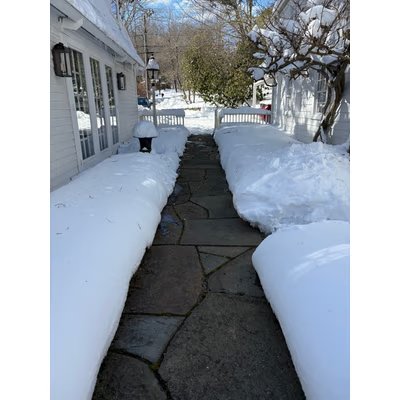
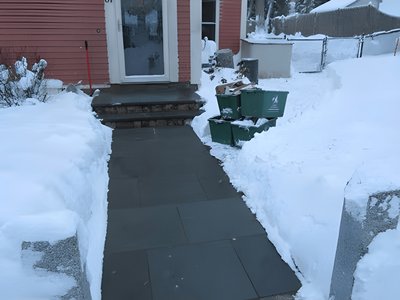
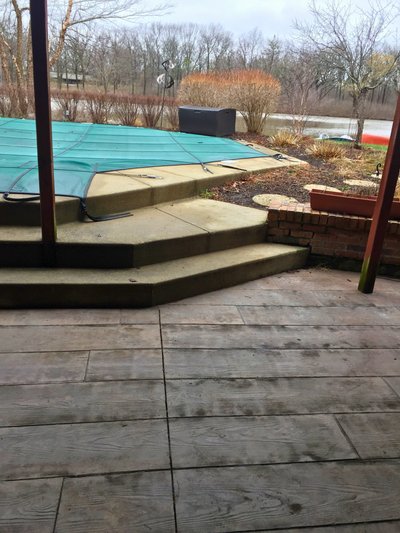
Check out these customer-submitted projects to see real world examples of how a snow melting system is installed in a variety of different areas.

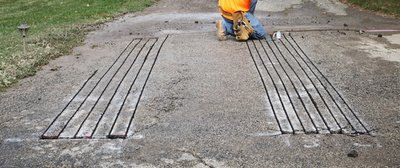
Snow Melting System Design Guides
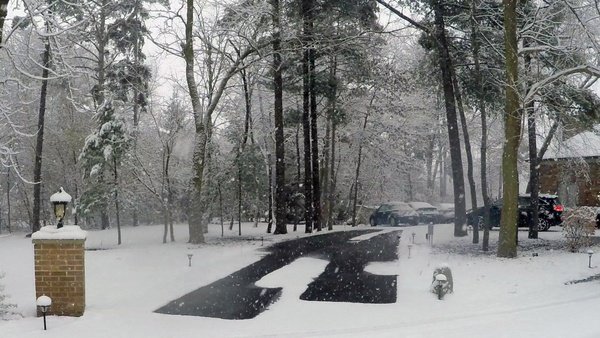
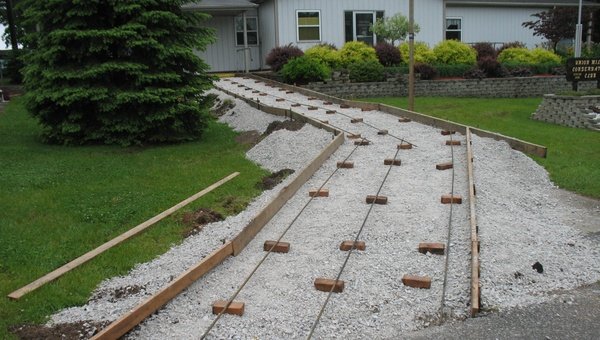
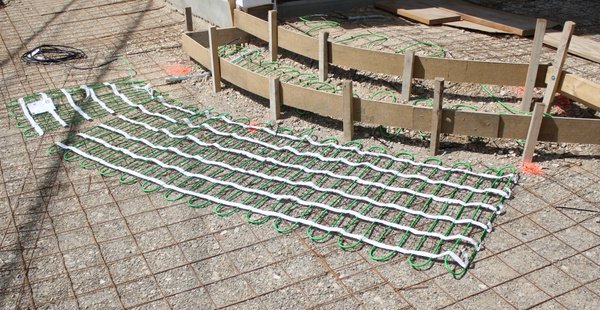
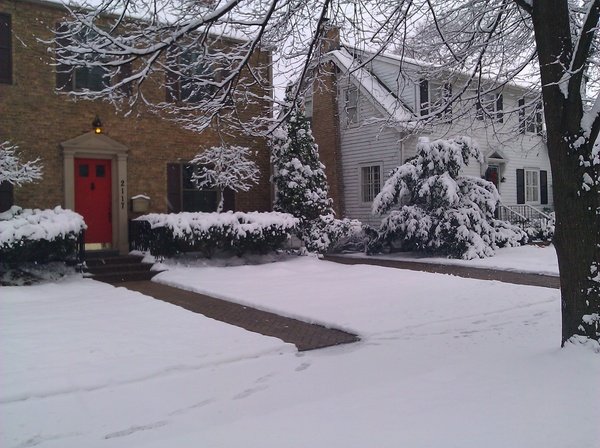
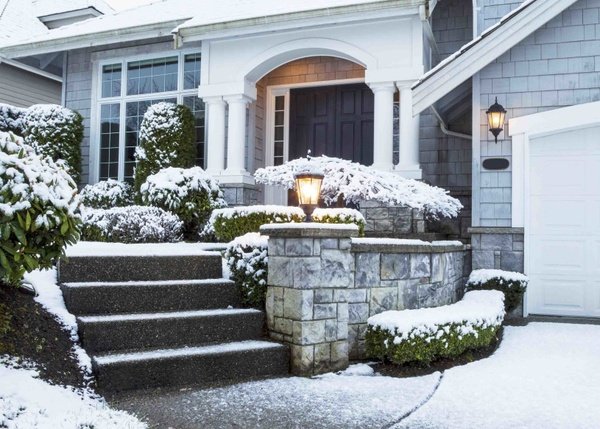
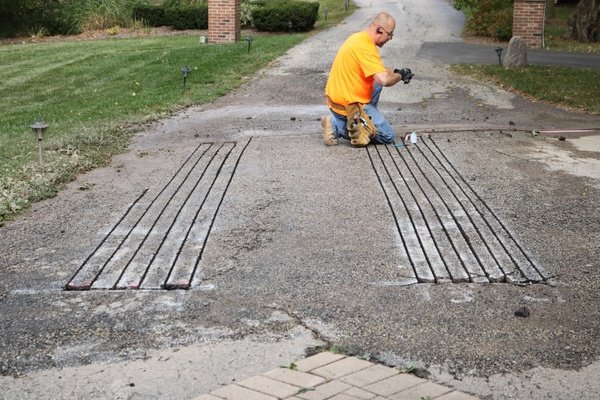
New to outdoor snow melting? Start with our complete planning and installation guide for walkways, stairs & patios.
Heating Solutions for Asphalt, Concrete & Pavers
We offer a selection of snow melting systems that heat driveways, patios, walkways, or stairs and can be installed in asphalt, concrete, or under pavers in mortar. Our snow melting systems are available in two formats: mat and cable. The mats are available in two configurations—PowerMat (50 watts/sq.ft for heavy snowfall) and OmniMat (39 watts/sq.ft for moderate climates)—to match your performance needs. The cable system allows for maximum flexibility and generates 12 watts per linear foot. Our systems are available with a selection of different controls, each with different specifications to sense things like air temperature or moisture on the pavement.
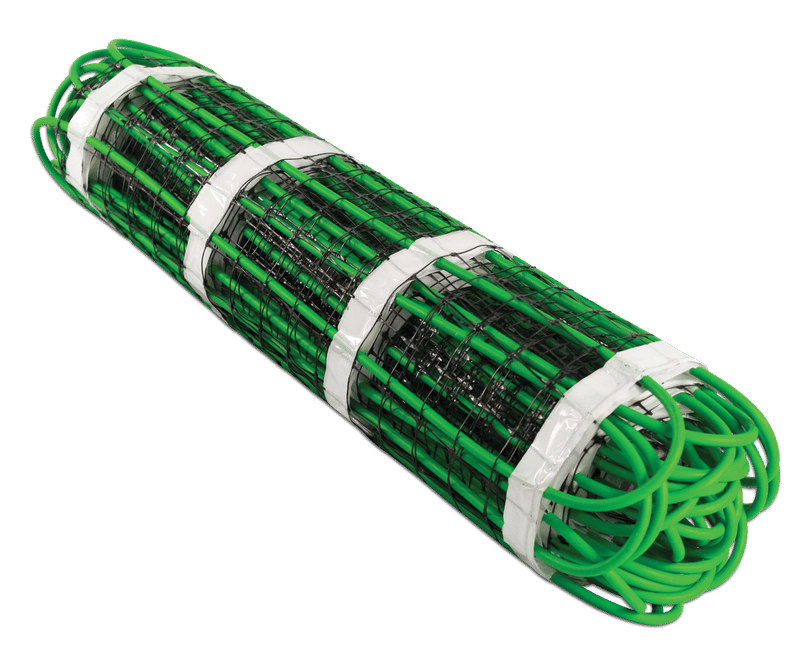
Maximum Heat Density for Heavy Snowfall (3″ spacing)
Ideal for heavy snowfall regions (60+ inches annually) or high-traffic commercial areas. The 3-inch cable spacing delivers maximum heat density (~50 watts/sq.ft) for the fastest snow melting performance. Best for: Northern climates, steep driveways, loading docks, emergency exits, and areas requiring rapid clearing.
Features
- Maximum Heat Output: Approximately 50-watts per sq. ft with 3″ cable spacing for fastest snow melting
- Best for Heavy Snowfall: Recommended for regions with 60+ inches of annual snowfall or when rapid melting is critical
- Even Heating: Pre-attached heating elements in a serpentine pattern with consistent 3″ spacing ensures uniform coverage
- Fast and Easy Installation: Cut-and-turn design makes installation faster than cables while providing maximum heat density
- Installation Support: Free SmartPlan™ installation plans, 24/7 phone support, and a 10-year limited warranty
Optimal Performance & Energy Balance (4″ spacing)
The versatile choice for moderate snowfall regions (30-60 inches annually). The 4-inch cable spacing provides an optimal balance of melting performance (~39 watts/sq.ft) and energy efficiency. Best for: Most residential driveways, walkways, and patios in typical winter climates.
Features
- Balanced Heat Output: Approximately 39-watts per sq. ft with 4″ cable spacing for optimal performance and efficiency
- Best for Moderate Snowfall: Recommended for regions with 30-60 inches of annual snowfall—our most popular choice
- Even Heating: Pre-attached heating elements in a serpentine pattern with consistent 4″ spacing ensures uniform coverage
- Fast and Easy Installation: Cut-and-turn design makes installation faster than cables while balancing cost and performance
- Installation Support: Free SmartPlan™ installation plans, 24/7 phone support, and a 10-year limited warranty

Maximum Flexibility at a Minimal Cost
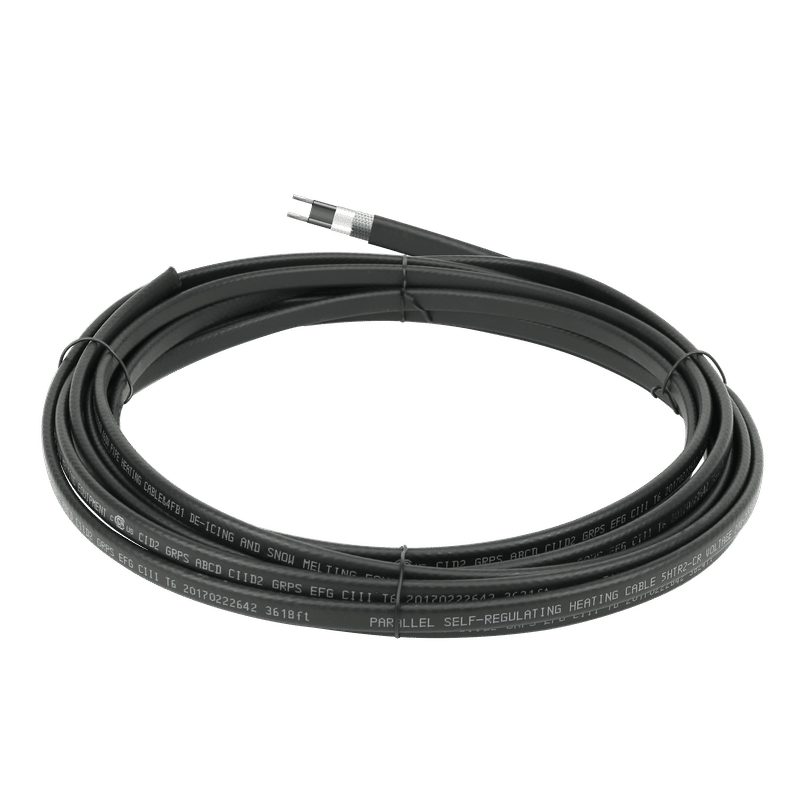
WarmlyYours Snow Melt Cables offer a high heat output solution to keep your driveway, walkway, or patio snow-free. Embeddable in concrete, asphalt, or under pavers, these cables provide a flexible and cost-effective alternative to mats. Choose from a variety of voltages and lengths to suit your outdoor heating needs, ensuring safe, dry surfaces all winter long. Benefit from our 10-year warranty and 24/7 customer support for peace of mind.
Features
- High Heat Output: This embeddable electric heating cable provides 12-watts of heat per linear foot (nearly 50-watts per sq. ft.)
- Embeddable in Concrete, Asphalt, or in Mortar Under Pavers: Installing a cable-based snow melting system within a new driveway, walkway, or patio means you can enjoy snow/ice free outdoor surfaces all year
- Cost-Effective and Flexible: Snow melting cables are an less expensive (but more time consuming) alternative to snow melting mats and they provide maximum flexibility to cover round driveways, cornered patios, or outdoor stairs
- Wide Variety of Voltages: We offer snow melting cables in 120, 208, 240, and 277 voltages and in a range of different lengths
- Installation Support: WarmlyYours offers free SmartPlan™ installation plans, 24/7 phone support, and a 10-year limited warranty
Snow Melting System Control Options
Once you've decided what type of heating system, you'll need to choose a control for your snow melting system. WarmlyYours offers a selection of controls, ranging from a basic manual control to our premium option that provides the ultimate in convenience and hands-off operation. We even offer an affordable and user-friendly WiFi control that can be configured so that the heating system can be controlled remotely or can be energized based on real-time weather events.
Shop Controls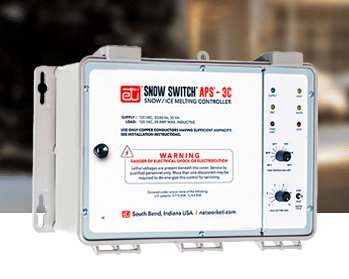
Find Snow Melt Plans by Application Type
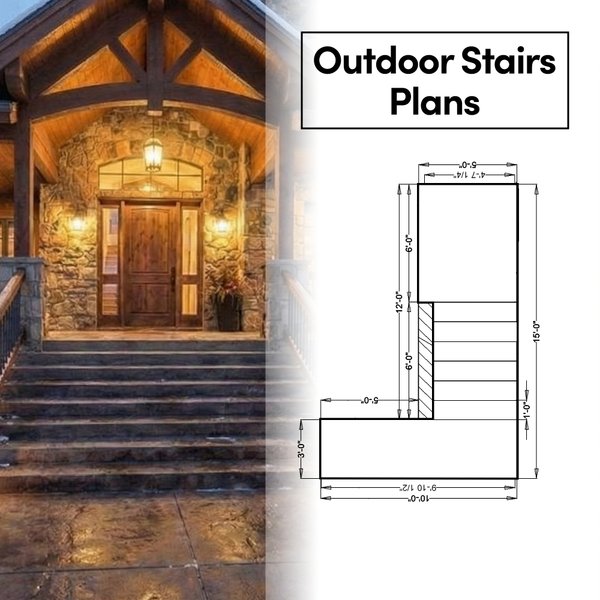
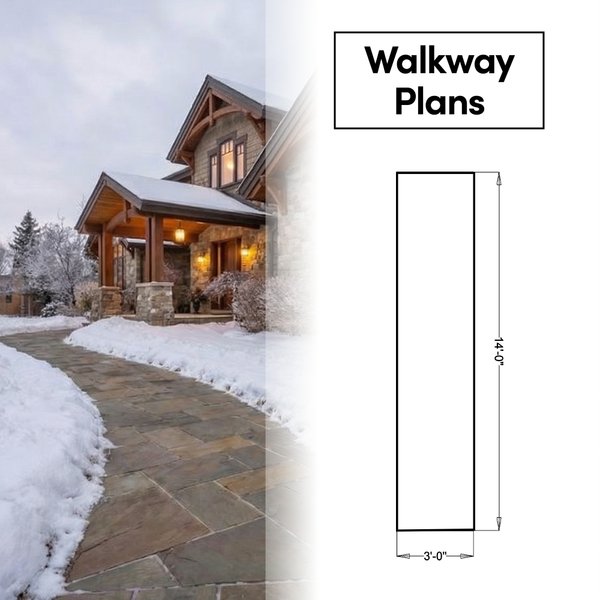
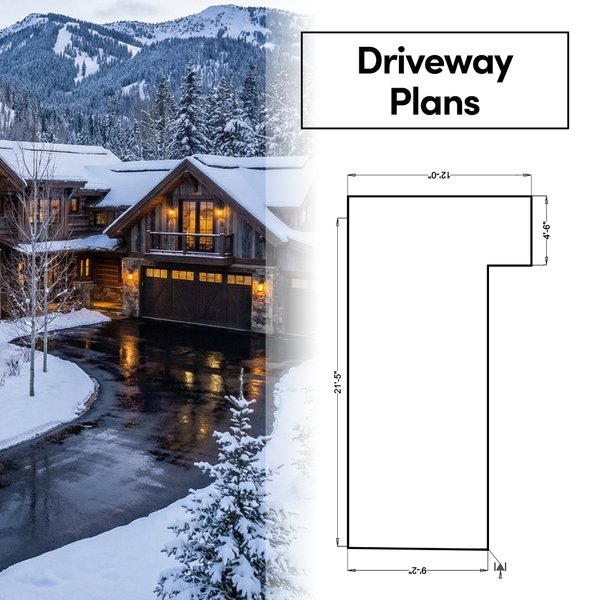
Each plan shows you the total pricing for the installation, the complete product list (heating elements, thermostats, and accessories), projected operating costs, a detailed installation layout, the coverage area, and the compatible surface materials—so you can compare options side by side and pick what fits your project.
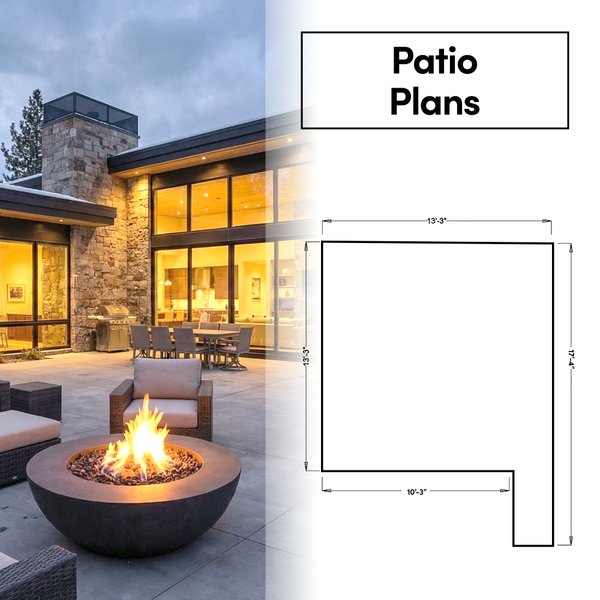
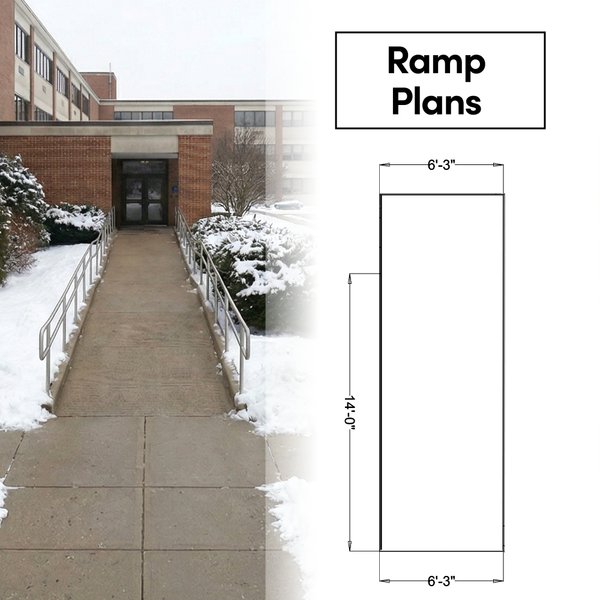
Get Your Free, Professional Snow Melting SmartPlan™
We're here to help you every step of the way—and that starts at the beginning with a free, professional installation plan for your electric snow melt system. Simply provide us with a rough sketch of your project area, including dimensions, power source, and any relevant obstacles, and we'll get back to you (usually in as little as one business day) with a no-obligation SmartPlan that includes a detailed installation diagram, an itemized product quote, and an electrical plan.
Learn More About SmartPlans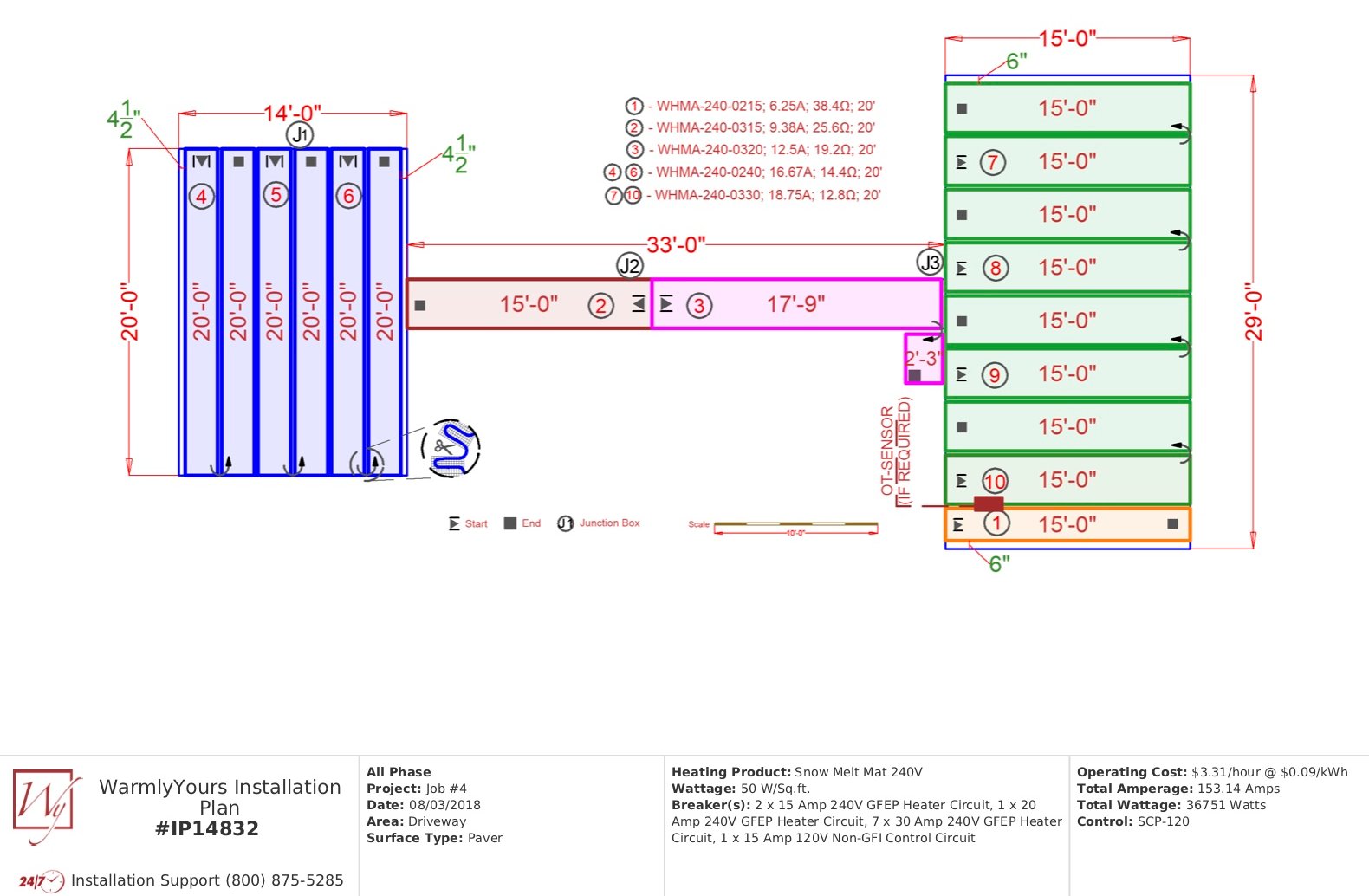
Electric vs. Hydronic: Choosing the Right System
When planning your snow melting project, you'll typically choose between two technologies: electric and hydronic. While both effectively clear snow, electric snow melt systems are the gold standard for residential applications due to their efficiency and ease of use.
Why Choose Electric Snow Melt Systems?
- Simpler Installation: Electric systems use heating cables or mats laid directly in the driveway material. They require no boilers, pumps, or dedicated mechanical rooms.
- Zero Maintenance: Once installed, electric systems are virtually maintenance-free. Hydronic systems require annual boiler service and fluid checks to prevent leaks and corrosion.
- Faster Response: Electric cables heat up almost instantly, allowing the system to stay ahead of the storm. Hydronic systems often take hours to reach operating temperature.
- Lower Upfront Cost: For most residential driveways, walkways, and stairs, electric systems are significantly more affordable to install than hydronic infrastructure.
For a detailed head-to-head comparison of installation, performance, and long-term costs, read our full guide: Electric vs. Hydronic Snow Melting: Which System is Right for Your Home?
How Much Does It Cost to Run Snow Melting Systems?
Example: 100 sq ft at 50 W/sq ft
Per Energized Hour
$1.00
Six Energized Hours
$6.00
This example uses an illustrative electricity rate of $0.20/kWh: 100 sq ft × 50 W/sq ft ÷ 1,000 = 5 kW; 5 kW × $0.20 = $1.00 per energized hour. Six energized hours costs $6.00. This is an example, not a typical bill: use your system’s installed wattage, heated area, local rate, and runtime in the calculator.
What Factors Affect Operating Cost?
Several key factors determine how much your snow melting system will cost to run:
- Heated area size — heating a small walkway costs far less than heating a large driveway.
- Coverage type — full coverage vs. tire tracks significantly impacts energy usage and costs.
- Runtime — preheating, snowfall, and the controller’s drying cycle can all add energized hours.
- Electricity rates — local kWh pricing (average $0.1626 per kWh) directly impacts costs.
Separate Installation Cost from Operating Cost
The electricity estimate does not include mats or cable, controls, electrical work, or the driveway surface. Compare those items in our heated driveway installation cost guide. Automatic controls help manage runtime; costs and snow-clearing performance depend on the design and weather.
Operating Cost Calculator for Snow Melting
Calculate driveway heating costs based on size, coverage type, and local energy rates.

¢
Average snowfall is 6 hours. Includes 3 hours post-snowfall to fully evaporate melted snow.

"A snow melting system is the ultimate set-it-and-forget-it solution. No more shoveling, no more slipping—just safe, clear walkways and driveways whenever you need them!"
— Rae RadiantSnow Melting System Videos
Documents

PDF

PDF

PDF

PDF

PDF

PDF

PDF

PDF
Snow Melting Posts






Consult with a Snow Melting Expert
Do you need to discuss your snow melting project with our experts? We will respond within 1 business day.
Typically respond within 1 business day
Other Snow Melt Products

Frequently Asked Questions
Showing 10 of 66 questions
The material costs are similar. However, electric systems are easier to install, with fewer components and significantly lower maintenance costs. Electric systems will run for a shorter period of time to give the same level of performance but with much higher energy efficiency (typically 95%-98% efficient). Controls and sensors required for the two types of systems are very similar. Electric systems do not usually require slab insulation and do not create the concerns typically associated with hydronic systems. These concerns include, but are not limited to, return temperatures, flue gas venting, waterway shrinkage and property damage caused by leaking pipes or tubes.
When installing outdoor WarmlyYours snow melting cables for your driveway, patio, walkway, terrace, stairs, ramp, etc. - NEVER cross, overlap, or allow the heating cables to touch each other. Doing so will quickly cause a circuit failure due to excessive heat build up. Always follow the installation instructions and/or design layout plan to ensure the cable is installed with the correct spacing required for proper operation.
Our systems can handle low temperatures, but many controls come equipped with a Low-Temperature Lockout Feature. This feature prevents the system from running in very low temperatures. At very low temperatures it can become difficult for the system to effectively melt the snow. It is however possible to turn off this feature should you need the system to keep running during such low temperatures.
To ensure optimal performance, snow melting heating elements should be installed so that they are consistently 2"-3" from the finished surface. For installations using pavers, the maximum thickness for pavers installed over heating elements is 2.5".
GFEP is the National Electric Code (NEC) required protection for fixed outdoor deicing and snow-melting equipment, which may be accomplished by using circuit breakers equipped with ground-fault equipment protection (GFEP) of 30 mA. It is important to understand that this required equipment protection is NOT the same as a 5 mA GFCI used for personal protection.
All of our automatic controllers have a Hold-on time feature after the initial warming up of the snow melt system. This feature ensures that all the snow is melted from the surface, and also that the system continues to operate and evaporate the surface water without it refreezing.
Pavers can be removed and reinstalled for a retrofit application of our snow melt system. Tire tracks are not typically recommended for paver surfaces, so any retrofit application would most likely need to be full coverage. In this case, it should be treated like a brand new installation, just with existing pavers.
If a cable is damaged during installation, recheck the system for continuity and confirm the integrity of the insulation with a megohmmeter, or "megger" tester, referring to the installation and testing instructions. If the cable fails any of these tests, take the following actions: clear a 3 foot square working area around the damaged section of cable, and record the cable part number from the UL tag and the location where you purchased the product. Call WarmlyYours with the above information. WarmlyYours will provide further assistance and supply a splice kit suitable for repairing the particular cable.
Always confirm the power requirements with the electrician. Large snow melting systems usually require a new electrical panel or electrical service. Contact WarmlyYours for a quotation, indicating the actual power capacity available, and to obtain recommendations for reducing the power consumption. For example, opting for tire track coverage rather than installing the snow melting system over the entire driveway can dramatically reduce power requirements.
Once you've decided what type of heating system (manual vs. automatic), you'll need to choose a control, which may or may not utilize a sensor. You may need a relay panel(s) depending on the size of the system, and a snow melt plaque which is required by the National Electric Code. Junction box(es) may be optional depending on the distance of heating cable from the indoor power location.
It depends on how the system is intended to operate. If the expectation is manual operation (ex. WiFi or Timer Control), then no sensors are required. If the expectation is automatic operation, then the system will require at least one snow sensor.
No, a sensor is not required with the snow melt system. However, certain automatic controllers require a temperature/moisture sensor to sense atmospheric conditions and may also require an in-slab, high temperature limit sensor to be installed (notably, asphalt installations).
WarmlyYours electric snow melting cables are rated for 30+ years of reliable operation — typically outlasting the asphalt or concrete surface installed above them. Because there are no moving parts and no fluids, there is nothing to wear out under normal use. Controls have a 15–20 year lifespan and are replaceable if needed. The most common cause of premature failure is not age or wear — it is physical damage to the cable during installation or a later surface repair.
Reflective insulation is not effective with conductive heating, which is how embedded floor heating and snow-melting systems transfer heat. To be effective, the reflective insulation surface needs to face an air space (air gap), which allows the reflected heat to be redirected.
An effective solution considers the insulating material's R-Value. This is the rating of a material's insulating properties. The "R" stands for "resistance" and refers to the material's resistance to heat flow, or temperature conduction.
Snow melting mats feature heating cables pre-spaced on a mesh backing for fast, consistent installation in large, straight areas like driveways. Loose cables offer maximum flexibility for custom shapes, stairs, or tight curves. Both provide the same heating output, but mats reduce labor time while cables handle complex layouts.
Shoveling snow is one of the most strenuous activities a person can perform. The combination of cold air, which constricts blood vessels and raises blood pressure, and the intense physical exertion of lifting heavy snow creates a "perfect storm" for cardiovascular strain. For many, especially seniors, a snow melting system is a vital preventative health investment that eliminates this dangerous physical burden.
Heated driveways are an eco-friendly alternative to traditional snow removal. They eliminate the need for harsh de-icing chemicals and salt, which can damage local ecosystems, contaminate groundwater, and harm pets. They also reduce the carbon footprint associated with gas-powered snow blowers and plows.
Yes, you can combine multiple areas like driveways, walkways, ramps, and stairs into a single snow melting system. Our team can design a SmartPlan that integrates all your selected zones with shared controls and sensors, ensuring optimal layout and efficient operation across your entire outdoor space.
Heating cables cannot be installed directly under an existing driveway surface. They must be embedded within the concrete, asphalt, or sand bed for pavers to transfer heat effectively. You can, however, install a system during a resurfacing project or by replacing specific sections like tire tracks.
Yes, snow melting systems are ideal for walkways, patios, and outdoor stairs. These systems eliminate the need for shoveling and salting while preventing dangerous ice buildup. For stairs, heating elements are typically spaced closer together to ensure complete coverage on every step, providing maximum safety for high-traffic entryways.
Yes, you can install snow melting on an existing driveway through a retrofit application, though it's more complex than new construction.Retrofit installation options:
- Asphalt: Remove top layer, install cables/mats, repave—typically 1–2 weeks
- Concrete: Remove and replace concrete with heating system embedded—typically 2–4 weeks
- Pavers: Remove pavers, install cables in sand base, reinstall pavers—typically 3–5 days
Retrofit considerations:
- Higher labor costs than new construction
- Temporary disruption to driveway access
- Professional installation required (not DIY-friendly)
- Permits may be needed (check local codes)
Best retrofit option: Pavers offer the fastest, most cost-effective retrofit solution. View our complete Retrofit Application Guide to explore all retrofit options for your existing driveway. Our experts can assess feasibility and provide custom recommendations. Request a free SmartPlan with retrofit options tailored to your project.
In most cases, snow melting systems must be installed during a new pour of concrete or asphalt, or when laying new pavers. However, you can retrofit an existing driveway by saw-cutting grooves for the heating cables and sealing them with hot asphalt or backer rod and sealant.
Yes, snow melting works on all three surface types, but installation methods differ:Asphalt:
- Heating cables/mats embedded in asphalt layer
- Best for new construction or overlay applications
- Cost: $8–$18/sq.ft. installed
- View Asphalt Design Guide
Concrete:
- Cables/mats embedded in concrete slab
- Ideal for new driveways or complete replacement
- Cost: $10–$25/sq.ft. installed
- View Concrete Design Guide
Pavers:
- Cables installed in sand base beneath pavers
- Best retrofit option for existing driveways
- Cost: $12–$22/sq.ft. installed
- View Paver Design Guide
Pro tip: Pavers offer the most flexibility for retrofitting existing driveways. All three options deliver the same reliable snow melting performance with proper installation.
Permit requirements vary by location, but most jurisdictions require permits for heated driveway installation.Typical permit requirements:
- Electrical permit (for power supply and controls)
- Building permit (for surface modification)
- Inspection (to verify code compliance)
Permit costs: Typically $100–$500 depending on your areaWhy permits matter:
- Safety compliance (electrical codes)
- Property records (increases home value documentation)
- Insurance (may require permits for coverage)
- Resale (permits protect future buyers)
WarmlyYours support: Our team helps navigate permit requirements. Contact us or call 800-875-5285 for guidance on local codes. Many installers handle permits as part of their service.
A heated driveway can add meaningful resale value, particularly in snow-belt markets where buyers understand and appreciate the benefit. While there is no universal appraisal standard for heated driveways, real estate professionals in high-snowfall regions commonly report a 2–5% premium for homes with snow melting systems — especially when the system covers the full driveway and includes automatic controls.
Beyond the dollar value, a heated driveway is a strong differentiator in a competitive market. Buyers who have experienced the convenience firsthand — or who dread the prospect of shoveling — will often prioritize a home with a heated driveway over a comparable home without one.
The value impact is strongest in markets with 20+ annual snow events, where the system provides clear, recurring benefit every winter.
Essentially none. The only yearly task is wiping the aerial sensor clean before the season starts — leaves, bird droppings and debris on the gold grid stop it detecting precipitation. Never paint the sensor, and confirm it still sits where snow falls freely rather than under an overhang or tree.
Yes. Rubbing alcohol (isopropyl alcohol) is an effective and inexpensive deicer because it has a freezing point of around -128°F (-89°C) — far below any outdoor temperature you'll encounter. Mix 2 parts 70% isopropyl alcohol with 1 part warm water in a spray bottle and apply directly to icy surfaces. It works quickly, won't damage concrete or asphalt, and is safe around pets once dry. It's best for thin ice layers and light frost rather than thick ice sheets.
Simulate snow at the sensor. Place something wet on the heated grid — ice, a damp sponge, or a careful pour of water — then chill it below 38°F using an air duster held upside down, holding that temperature for a couple of minutes. Once both conditions are met, the sensor signals the controller and the system should energize.
To find a qualified contractor, check out WarmlyYours Radiant Heating’s Dealer/Installer Database. Plug in your zip code to search for local professionals and filter the results by "Supports Snow Melting."
A heated driveway supports aging in place by removing the two biggest winter obstacles: the physical strain of snow removal and the risk of icy falls. By automatically maintaining clear, dry pavement, these systems ensure seniors can safely access their vehicles and homes, maintaining their independence and peace of mind without relying on manual labor or unpredictable plowing services.
Electric snow melting systems use heating cables or mats embedded in outdoor surfaces like concrete, asphalt, or under pavers. When paired with an automatic sensor, the system detects freezing temperatures and moisture, turning on to melt snow and ice as it falls, and shutting off automatically once the surface is clear.
There is no single payback period. It depends on what the system costs to install, what you spend on snow removal now and how much electricity it uses. A simple estimate: payback in years ≈ installed cost ÷ (annual snow removal spending you avoid − annual operating cost). Operating cost is heated area × W/sq ft ÷ 1,000 × your rate × energized hours per season; at 50 W/sq ft, 100 sq ft costs $1.00 per energized hour at an illustrative $0.20/kWh. If operating cost approaches what you pay for plowing, shoveling and salt, the system may never pay back in dollars, and the case rests on convenience and safety. Get installation figures from a quote or our heated driveway cost guide, and operating figures from the snow melting cost calculator.
Installation typically takes 3–5 days for pavers or 1–2 weeks for asphalt. Concrete projects usually require 2–4 weeks, including formwork, cable placement, and curing time. The exact timeline depends on project size, weather conditions, and whether you are installing in a new pour or a retrofit application.
Installation typically takes 3–5 days for pavers or 1–2 weeks for asphalt. Concrete projects usually require 2–4 weeks, including formwork, cable placement, and curing time. The exact timeline depends on project size, weather conditions, and whether you are installing in a new pour or a retrofit application.
Professional installation for a heated driveway typically costs between $10 and $25 per square foot, including materials and labor. Total pricing varies based on the system type, the driveway material (asphalt, concrete, or pavers), and local electrical rates. Use our online calculator for a precise estimate.
Multiply the heated area by the installed watts per square foot, divide by 1,000 for kilowatts, then multiply by your electricity rate. At 50 W/sq ft, every 100 sq ft draws 5 kW, or $1.00 per energized hour at an illustrative $0.20/kWh. For example, a 400 sq ft full-coverage driveway draws 20 kW: $4.00 per energized hour, or $24.00 for six energized hours. Tire tracks heat less area, so they cost proportionally less. Your seasonal bill depends on how many hours the system is energized, including preheating and the controller’s drying cycle, which varies with the weather. These are examples, not typical bills; enter your own area, rate and runtime in our snow melting cost calculator.
A heated walkway typically costs $8–$20 per square foot for heating materials. Total project costs, including an automatic control and professional installation, generally range from $1,500 to $5,000 for a standard residential walkway. Factors like the choice between mats or cables and the type of surface material (concrete, pavers, or asphalt) will influence the final price.
The cost for the heating system typically ranges from $10 to $20 per square foot. Total project costs vary based on the driveway material (asphalt, concrete, or pavers) and labor rates. For a standard two-car driveway, the heating components usually cost between $3,000 and $5,000.
Operating cost depends on the heated area, installed wattage, your electricity rate and how many hours the system is energized. For example, 100 sq ft at 50 W/sq ft draws 5 kW (100 × 50 ÷ 1,000). At an illustrative $0.20/kWh, that is $1.00 per energized hour, or $6.00 for six energized hours. This is an example, not a typical bill. What changes your total:
- Heated area and coverage (full area or tire tracks)
- Installed watts per square foot
- Your local electricity rate
- Runtime, including preheating, snowfall and the controller’s drying cycle
Enter your own numbers in our snow melting cost calculator.
It depends on what matters most to you. With few storms there is less snow removal spending to replace, so a financial payback takes longer and may not happen at all; compare your installed and operating costs with what you spend on snow removal now. Other benefits don’t depend on snowfall totals: an automatic system can keep the heated area clear without shoveling and reduce salt use. In mild climates the stronger case is often ice rather than snow. A light snowfall followed by a freeze can leave a slippery surface, and a sensor-controlled system can melt it before it refreezes. For a sloped driveway or a household with mobility concerns, that can matter more than payback.
It depends on your climate, the area you need kept clear and what snow removal costs you now. An automatic system melts snow on the heated area during a storm, which can reduce shoveling, plowing and deicer use. Weigh that against two separate costs. Installation covers mats or cable, controls, electrical work and the driveway surface; our heated driveway cost guide breaks these down. Operating cost depends on area, wattage, electricity rate and runtime. For example, 100 sq ft at 50 W/sq ft is 5 kW: $1.00 per energized hour at an illustrative $0.20/kWh, or $6.00 for six energized hours. That is an example, not a typical bill. Compare your quote and a cost calculator estimate with your current snow removal costs.
A controller calling for heat only proves the control side is working — it does not confirm power reached the cable. Perform in/out voltage testing across each stage of the chain: breaker → relay → junction box → cold lead, and find the point where voltage stops. Then de-energize and test resistance across the heating element, comparing the reading to the factory spec on the cable tag.
For paver installations, snow melting mats are generally preferred because the pre-spaced mesh ensures even heating across large surfaces and simplifies the layout process. However, loose cables are better for heating the specific paths of stairs or custom-shaped landings leading to the driveway.
For driveways with a grade (slope) of 5% or more, WarmlyYours recommends full-coverage snow melting rather than tire-track heating. Here's why grade matters:
- 0–4% grade (nearly flat): Tire-track heating is a cost-effective option. The unheated areas between tracks are a minor inconvenience.
- 5–8% grade (moderate slope): Full coverage is strongly recommended. Unheated areas between tire tracks become primary slip hazards for pedestrians stepping out of vehicles.
- 8%+ grade (steep): Full coverage is essential. Gravity significantly increases the risk of vehicle sliding and pedestrian falls on any unheated surface.
On a slope, a vehicle that makes it up a heated tire track can still slide sideways if the surrounding surface is icy. Full coverage eliminates the entire hazard — not just the vehicle path. The additional material cost is approximately 35% more than tire-track heating, but it is the only option that truly eliminates the risk on a steep grade.
Electric snow melting systems require power to operate. If your area experiences frequent outages during storms, you can connect the system to a backup generator. However, because these systems have high wattage requirements, ensure your generator has sufficient capacity to handle the load.
The best pet-safe deicers for driveways are magnesium chloride and urea-based products. Magnesium chloride is gentler on paws than rock salt or calcium chloride, works down to about -13°F (-25°C), and is less harmful to vegetation. Sand and kitty litter are also completely pet-safe traction options, though they don't melt ice. Always rinse pets' paws after walks on treated surfaces. For a truly pet-safe solution, a heated driveway eliminates the need for any chemical deicers entirely.
The fastest way to melt ice on a driveway without salt is to use a rubbing alcohol spray (mix 2 parts 70% isopropyl alcohol with 1 part warm water in a spray bottle) or a calcium chloride-based deicer. Both work rapidly at low temperatures. For thick ice, break it up with a metal ice scraper first, then apply the deicer. A heated driveway system is the only permanent solution — it prevents ice from forming in the first place.
Operating cost depends on the heated area, installed wattage, electricity rate and energized hours. A 100 sq ft walkway at 50 W/sq ft draws 5 kW, which is $1.00 per energized hour at an illustrative $0.20/kWh, or $6.00 for six energized hours. This is an example, not a typical bill: preheating, snowfall and the controller’s drying cycle all add runtime, and seasonal cost varies with the weather. Try your own numbers in the snow melting cost calculator.
Electric snow melting systems require virtually no maintenance. There are no fluids to check, no pump to service, and no annual inspection required. The one recommended task is a quick ohmmeter resistance test each fall — about five minutes with a basic multimeter — to confirm the cable is intact before winter. If the reading falls within ±15% of the spec in your installation manual, the system is in good health.
Electric snow melting uses heating cables embedded in the surface, offering easier installation, lower maintenance, and a longer lifespan. Hydronic systems circulate heated fluid through tubing, which requires a complex boiler system and regular maintenance. Electric systems are generally more affordable and ideal for most residential applications.
A tripping breaker usually points to a ground fault, moisture in a junction box, or the wrong breaker type. Confirm the circuit uses a 30mA GFEP (Ground Fault Equipment Protection) breaker — a standard 5mA GFCI will nuisance-trip on the normal capacitive leakage of a snow-melt circuit. Then have a qualified electrician megger test core-to-ground, inspect boxes for water ingress, and clamp-meter the load against the breaker rating.
Almost always a sensor fault. The most common cause is a sensor landed on the wrong terminals, or a lead that is seated but not clamped — the controller reads both as no sensor at all. Cross-reference the blink pattern in your specific controller manual, then measure thermistor resistance to rule out a cut or pinched wire.
Partial melting usually means a damaged cable section, improper wire spacing, or uneven slab depth — not a failed system. Work through it without digging:
- Clamp-meter the live feed per zone and compare amp draw against spec.
- Inspect the relay panel and junction box connections.
- Sweep the surface with a thermal imaging camera to locate spacing gaps, cold zones, or a break.
